Author Archives: Kimsmithdesigns

Unknown's avatar

About Kimsmithdesigns

Documentary filmmaker, photographer, landscape designer, author, and illustrator. "Beauty on the Wing: Life Story of the Monarch Butterfly" currently airing on PBS. Current film projects include Piping Plovers, Gloucester's Feast of St. Joseph, and Saint Peter's Fiesta. Visit my websites for more information about film and design projects at kimsmithdesigns.com, monarchbutterflyfilm.com, and pipingploverproject.org. Author/illustrator "Oh Garden of Fresh Possibilities! Notes from a Gloucester Garden."

THE LATE GREAT MONARCH MIGRATION CONTINUES

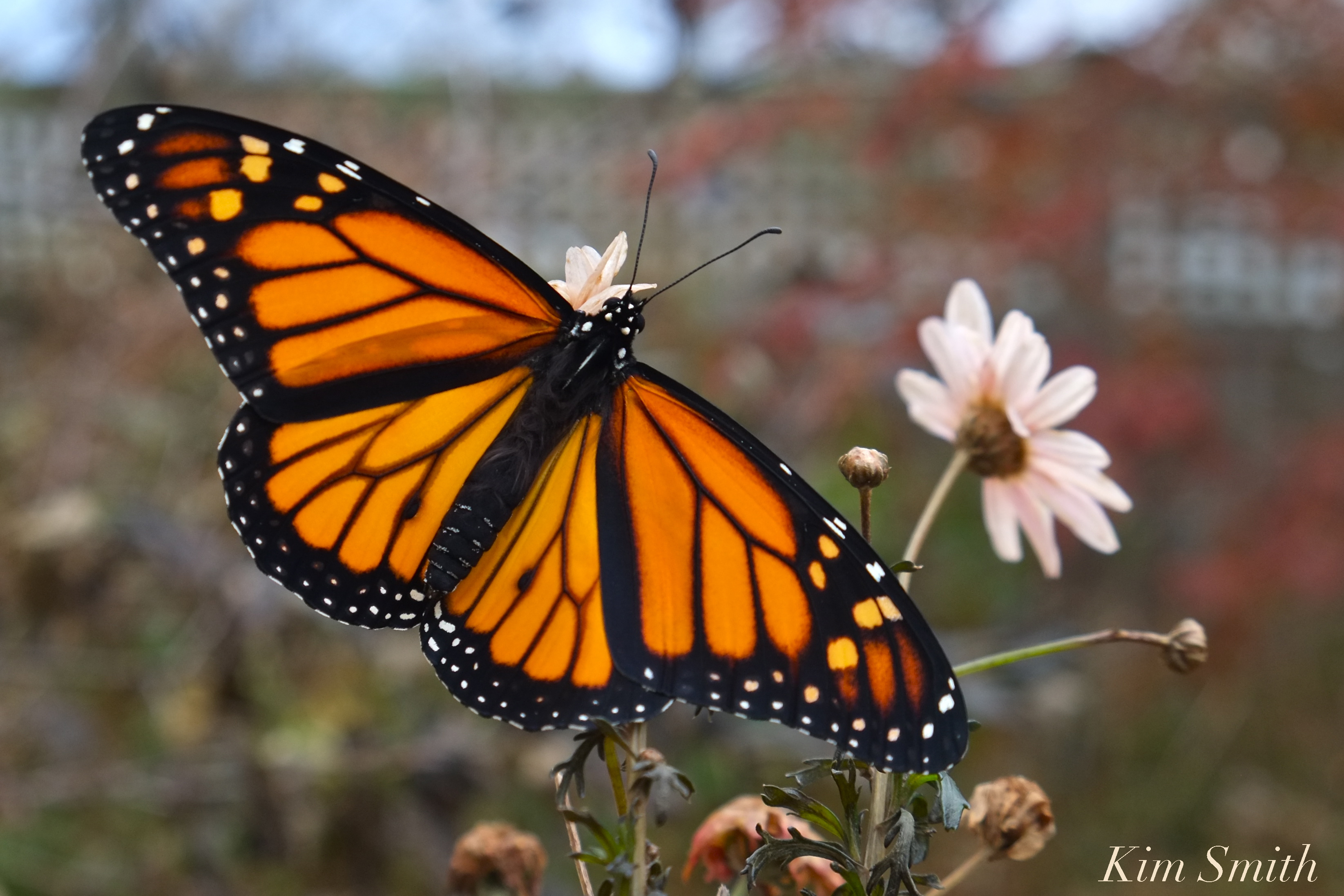
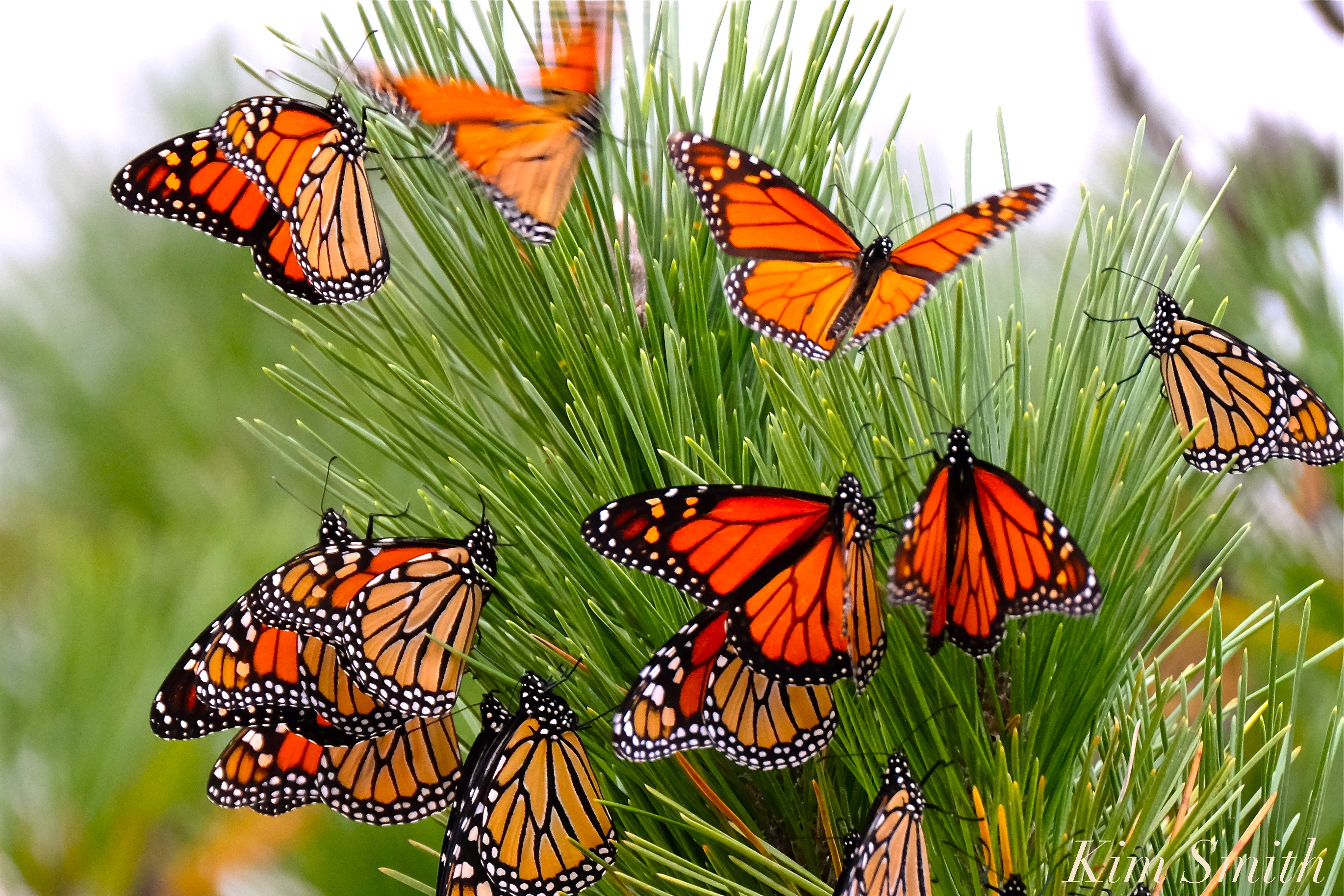
Too cold for the last of our intrepid Monarchs to fly away today.

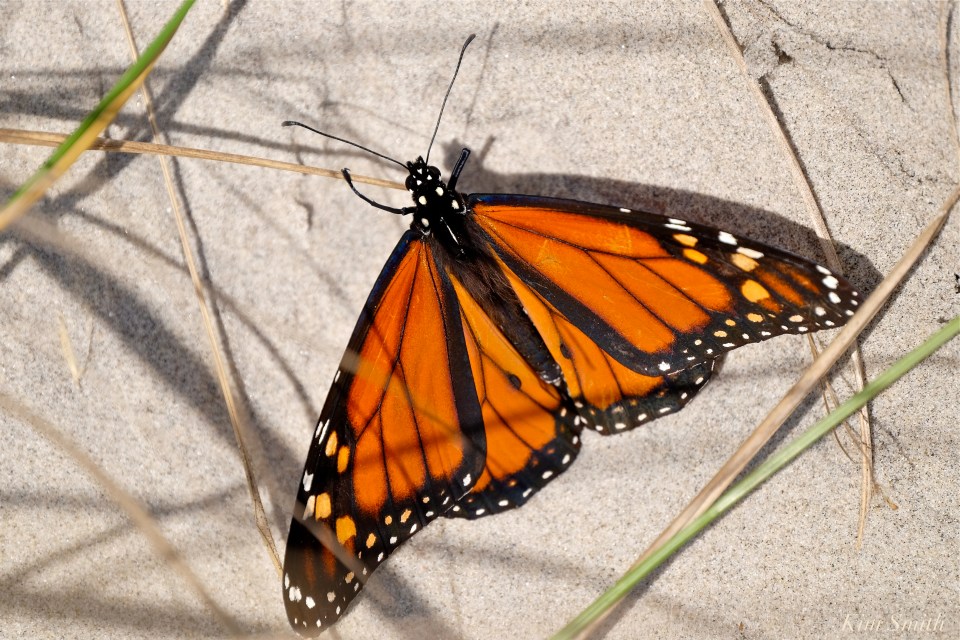
Our last little Monarch to emerge struggled to gain the warmth needed for takeoff. What is the minimum air temperature needed to allow Monarchs to fly? When at Cape May several weeks ago and witnessing a large overnight roost of butterflies, the air temperature the following morning was the same as Gloucester’s temperature this morning–low forties–but the sun was shining. No sunshine today, combined with the low temperature, made flying impossible. Monarchs cluster together in overnight roosts for warmth. Our little guy was all alone on an isolated branch and with temperatures expected to dip into the mid thirties, I brought him indoors for the night.

Why the late season stragglers? Warmer than usual fall temperatures allowed eggs and caterpillars to reach maturity when in colder years, freezing temperatures would have prevented development

Some Monarchs begin migrating southward as early as August. And as we have seen, during the warm fall season of 2017 in particular, as late as November. The Monarch migration continues until halted by freezing temperatures. This staggered migration is yet another chapter in the survival strategy of the Monarch’s life story. If all Monarchs began migrating at exactly the same time, a powerful storm or hurricane, such as Harvey or Irma, could have devastating consequences on a great many Monarchs.

https://www.instagram.com/p/BbffiAGlqCk/

https://www.instagram.com/p/Bbfdku5Fga3/

Will This Monarch Survive?

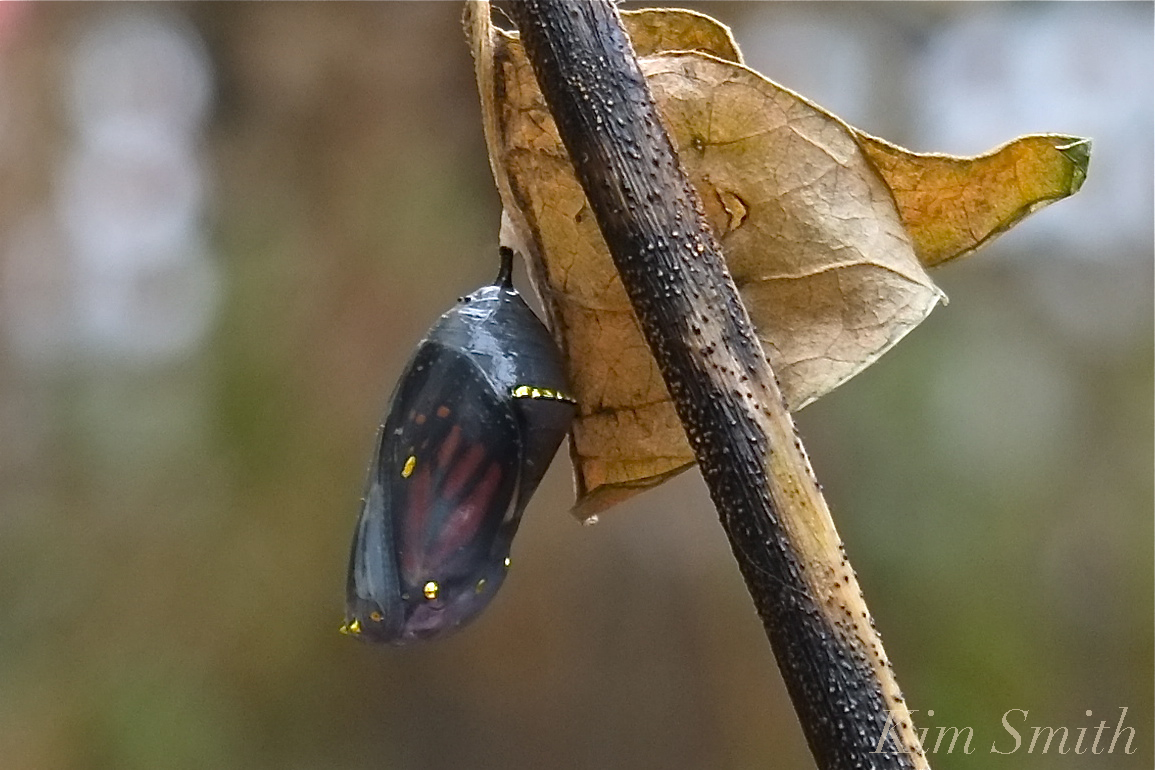
Today, November 13th, a Monarch will emerge from its chrysalis in a garden 2,800 miles north of its winter sanctuary. The thing is, Monarchs typically arrive in Mexico at harvest time and around Day of the Dead celebrations, or when Americans celebrate Halloween. In the language of the indigenous Purépecha peoples, the name for the Monarch is “Harvester” butterfly. Under the most ideal conditions, this Monarch won’t arrive until Christmastime.

Along the northern leg of his journey, he will find little or no nectar plants as we have had several nights of freezing temperatures. All the wildflowers and garden plants have finished blooming for the season. With little fortification, is it possible for Monarchs to fly great distances? Biologists look for this type of climate change mismatch to track how global warming is affecting wildlife. Butterflies can survive rain. The water beads up and drips off its wings, but snow and below freezing temperatures are fatal to Monarchs.

With a hope and a prayer, fair winds and good weather, perhaps our little intrepid Monarch will make it to sunny Mexico, or possibly, shorten his journey, and at least make Florida his home for the winter. Here’s hoping.

 *   *   *

WITH THE GREATEST APPRECIATION FOR OUR COMMUNITY OF FRIENDS AND SPONSORS, I AM OVERJOYED TO SHARE THAT TO DATE WE HAVE RAISED $23,960.00 FOR THE DOCUMENTARY FILM “BEAUTY ON THE WING” ONLINE FUNDRAISER! 

Friends of the Monarch Butterfly: If you would like to help towards the completion of the documentary film Beauty on the Wing: Life Story of the Monarch Butterfly, please consider making a tax deductible donation here:

DONATE HERE

Donors contributing over $5,000. will be listed in the credits as a film producer.

For more information, visit the film’s website here: Monarch Butterfly Film

For an overview of the film’s budget, please go here: Budget

Thank you so very much for your help.

With gratitude,

Kim

SCARY BUTTERFLIES AND THANK YOU MONARCH FILM DONORS FOR YOUR GENEROSITY!!!

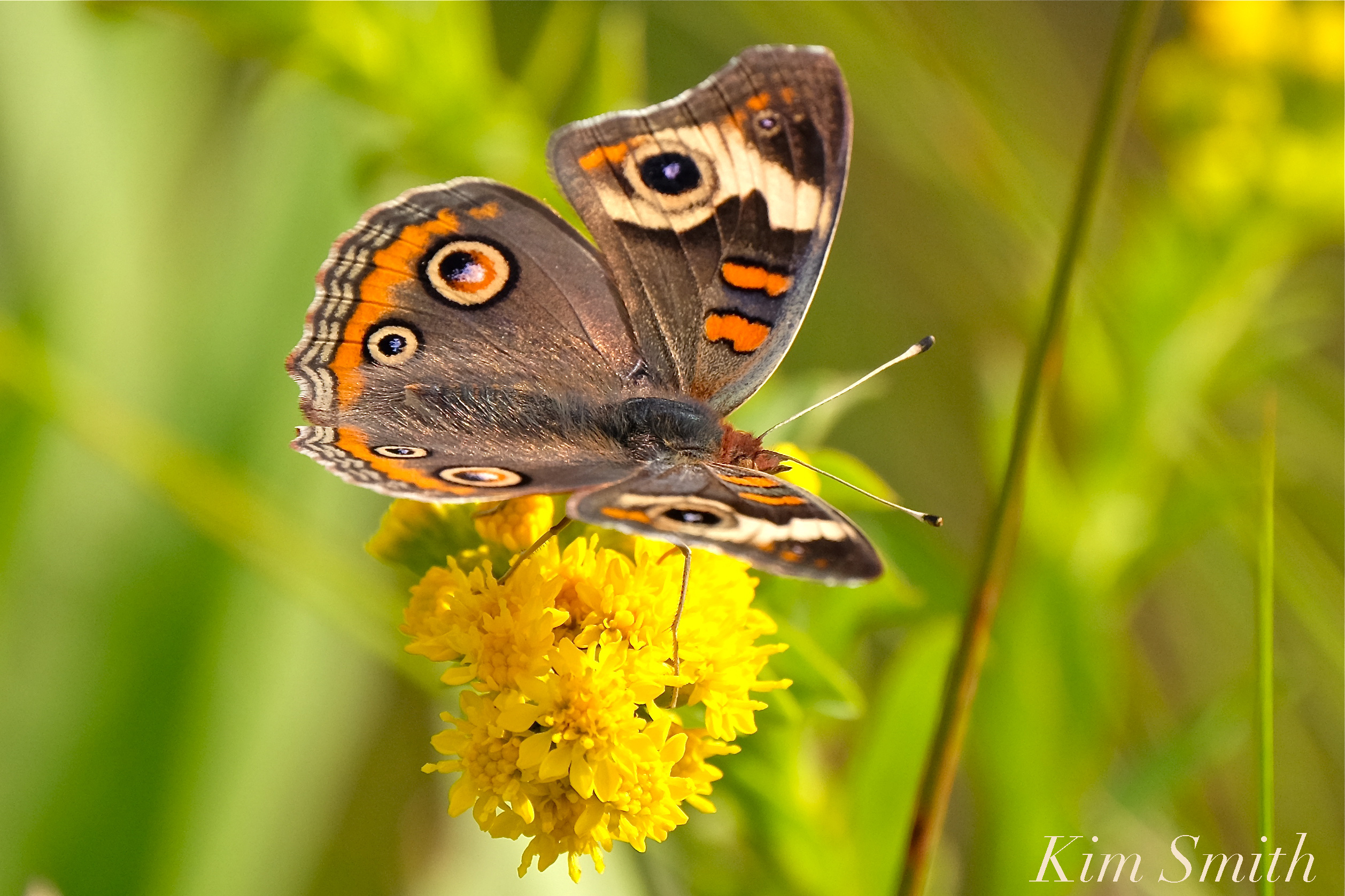
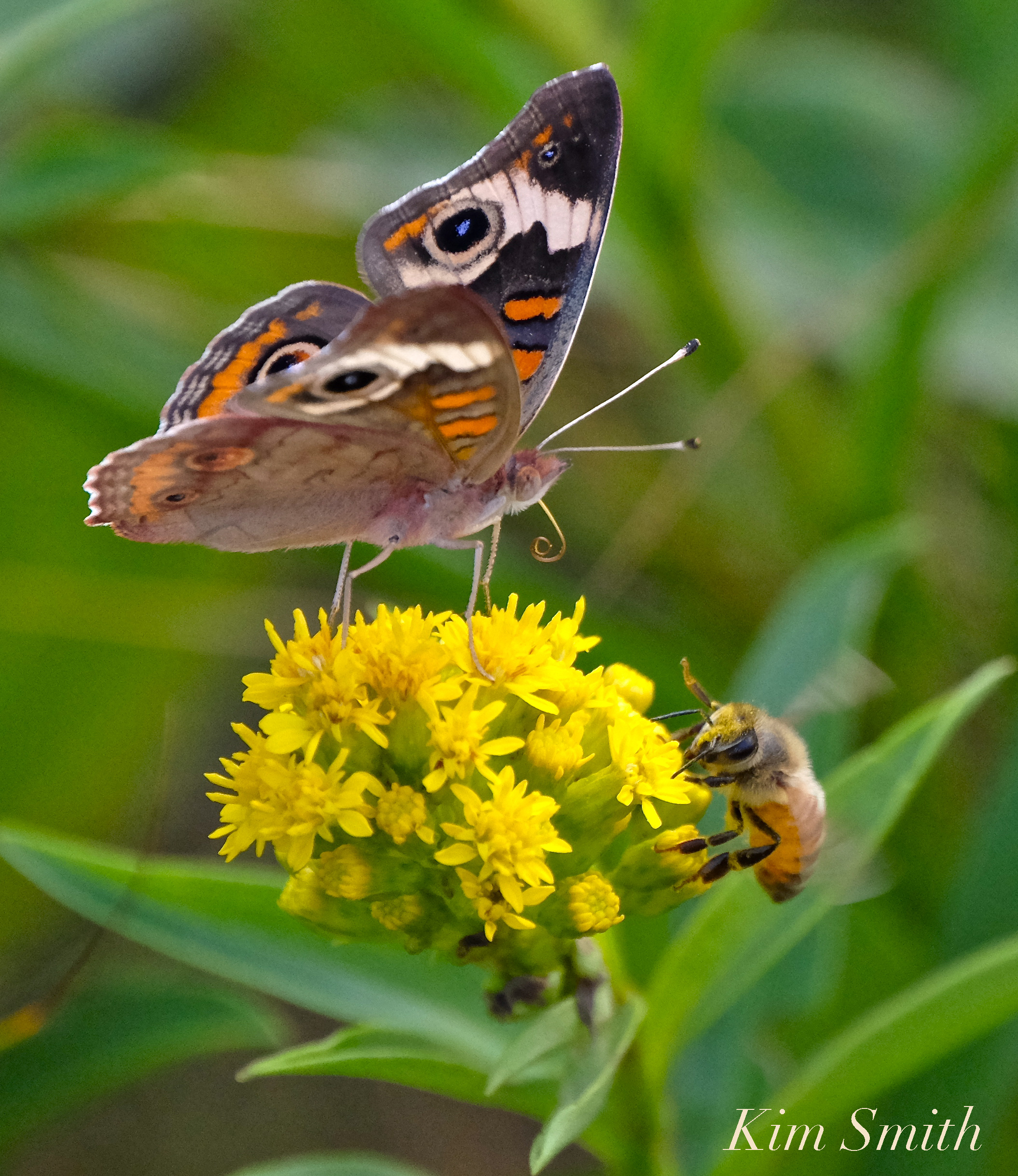
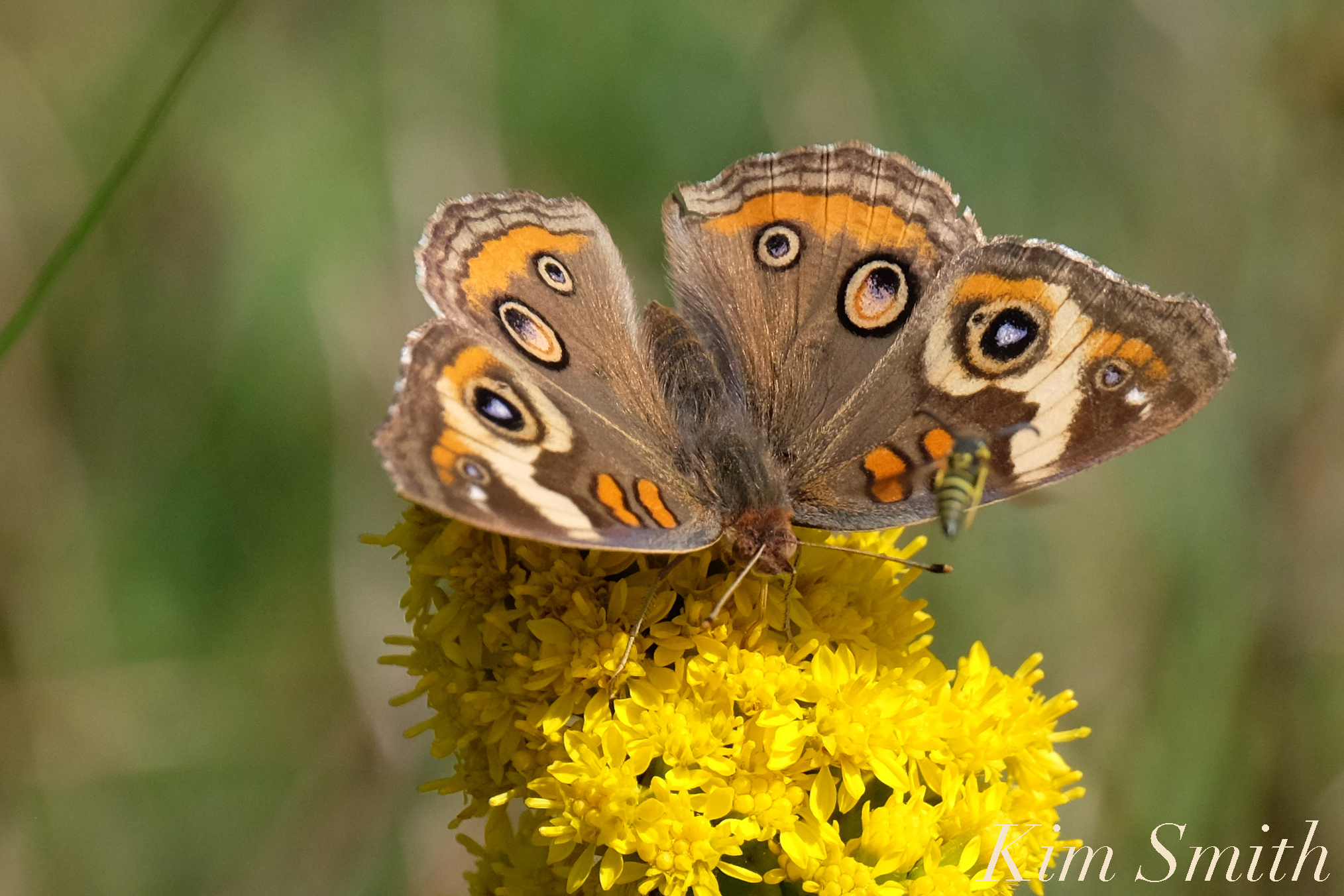
Beautiful to you and I, the large concentric circles strategically located on the wings of the Buckeye are meant to mimic the eyes of a larger creature. The eye patterns, or eyespots, frighten away would-be predators, mainly, hungry birds snipping at butterfly wings.

Many species of Lepidoptera have eyespots both in the adult and caterpillar stages, but butterflies and moths aren’t the only creatures that have evolved with eye-like markings. Reptiles, wild cats, fish, and birds also have eyespots.

Peacocks have very conspicuous eyespots, not to mimic and frighten, but to attract a peahen. The greater the number of “eyes,” the more desirable the male is to the female.

https://www.instagram.com/p/BU7mTlHFlbB/

The Foureye Butterflyfish, like butterflies, have eyespots located away from the more vulnerable head region; its eye markings are at the tail end.

Foureye Butterflyfish are found in the Western Atlantic, from Massachusetts and Bermuda to the West Indies and northern South America. Photo courtesy wiki commons media.

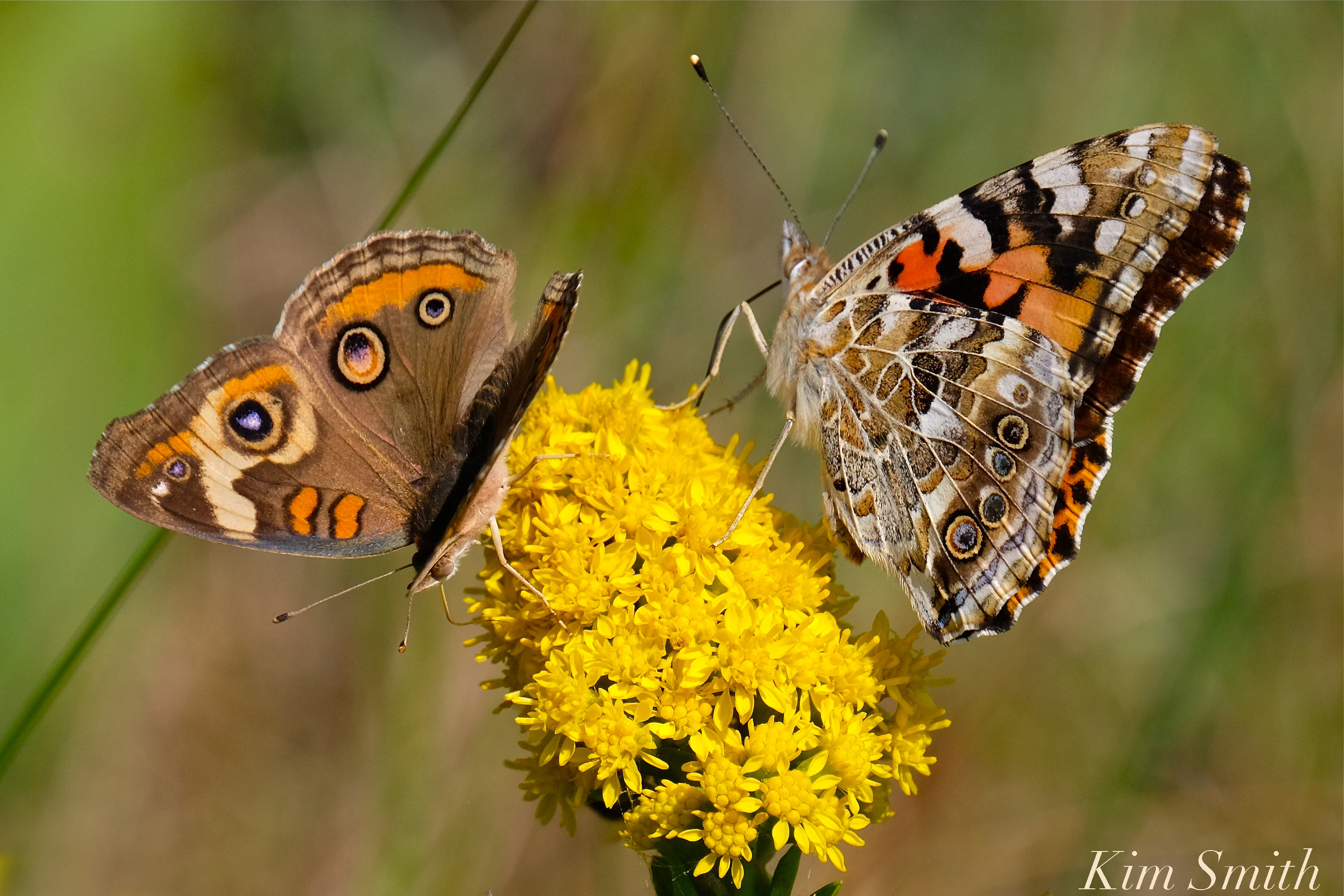
Over the course of the many years documenting Monarchs, I often encounter the beautiful Buckeye during the end of the summer. Common Buckeyes migrate every year, departing our most southern states in the spring, repopulating the northern states on their way; in some years even reaching as far north as southern Canada. In the fall, Buckeyes return south as they are not adapted to survive northern winters.

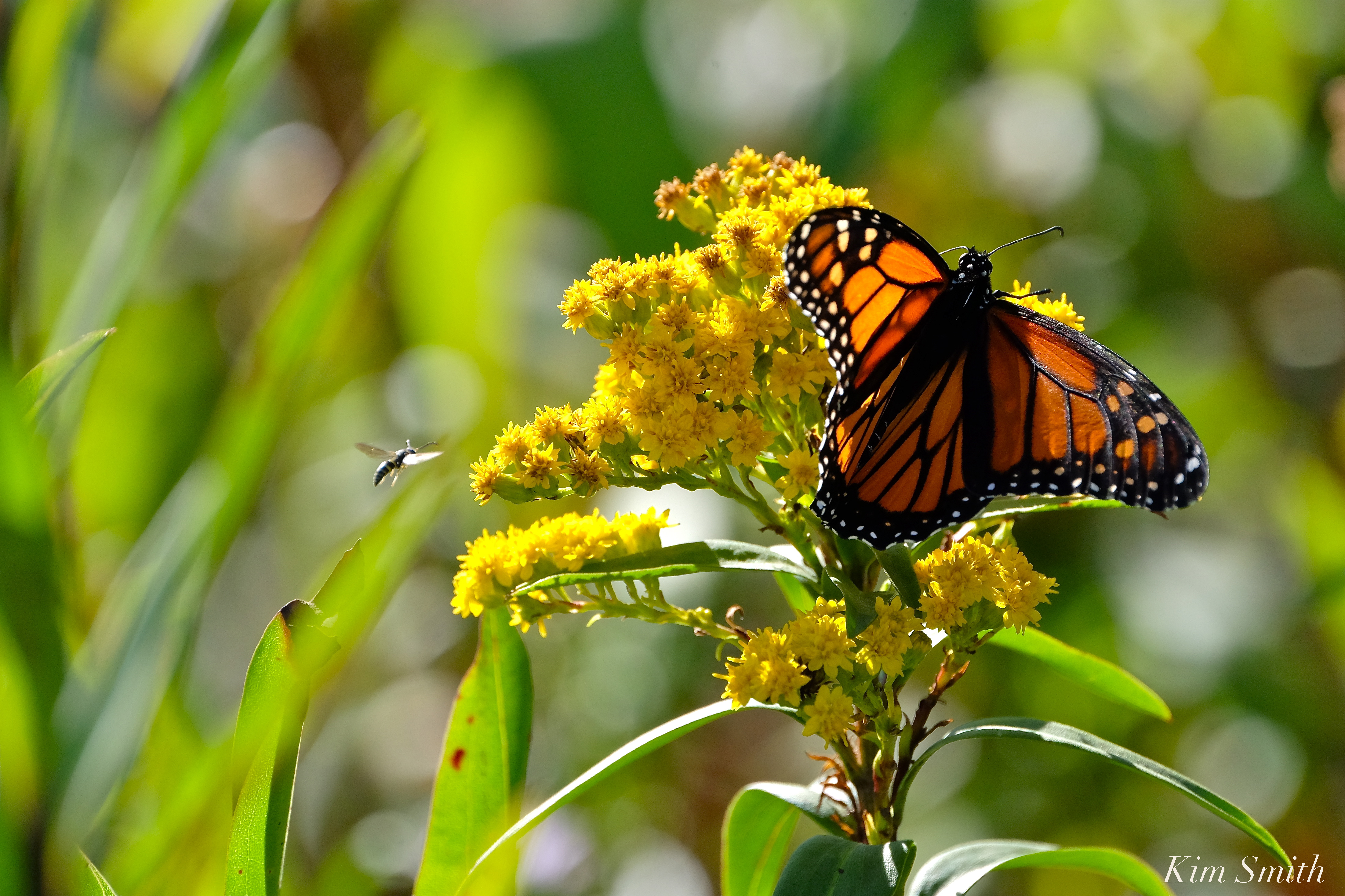
The Common Buckeye is most attracted to yellow flowers. Look for them drinking nectar at Seaside Goldenrod and the yellow florets at the center of New England and Purple-stemmed Asters.

Common Buckeye and Painted Lady, Fall Migration 2017

To date we have raised $23,960.00, thanks to the extraordinary generosity of our community. If you would like to help towards the completion of the documentary film Beauty on the Wing: Life Story of the Monarch Butterfly, please consider making a tax deductible donation here:

DONATE HERE

Donors contributing over $5,000. will be listed in the credits as a film producer.

For more information, visit the film’s website here: Monarch Butterfly Film

For an overview of the film’s budget, please go here: Budget

Thank you so very much for your kind generosity and help in completing and bringing Beauty on the Wing to classrooms and theaters.

With gratitude,

Kim

MY DEEPEST THANKS AND APPRECIATION TO LAUREN MERCADANTE (PRODUCER), SUSAN FREY (PRODUCER), NEW ENGLAND BIOLABS FOUNDATION, BOB AND JAN CRANDALL, MARY WEISSBLUM, SHERMAN MORSS, JAY FEATHERSTONE, GARTH GREIMANN (CAMBRIDGE), JUNI VANDYKE, MARION F., ELAINE M., KIMBERLY MCGOVERN, MEGAN HOUSER (PRIDES CROSSING), JIM VANBUSKIRK (PITTSBURGH) NANCY MATTERN (ALBUQUERQUE), DONNA STOMAN, PEGGY O’MALLEY, JOEY C., CATHERINE RYAN, JOEANN HART, JANE PAZNIK BONDARIN (NEW YORK), ROBERT REDIS (NEW YORK), NUBAR ALEXANIAN, PETER VAN DEMARK, PATRICIA VAN DERPOOL, FRED FREDERICKS (CHELMSFORD), LESLIE HEFFRON, JIM MASCIARELLI, DAVE MOORE (KOREA), LILIAN AND CRAIG OLMSTEAD, JOHN STEIGER, PAT DALPIAZ, AMY KERR, BARBARA T. (JEWETT, NY), ROBERTA C. ((NY), MARIANNE G. (WINDHAM, NY), PAULA RYAN O’BRIEN (WALTON, NY), MARTHA SWANSON, KIM TEIGER, JUDITH FOLEY (WOBURN), PATTI SULLIVAN, RONN FARREN, SUSAN NADWORNY (MELROSE), DIANE LINDQUIST (MANCHESTER), HEIDI SHRIVER (PENNSYLVANIA), JENNIFER CULLEN, TOM HAUCK, AND ANONYMOUS PERSONS FOR THEIR GENEROUS HELP.

$22,265.00 RAISED FOR BEAUTY ON THE WING!!!

$22,265.00!!! RAISED FOR BEAUTY ON THE WING DOCUMENTARY! THANK YOU KIND DONORS!!!!!!!!!!!

WITH THE GREATEST APPRECIATION FOR OUR COMMUNITY OF FRIENDS AND SPONSORS, I AM OVERJOYED TO SHARE THAT TO DATE WE HAVE RAISED $22,265.00 FOR THE DOCUMENTARY FILM “BEAUTY ON THE WING” ONLINE FUNDRAISER!!!

Friends of the Monarch Butterfly: If you would like to help towards the completion of the documentary film Beauty on the Wing: Life Story of the Monarch Butterfly, please consider making a tax deductible donation here:

DONATE HERE

Donors contributing over $5,000. will be listed in the credits as a film producer.

For more information, visit the film’s website here: Monarch Butterfly Film

For an overview of the film’s budget, please go here: Budget

Thank you so very much for your help.

With gratitude,

Kim

MY DEEPEST THANKS AND GRATITUDE TO LAUREN MERCADANTE (PRODUCER), SUSAN FREY (PRODUCER), NEW ENGLAND BIOLABS FOUNDATION, BOB AND JAN CRANDALL, MARY WEISSBLUM, SHERMAN MORSS, JAY FEATHERSTONE, MARION F., ELAINE M., KIMBERLY MCGOVERN, DONNA STOMAN, PEGGY O’MALLEY, JOEY C., CATHERINE RYAN, JOEANN HART, JANE PAZNIK BONDARIN (NEW YORK), ROBERT REDIS (NEW YORK), NUBAR ALEXANIAN, PETER VAN DEMARK, PATRICIA VAN DERPOOL, FRED FREDERICKS (CHELMSFORD), LESLIE HEFFRON, JIM MASCIARELLI, DAVE MOORE (KOREA), LILIAN AND CRAIG OLMSTEAD, JOHN STEIGER, PAT DALPIAZ, AMY KERR, BARBARA T. (JEWETT, NY), ROBERTA C. ((NY), MARIANNE G. (WINDHAM, NY), PAULA RYAN O’BRIEN (WALTON, NY), MARTHA SWANSON, KIM TEIGER, JUDITH FOLEY (WOBURN), PATTI SULLIVAN, RONN FARREN, SUSAN NADWORNY (MELROSE), HEIDI SHRIVER (PENNSYLVANIA), JENNIFER CULLEN, TOM HAUCK, AND ANONYMOUS PERSONS FOR THEIR GENEROUS HELP.


SPECIAL FILM SCREENING OFFER!

Donors contributing $20.00 or more will be invited to a very special screening preview party of the documentary Beauty on the Wing: Life Story of the Monarch Butterfly.

Consider the cost of a movie ticket, beverage, and popcorn is $20.00. By contributing to the film’s online fundraising campaign, you will help bring it to theaters and classrooms. Contributors will be invited to the film’s preview screening party and be amongst the first to see this stunning film!

One of the many ways that you will find Beauty on the Wing to be unique is that it was filmed entirely on location, outdoors, and in nature. There are absolutely no computer generated graphics. The life cycle scenes were filmed on Cape Ann, in meadows, dunes, and gardens (not laboratories). Flight scenes are not simulated, but filmed on location, predominantly on Cape Ann, some in Angangueo, and also Santa Barbara, Westport, Cape May, and Stone Harbor Point. Mostly though, through story telling and cinematography, the film shines a beautiful light on the Monarch migration as it unfolds on the shores of Cape Ann, portraying our community and the natural world of Cape Ann as we would hope to be revealed to the world at large.

East Coast Monarch Butterfly Habitat

CHASING MONARCHS ~ WHIRLWIND TRIP TO STONE HARBOR AND CAPE MAY PART TWO

Read Part One Here

Google maps sent me back to Cape May via a different route and I did not again pass the one gas station that appeared to be open for business. Concerned though that the Jetty Motel’s office would close for the night before I had checked in, I headed straight there, passing several closed gas stations along the way.  Not looking good in the refueling department. I arrived just in time, moments before the front desk closed, and was helped tremendously by the receptionist. She pointed me in the direction of the one and only gas station open and provided great advice for dinner, The Lobster House, located on Schellengers Landing Road, Fisherman’s Wharf at Cape May.

My dinner of chowder and oysters was fabulous! I met a super nice guy  at the bar and he shared lots of information about the area. He is marine biologist on one of the local whale boats, which is actually a schooner! He was headed the next morning to the Keys to help a friend rebuild his campgrounds.

The Lobster House is open seven days a week, all year round, and includes several restaurants, a coffee shop-lunch counter style diner, fish market, and dining on the Schooner American, which is moored dockside. The commercial fishing fleet at the Lobster House offloads millions of pounds of seafood and supplies much of the fresh seafood on the Lobster House menu.

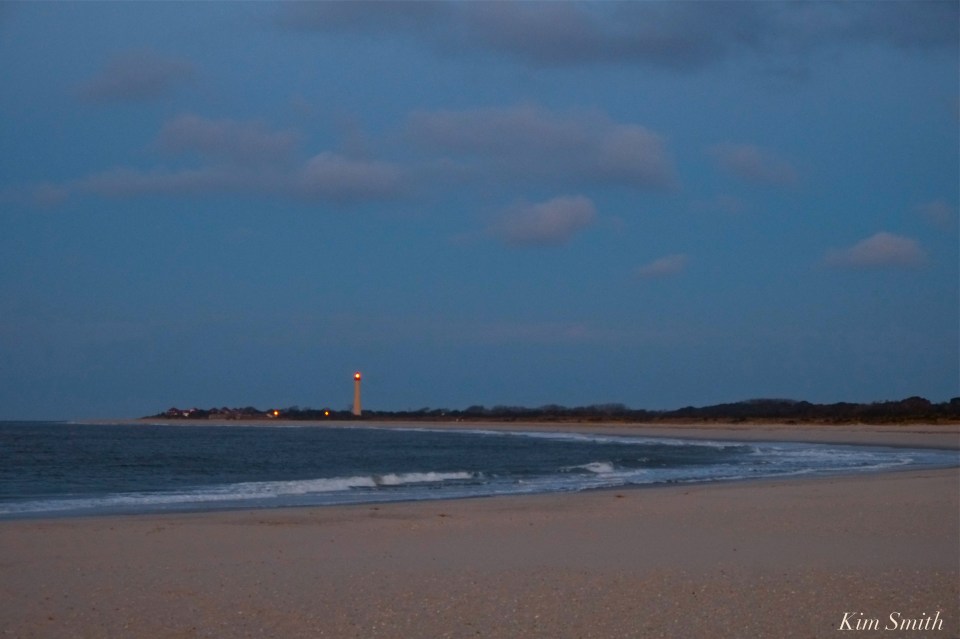
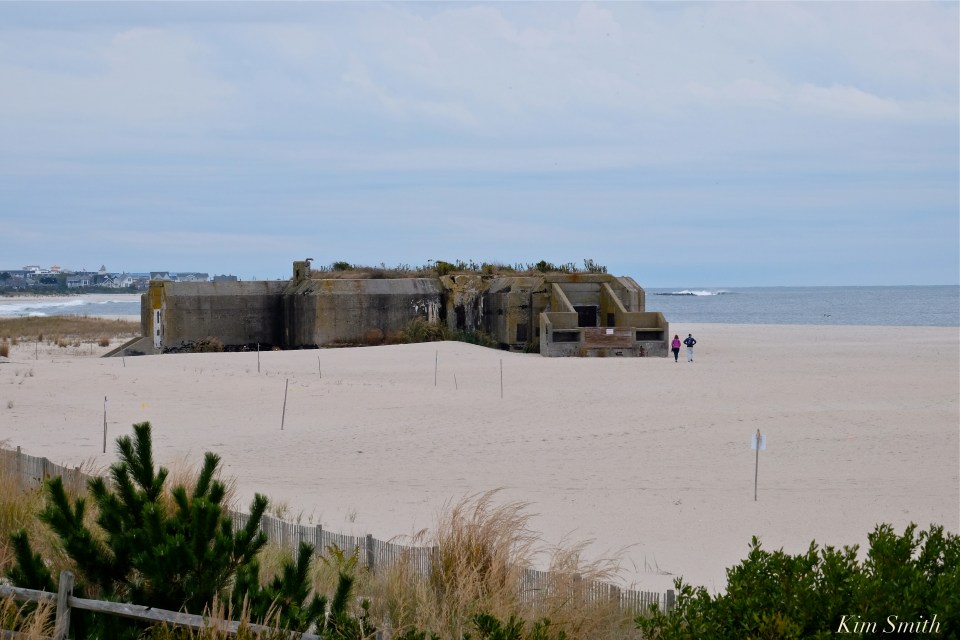
The following morning I had checked out by daybreak, filled with anticipation to return to Stone Harbor Point to see the Monarchs departing the trees at first light. First though I headed to the beach across from the hotel for a very quick glimpse. The wide sandy beach has a perfect view of the Cape May Lighthouse. You can walk along the beach and through the trails of the Cape May State Park for direct access to the Lighthouse.

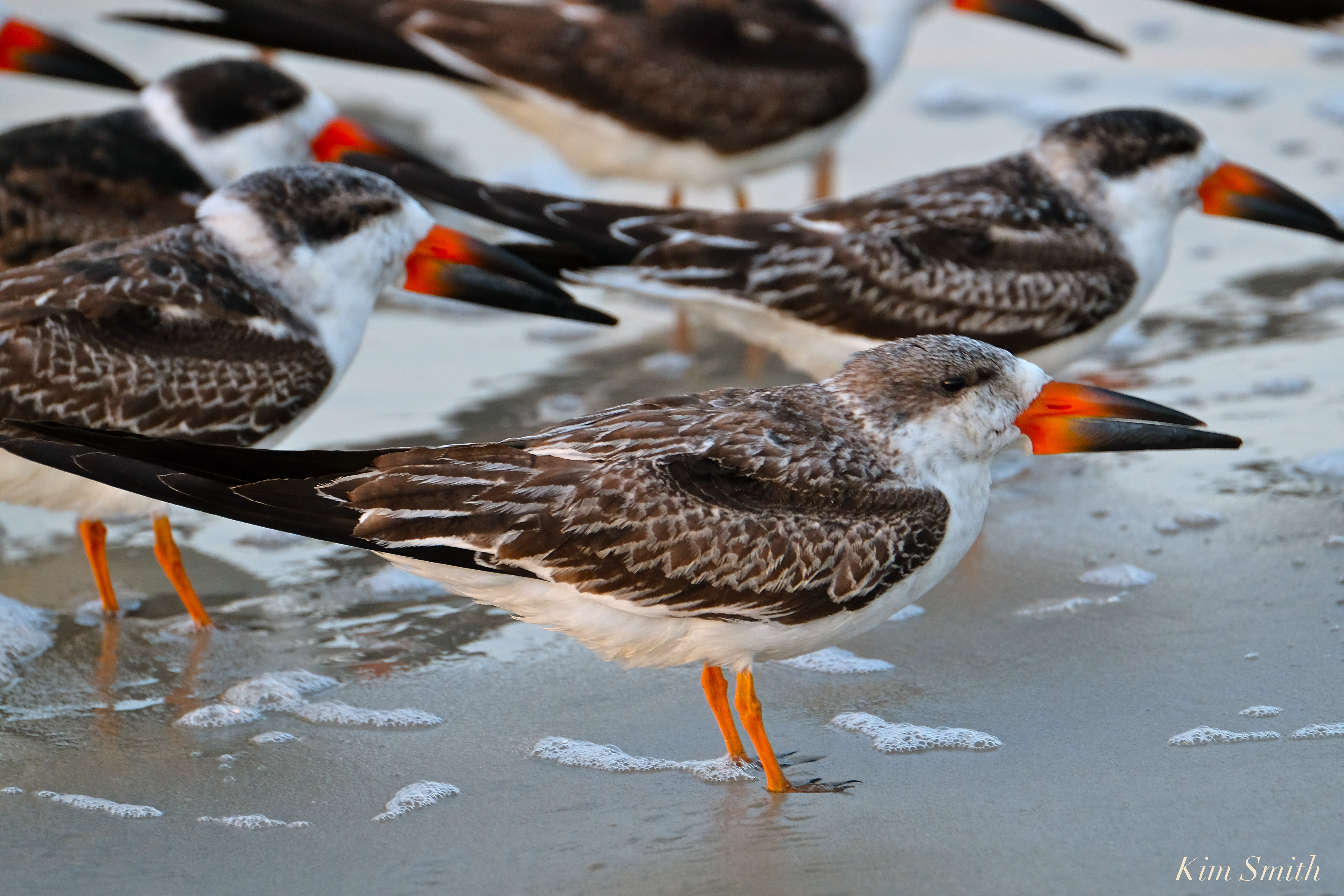
At the shoreline were poised to cross the Bay a great flock of Black Skimmers. Overnight the wind had picked up tremendously and the flock were aligned in perfect soldier-like order, all facing into the strong gusts. Oh how I wished I could have spent more time there exploring this area so rich in fabulous creatures and wildlife. Most definitely on my next visit!

Notice the amazing lower mandible of the Black Skimmer. While flying, the Skimmers use their bill to skim small fish along the surface of the water. The Skimmers pictured here are mostly young Black Skimmers in plumage mottled brown and white.
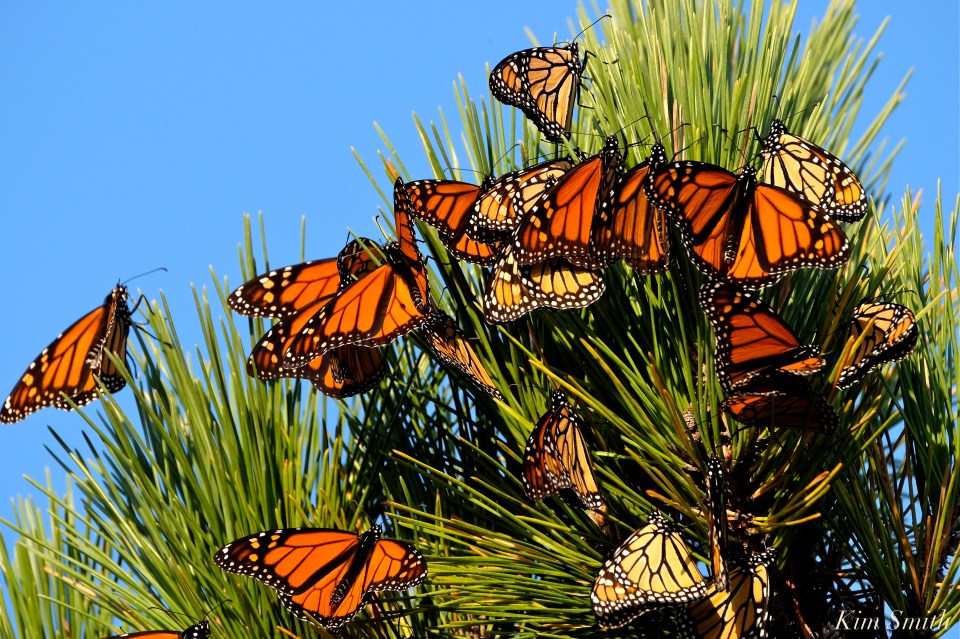
I arrived at Stone Point Harbor just as the butterflies were awakening. When butterflies roost in trees, they will often situate themselves so that the eastern light of the early morning sun rays warm their wings. They will also typically (but not always) choose overnight sleeping areas that are out of the way of the of the prevailing winds.

Because of the strong wind, instead of leaving the trees all at once, as I have often observed, the Monarchs would take off, have difficulty navigating the wind, and then return to the trees. These attempts lasted several hours as the Monarchs tried again and again to negotiate the harsh wind.

In the mean time, the Monarchs that weren’t as intuitive as the ones that were roosting in trees had roosted overnight on the dried out stalks of wildflowers. They were having an extremely tough time, clinging with all their might to the stalks or getting pulled down to the sand. This was challenging to observe as there was nothing that could be done to help the butterflies expending so much energy to stay grounded.

https://www.instagram.com/p/BawAbPmljVHAnGl29-fn5xh5kmFBKUEtsG6s6o0/

Monarchs Clinging to Dry Stalks of Seaside Goldenrod and Beach Grass in the Sand

Time was spent between the trees and the dunes. After several hours there were still a number of butterflies warming in the trees, barberry bushes, and wildflowers when I had to leave Stone Harbor Point to return to Cape May Point to investigate any migrating butterflies that may have been there.

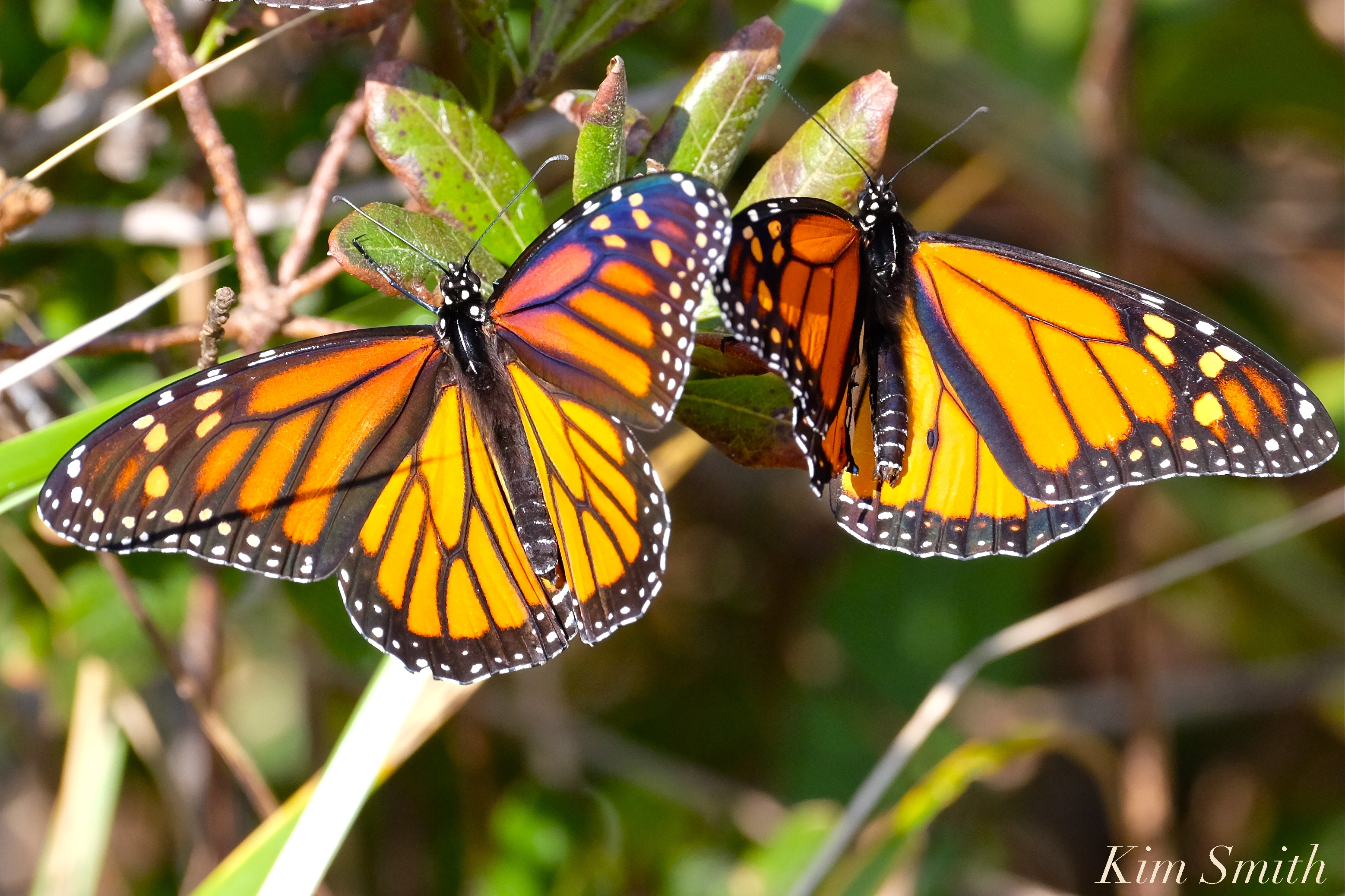
Female (left) and Male Monarch Butterfly warming their wings on a barberry bush.

None were roosting at the Cape May Lighthouse and few were on the wing.  With the wind blowing in precisely the opposite direction for safe travel across the Delaware Bay, the Monarchs were waiting yet another day to take the next leg of their journey. Looking towards a nine hour drive ahead of me, I couldn’t stay a moment longer. Except to grab a bowl of chowder at the Lobster House and have a quick glimpse in the daylight hours at the Fisherman’s Wharf at Cape May.

Sea Bass fishing season was open and fisherman Jim is cutting up squid for bass bait.

Monarchs began arriving in Angangueo several days ago. And in much greater numbers than have been seen in recent years. Barring any huge weather events, this late, great batch of migrants will make it too. Friends are reporting that there are Monarchs in their gardens still, and I have one of Patti Papows caterpillars in its chrysalis, yet to emerge.

Eggs, caterpillars, chrysalides, and butterflies that would have been killed by more seasonable colder temperatures are able to survive in the unusually warm weather we are experiencing on the East Coast. However, most of the wildflowers that provide fortification to the Monarchs on their southward journey have withered. You can help late stragglers by keeping nectar producing flowers in your garden going as long as possible. In our garden, it is the old passalong Korean Daisy that is providing nectar to bees and butterflies, and it will bloom until the first hard frost.

Friends of the Monarch Butterfly: If you would like to help towards the completion of the documentary filmBeauty on the Wing: Life Story of the Monarch Butterfly, please consider making a tax deductible donation here:

DONATE HERE

Donors contributing over $5,000. will be listed in the credits as a film producer.

For more information, visit the film’s website here: Monarch Butterfly Film

For an overview of the film’s budget, please go here: Budget

Thank you so very much for your help.

With gratitude,

Kim
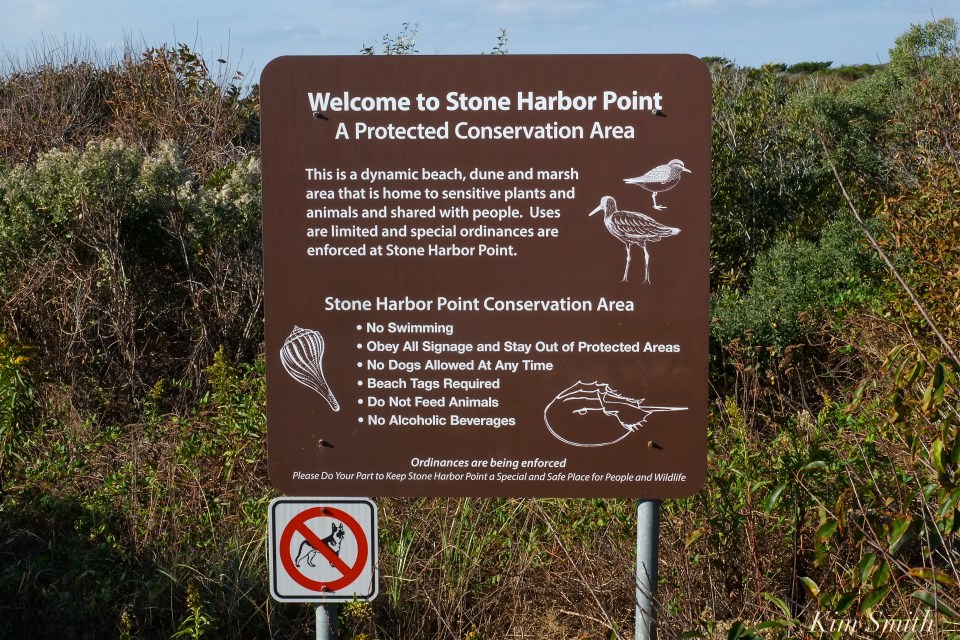
CHASING MONARCHS ~ WHIRLWIND TRIP TO STONE HARBOR AND CAPE MAY PART ONE

A SERIES OF EVENTS OF THE MOST FORTUNATE SORT!

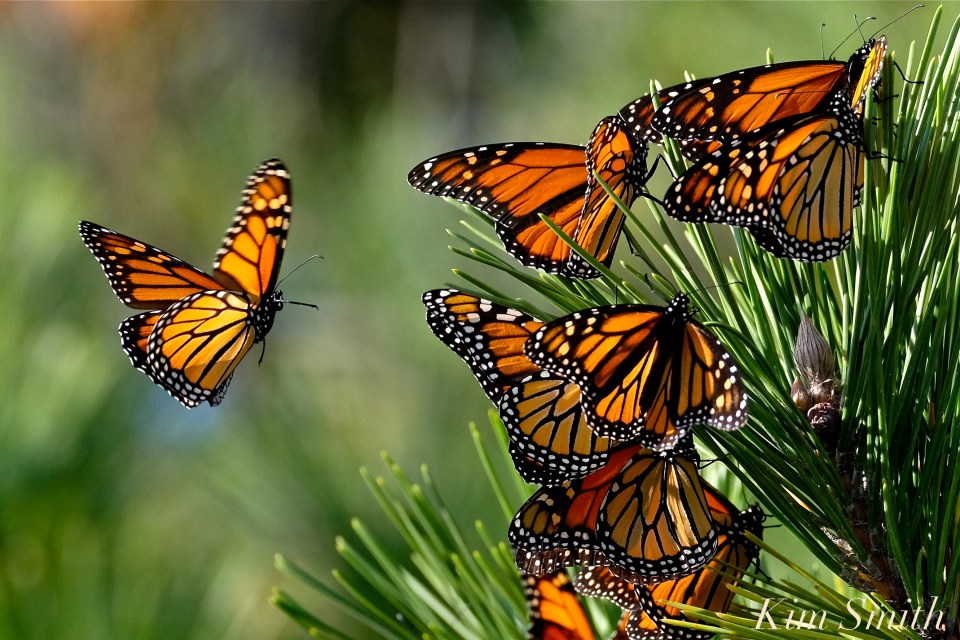
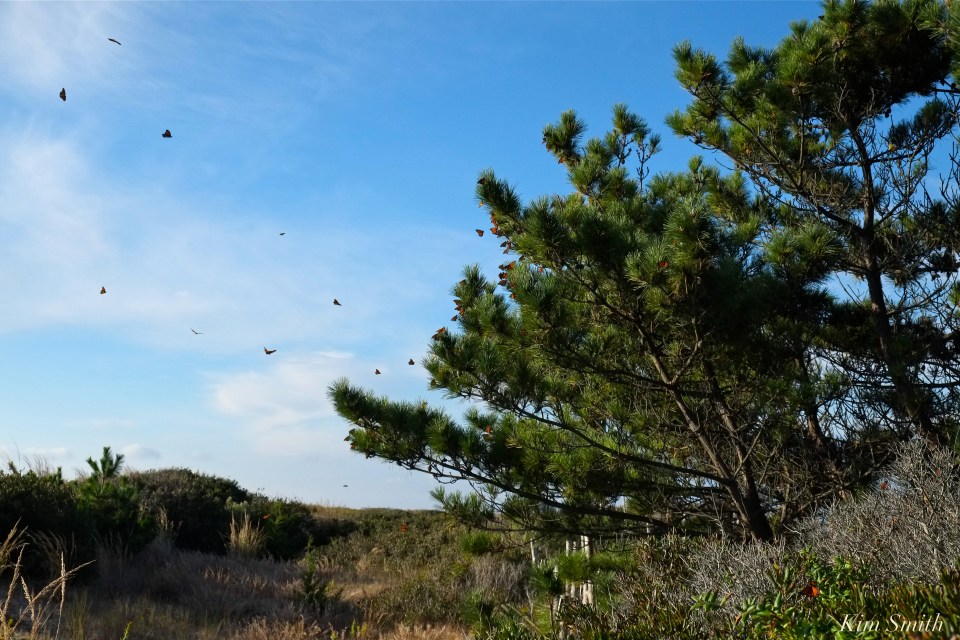
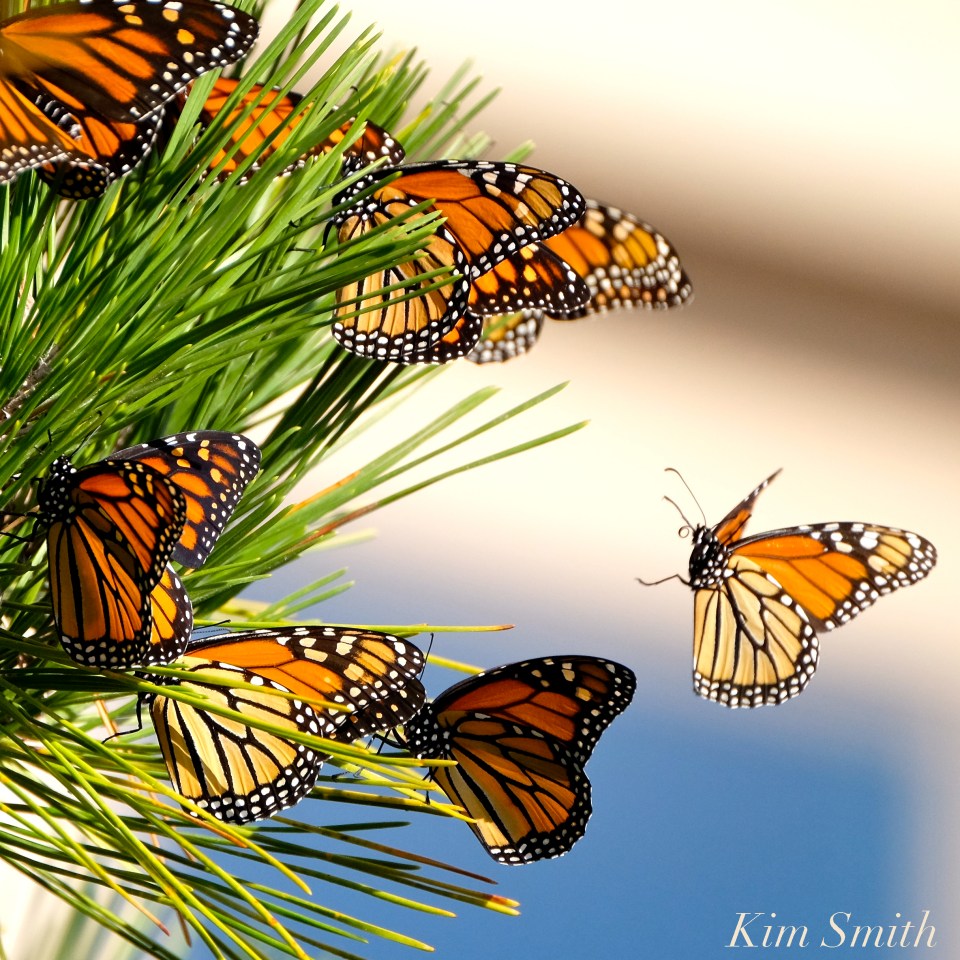
Monarchs flying into the trees to roost for the night.

As I wrote briefly last, this past week I traveled to Cape May and Stone Harbor. The coastline of New Jersey, as is Westport, Massachusetts, yet another region where the Monarchs are known to gather in large numbers on their southward migration. I was hoping to investigate and possibly capture some footage for my documentary film Beauty on the Wing: Life Story of the Monarch Butterfly. I was inspired to take the trip by sightings of Monarchs reported by my daughter Liv. Over the weekend she had seen quite a few on Coney Island, Brooklyn, as well as at Battery Park, located at the southern tip of Manhattan. Checking the weather report, I know that after a day or two of bad weather during the butterfly’s migration, the Monarchs are often seen in good numbers the following day. So Saturday and Sunday were great conditions for migrating Monarchs in NYC, Monday and Tuesday bad weather was predicted–in all likelihood no Monarchs on the wing–so perhaps, I thought by Wednesday the Atlantic coast Monarchs would possibly be moving through New Jersey.

After the long drive Wednesday I arrived at Cape May at 3:00, with little time to spare. The skies had become overcast and the afternoon was turning chilly. Very fortunately, I arrived just in the nick of time to film a batch passing by the Cape May Lighthouse, located at Cape May Point. If I got nothing else, those first few minutes of the visit would have been well worth the time spent driving!

I next headed over to Saint Peter’s by-the-Sea, a tiny charming church tucked on a side street where the Monarchs are sometimes seen, roosting in the trees on the grounds of the church. Only a few could be located. Very fortunately, a man pulled up and got out of his car near to where I was walking. He was obviously a birder, dressed in camouflage, a sun hat, sensible shoes, and toting binoculars around his neck. “Hello, sir, have you seen any Monarchs today?” I inquired. “No, he replied, yesterday yes, but none today.” A few minutes later he was joined by a whole slew of birders and, with unbelievably good luck, a few moments after that, one birder came running up, excitedly showing me a photo on her phone, exclaiming that numerous numbers were spotted further north, at Stone Harbor Point. “Find the parking lot, hit the dunes, locate the dirt road, and there you will find them, at the end of the road,” she said. Oh my, I said to myself, I’ll be looking for yet another needle in a haystack, this time in completely foreign territory, and, more driving. Happily, Google maps got me there in half an hour but by now it was getting very close to sunset.

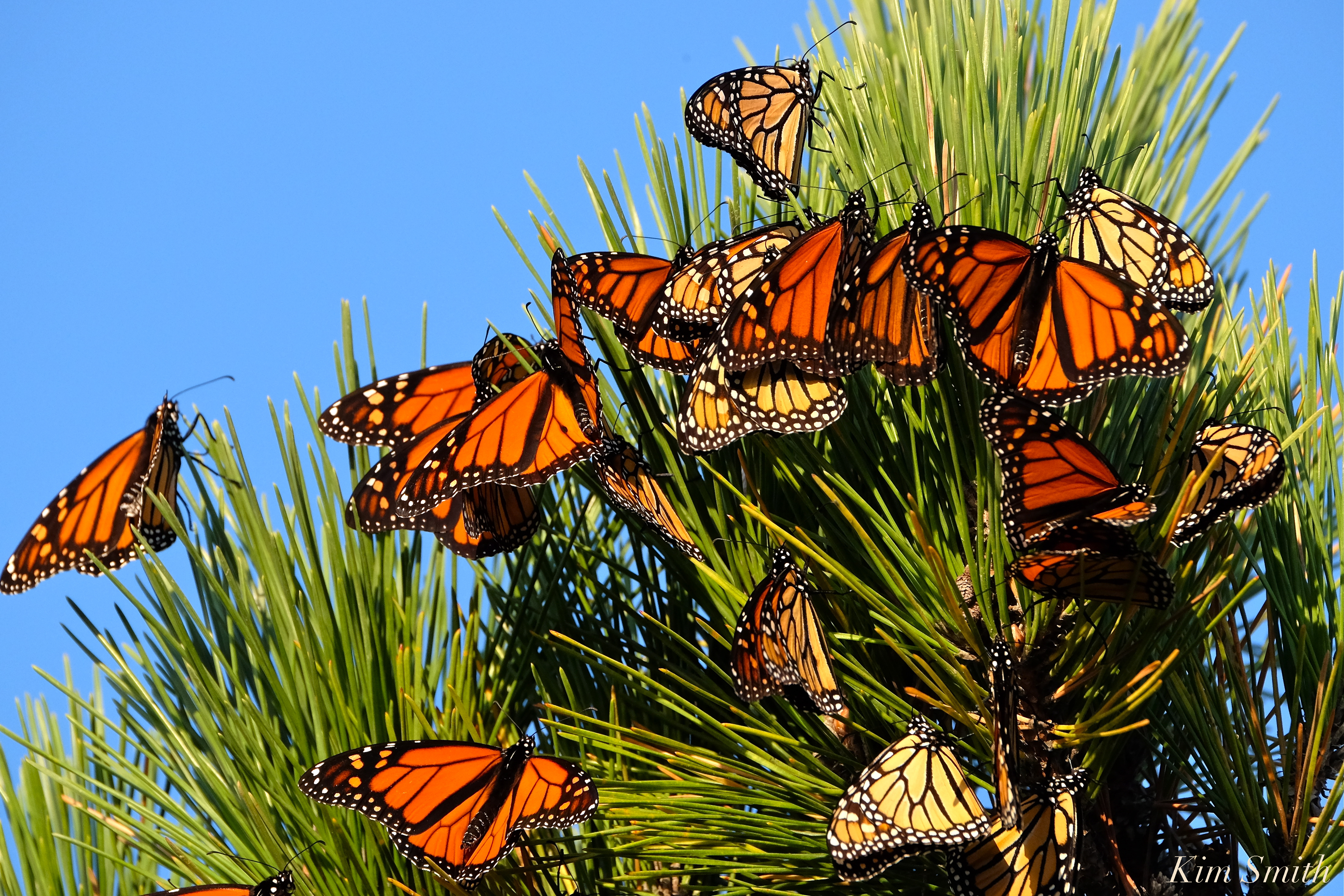
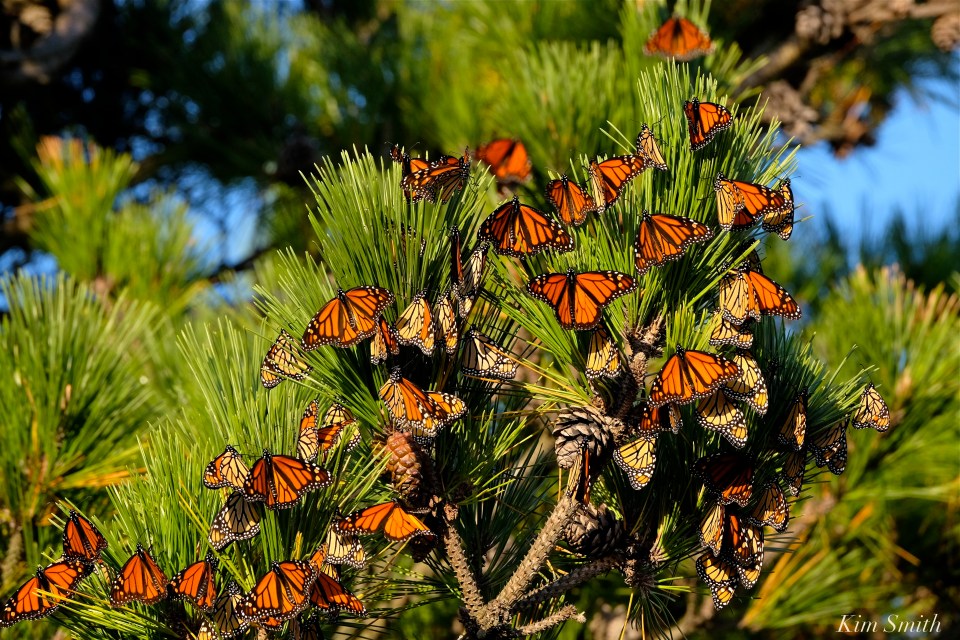
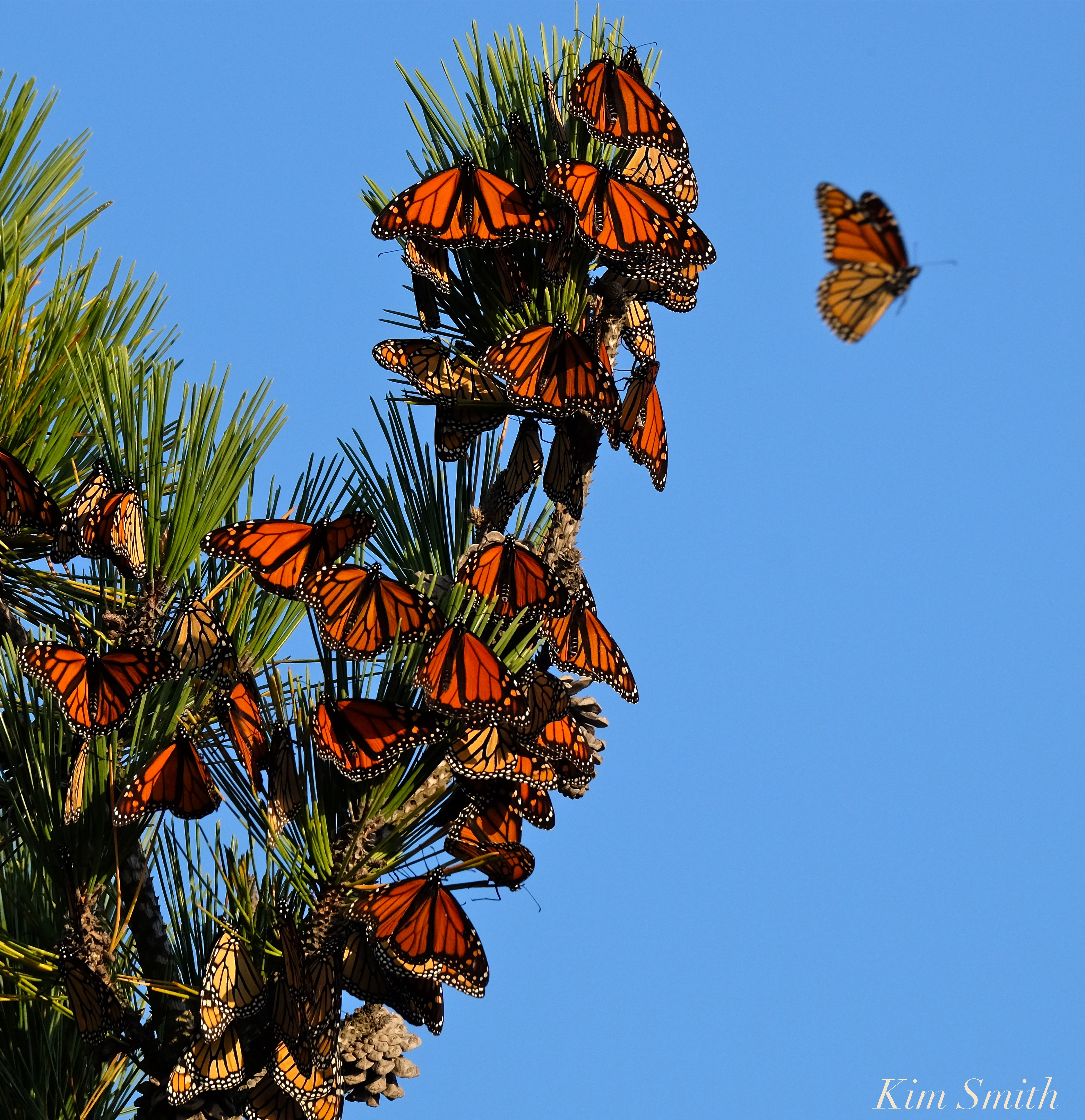
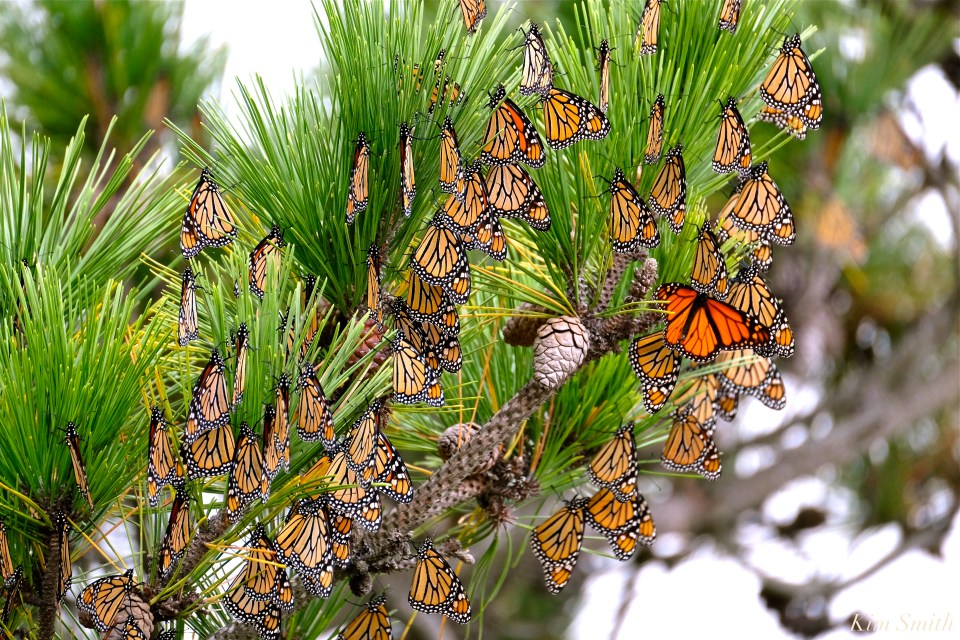
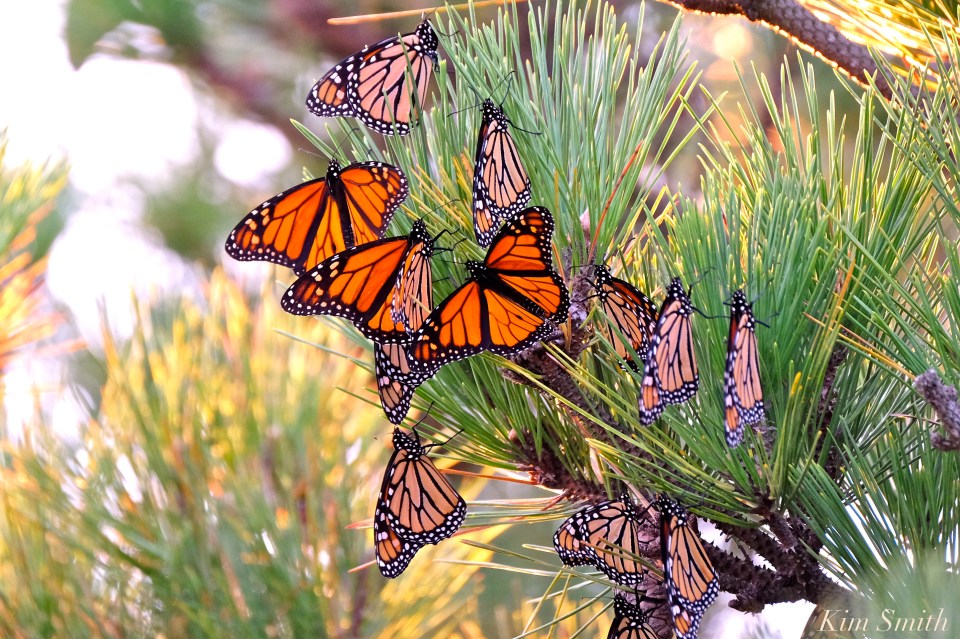
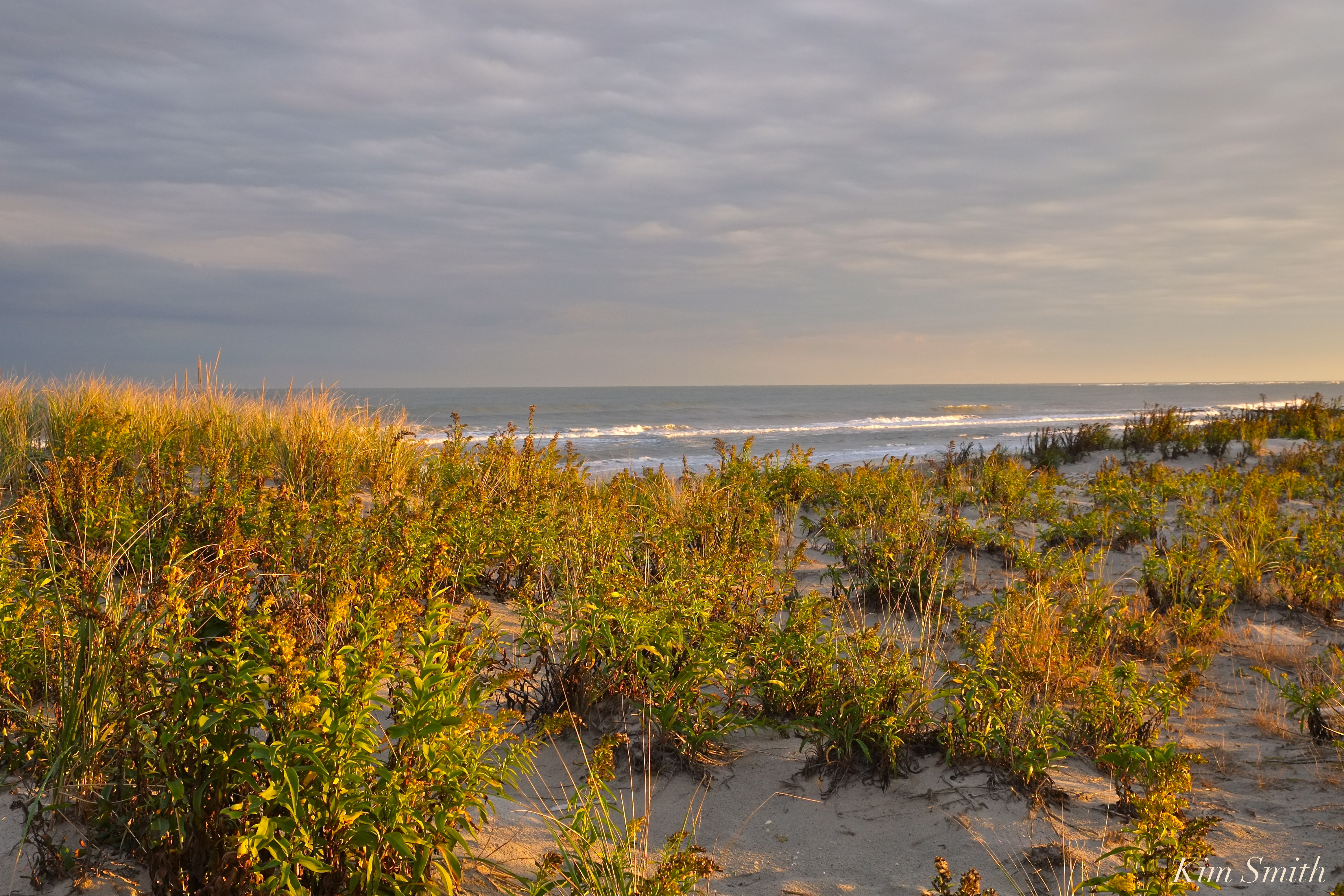
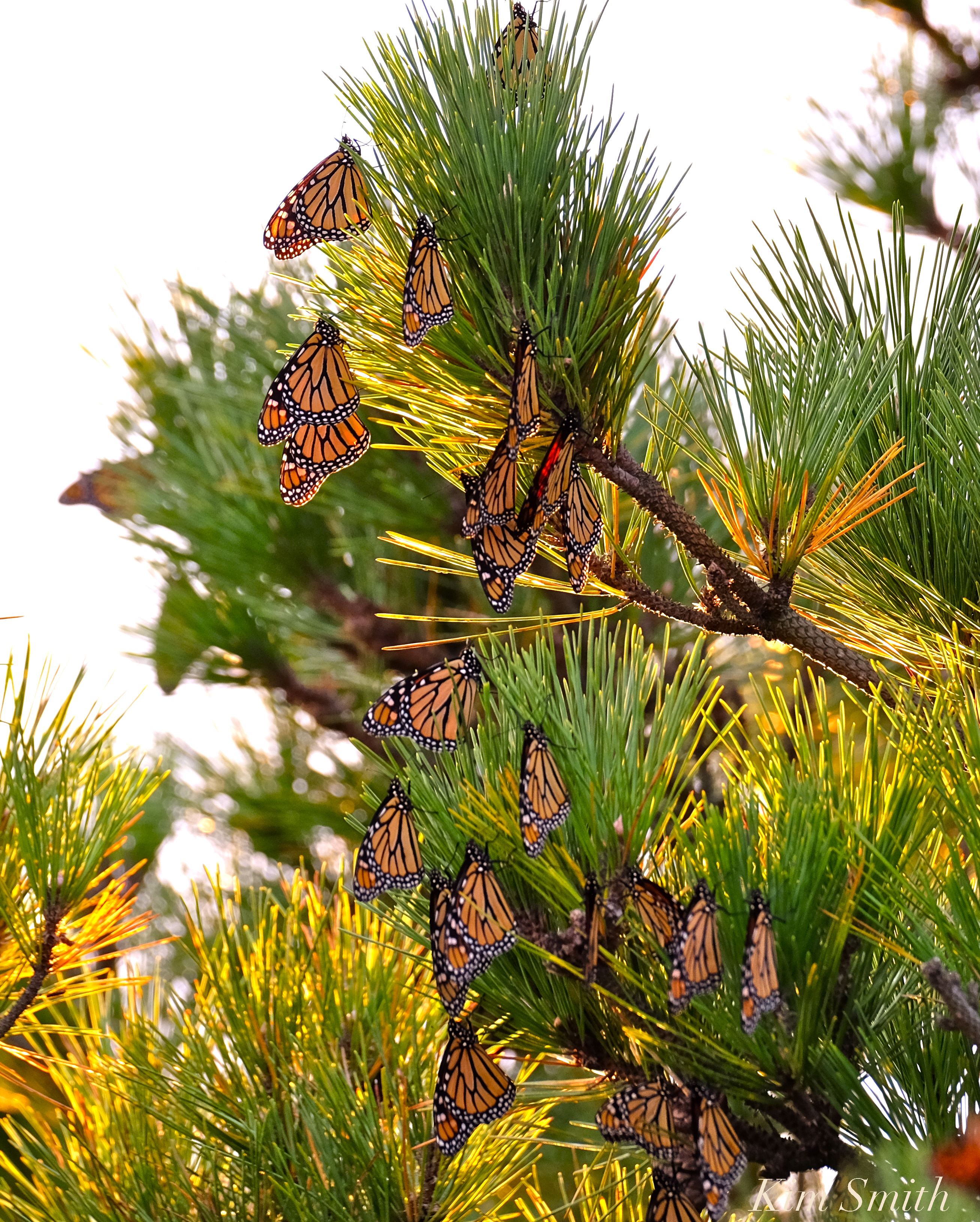
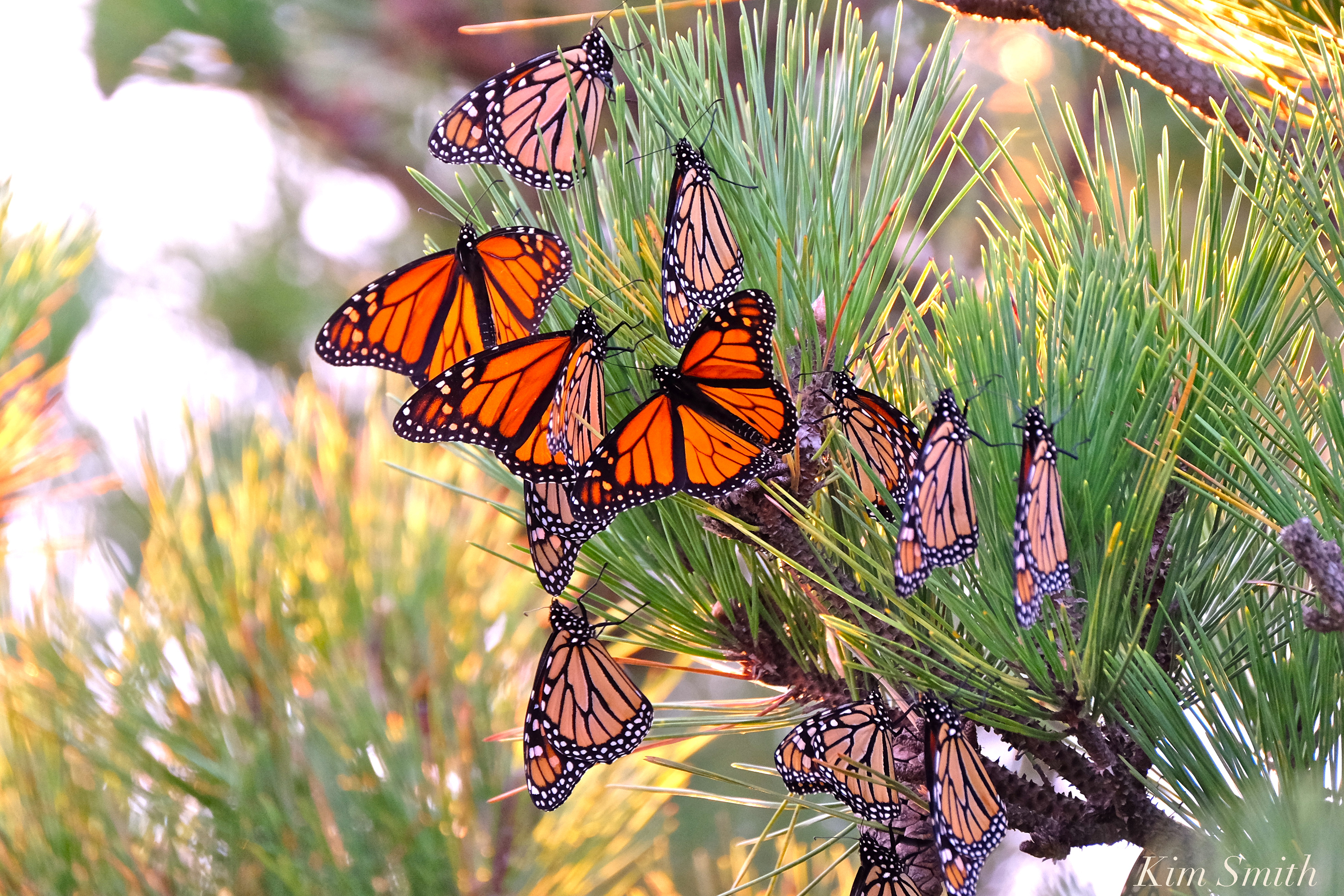
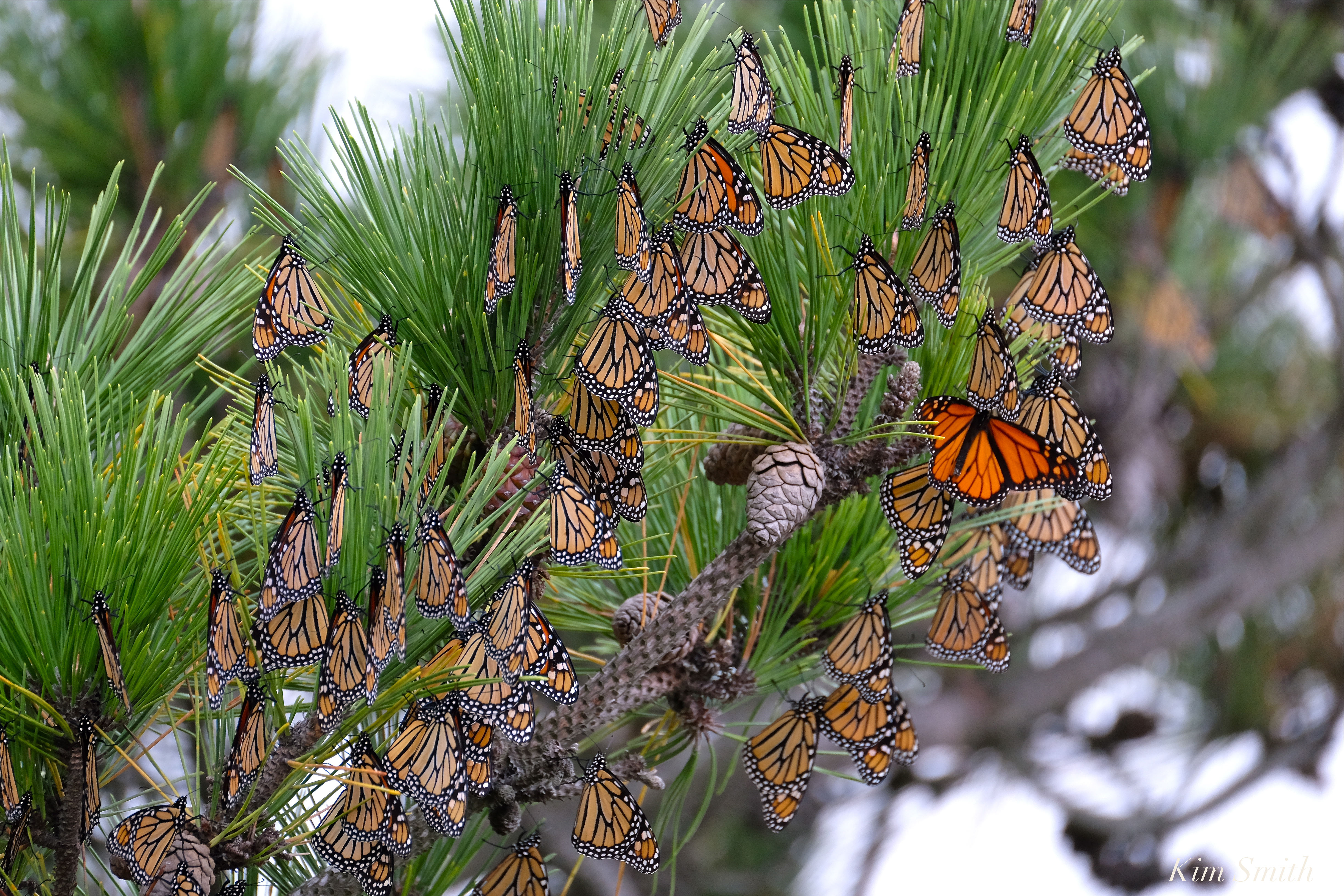
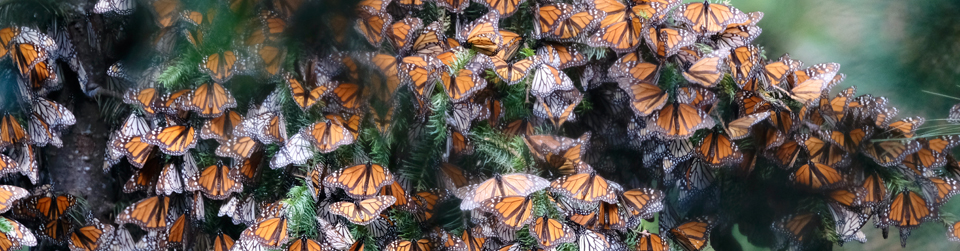
Miraculously, I found the butterflies! Ten thousand, at least. They were swirling around the dunes searching for tree limbs and shrubs on which to take shelter for the night. One tree in particular, an old Japanese Black Pine that was tucked at the base of the dunes, and out of the wind, was hosting thousands. Watching the movement of masses of Monarchs flying for me never ceases to be a magical experience and I filmed the butterflies well into the lingering twilight. The afternoon had been cloudy gray and overcast, except for the last twenty minutes of the day, when the sun lit up the dunes and butterflies in tones of yellow and gold. I wondered as I was filming if these were the very same Monarchs that I had seen in a large roost at Eastern Point in Gloucester ten days earlier, or that Liv had seen in New York several days earlier.

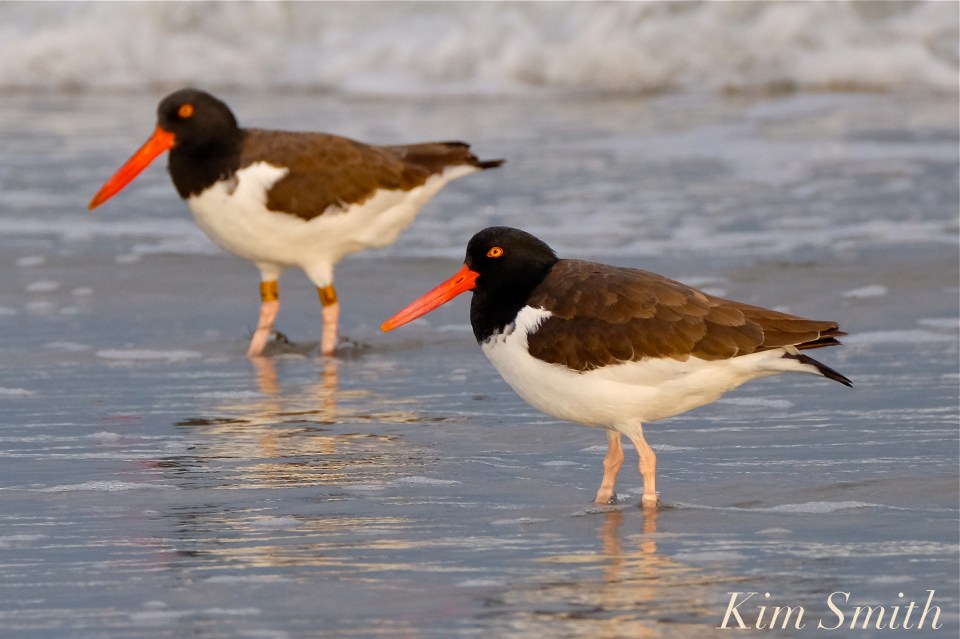
Located on the adjacent beach was a noisily chattering flock of American Oystercatchers, and I shot some photos and footage of these fascinating shorebirds as well, because migrating birds are an integral part of Beauty on the Wing. American Oystercatchers breed along the Jersey shore and the south coast is at the northern end of their winter range.

Yak, yak, yak!

As I was completely unfamiliar with the area, I had planned to be tucked into my cozy hotel room on the beach by sundown, under the covers with a warm dinner, recharging camera batteries and myself. But now it was pitch black, I hadn’t yet checked in, had missed lunch and was super starving, but worse, was out of gas and didn’t know where to find a gas station that was open this late in the season.

Part Two tomorrow.

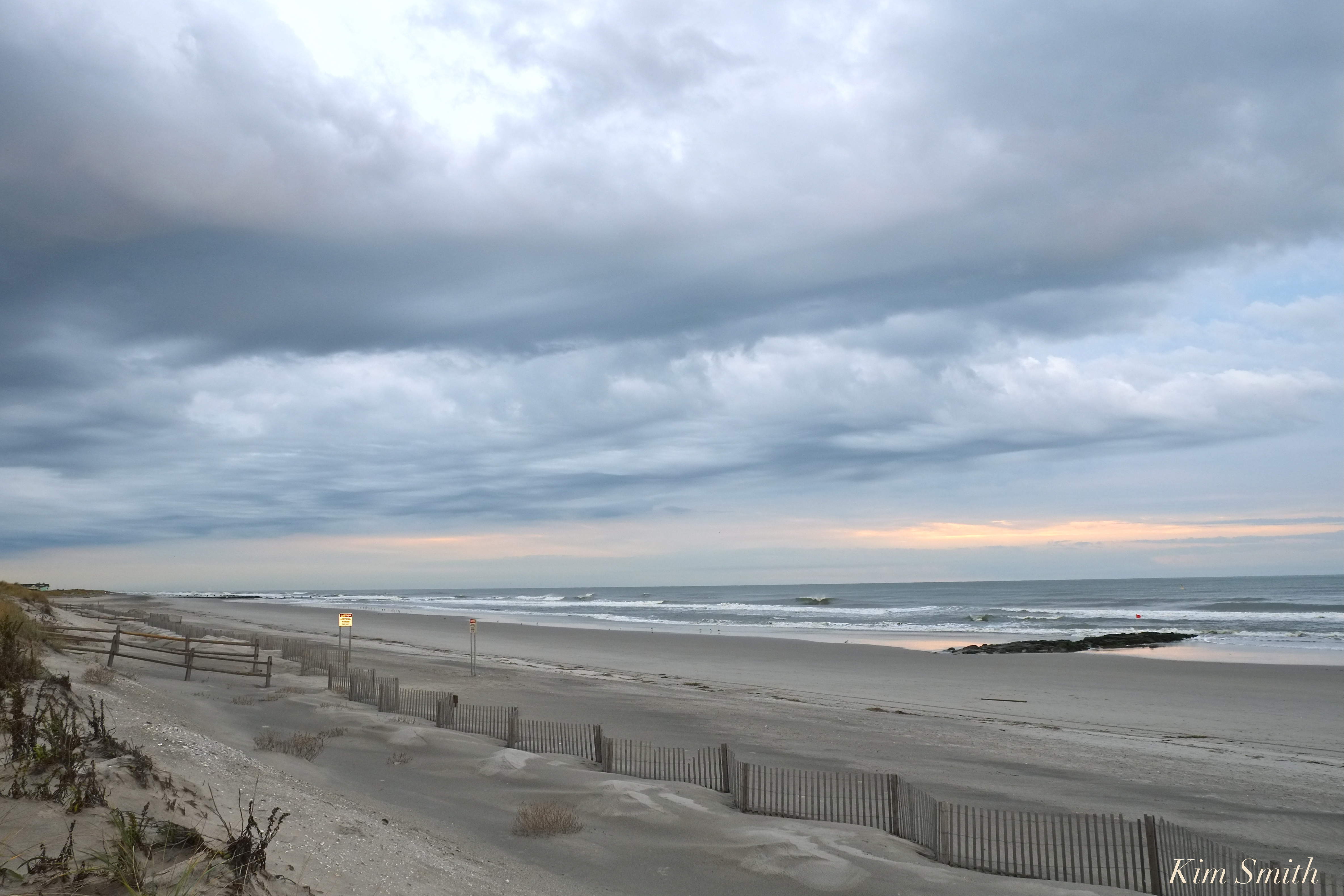
Stone Harbor Point

The dunes are covered in Seaside Goldenrod

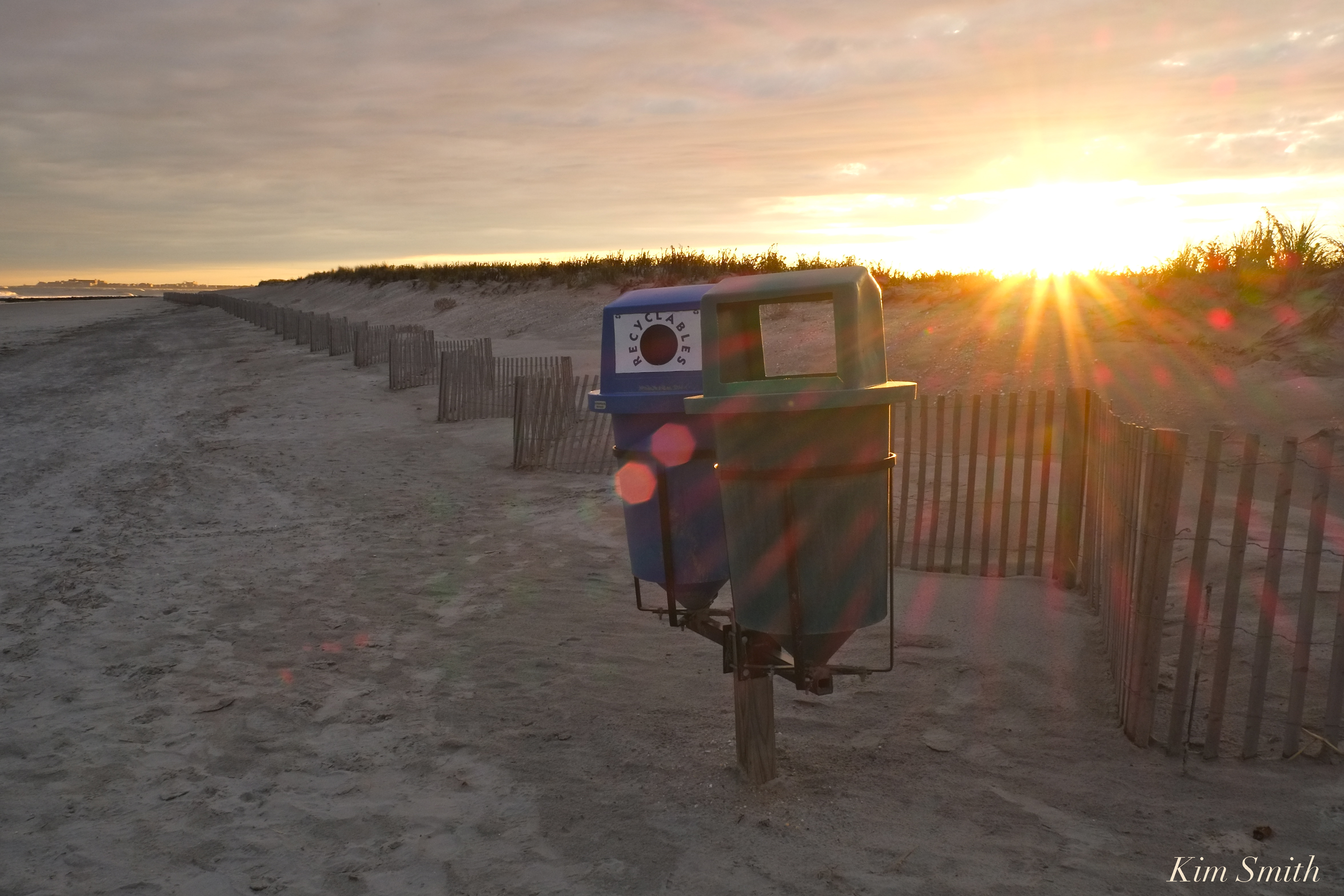
Recycling and trash barrels 

American Oystercatcher Range Map

Friends of the Monarch Butterfly: If you would like to help towards the completion of the documentary filmBeauty on the Wing: Life Story of the Monarch Butterfly, please consider making a tax deductible donation here:

DONATE HERE

Donors contributing over $5,000. will be listed in the credits as a film producer.

For more information, visit the film’s website here: Monarch Butterfly Film

For an overview of the film’s budget, please go here: Budget

Thank you so very much for your help.

With gratitude,

Kim

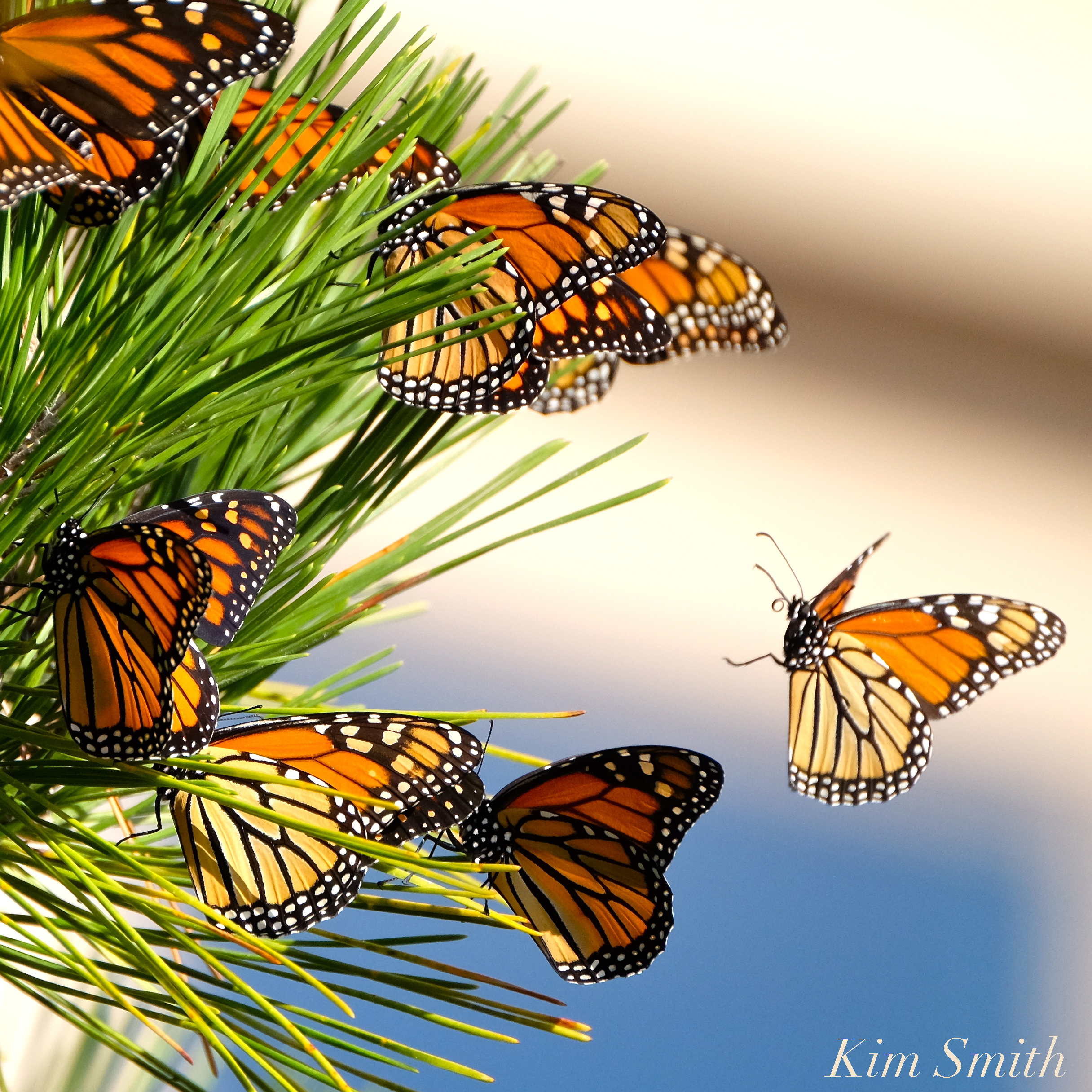
Some limbs of the Japanese Black Pine were covered in Monarchs and some limbs the butterflies were more sparsely spaced.

Ofrenda de Muertos Gloucester

Whether on the wings of a butterfly or the seat of a ferris wheel, the souls of loved ones return to earth to be remembered by their families and friends.

In late October millions of Monarchs begin to arrive to the magnificent oyamel fir and pine tree forests of the Trans-Mexican Volcanic Belt, located in the heart of Mexico in the eastern regions of Michoacán. Their return coincides with the annual celebration of Día de los Muertos, the Day of the Dead fiesta. Native peoples and their descendants today believe butterflies are the souls of departed loved ones, returning to Earth to be remembered by their ancestors. An even older tradition connects the Monarchs with the corn harvest, as their return signified that the corn was ripe. In the language of the native Purpécha Indians, the name for the Monarch is “harvester.”

Ofrenda de Muertos Gloucester

MONARCH BUTTERFLY FILM SCREENING OFFER!

ANNOUNCING A SPECIAL FILM SCREENING OFFER!

Donors contributing $20.00 or more will be invited to a very special screening preview party of the documentary Beauty on the Wing: Life Story of the Monarch Butterfly.

Consider the cost of a movie ticket, beverage, and popcorn is $20.00. By contributing to the film’s online fundraising campaign, you will help bring it to theaters and classrooms. Contributors will be invited to the film’s preview screening party and be amongst the first to see this stunning film!

One of the many ways that you will find Beauty on the Wing to be unique is that it was filmed entirely on location, outdoors, and in nature. There are absolutely no computer generated graphics. The life cycle scenes were filmed on Cape Ann, in meadows, dunes, and gardens (not laboratories). Flight scenes are not simulated, but filmed on location, predominantly on Cape Ann, some in Angangueo, and also Santa Barbara, Westport, Cape May, and Stone Harbor Point.

Mostly though, through story telling and cinematography, the film shines a beautiful light on the Monarch migration as it unfolds on the shores of Cape Ann, portraying our community and the natural world of Cape Ann as we would hope to be revealed to the world at large.


Friends of the Monarch Butterfly: If you would like to help towards the completion of the documentary film Beauty on the Wing: Life Story of the Monarch Butterfly, please consider making a tax deductible donation here:

DONATE HERE

Donors contributing over $5,000. will be listed in the credits as a film producer.

For more information, visit the film’s website here: Monarch Butterfly Film

For an overview of the film’s budget, please go here: Budget

Thank you so very much for your help.

With gratitude,

Kim
Many folks assume when viewing the trailer that the scene of the single Monarch floating towards the Eastern Point Lighthouse was computer generated. It was not. The scene is the result of the filmmaker standing on the Lighthouse lawn, waiting for just the perfect fleeting moment. Every aspect of the film is genuine and true to the nature of Cape Ann, and to all the locations where filmed. Another example is the film’s ambient soundtrack–of songbirds, crickets, foghorns, train whistles, boat engines, roosters crowing, et. al.,– every sound was captured live on location.

   *    *    *

Monarchs in New Jersey and a migration update will be posted later today.! The above photos shows a roost of Monarchs at Stone Harbor Point in the golden light of late day.

Hello From Cape May and Stone Harbor!

Whirlwind trip to Cape May to check on the late, great Monarch migration of 2017. Leaving at 5am, from Gloucester, it is an eight to nine hour drive. I spent the afternoon and evening there and then left the following day at noon. Although brief, I found all that I was looking for and much, much more. There are vast areas of wildlife habitat along the southern New Jersey coastline and so many beautiful connections between Cape Ann and Cape May; I would love to return again soon!

The Monarchs are in trouble. I am hoping with all my heart that the tens of thousands that are currently held back by winds blowing from the wrong direction, along with intermittent inclement weather, will be able to cross the Delaware Bay as soon as possible. Will write much more this weekend after catching up with work and after I am able to sort through photos.

https://www.instagram.com/p/BauEf2TFL5WBYG7-fazJODwkpfv1WKkZHQYV0k0/

Cape May Lighthouse

Where Do All the Monarchs Go?

After departing the shores of Cape Ann in autumn, where is the Monarch’s next destination on their several thousand mile journey to Mexico?  Cape Ann Monarchs join the stream of Monarchs that are migrating southward along the Atlantic Coast. They hug the coastline, crossing bays and ponds, and pausing at beaches to nectar and rest when caught in a headwind or during a storm. When weather and habitat variables combine to create a favorable year for the Monarchs, there may be tens of thousands, perhaps hundreds of thousands, of butterflies traveling along the Atlantic Coast beaches.

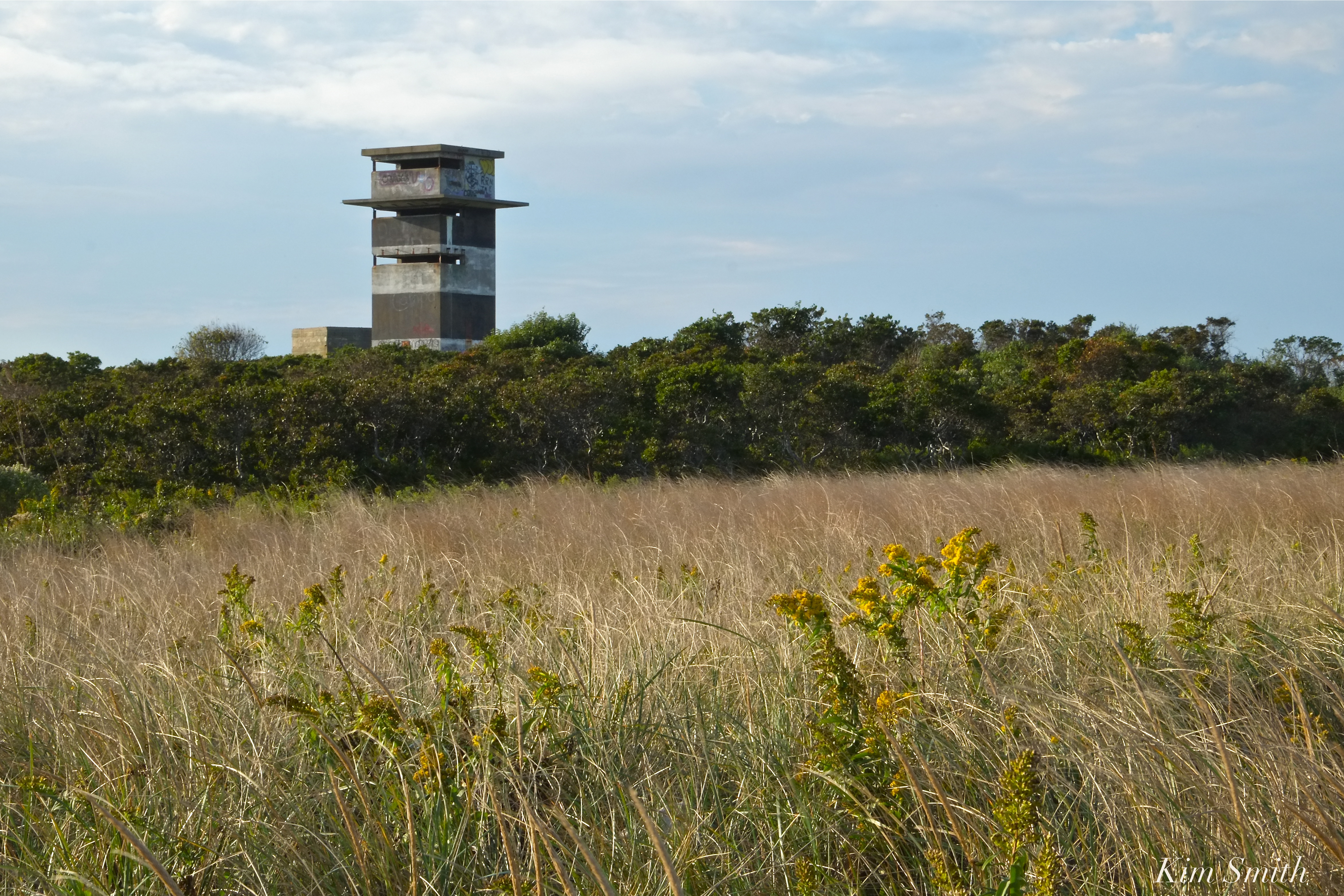
The Gooseberry Island old lookout tower is surrounded by a sea of Seaside Goldenrod.

The next major stopover is Westport in Massachusetts, at Gooseberry Island and Allen’s Pond Wildlife Sancturary. Here they find dunes and fields of nectar-rich wildflowers such as Frost Asters, Purple-stemmed Asters, Seaside Goldenrod, Knapweed, Red Clover, and more.

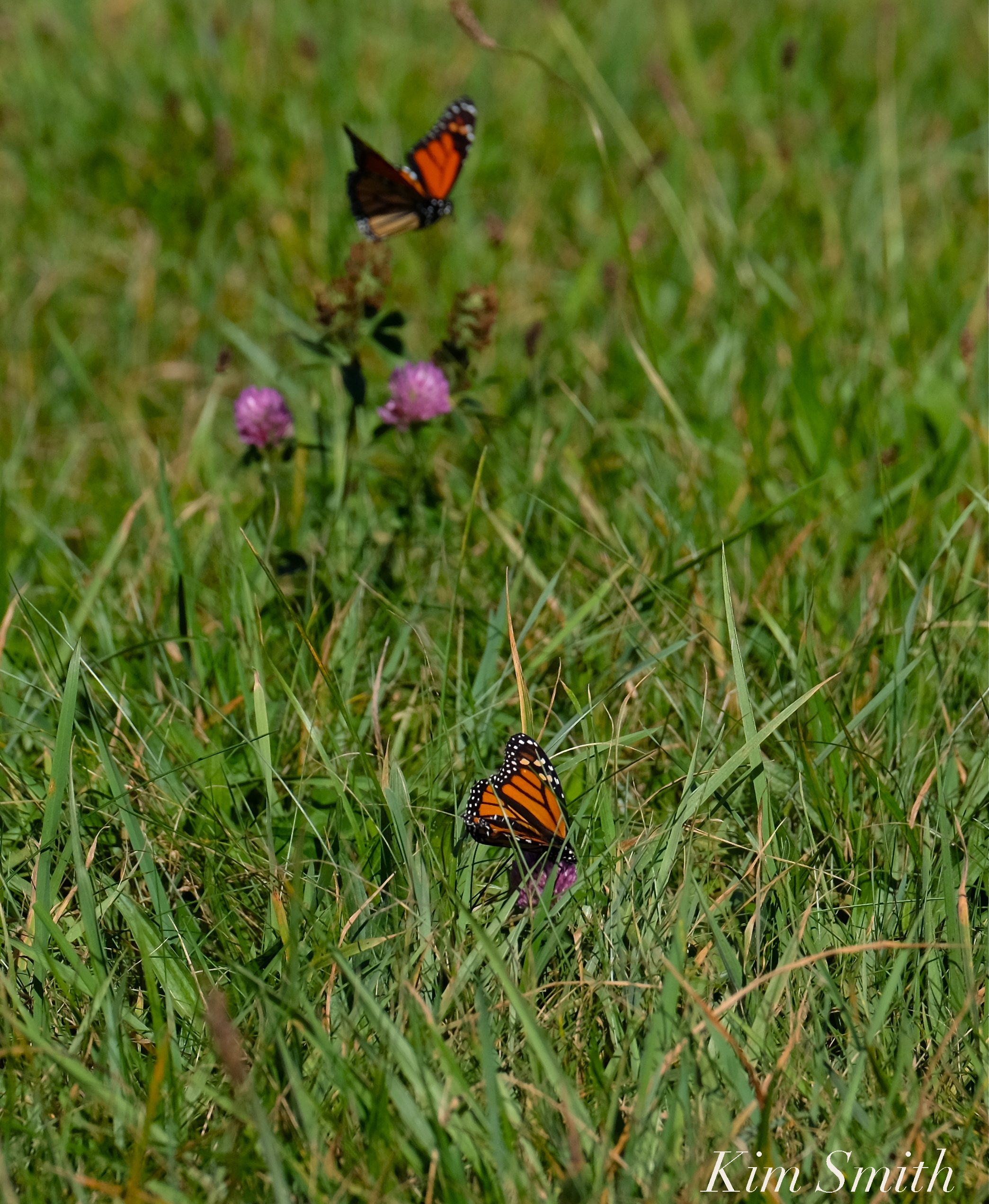
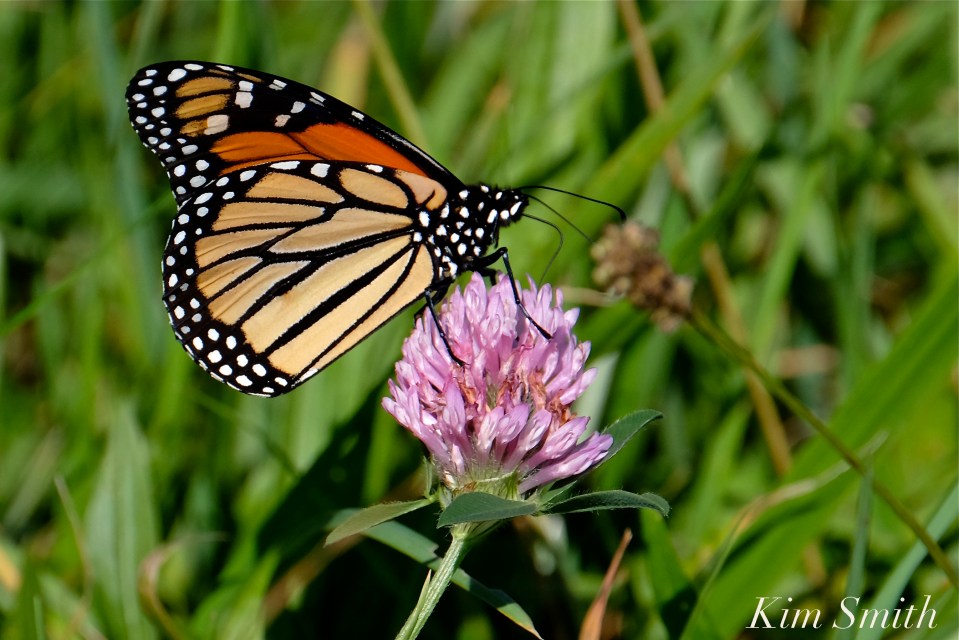
Monarchs drinking nectar from Red Clover at Allen’s Pond Middle Meadow.

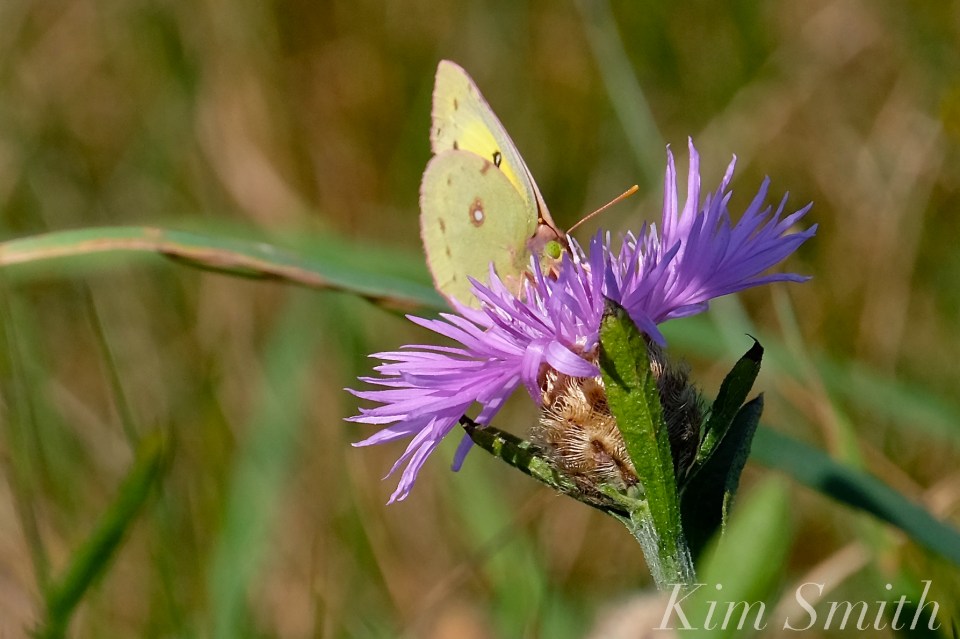
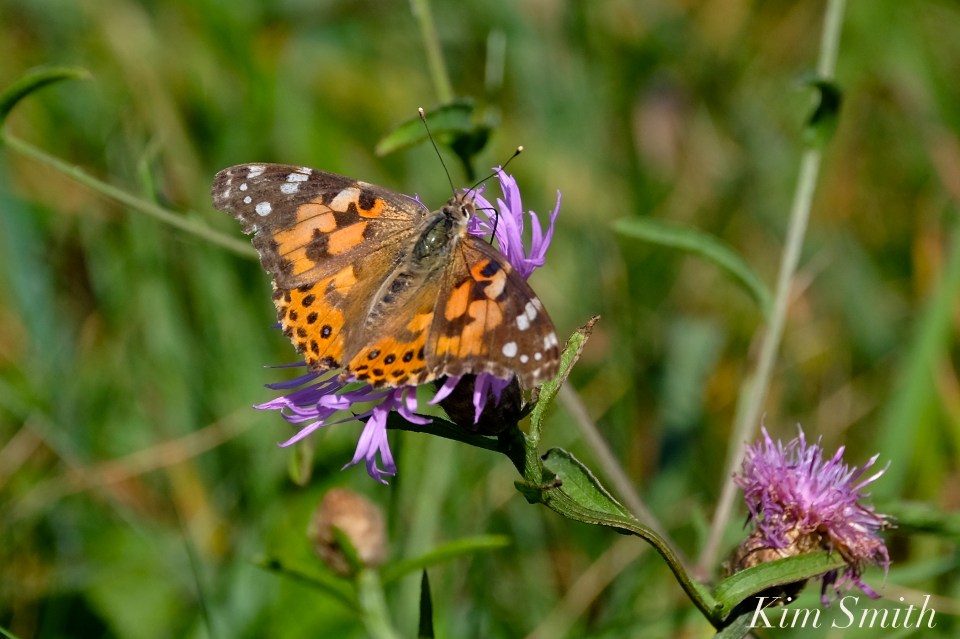
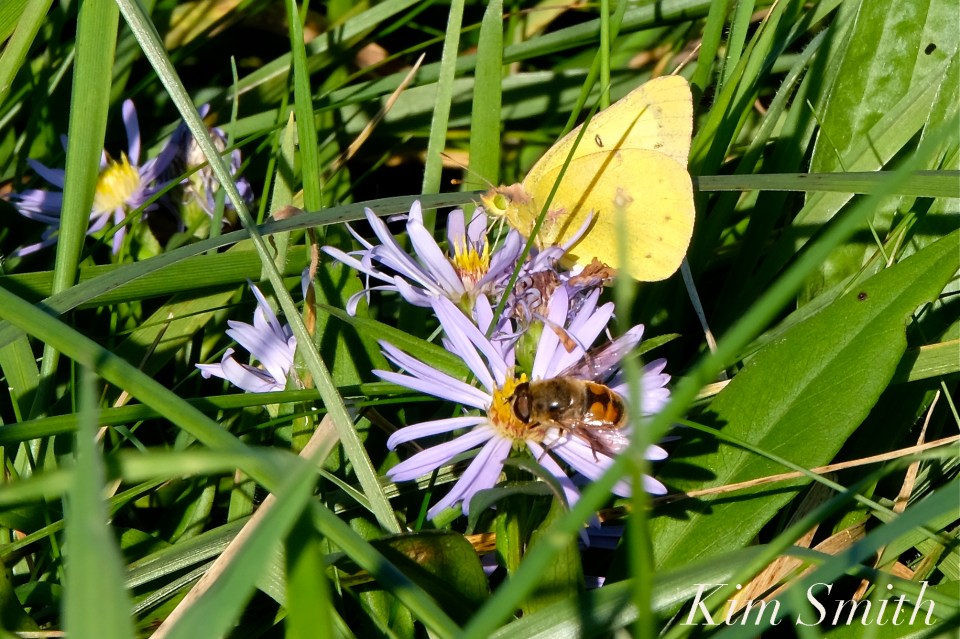
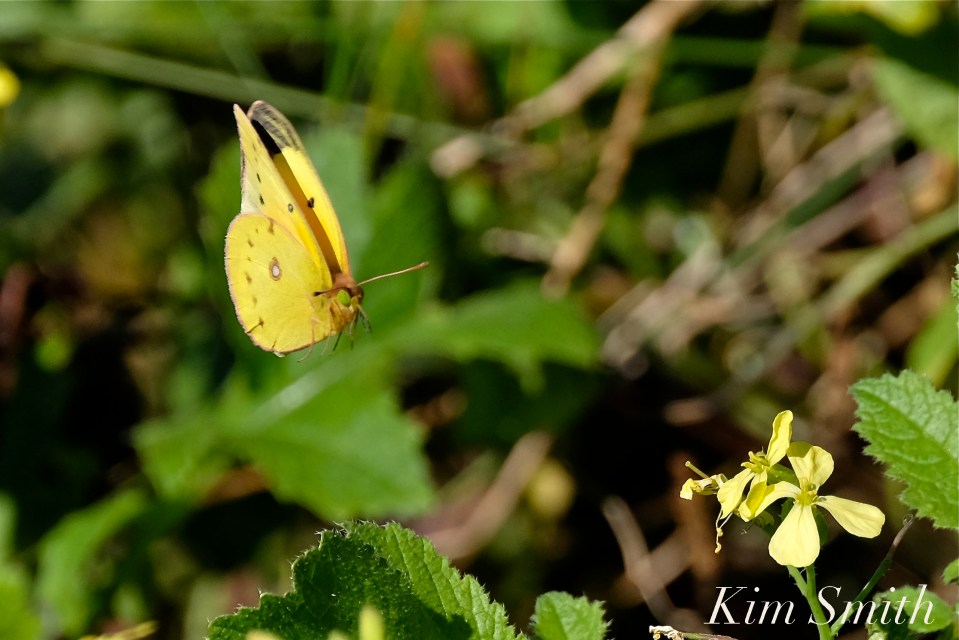
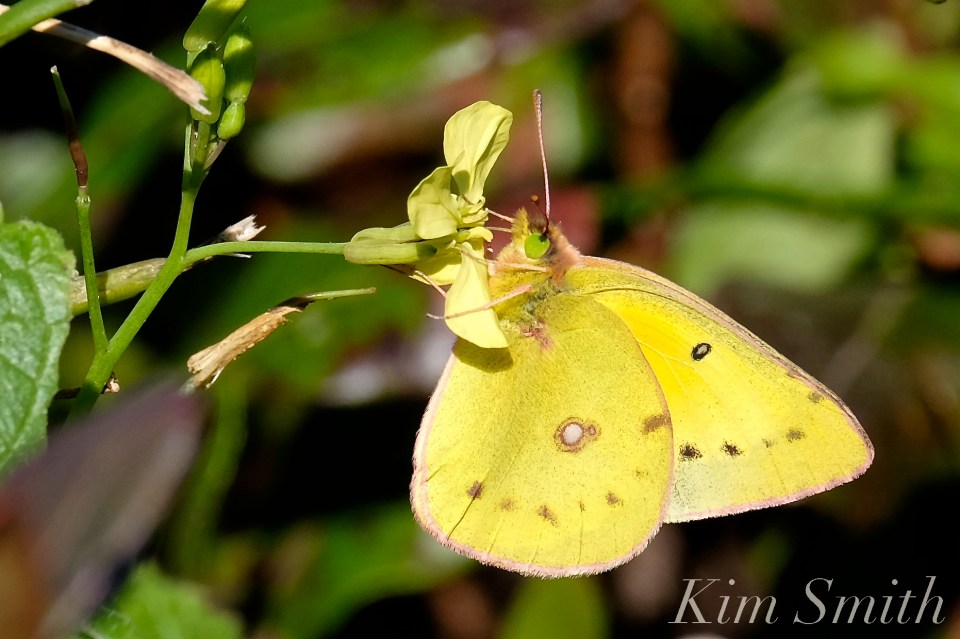
The sanctuary at Allen’s Pond is host to many species of butterflies during the Monarch’s fall migration, including Clouded Sulphurs, Orange Sulphurs, and Painted Ladies.  They, too, drink nectar from the Knapweed, Red Clover, asters, goldenrod, and Black Mustard in the sanctuary fields.

The Atlantic Monarchs next head to New York, traveling along the coast of Long Island, from the eastern tip of Montauk, southwest to Fire Island, and continuing to Coney Island. On the day of October 9th, because of a storm passing through, a batch of migrating Monarchs was “stuck” on Plumb Island in Brooklyn.  After the storm passed the following morning, tens of thousand of Monarchs were observed flying over the dunes and along the beach, resuming their journey south.

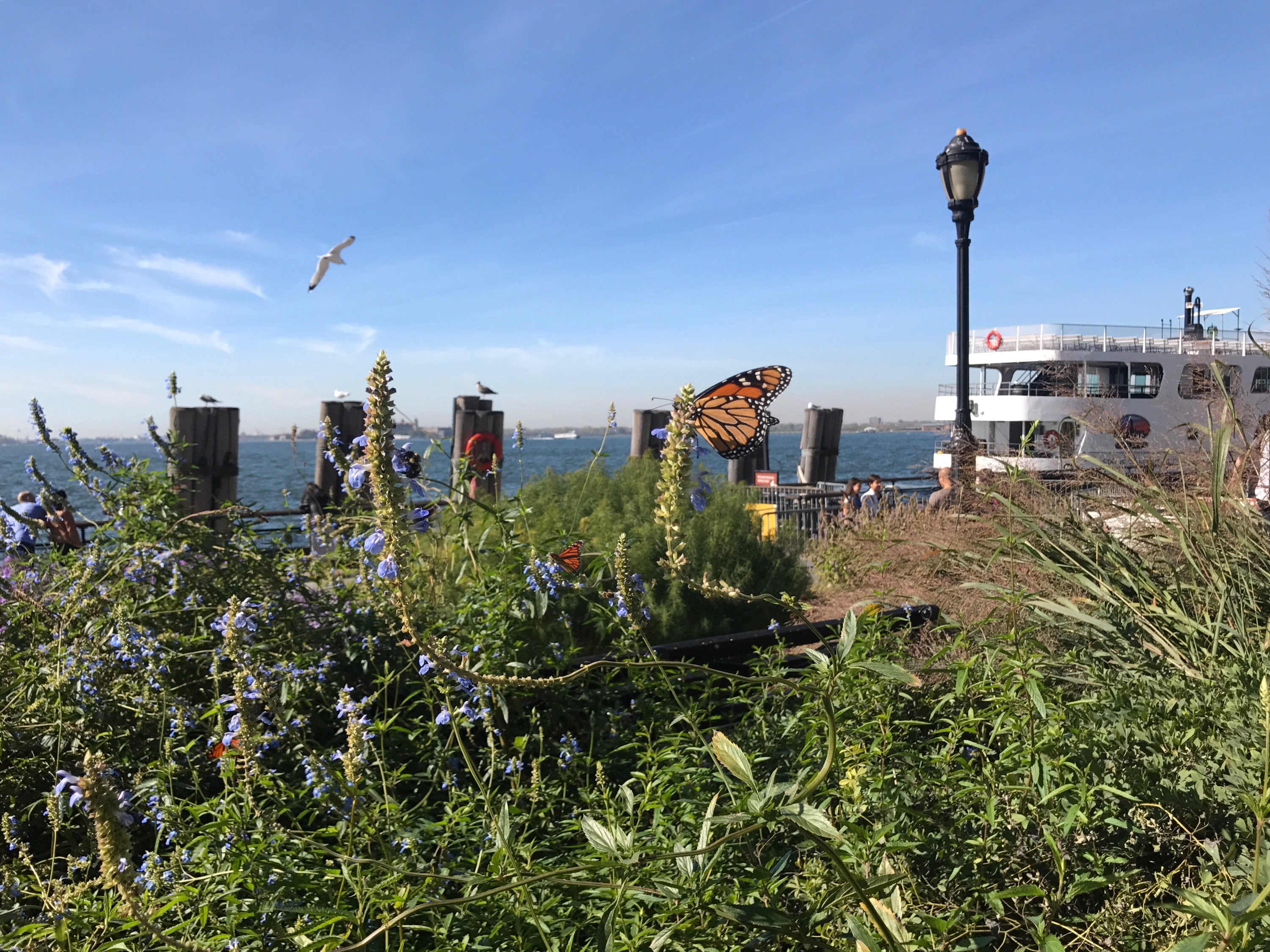
Monarchs in the gardens at Battery Park with ferry to the Statue of Liberty in the background. Liv Photo.

Our daughter Liv reports that over the weekend of October 21-22, New York City was teeming with Monarchs. She observed hundreds at Coney Island on Saturday, and even more at the gardens at Battery Park on Sunday. Liv has even seen them in the NYC underground subway stations!

After departing the shores of Long Island and NYC, the next great stopover and roosting area is Cape May, New Jersey. The Monarchs pause along the way, stopping to drink nectar and rest on the barrier beaches of the Jersey Shore. Latest field reports suggest that the dunes and fields of Cape May are rife with Seaside Goldenrod that is still in bloom. I am on my way there today and will report all that I see.

From Cape May Point the Monarchs travel ten miles across the Delaware Bay, then journey along the eastern shores of Delaware, Maryland, and Virginia. Some years the Monarchs converge by the millions at the Virginia National Wildlife Refuge waiting for the right winds to carry them across the Chesapeake Bay.

Some Monarch Butterflies travel to Florida, but most are funneled in through the Appalachian and Rocky Mountains, on into Texas and central Mexico.

https://www.instagram.com/p/BaIN9gcFtxOrWP27M6OactjFI6UB_VYRPCaaU00/

If you would like to help towards the completion of my documentary film Beauty on the Wing: Life Story of the Monarch Butterfly, filmed in the wilds of Cape Ann and Angangueo, Mexico, please consider making a tax deductible donation here:

DONATE HERE

Donors contributing over $5,000. will be listed in the credits as a film producer.

For more information, visit the film’s website here: Monarch Butterfly Film

For an overview of the film’s budget, please go here: Budget

Thank you so very much for your help.

With gratitude,

Kim Smith