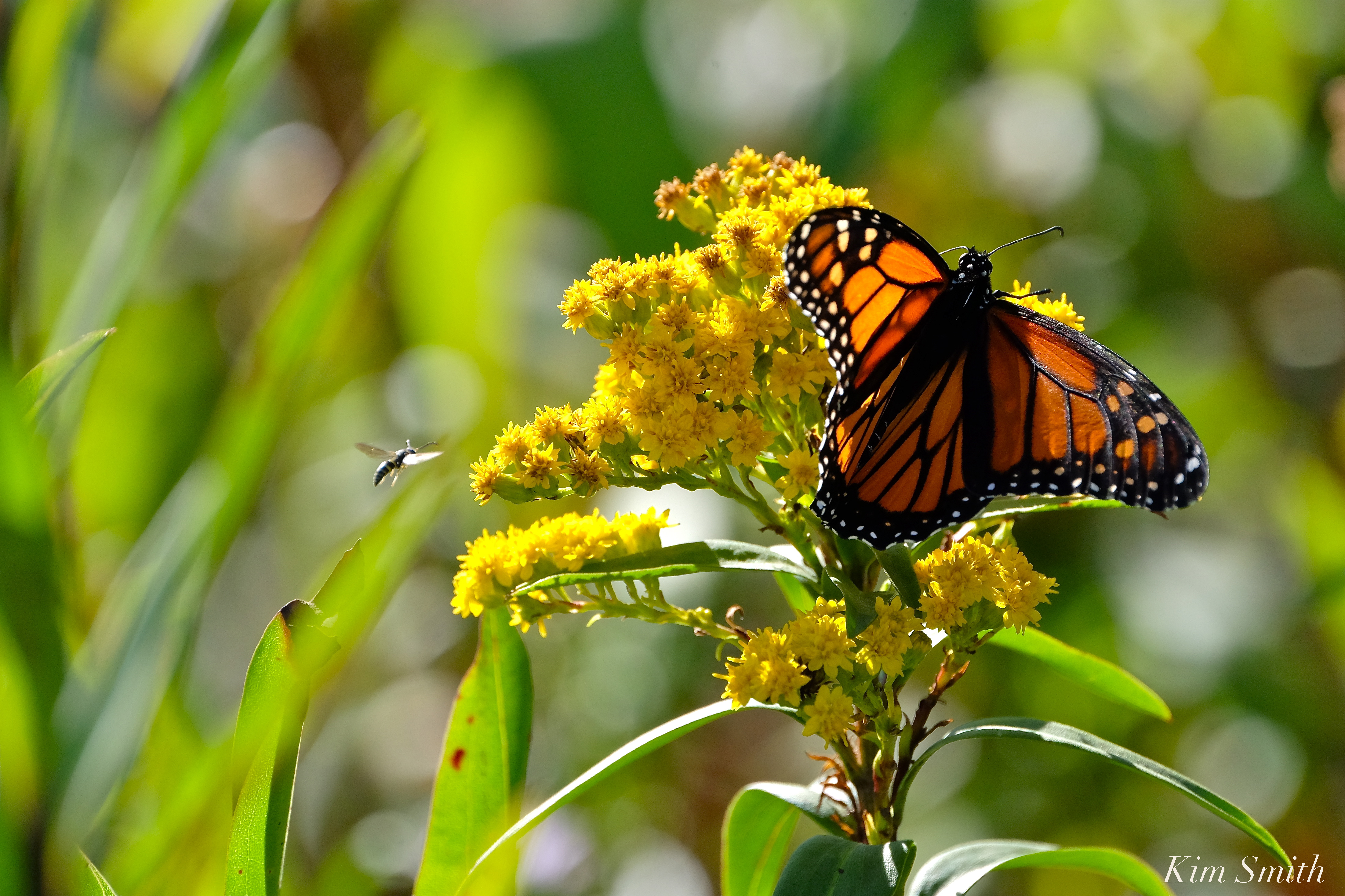
Tag Archives: Seaside Goldenrod

Where Do All the Monarchs Go?

After departing the shores of Cape Ann in autumn, where is the Monarch’s next destination on their several thousand mile journey to Mexico?  Cape Ann Monarchs join the stream of Monarchs that are migrating southward along the Atlantic Coast. They hug the coastline, crossing bays and ponds, and pausing at beaches to nectar and rest when caught in a headwind or during a storm. When weather and habitat variables combine to create a favorable year for the Monarchs, there may be tens of thousands, perhaps hundreds of thousands, of butterflies traveling along the Atlantic Coast beaches.
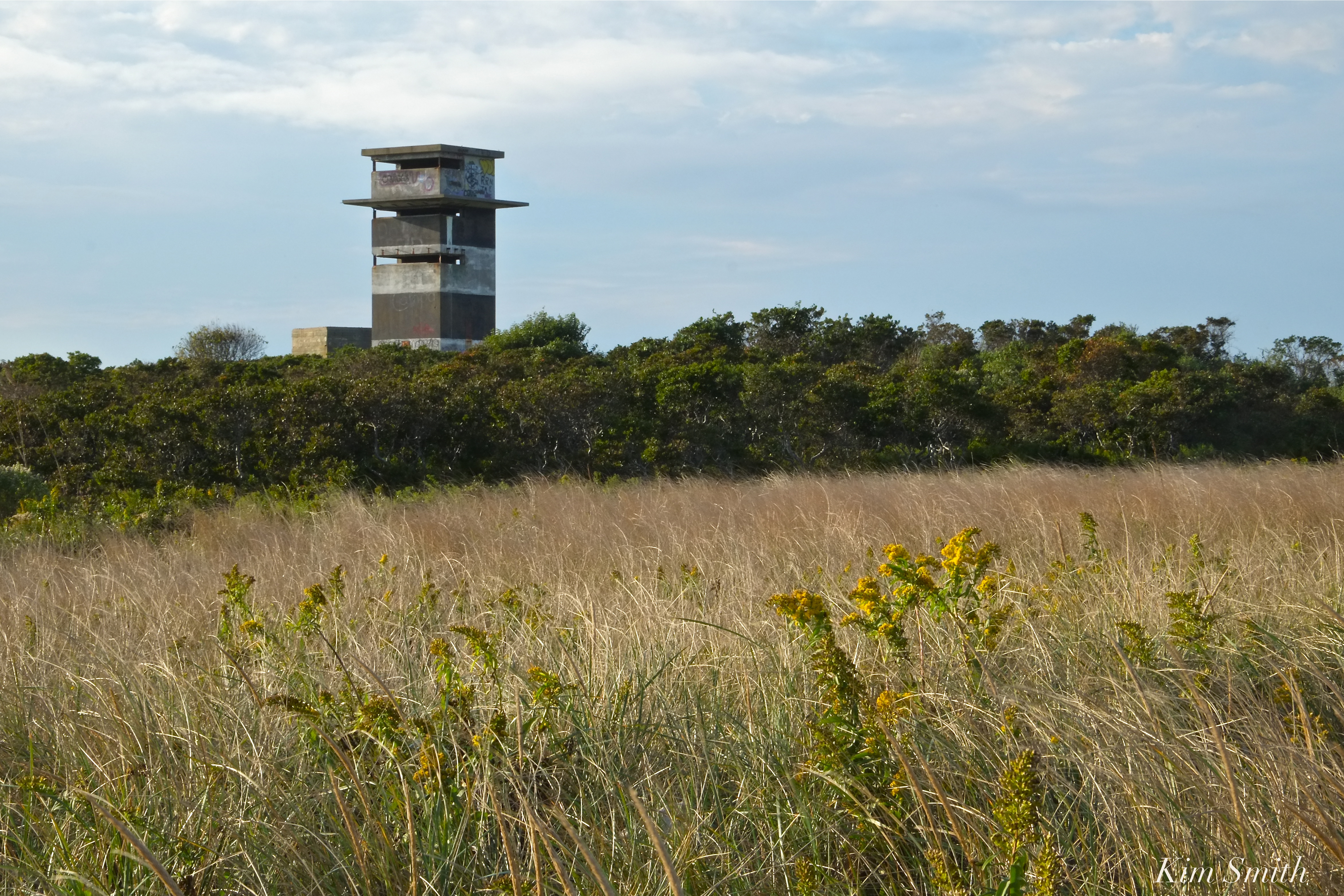
The Gooseberry Island old lookout tower is surrounded by a sea of Seaside Goldenrod.

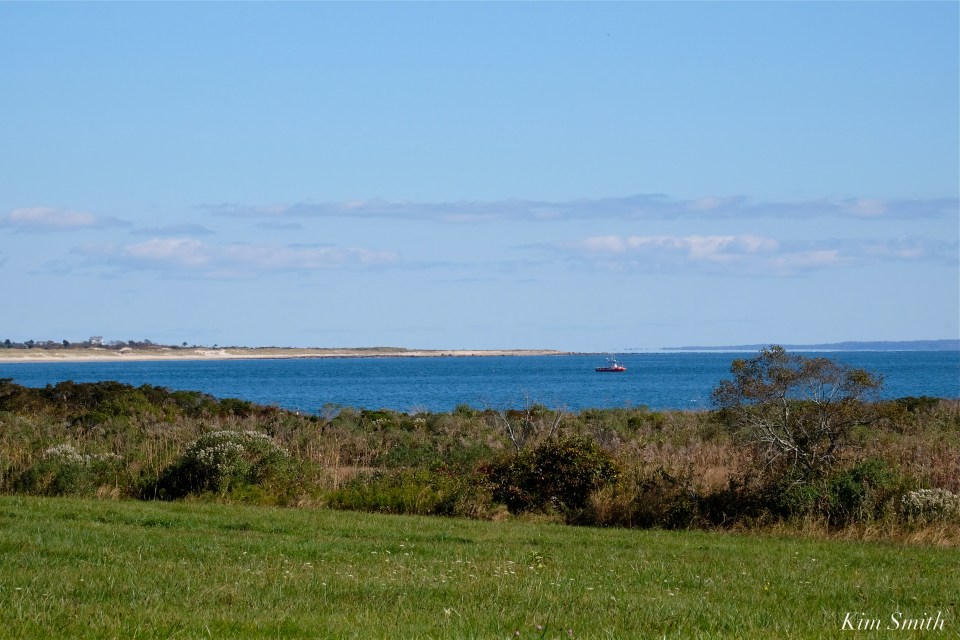
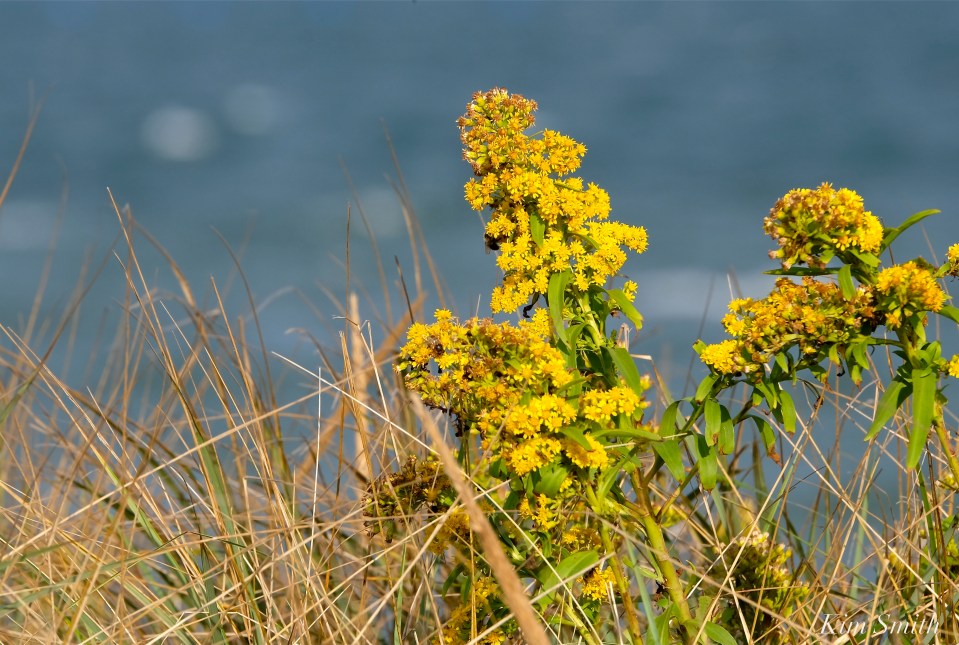
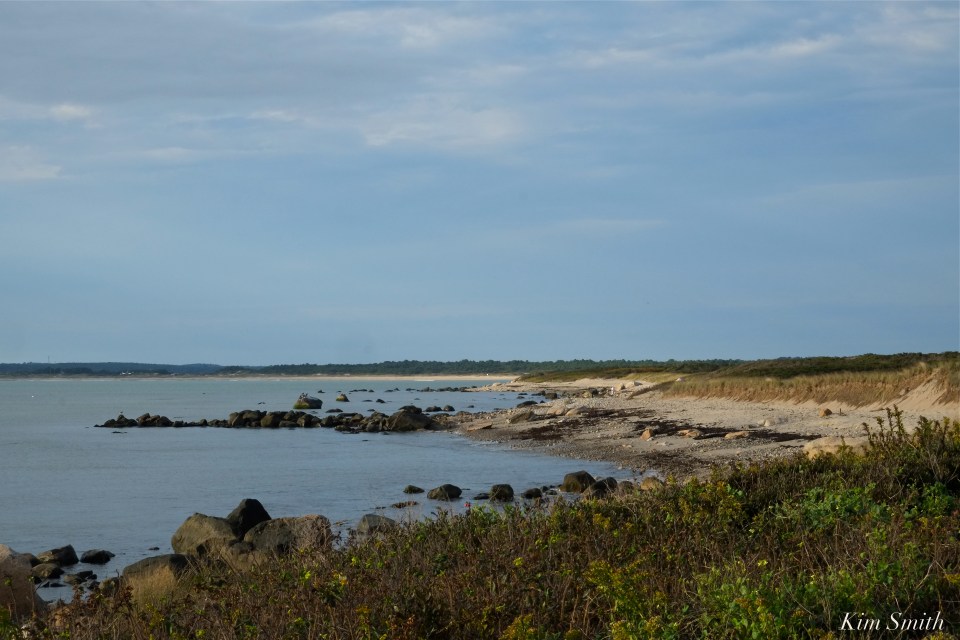
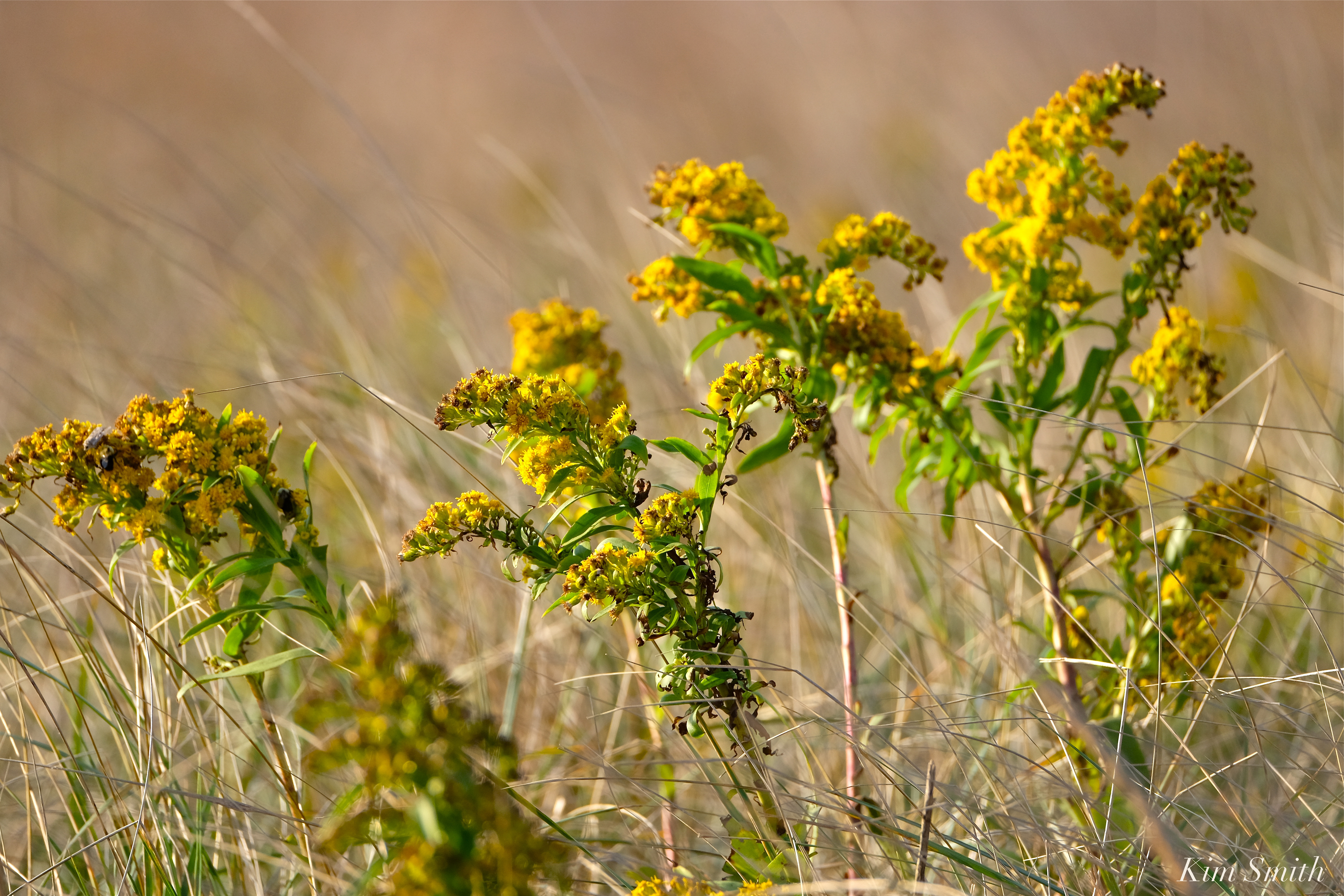
The next major stopover is Westport in Massachusetts, at Gooseberry Island and Allen’s Pond Wildlife Sancturary. Here they find dunes and fields of nectar-rich wildflowers such as Frost Asters, Purple-stemmed Asters, Seaside Goldenrod, Knapweed, Red Clover, and more.
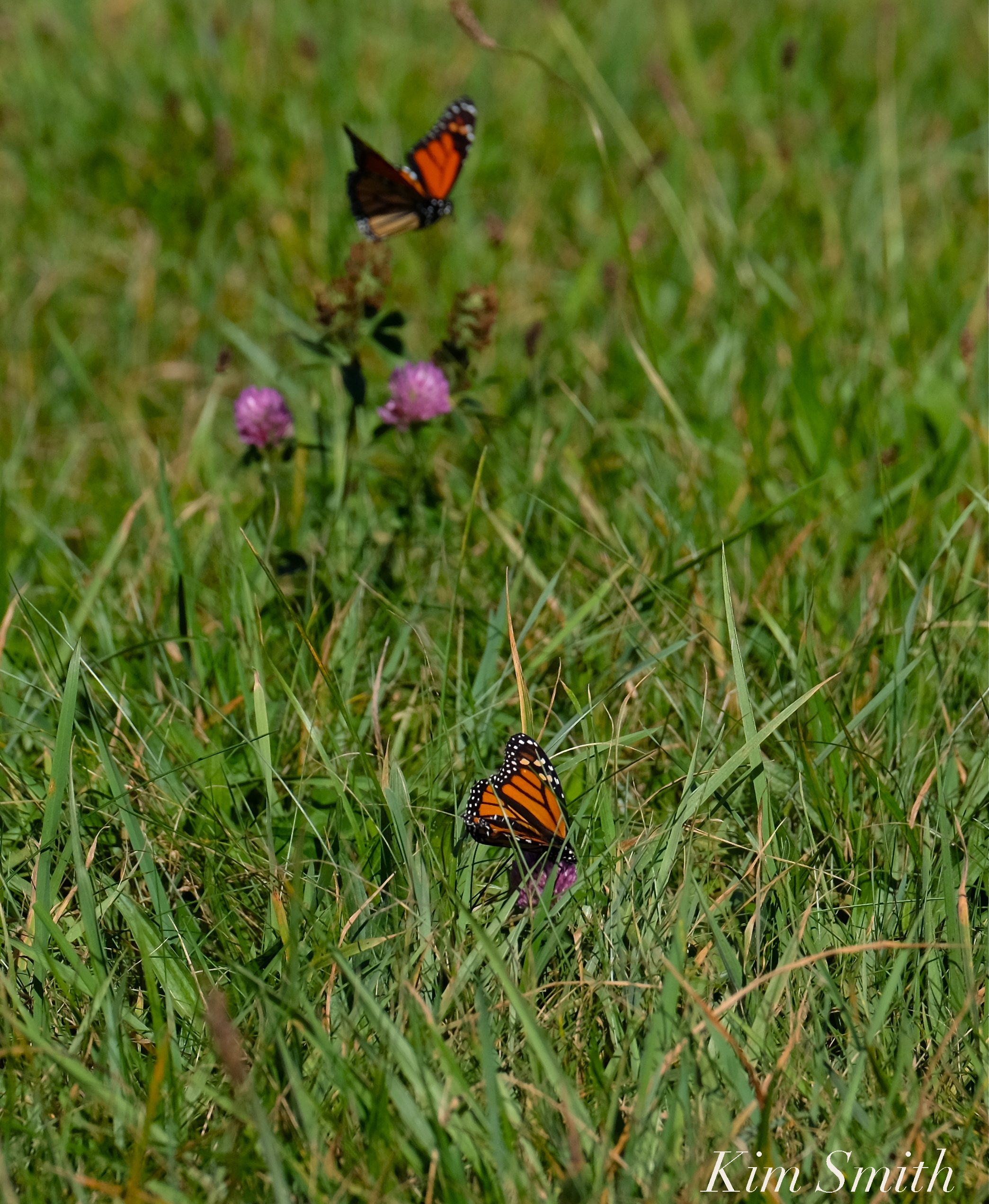
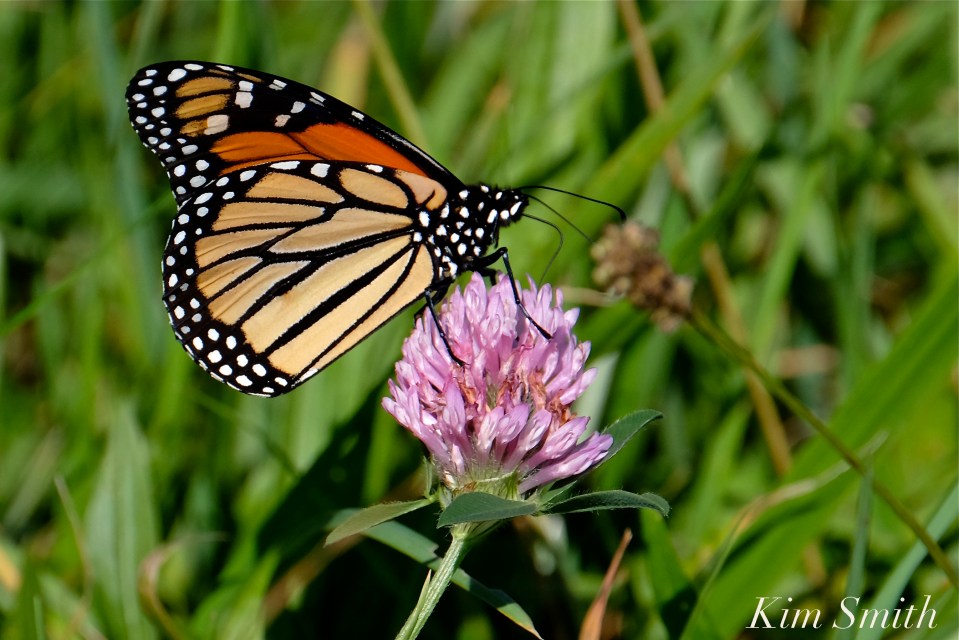
Monarchs drinking nectar from Red Clover at Allen’s Pond Middle Meadow.
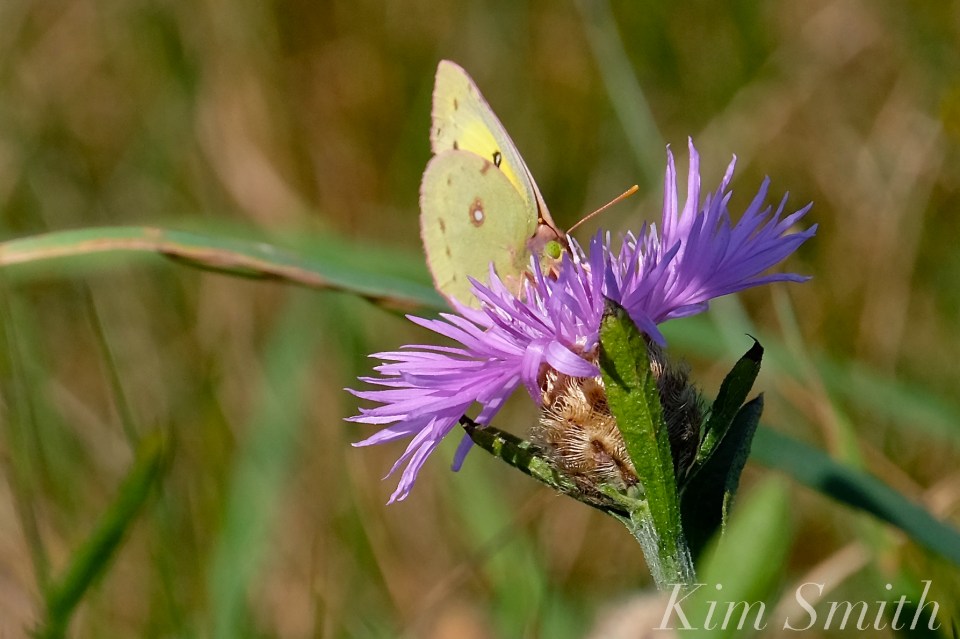
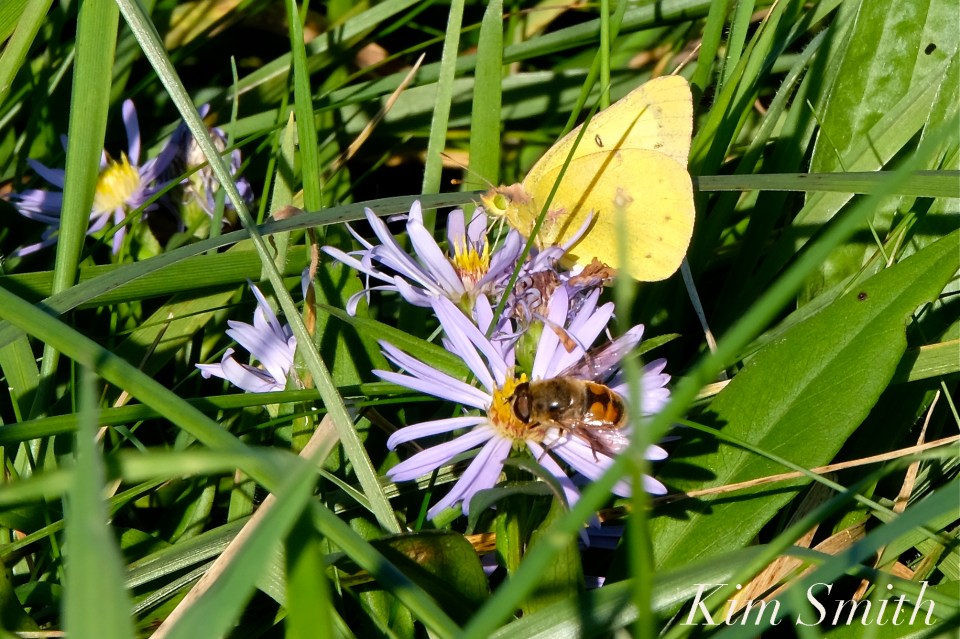
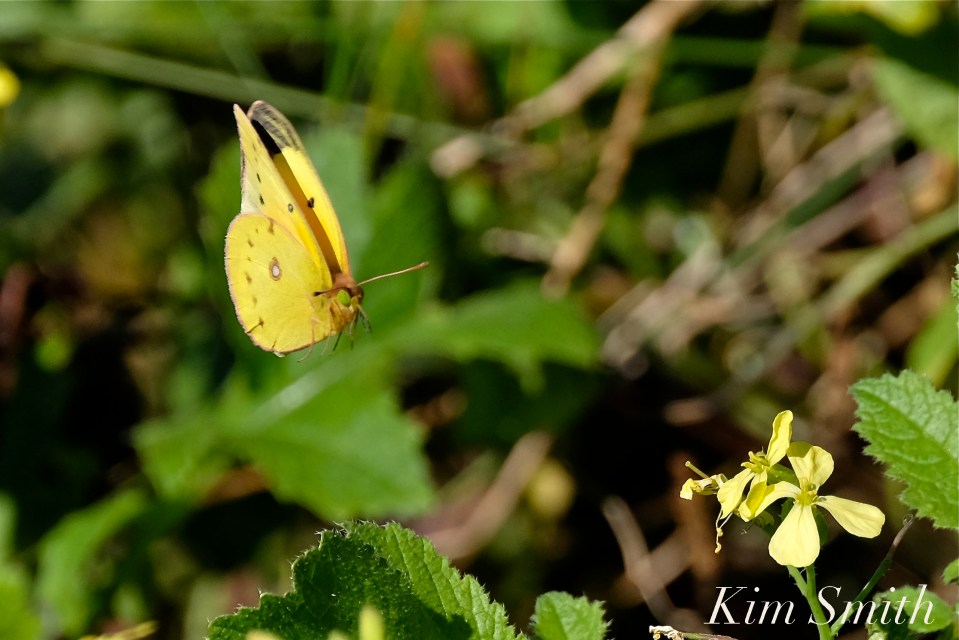
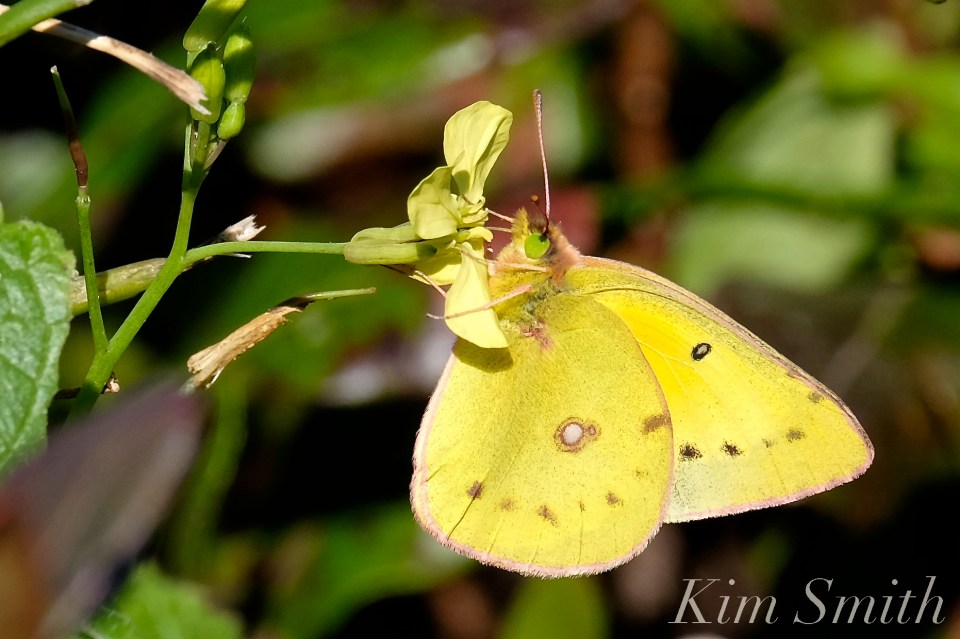
The sanctuary at Allen’s Pond is host to many species of butterflies during the Monarch’s fall migration, including Clouded Sulphurs, Orange Sulphurs, and Painted Ladies.  They, too, drink nectar from the Knapweed, Red Clover, asters, goldenrod, and Black Mustard in the sanctuary fields.

The Atlantic Monarchs next head to New York, traveling along the coast of Long Island, from the eastern tip of Montauk, southwest to Fire Island, and continuing to Coney Island. On the day of October 9th, because of a storm passing through, a batch of migrating Monarchs was “stuck” on Plumb Island in Brooklyn.  After the storm passed the following morning, tens of thousand of Monarchs were observed flying over the dunes and along the beach, resuming their journey south.
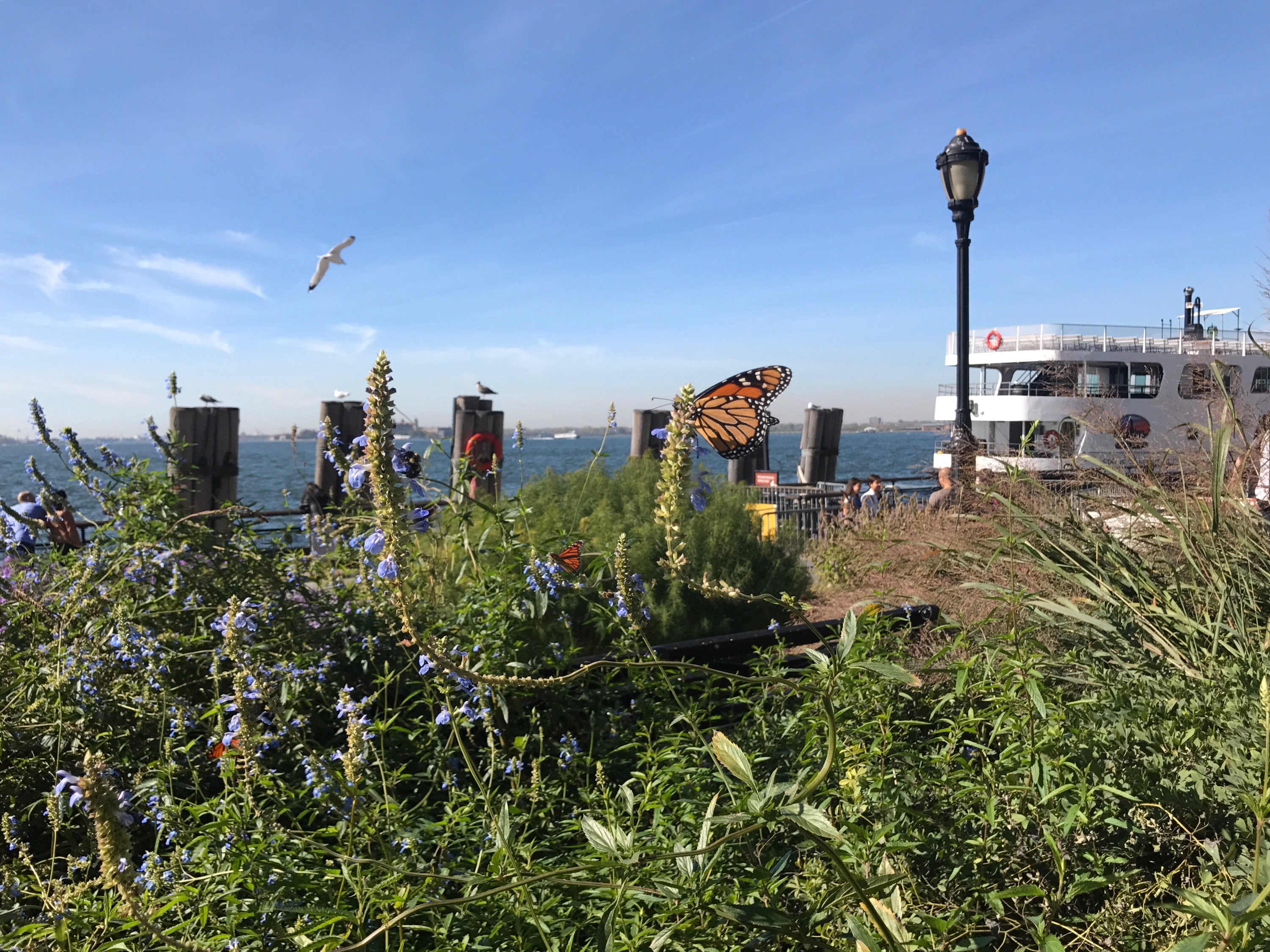
Monarchs in the gardens at Battery Park with ferry to the Statue of Liberty in the background. Liv Photo.

Our daughter Liv reports that over the weekend of October 21-22, New York City was teeming with Monarchs. She observed hundreds at Coney Island on Saturday, and even more at the gardens at Battery Park on Sunday. Liv has even seen them in the NYC underground subway stations!

After departing the shores of Long Island and NYC, the next great stopover and roosting area is Cape May, New Jersey. The Monarchs pause along the way, stopping to drink nectar and rest on the barrier beaches of the Jersey Shore. Latest field reports suggest that the dunes and fields of Cape May are rife with Seaside Goldenrod that is still in bloom. I am on my way there today and will report all that I see.
From Cape May Point the Monarchs travel ten miles across the Delaware Bay, then journey along the eastern shores of Delaware, Maryland, and Virginia. Some years the Monarchs converge by the millions at the Virginia National Wildlife Refuge waiting for the right winds to carry them across the Chesapeake Bay.

Some Monarch Butterflies travel to Florida, but most are funneled in through the Appalachian and Rocky Mountains, on into Texas and central Mexico.

https://www.instagram.com/p/BaIN9gcFtxOrWP27M6OactjFI6UB_VYRPCaaU00/

If you would like to help towards the completion of my documentary film Beauty on the Wing: Life Story of the Monarch Butterfly, filmed in the wilds of Cape Ann and Angangueo, Mexico, please consider making a tax deductible donation here:

DONATE HERE

Donors contributing over $5,000. will be listed in the credits as a film producer.

For more information, visit the film’s website here: Monarch Butterfly Film

For an overview of the film’s budget, please go here: Budget

Thank you so very much for your help.

With gratitude,

Kim Smith
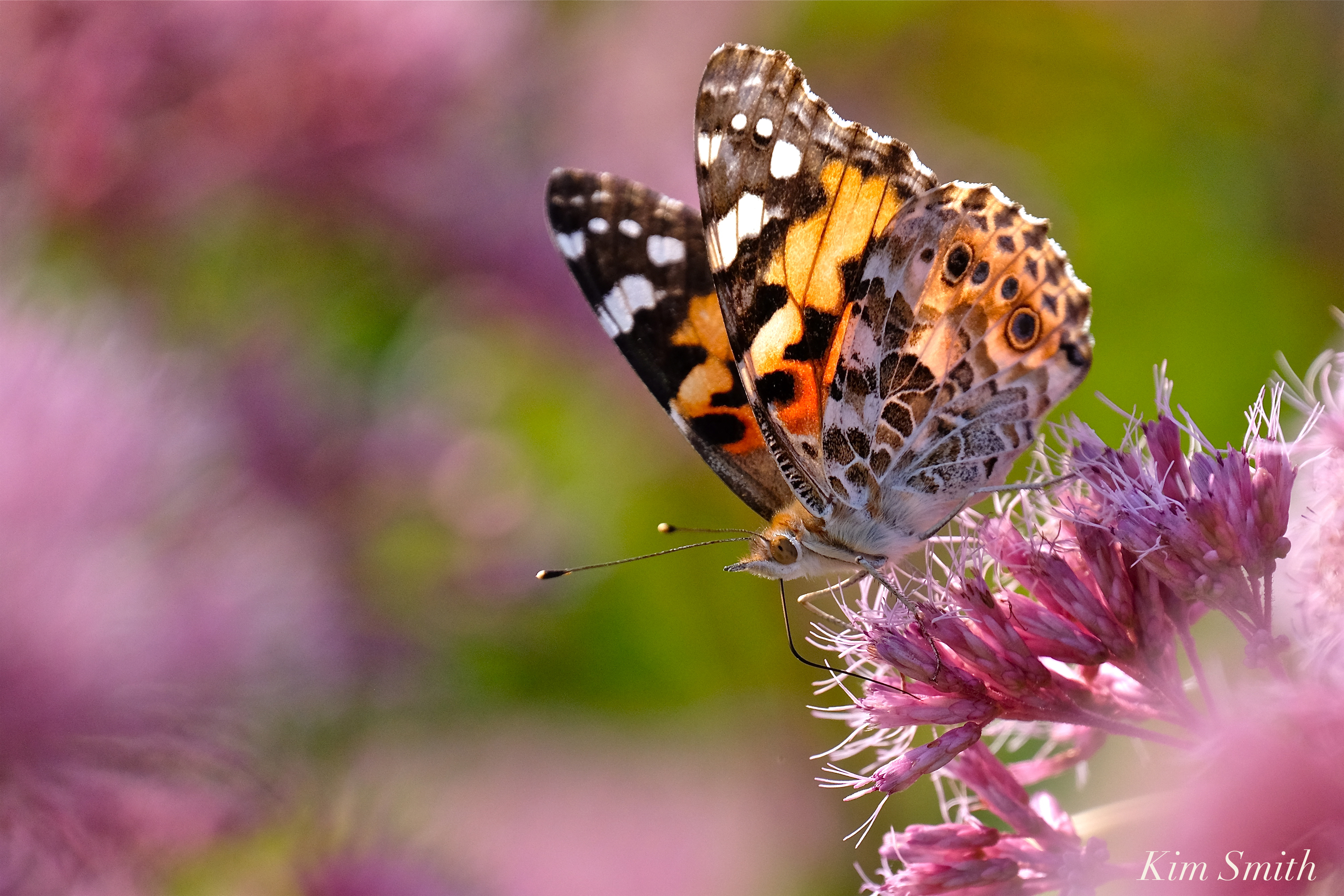
A SPECTACULAR PAINTED LADY BUTTERFLY IRRUPTION HAPPENING RIGHT NOW!

The sheer number of Painted Ladies migrating are stealing some of the Monarchs thunder!

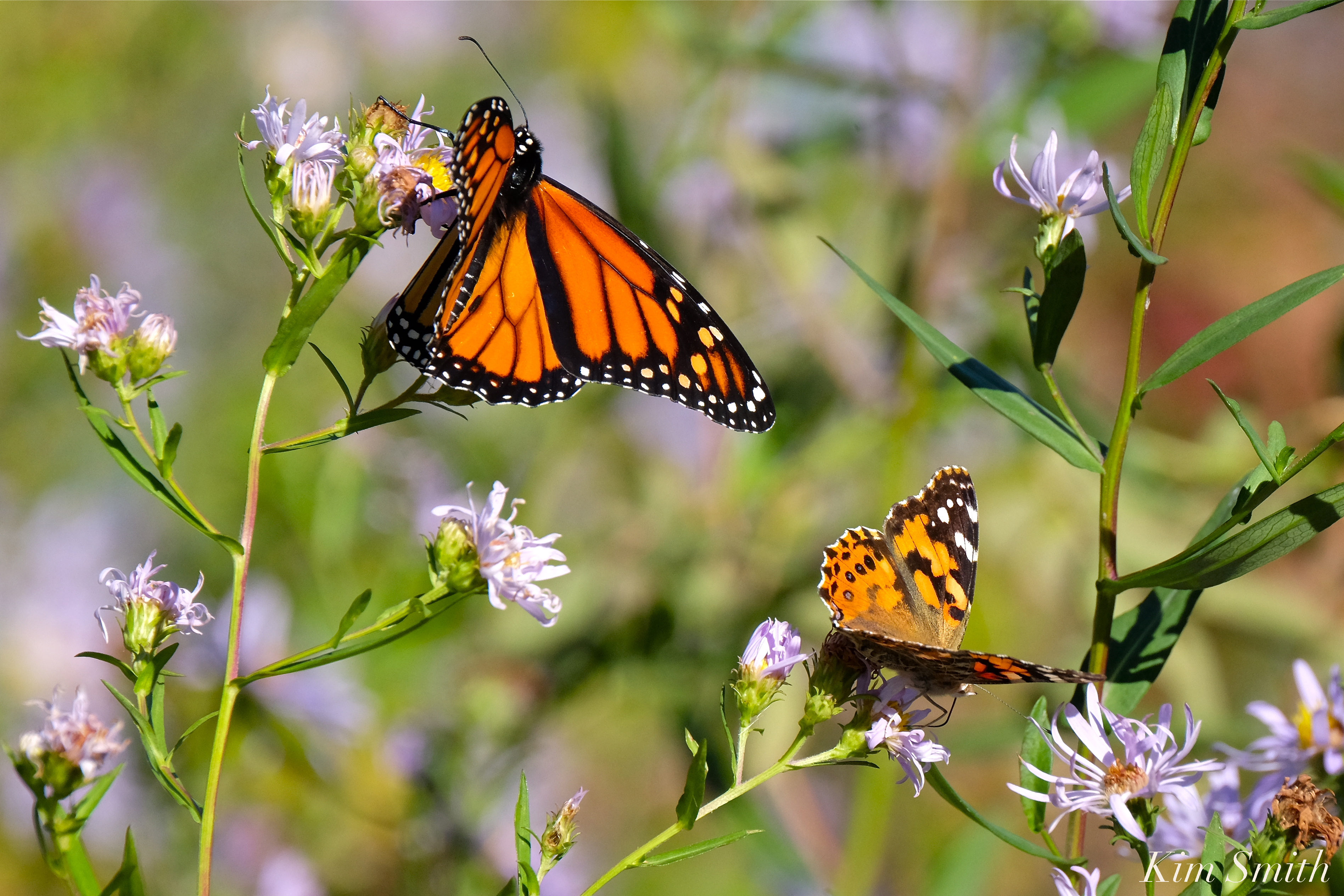
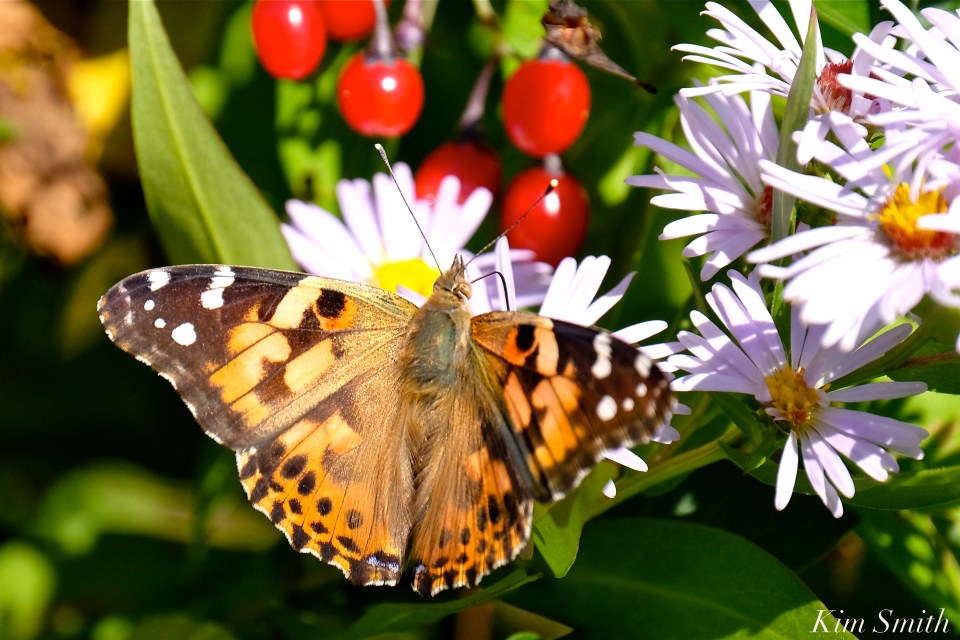
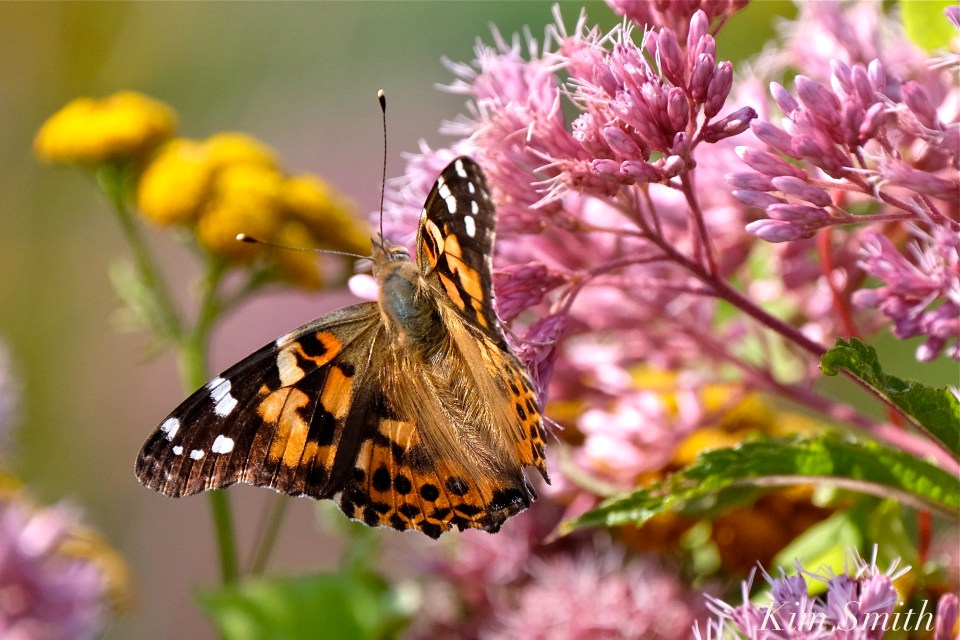
Many readers have written inquiring about the beautiful butterflies with wings in a tapestry of brilliant orange, brown, black, gold, and blue. Painted Ladies (Vanessa cardui) are often confused with Monarch butterflies, especially during the late summer. Both are currently migrating and you will often see the two species drinking nectar side-by-side.

As do Monarchs, Painted Ladies depart from Mexico to begin their northward migration in springtime. Both Monarchs and Painted Ladies belong to the brush-foot family (Nymphalidae) and can only survive in warm climates.

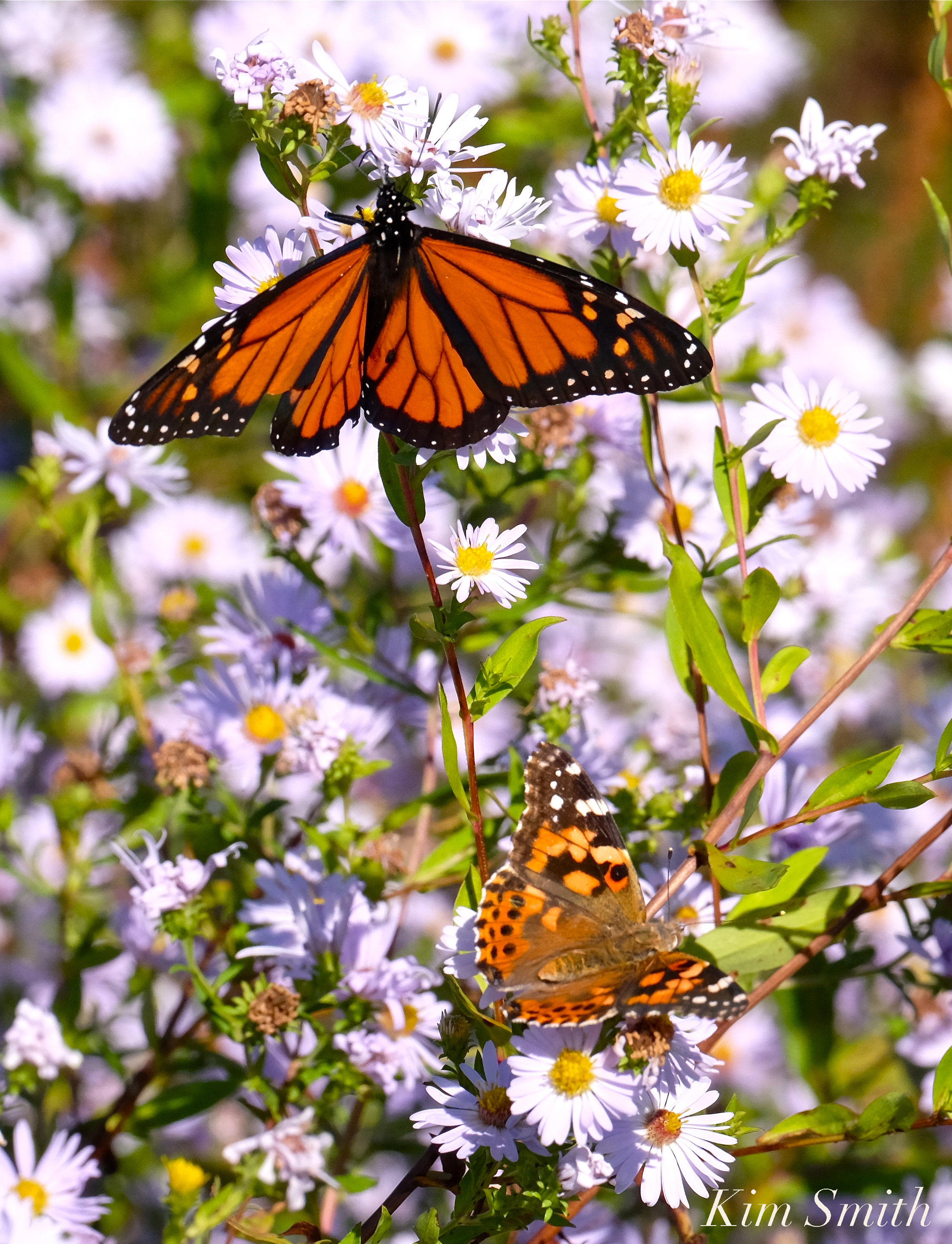
Monarch Butterfly, top, and Painted Lady bottom. Note that the Painted Lady is about half the size of the Monarch.

Sightings from the midwest recorded large numbers early in the season, and 2017 has proven to be an outstanding year for this most successful of butterflies. The Painted Lady is also nicknamed the “Cosmopolitan” butterfly because it is the most widespread butterfly in the world.

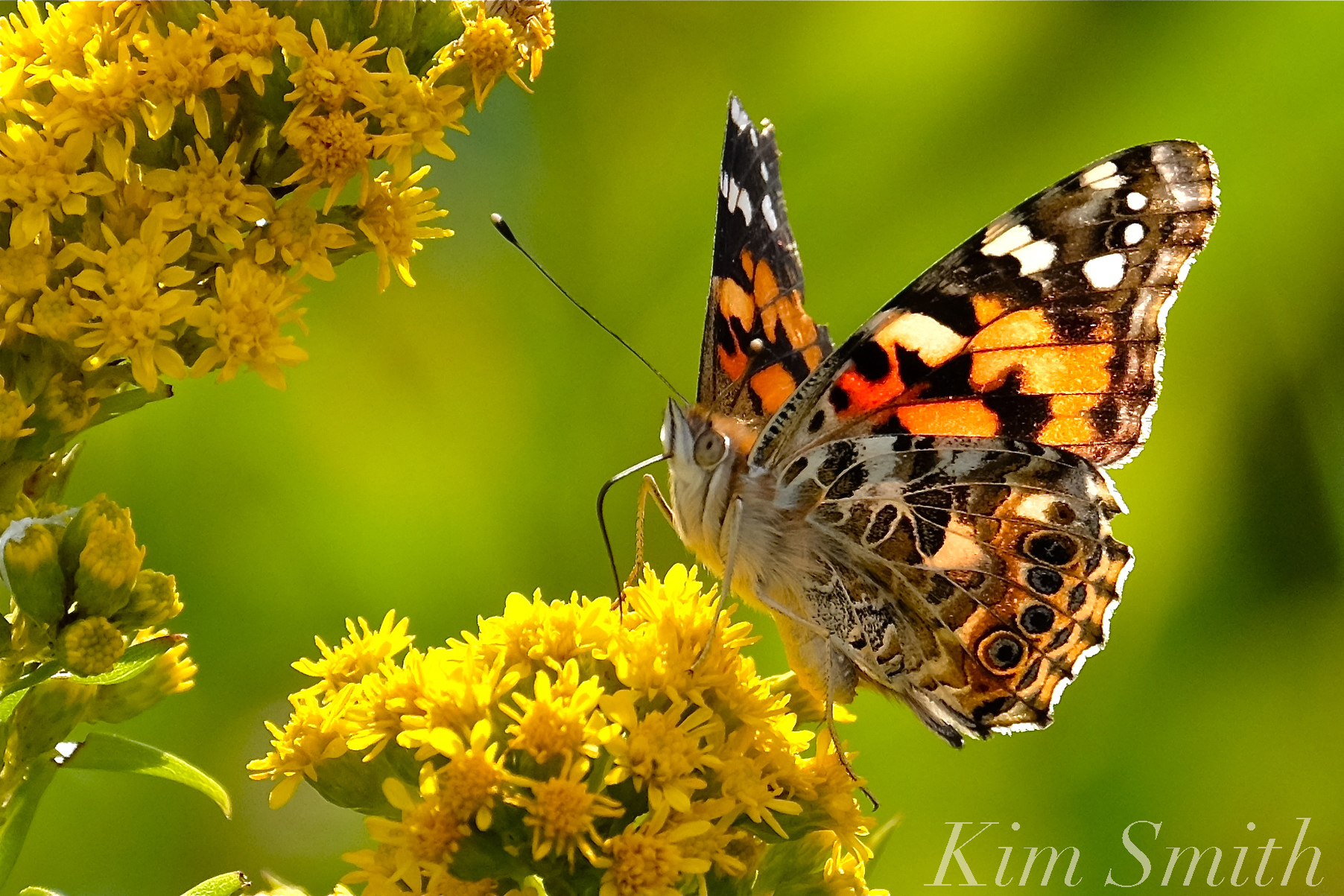
Painted Lady drinking nectar from the Seaside Goldenrod at the Gloucester HarborWalk

One reason we may possibly be experiencing a Painted Lady irruption in North America is because a rainy spring in the south was followed by a fabulous bloom of dessert annuals that provided abundant food plants for the caterpillars. Unlike Monarch butterflies, which will only deposit their eggs on members of the milkweed family (Asclepias), Painted Lady caterpillars eat a wide range of plants. More than 300 host plants have been noted; favorites include thistles, yarrow, Pearly Everlasting, Common Sunflower (Asteraceae), Hollyhock and many mallows (Malvaceae), various legumes (Fabaceae) along with members of Boraginaceae, Plantaginaceae, and Urticaceae.

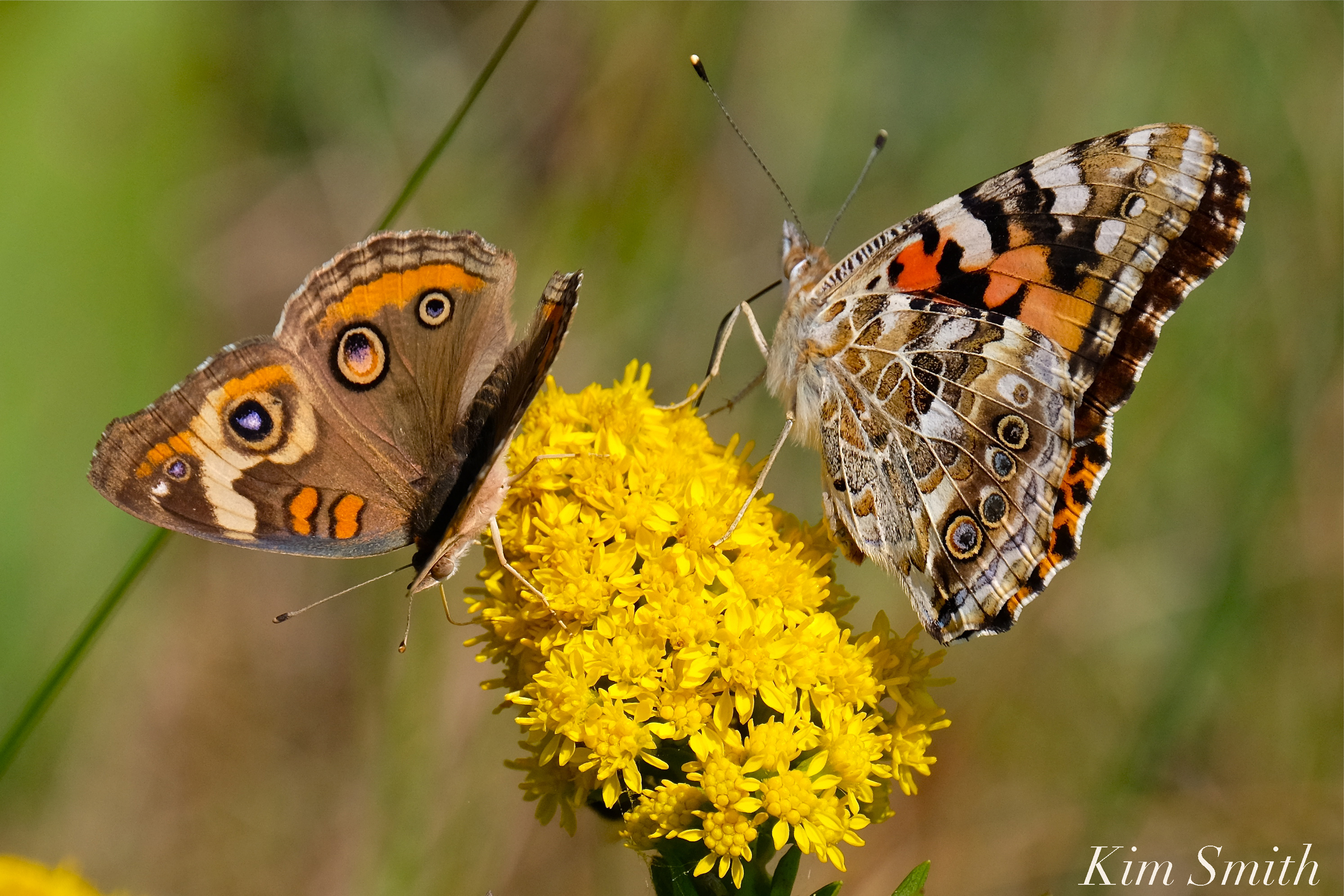
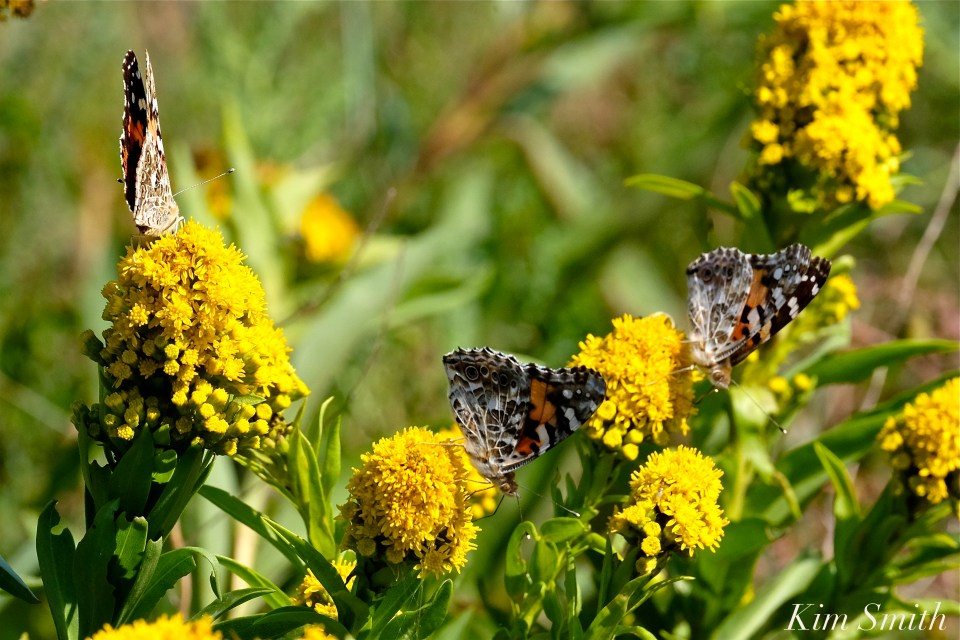
Common Buckeye and Painted Lady Nectaring at the Seaside Goldenrod at the Gloucester HarborWalk  

Much, much more remains to be discovered about the beautiful Painted Lady, its habits and how their behavior and seasonal distribution varies by geographic location.

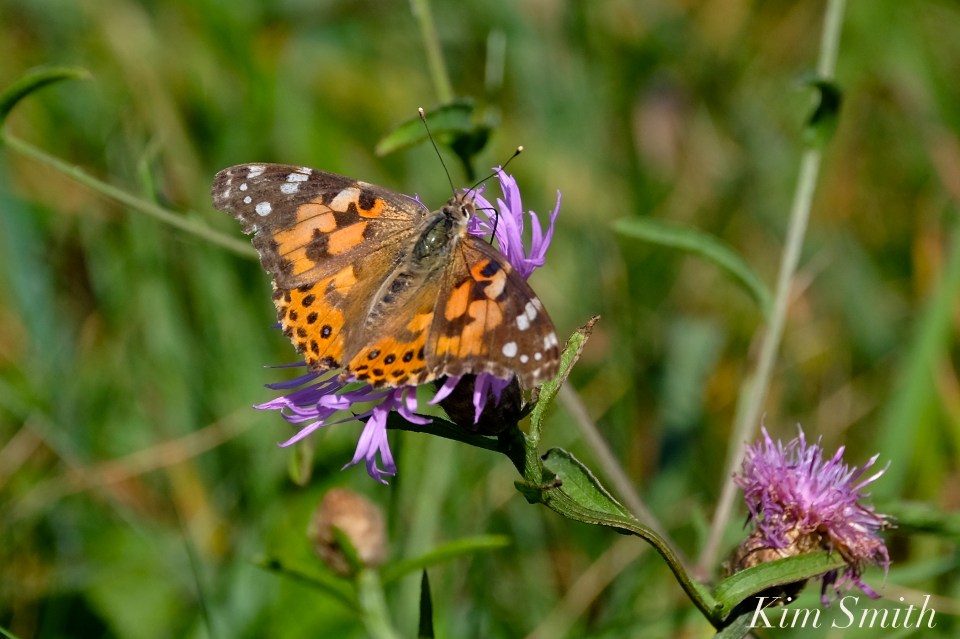
Painted Lady Drinking Nectar from the Purple-stemmed Aster

NEW FILM: A FLIGHT OF MONARCHS

When watching, know that the first two minutes of the film were shot in Gloucester. I think you will be dazzled by the sheer numbers of Monarchs that travel through Cape Ann’s backyards and meadows during the peak of migration.

I began photographing the Monarchs in 2006, which was a year when we had an extraordinary number of Monarchs visiting our shores. At that time, I became determined that if ever again this phenomenon were to occur on Cape Ann, I was going to have the ability to document on film, rather than only through still images, this beautiful event for my community. It’s hard to imagine without observing and here you can see what I have wanted to share.

A Flight of Monarchs begins on a September day as first one and then passels of Monarchs begin to arrive to the fields and meadows of Cape Ann, carried across Massachusetts Bay on a tailwind. By the early evening light they begin to pour into the surrounding trees, clustering to stay warm in the branches furthest away from the prevailing breezes. The following morning as the sun begins to touch their wings, they alight from the trees, seeking the freshest wildflowers from which to drink nectar to help build their lipid reserves for the several thousand mile journey south. They drink and drink until the last of the sun’s rays dip below the tree line. As they arrived on a tailwind, they again depart, and are carried to the next gathering area. For coastal Monarchs, Allens Pond, which is located in Westport, Massachusetts is often the next stop.

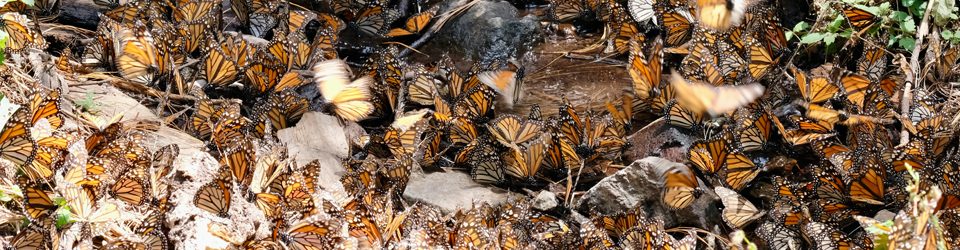
In the next scene, the butterflies have arrived to the sacred oyamel fir forests of Angangueo, Michoacán, deep in the heart of the Trans-Mexican Volcanic Belt. It’s early morning and the butterflies are suspended in great primordial branched clusters that may become so heavy from the weight of so many butterflies the boughs of the trees bend to the breaking point. Later in the day, as the sun begins to warm their wings, the butterflies begin to stir. During the winter, it is imperative that the Monarch’s body temperature remains relatively low. They leave the sunniest branches in search of shade and a drink of water from nearby mountain streams. Occasionally in late February, as the air temperatures begin to warm with the coming springtime, for a short period during the day, the butterflies leave the trees all at once. This phenomenon is called a butterfly “explosion,” and is a truly magnificent event to observe.

A Flight of Monarchs is set to the evocative and tender “Fields of Blue,” written and performed by composer and guitarist Jesse Cook and his band, to which permission was granted by the artist for the purpose of this short film. Here is a link to Cook’s website. I highly, highly recommend attending a live performance of Jesse Cook and Company. As was I, you will be completely taken by their gorgeous music, exquisite artistry, and with Cook’s songwriting, will travel in beautiful melodies inspired from around the world.

I am currently editing my feature length documentary, Beauty on the Wing, which after months and months of organizing and editing three years of footage, is currently running at approximately twelve hours in length. At eleven hours too long, I have a great deal of editing to accomplish in the coming winter months!

A Flight of Monarchs presented here is the shorter version of the film that I created for the Berkshire Museum’s “Butterflies” exhibit. The first version is six minutes long and played on a continuous loop in the main gallery of the exhibit hall. The longer version will soon be posted on Vimeo.