Tag Archives: Cape Ann

MONARCH BUTTERFLY FILM SCREENING OFFER!

ANNOUNCING A SPECIAL FILM SCREENING OFFER!

Donors contributing $20.00 or more will be invited to a very special screening preview party of the documentary Beauty on the Wing: Life Story of the Monarch Butterfly.

Consider the cost of a movie ticket, beverage, and popcorn is $20.00. By contributing to the film’s online fundraising campaign, you will help bring it to theaters and classrooms. Contributors will be invited to the film’s preview screening party and be amongst the first to see this stunning film!

One of the many ways that you will find Beauty on the Wing to be unique is that it was filmed entirely on location, outdoors, and in nature. There are absolutely no computer generated graphics. The life cycle scenes were filmed on Cape Ann, in meadows, dunes, and gardens (not laboratories). Flight scenes are not simulated, but filmed on location, predominantly on Cape Ann, some in Angangueo, and also Santa Barbara, Westport, Cape May, and Stone Harbor Point.

Mostly though, through story telling and cinematography, the film shines a beautiful light on the Monarch migration as it unfolds on the shores of Cape Ann, portraying our community and the natural world of Cape Ann as we would hope to be revealed to the world at large.


Friends of the Monarch Butterfly: If you would like to help towards the completion of the documentary film Beauty on the Wing: Life Story of the Monarch Butterfly, please consider making a tax deductible donation here:

DONATE HERE

Donors contributing over $5,000. will be listed in the credits as a film producer.

For more information, visit the film’s website here: Monarch Butterfly Film

For an overview of the film’s budget, please go here: Budget

Thank you so very much for your help.

With gratitude,

Kim

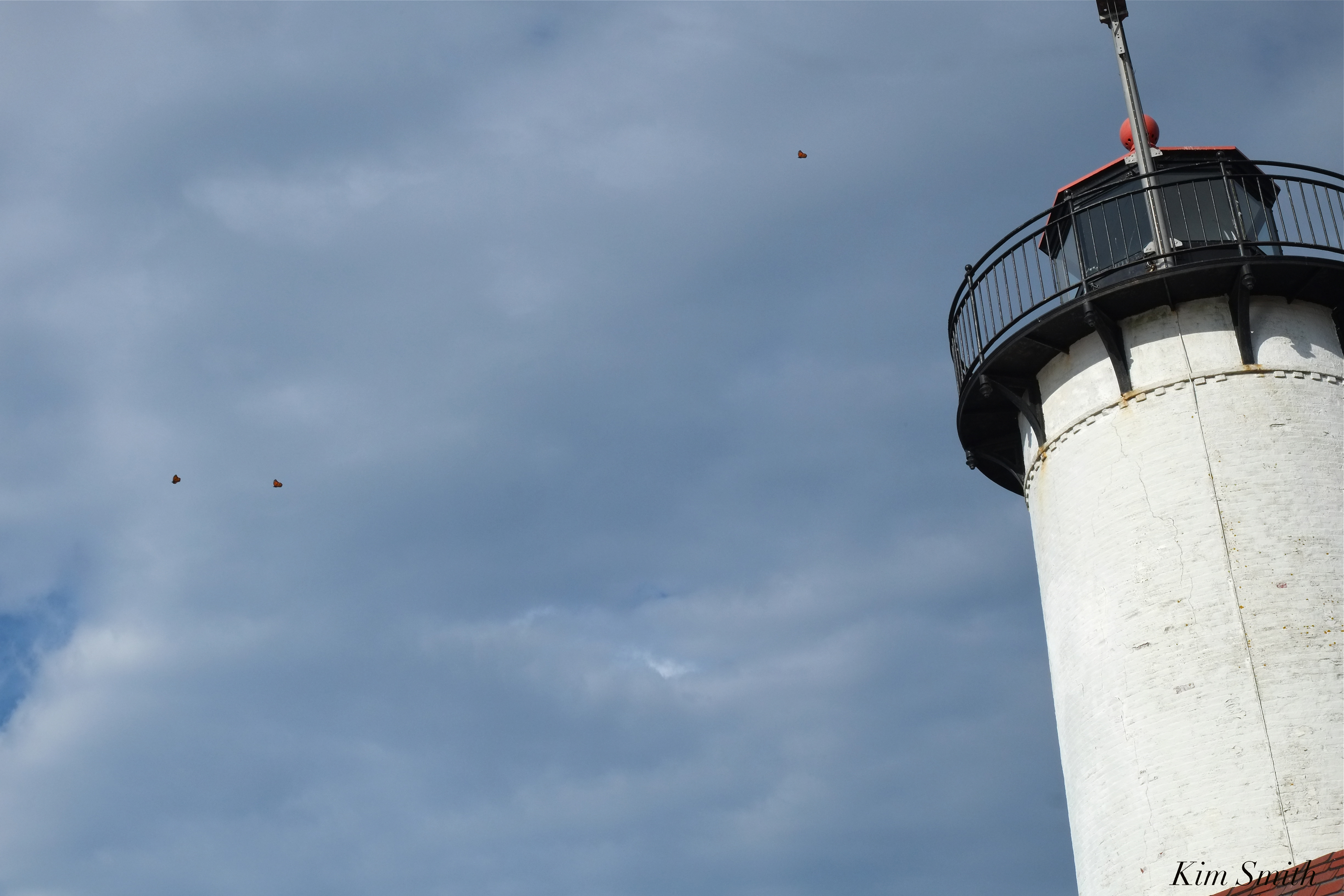
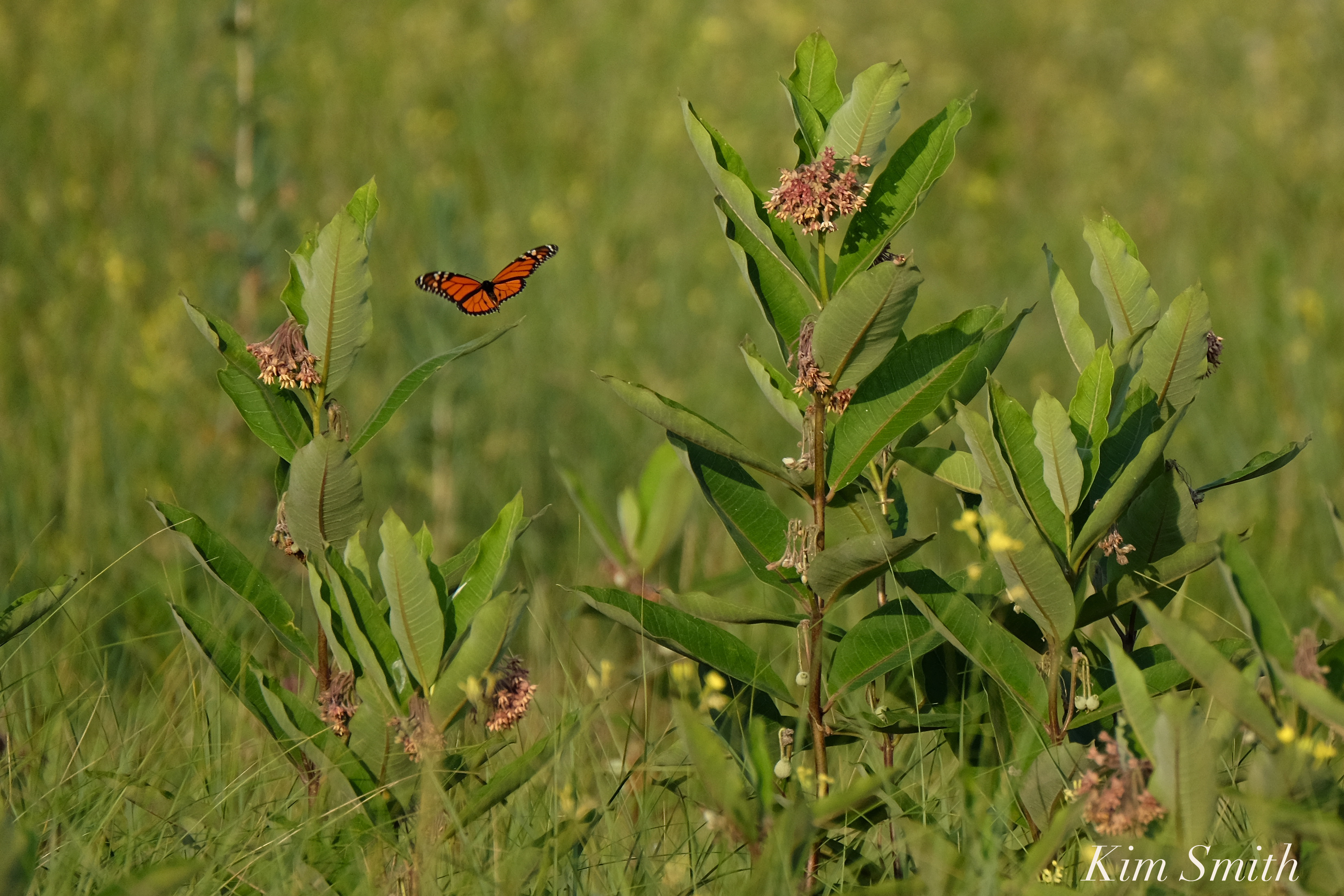
Many folks assume when viewing the trailer that the scene of the single Monarch floating towards the Eastern Point Lighthouse was computer generated. It was not. The scene is the result of the filmmaker standing on the Lighthouse lawn, waiting for just the perfect fleeting moment. Every aspect of the film is genuine and true to the nature of Cape Ann, and to all the locations where filmed. Another example is the film’s ambient soundtrack–of songbirds, crickets, foghorns, train whistles, boat engines, roosters crowing, et. al.,– every sound was captured live on location.

   *    *    *
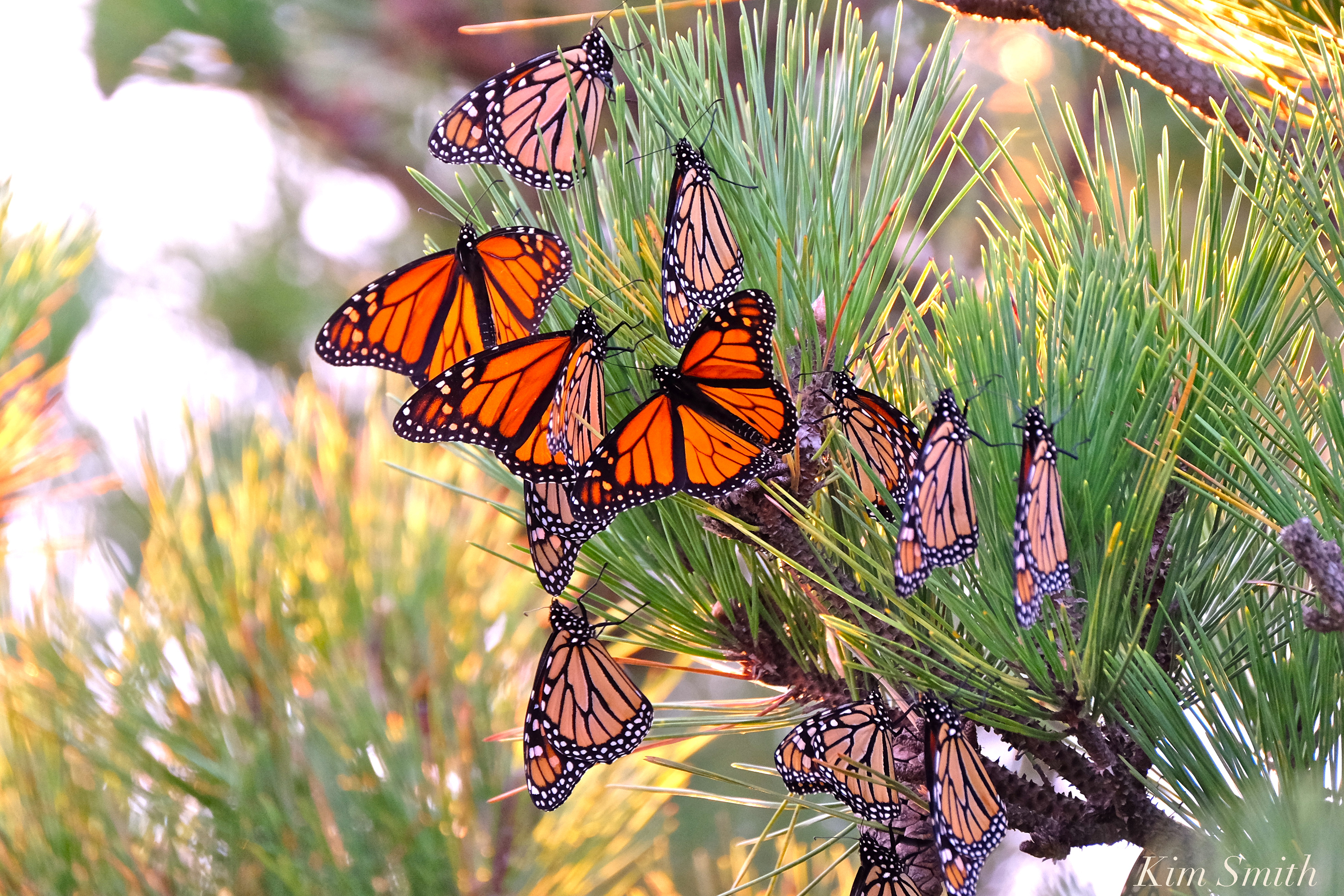
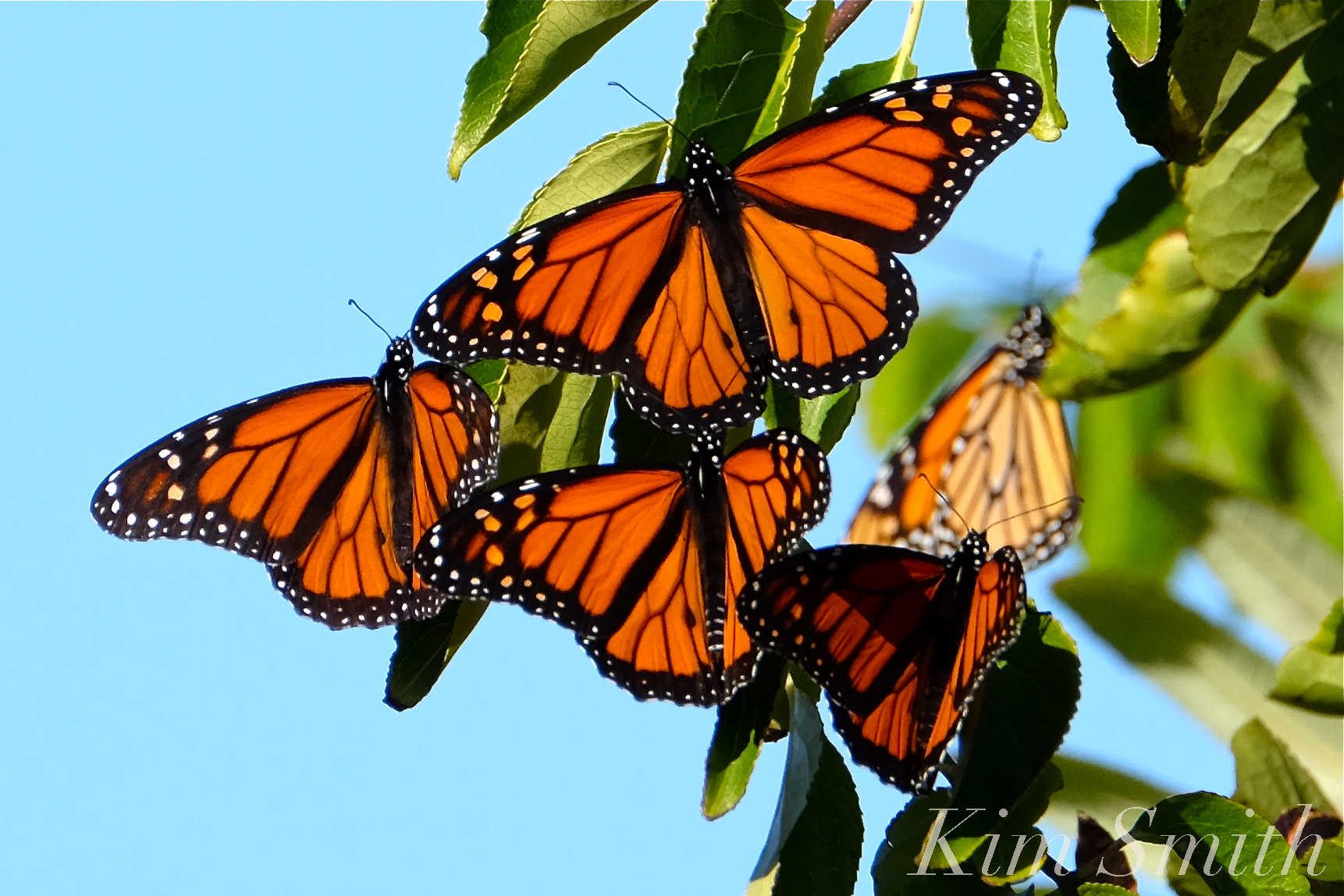
Monarchs in New Jersey and a migration update will be posted later today.! The above photos shows a roost of Monarchs at Stone Harbor Point in the golden light of late day.
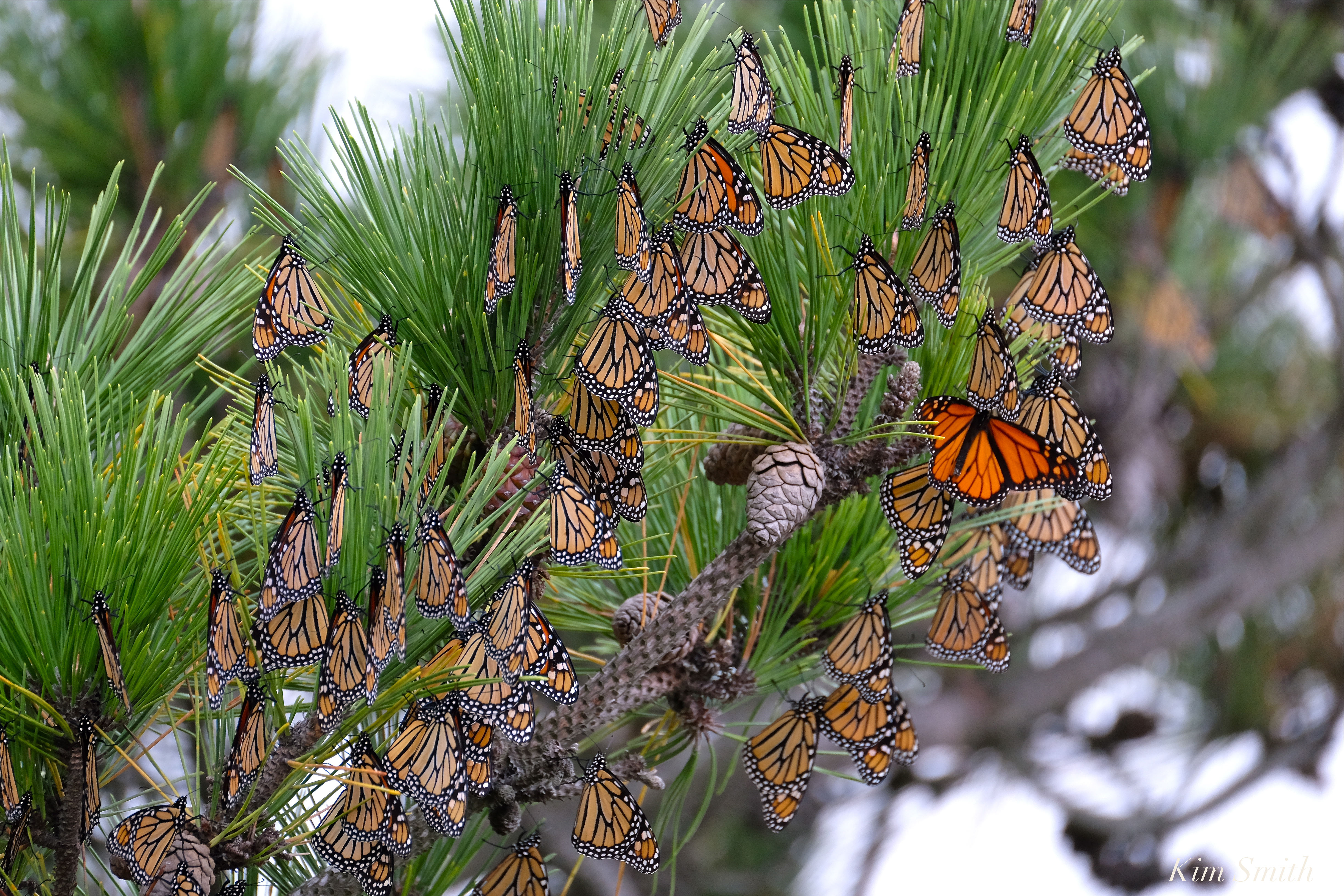
Hello From Cape May and Stone Harbor!

Whirlwind trip to Cape May to check on the late, great Monarch migration of 2017. Leaving at 5am, from Gloucester, it is an eight to nine hour drive. I spent the afternoon and evening there and then left the following day at noon. Although brief, I found all that I was looking for and much, much more. There are vast areas of wildlife habitat along the southern New Jersey coastline and so many beautiful connections between Cape Ann and Cape May; I would love to return again soon!

The Monarchs are in trouble. I am hoping with all my heart that the tens of thousands that are currently held back by winds blowing from the wrong direction, along with intermittent inclement weather, will be able to cross the Delaware Bay as soon as possible. Will write much more this weekend after catching up with work and after I am able to sort through photos.

https://www.instagram.com/p/BauEf2TFL5WBYG7-fazJODwkpfv1WKkZHQYV0k0/

Cape May Lighthouse

Where Do All the Monarchs Go?

After departing the shores of Cape Ann in autumn, where is the Monarch’s next destination on their several thousand mile journey to Mexico?  Cape Ann Monarchs join the stream of Monarchs that are migrating southward along the Atlantic Coast. They hug the coastline, crossing bays and ponds, and pausing at beaches to nectar and rest when caught in a headwind or during a storm. When weather and habitat variables combine to create a favorable year for the Monarchs, there may be tens of thousands, perhaps hundreds of thousands, of butterflies traveling along the Atlantic Coast beaches.

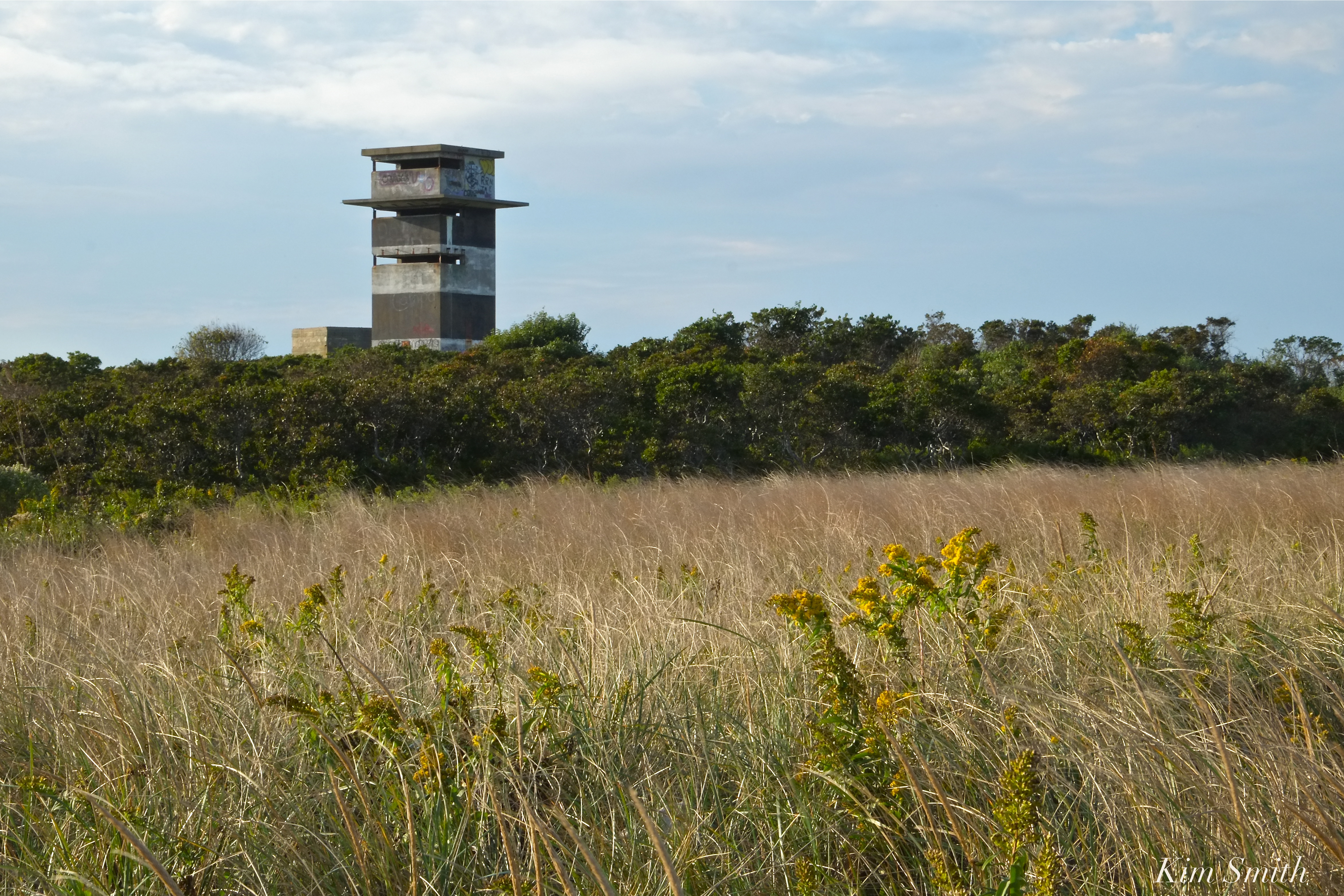
The Gooseberry Island old lookout tower is surrounded by a sea of Seaside Goldenrod.

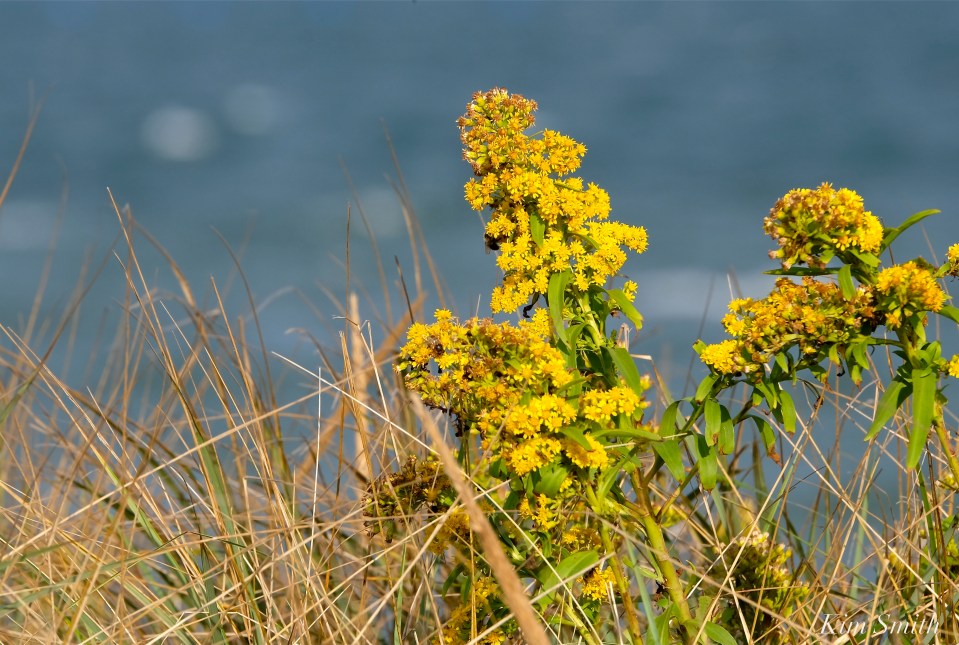
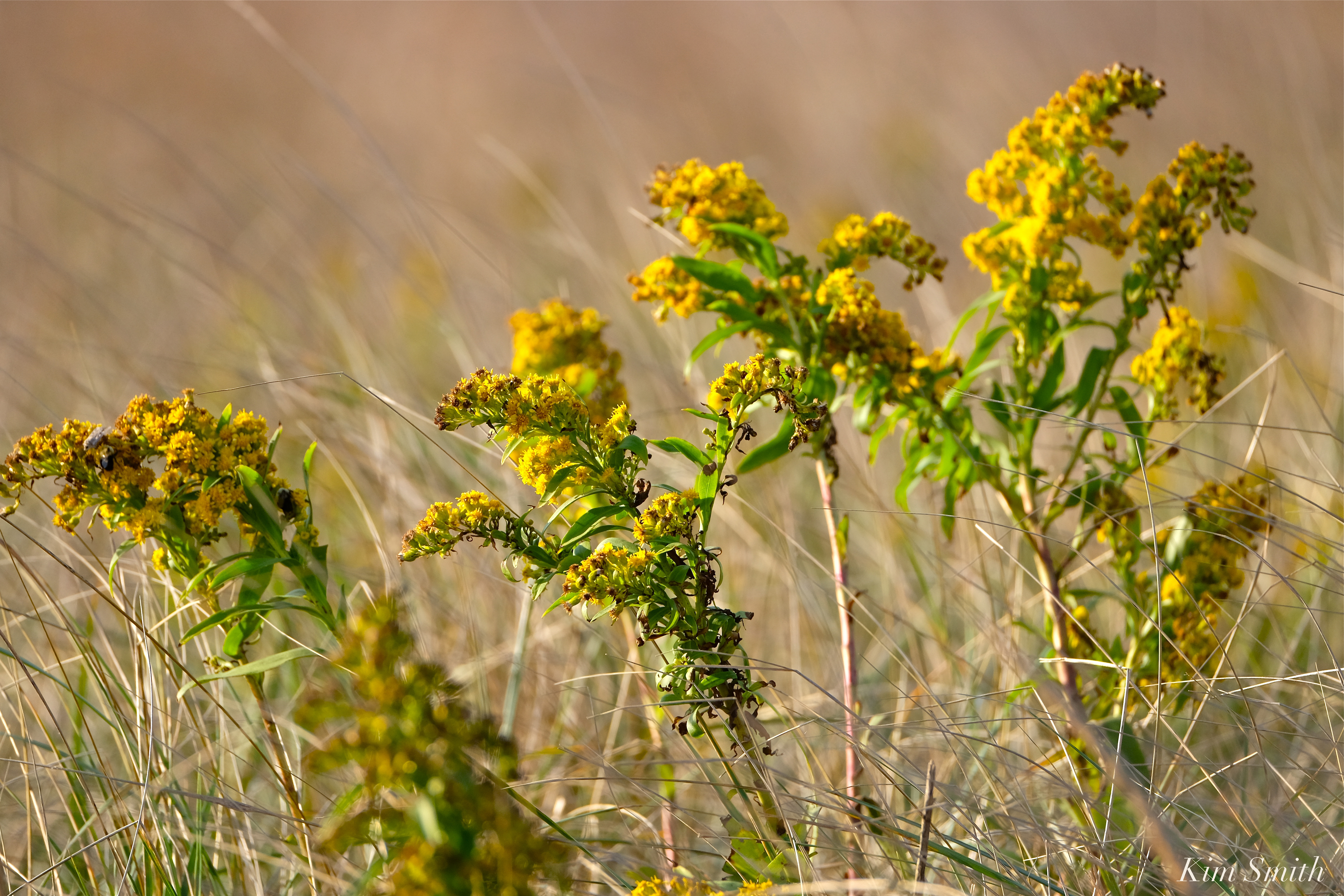
The next major stopover is Westport in Massachusetts, at Gooseberry Island and Allen’s Pond Wildlife Sancturary. Here they find dunes and fields of nectar-rich wildflowers such as Frost Asters, Purple-stemmed Asters, Seaside Goldenrod, Knapweed, Red Clover, and more.

Monarchs drinking nectar from Red Clover at Allen’s Pond Middle Meadow.

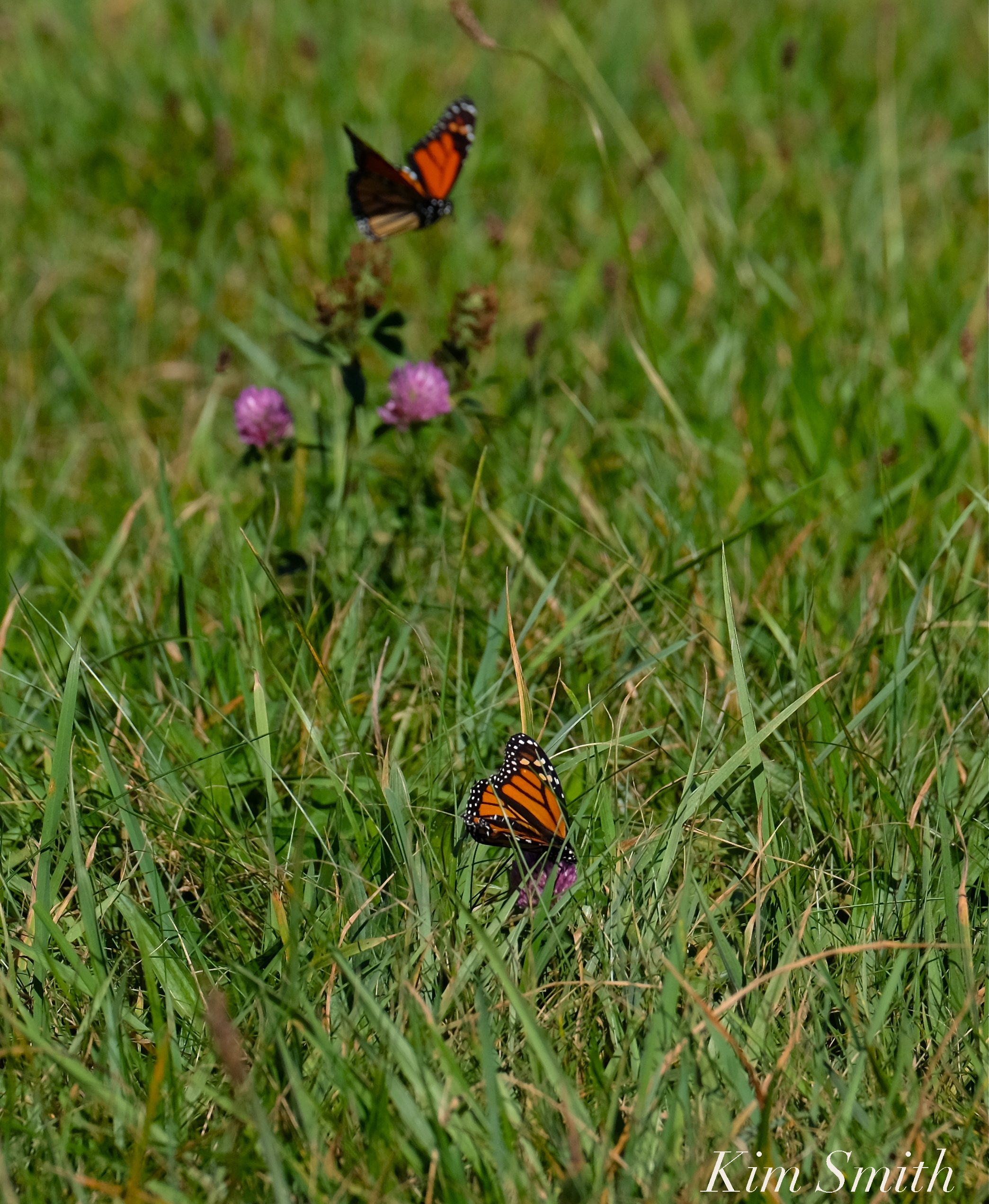
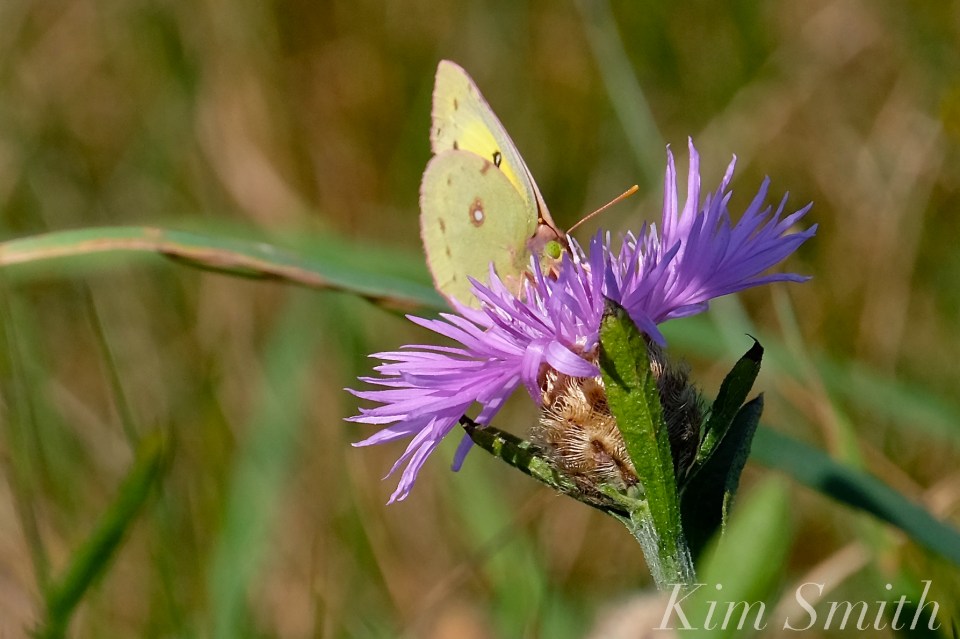
The sanctuary at Allen’s Pond is host to many species of butterflies during the Monarch’s fall migration, including Clouded Sulphurs, Orange Sulphurs, and Painted Ladies.  They, too, drink nectar from the Knapweed, Red Clover, asters, goldenrod, and Black Mustard in the sanctuary fields.

The Atlantic Monarchs next head to New York, traveling along the coast of Long Island, from the eastern tip of Montauk, southwest to Fire Island, and continuing to Coney Island. On the day of October 9th, because of a storm passing through, a batch of migrating Monarchs was “stuck” on Plumb Island in Brooklyn.  After the storm passed the following morning, tens of thousand of Monarchs were observed flying over the dunes and along the beach, resuming their journey south.

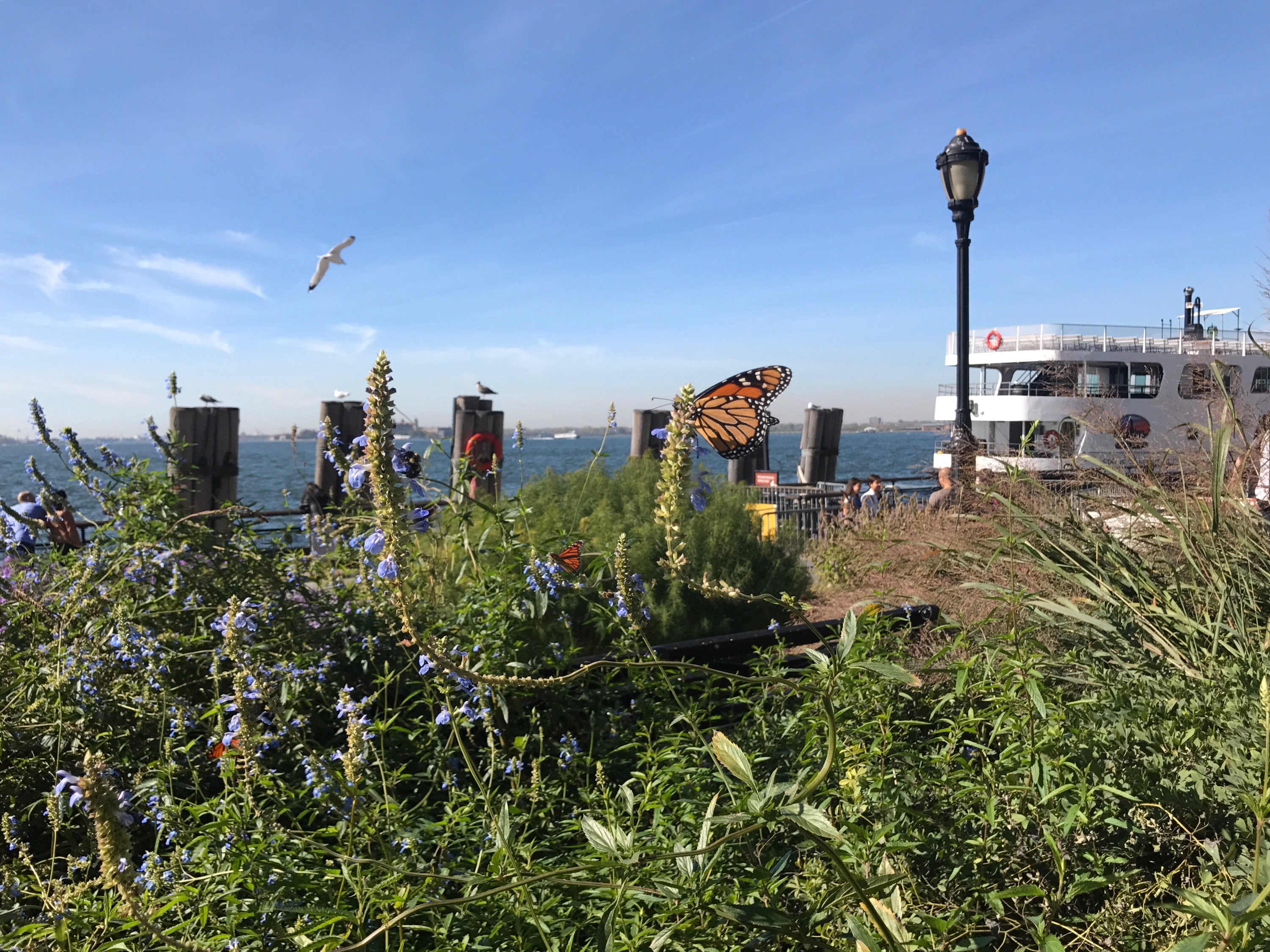
Monarchs in the gardens at Battery Park with ferry to the Statue of Liberty in the background. Liv Photo.

Our daughter Liv reports that over the weekend of October 21-22, New York City was teeming with Monarchs. She observed hundreds at Coney Island on Saturday, and even more at the gardens at Battery Park on Sunday. Liv has even seen them in the NYC underground subway stations!
After departing the shores of Long Island and NYC, the next great stopover and roosting area is Cape May, New Jersey. The Monarchs pause along the way, stopping to drink nectar and rest on the barrier beaches of the Jersey Shore. Latest field reports suggest that the dunes and fields of Cape May are rife with Seaside Goldenrod that is still in bloom. I am on my way there today and will report all that I see.

From Cape May Point the Monarchs travel ten miles across the Delaware Bay, then journey along the eastern shores of Delaware, Maryland, and Virginia. Some years the Monarchs converge by the millions at the Virginia National Wildlife Refuge waiting for the right winds to carry them across the Chesapeake Bay.
Some Monarch Butterflies travel to Florida, but most are funneled in through the Appalachian and Rocky Mountains, on into Texas and central Mexico.

https://www.instagram.com/p/BaIN9gcFtxOrWP27M6OactjFI6UB_VYRPCaaU00/

If you would like to help towards the completion of my documentary film Beauty on the Wing: Life Story of the Monarch Butterfly, filmed in the wilds of Cape Ann and Angangueo, Mexico, please consider making a tax deductible donation here:

DONATE HERE

Donors contributing over $5,000. will be listed in the credits as a film producer.

For more information, visit the film’s website here: Monarch Butterfly Film

For an overview of the film’s budget, please go here: Budget

Thank you so very much for your help.

With gratitude,

Kim Smith

$20,450.00!!! RAISED FOR “BEAUTY ON THE WING” DOCUMENTARY! THANK YOU KIND DONORS!!!!!!!!!!!!!!!!!!!!

WITH THE GREATEST JOY AND APPRECIATION FOR OUR COMMUNITY OF FRIENDS AND SPONSORS, I AM OVERJOYED TO SHARE THAT TO DATE WE HAVE RAISED $20,450.00 FOR THE DOCUMENTARY FILM “BEAUTY ON THE WING” ONLINE FUNDRAISER!!!

MY DEEPEST THANKS AND GRATITUDE TO LAUREN MERCADANTE (PRODUCER), SUSAN FREY (PRODUCER), NEW ENGLAND BIOLABS FOUNDATION, LAUREN M., MARION F., ELAINE M., DONNA STOMAN, PEGGY O’MALLEY, JOEY C., CATHERINE RYAN, JOEANN HART, JANE PAZNIK BONDARIN AND ROBERT REDIS (BOTH FROM NEW YORK), NUBAR ALEXANIAN, PETER VAN DEMARK, PATRICIA VAN DERPOOL, FRED FREDERICKS (CHELMSFORD), LESLIE HEFFRON, JIM MASCIARELLI, DAVE MOORE (KOREA), LILIAN AND CRAIG OLMSTEAD, JOHN STEIGER, PAT DALPIAZ, AMY KERR, BARBARA T. (JEWETT, NY), ROBERTA C. ((NY), MARIANNE G. (WINDHAM, NY), PAULA O’BRIEN (WALTON, NY), TOM HAUCK, AND ANONYMOUS PERSONS FOR THEIR GENEROUS HELP. 

We are approximately one third towards the online fundraising goal of $62,000.00. If you would like to help towards the completion of my documentary film Beauty on the Wing: Life Story of the Monarch Butterfly, filmed in the wilds of Cape Ann and Angangueo, Mexico, please consider making a tax deductible donation here:

DONATE HERE

Donors contributing over $5,000. will be listed in the credits as a film producer.

For more information, visit the film’s website here: Monarch Butterfly Film

For an overview of the film’s budget, please go here: Budget

Thank you so very much for your help.

With gratitude,

Kim
Monarch Silhouettes at Twilight 

THE LATE GREAT MONARCH MIGRATION CONTINUES AND THANK YOU KIND DONORS FOR CONTRIBUTING TO “BEAUTY ON THE WING” $5,300.00 RAISED TO DATE!!!

WITH THANKS AND GRATITUDE FOR THE KIND GENEROSITY OF OUR COMMUNITY, TO DATE WE HAVE RAISED OVER $5,300.00 FOR MY DOCUMENTARY FILM “BEAUTY ON THE WING: LIFE STORY OF THE MONARCH BUTTERFLY” ONLINE FUNDRAISER!!! MY DEEPEST APPRECIATION TO NEW ENGLAND BIOLABS FOUNDATION, LAUREN M., MARION F., ELAINE M., DONNA STOMAN, PEGGY O’MALLEY, JOEY C., CATHERINE RYAN, JOEANN HART, JANE PAZNIK BONDARIN AND ROBERT REDIS (BOTH FROM NEW YORK), NUBAR ALEXANIAN, PETER VAN DEMARK, PATRICIA VAN DERPOOL, FRED FREDERICKS (CHELMSFORD), LESLIE HEFFRON, JIM MASCIARELLI, DAVE MOORE (KOREA), LILIAN AND CRAIG OLMSTEAD, JOHN STEIGER, PAT DALPIAZ, AMY KERR, BARBARA T. (JEWETT, NY), ROBERTA C. ((NY), MARIANNE G. (WINDHAM, NY), TOM HAUCK, AND ANONYMOUS PERSONS FOR THEIR GENEROUS HELP.

If you would like to help towards the completion of my documentary film Beauty on the Wing: Life Story of the Monarch Butterfly, filmed in the wilds of Cape Ann and Angangueo, Mexico, please consider making a tax deductible donation here:

DONATE HERE

Donors contributing over $5,000. will be listed in the credits as a film producer.

For more information, visit the film’s website here: Monarch Butterfly Film

For an overview of the film’s budget, please go here: Budget

Thank you so very much for your help.

With gratitude,

Kim Smith

 *   *   *

The Monarchs migrating through our region, although higher in number than in recent years, are also later than usual. The greater numbers are attributed to the tremendous amount of eggs and caterpillars reported this summer and, too, the beautiful warm weather we are enjoying has allowed eggs, caterpillars, and chrysalides to mature. In a typical year, the onset of colder autumn temperatures would have halted the larvae’s development. Hopefully, the Monarchs will arrive to the sanctuaries in Mexico before the cold puts the kibosh on this late migration.

Another problem facing the Monarchs is that most flowers have cycled through their bloom power. The butterflies will be challenged to find nectar producing flora to fortify them on the journey south. This type of ecological mismatch is increasing and very negatively affects wildlife species worldwide.

Today, October 19, there were about two dozen Monarchs at Eastern Point. The only wild plants in bloom at the Point are Purple-stemmed Asters and dandelions. As the effects of global climate change pose increasing threat to wildlife, we can help the migrating butterflies, and all pollinators, by planting nectar-rich flora that blooms in succession from April through November. These actions will help mitigate some of the mismatching happening right now.

Monarchs and Purple-stemmed Asters

One sleepy little Monarch in the trees this morning at daybreak.

 Monarch Flakes -2  Eastern Point Lighthouse  

MONARCH MIGRATION UPDATE AND THANK YOU KIND DONORS FOR CONTRIBUTING TO MY DOCUMENTARY “BEAUTY ON THE WING!”

I AM OVERJOYED TO SHARE THAT WE HAVE RAISED OVER $2,500.00 IN THE FIRST WEEK OF “BEAUTY ON THE WING” ONLINE FUNDRAISER!!! MY DEEPEST THANKS AND GRATITUDE  TO NEW ENGLAND BIOLABS, LAUREN M., MARION F., ELAINE M., DONNA STOMAN, PEGGY O’MALLEY, JOEY C., CATHERINE RYAN, JOEANN HART, JANE PAZNIK BONDARIN AND ROBERT REDIS (BOTH FROM NEW YORK), NUBAR ALEXANIAN, PETER VAN DEMARK, PATRICIA VAN DERPOOL, FRED FREDERICKS, LESLIE HEFFRON, JIM MASCIARELLI, DAVE MOORE (KOREA), LILIAN AND CRAIG OLMSTEAD, TOM HAUCK, AND ANONYMOUS PERSONS FOR THEIR GENEROUS HELP.  
If you would like to help towards the completion of my documentary film Beauty on the Wing: Life Story of the Monarch Butterfly, filmed in the wilds of Cape Ann and Angangueo, Mexico, please consider making a tax deductible donation here:

DONATE HERE

Donors contributing over $5,000. will be listed in the credits as a film producer.

For more information, visit the film’s website here: Monarch Butterfly Film

For an overview of the film’s budget, please go here: Budget

Thank you so very much for your help.

With gratitude,

Kim Smith


Cape Ann Monarch Migration Update October 16, 2017

Monarchs roosting overnight in the old chokecherry tree.

We have had four beautiful waves of Monarchs pouring into Cape Ann. The first arrived on September 23rd and the fourth departed last Wednesday morning, on the eleventh of October. As there are reports of Monarchs still further north, we should be expecting at least one more wave, quite possibly this week. And, too, my friend Patti found several Monarch caterpillars in her garden only several days ago. These caterpillars won’t be ready to fly to Mexico for another week to ten days at least. If this warm weather continues, we may still yet have more batches coming through in the coming weeks.

What can you do to help the Monarchs, Painted Ladies, bees, Ruby-throated Hummingbirds, and all pollinators at this time of year? Don’t tidy up the garden just yet!  When you cut back remaining flowering stalks and sprigs, you are depriving winged creatures of much needed, and less readily available, nourishment. Bees, and migrating butterflies on the wing, especially Monarchs, need nectar throughout their journey to Mexico. Songbirds eat the seeds of expiring flowering stalks.

I keep my client’s gardens neat and tidy at this time of year by pulling out the occasional dead plant and trimming away dried out foliage. In deference to the pollinators, the very best time of year to plant bulbs and organize the garden for the following year is after November 1st, at the very earliest. And even then, if for example my Korean Daisies are still blooming, I work around the plant. Usually in November and up until the first frost, it is covered in bees. I’ve had many a Monarch pass through my garden in November and the Korean Daisies were there at the ready to provide nectar for weary travelers.

Patti’s Caterpillar, found in her garden on October 14th. He’s now at our home in a terrarium, happily munching away on Common Milkweed leaves. I leave him outdoors in a sunny location during the day but bring him indoors late in the afternoon because the air temperature is dropping considerably at night. Patti Papow Photo

THANK YOU! AND MONARCH FLAKES AT EASTERN POINT LIGHTHOUSE

 Monarchs were streaming all along the coast of Cape Ann yesterday and it was a beautiful sight! 

I AM OVERJOYED TO SHARE THAT WE HAVE RAISED 800.00 IN 24 HOURS!!! MY DEEPEST THANKS TO LAUREN M. FROM MANCHESTER, DONNA STOMAN AND PEGGY O’MALLEY FROM GLOUCESTER, JOEY C, AND ANONYMOUS FOR THEIR GENEROUS HELP. 

Please help towards the completion of my documentary film Beauty on the Wing: Life Story of the Monarch Butterfly, filmed in the wilds of Cape Ann and Angangueo. Thank you! DONATE HERE.

A SPECTACULAR PAINTED LADY BUTTERFLY IRRUPTION HAPPENING RIGHT NOW!

The sheer number of Painted Ladies migrating are stealing some of the Monarchs thunder!

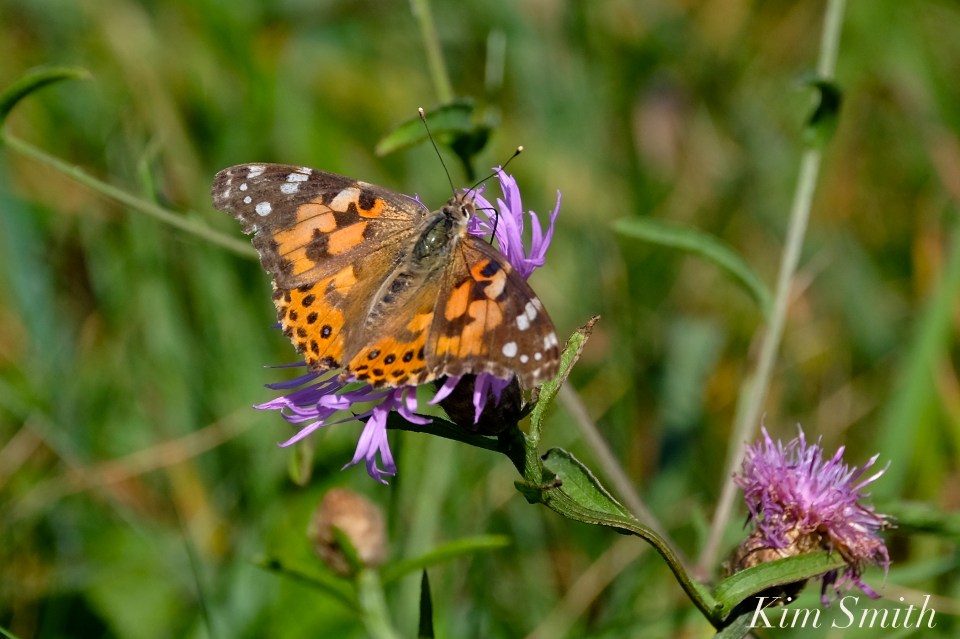
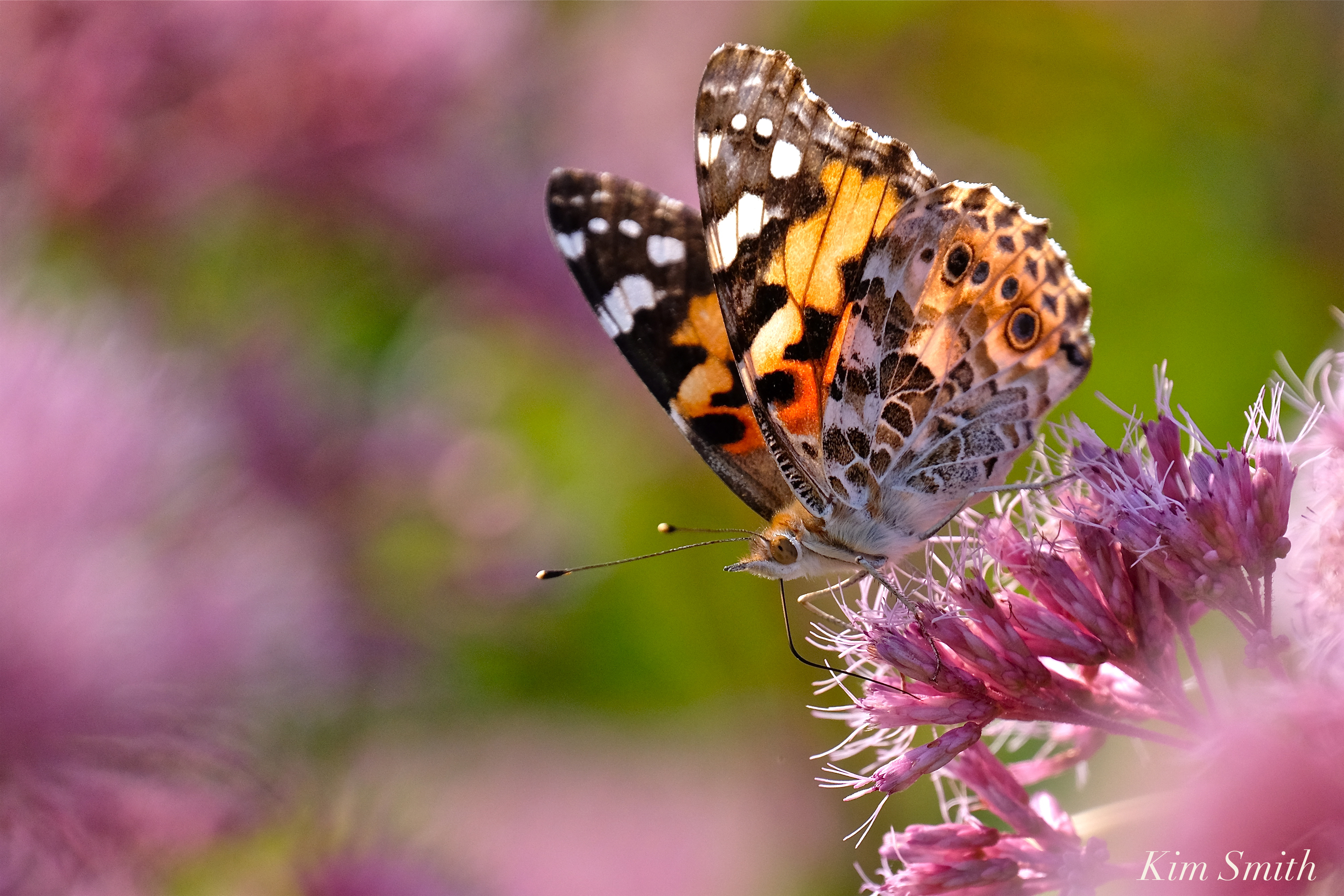
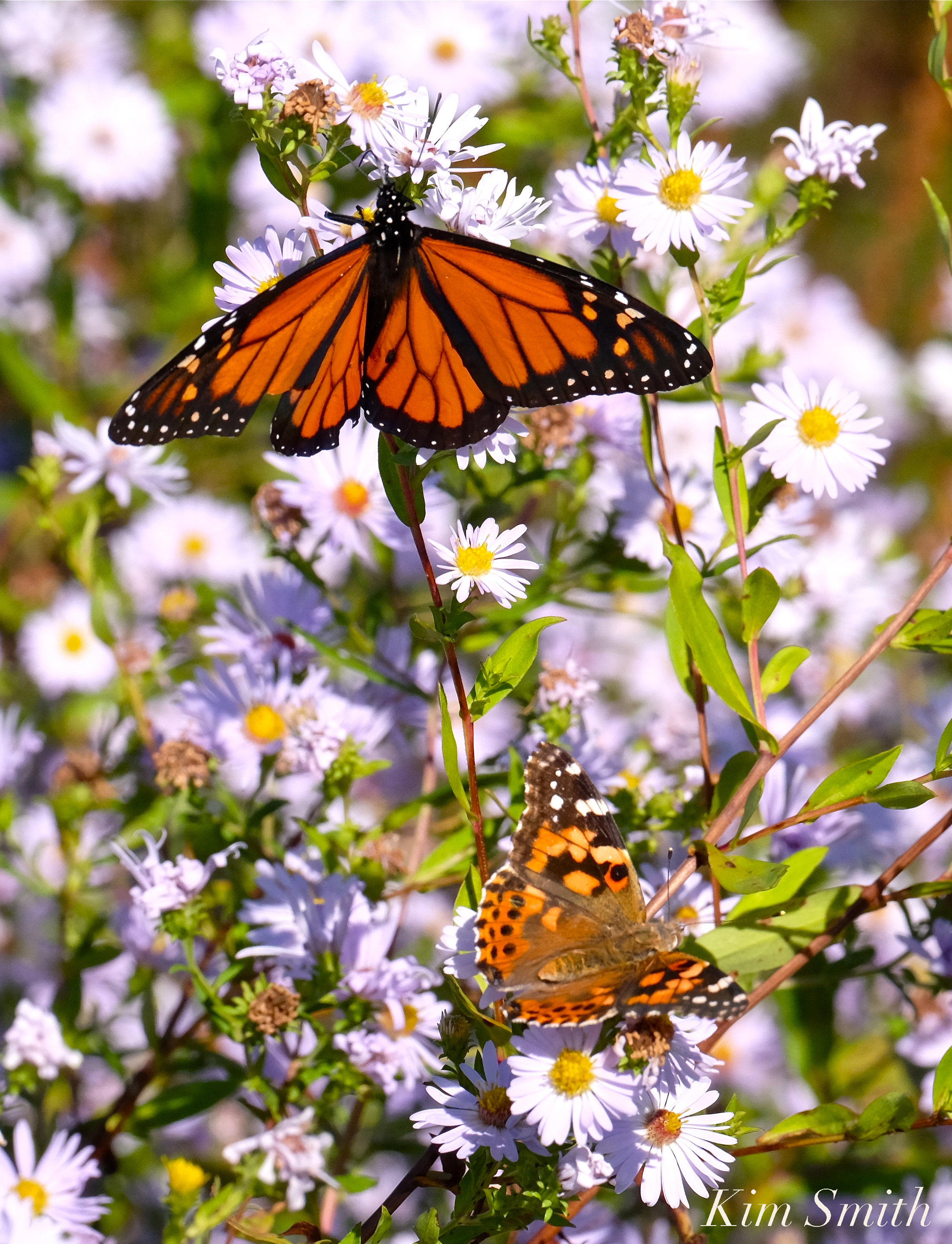
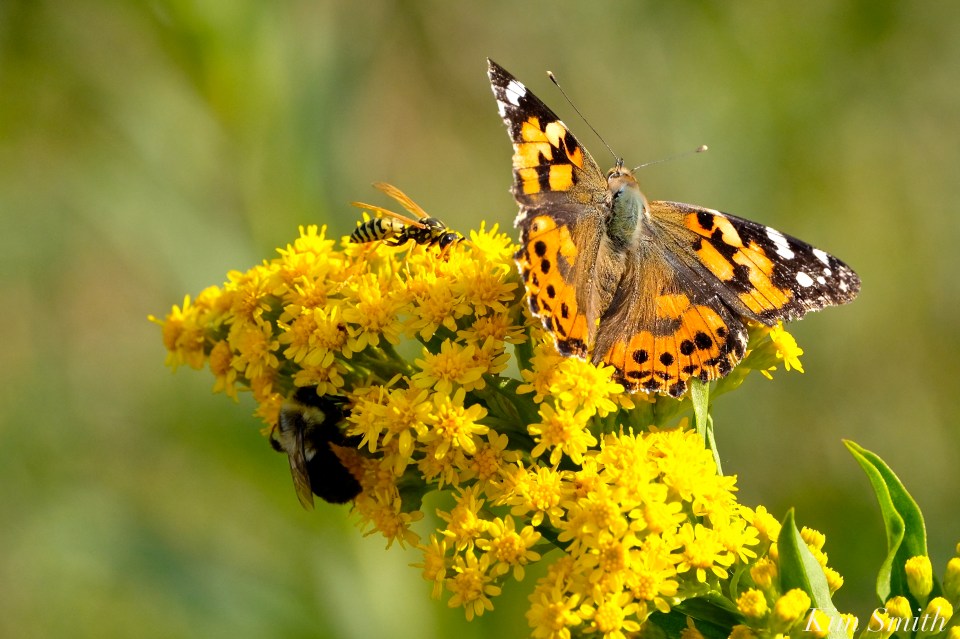
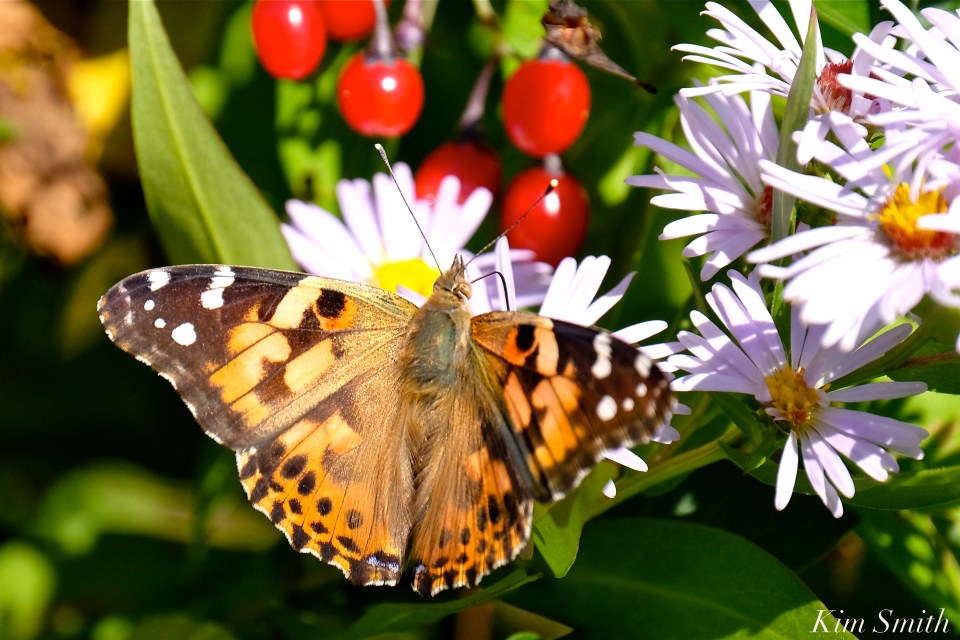
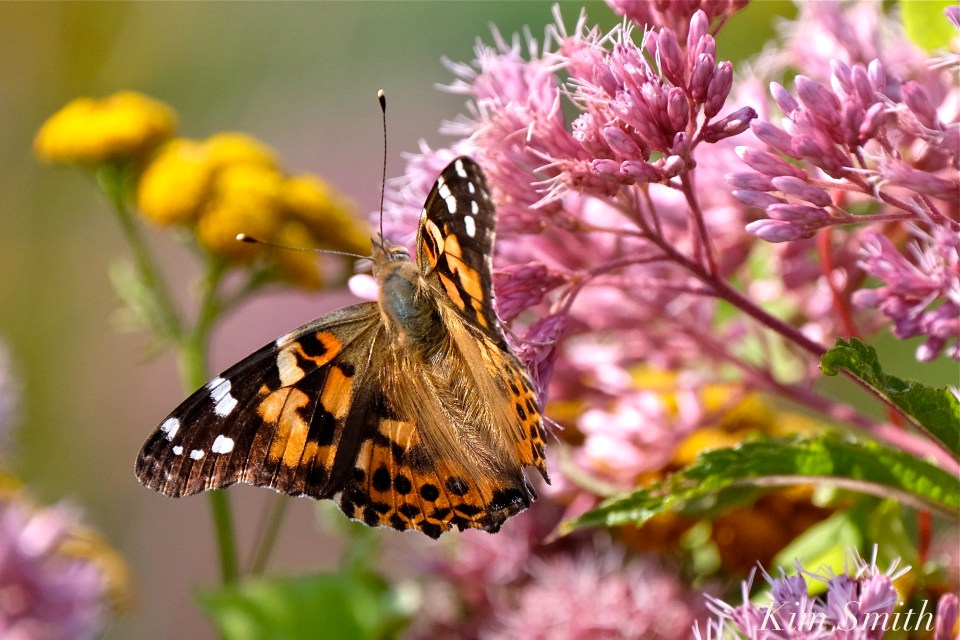
Many readers have written inquiring about the beautiful butterflies with wings in a tapestry of brilliant orange, brown, black, gold, and blue. Painted Ladies (Vanessa cardui) are often confused with Monarch butterflies, especially during the late summer. Both are currently migrating and you will often see the two species drinking nectar side-by-side.

As do Monarchs, Painted Ladies depart from Mexico to begin their northward migration in springtime. Both Monarchs and Painted Ladies belong to the brush-foot family (Nymphalidae) and can only survive in warm climates.

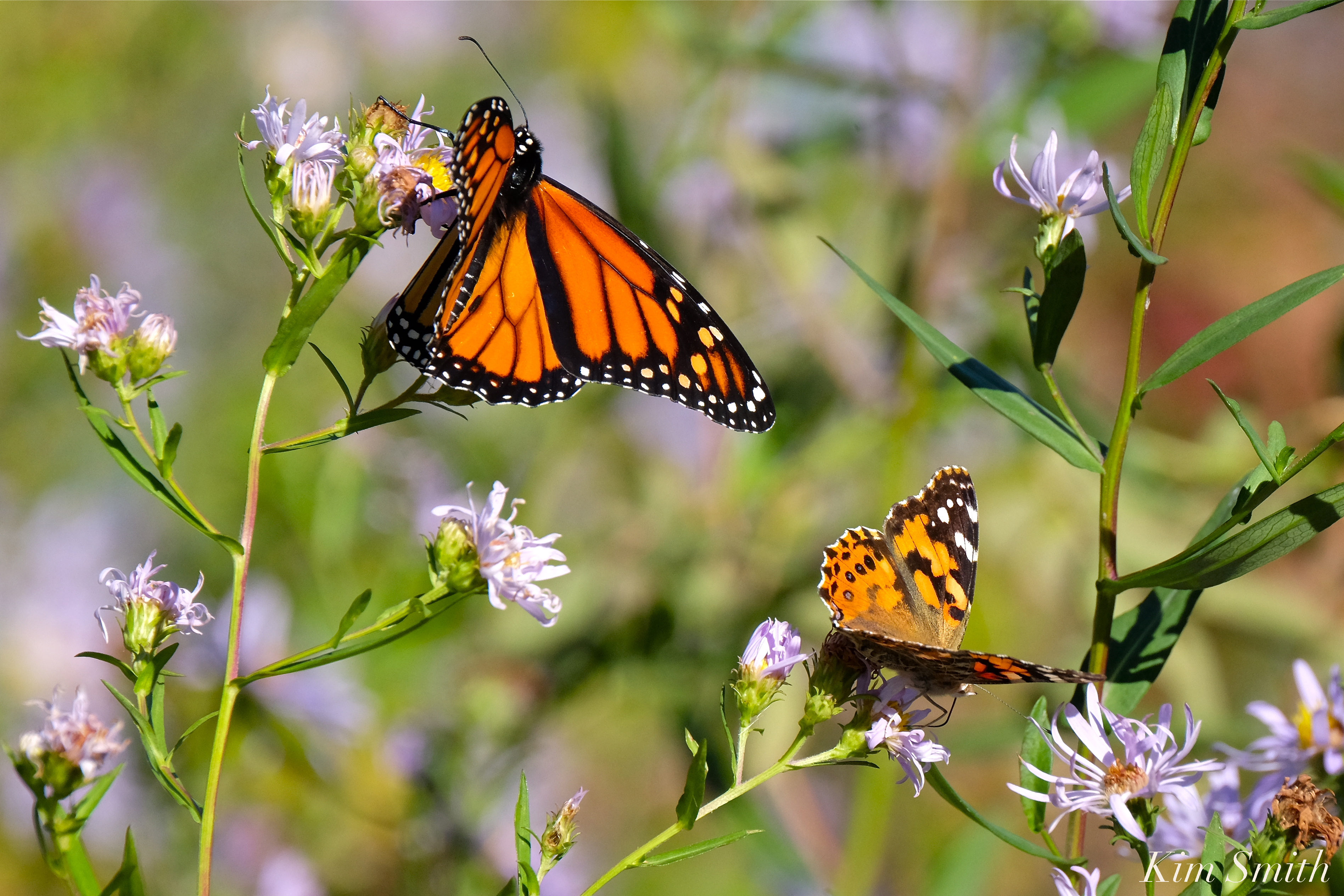
Monarch Butterfly, top, and Painted Lady bottom. Note that the Painted Lady is about half the size of the Monarch.

Sightings from the midwest recorded large numbers early in the season, and 2017 has proven to be an outstanding year for this most successful of butterflies. The Painted Lady is also nicknamed the “Cosmopolitan” butterfly because it is the most widespread butterfly in the world.

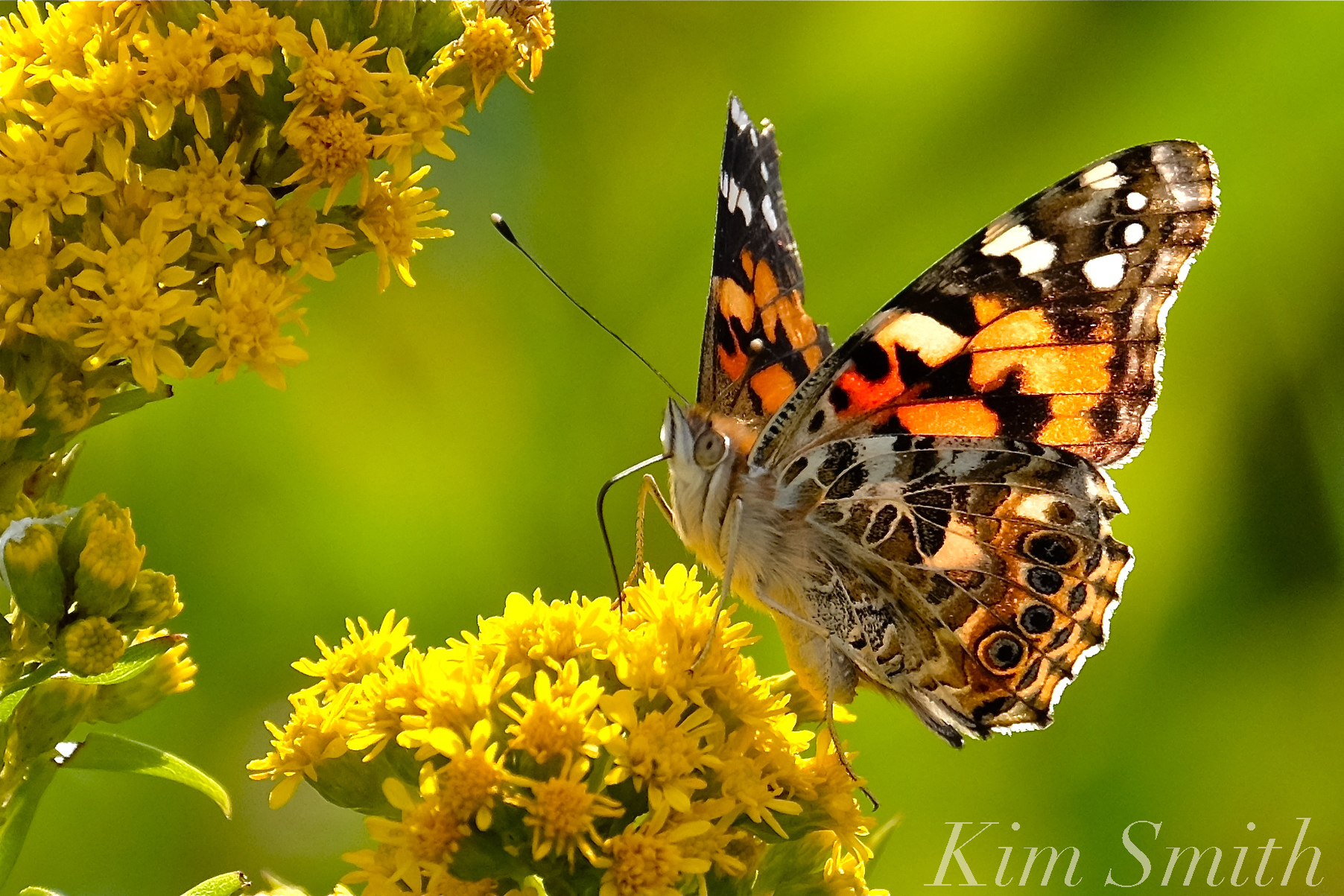
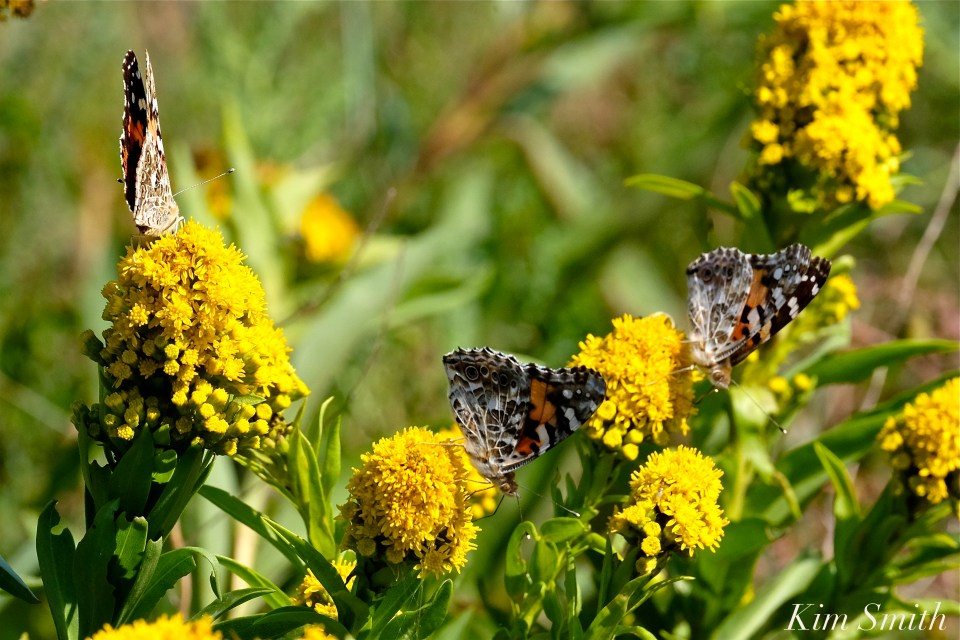
Painted Lady drinking nectar from the Seaside Goldenrod at the Gloucester HarborWalk

One reason we may possibly be experiencing a Painted Lady irruption in North America is because a rainy spring in the south was followed by a fabulous bloom of dessert annuals that provided abundant food plants for the caterpillars. Unlike Monarch butterflies, which will only deposit their eggs on members of the milkweed family (Asclepias), Painted Lady caterpillars eat a wide range of plants. More than 300 host plants have been noted; favorites include thistles, yarrow, Pearly Everlasting, Common Sunflower (Asteraceae), Hollyhock and many mallows (Malvaceae), various legumes (Fabaceae) along with members of Boraginaceae, Plantaginaceae, and Urticaceae.

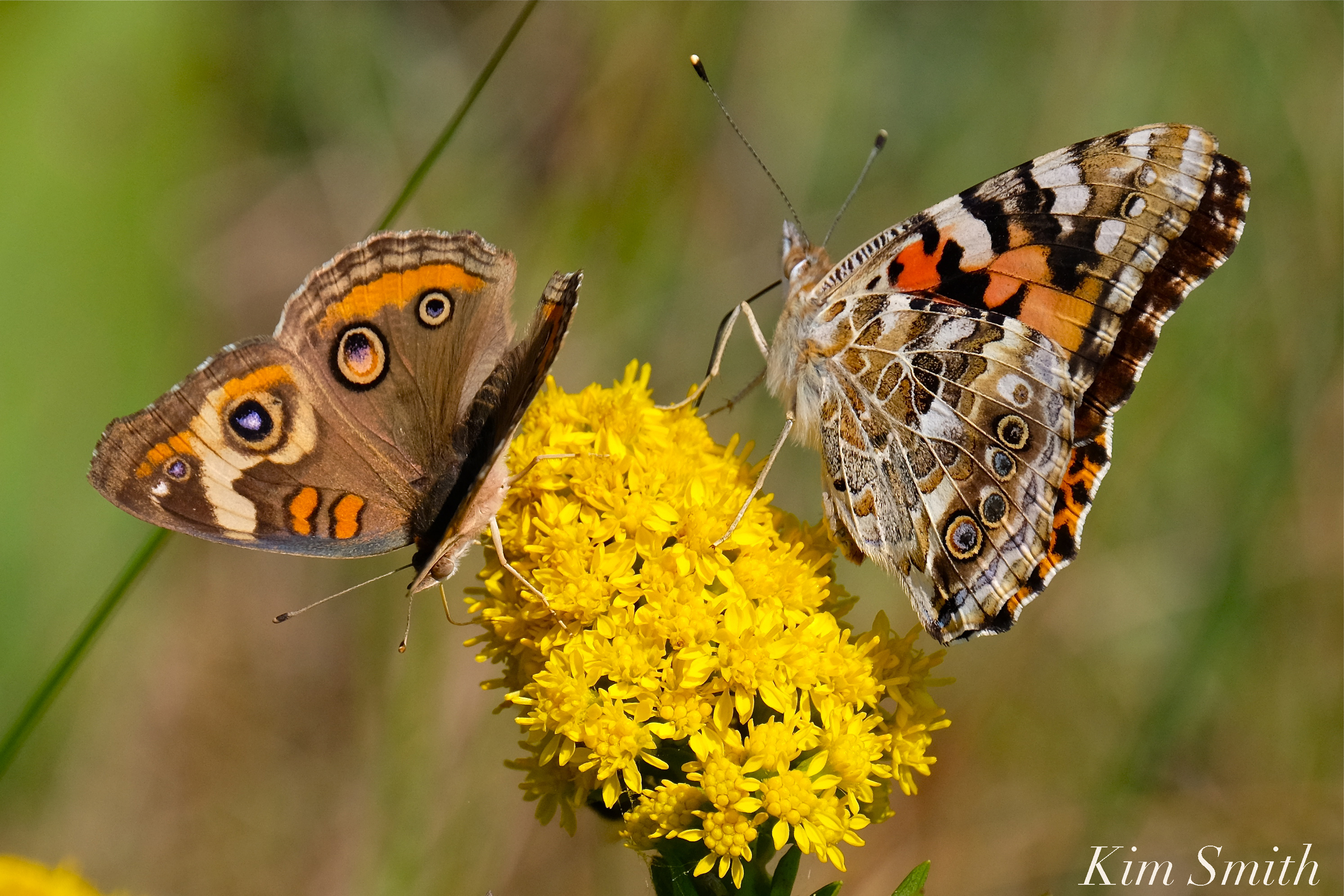
Common Buckeye and Painted Lady Nectaring at the Seaside Goldenrod at the Gloucester HarborWalk  

Much, much more remains to be discovered about the beautiful Painted Lady, its habits and how their behavior and seasonal distribution varies by geographic location.

Painted Lady Drinking Nectar from the Purple-stemmed Aster

MONARCHS HERE, THERE, AND EVERYWHERE PART TWO AND PLEASE CONTINUE TO REPORT YOUR MONARCH SIGHTINGS

The title of the post could just as easily have read Monarchs, Eggs, and Caterpillars Here, There, and Everywhere. I haven’t seen this much Monarch activity on Cape Ann in over ten years and hope so much the number of Monarchs seen in gardens, meadows, and dunes indicates a strong migration.

Thank you to everyone who has written in with your Monarch sightings! The reports are tremendously informative and fun to read, so please, do continue to let us know. The rainy cool weather has temporarily put the kibosh on mating and egg laying, but they are here on our shores and just waiting for a few warm hours and the sun to come out to renew breeding activity.
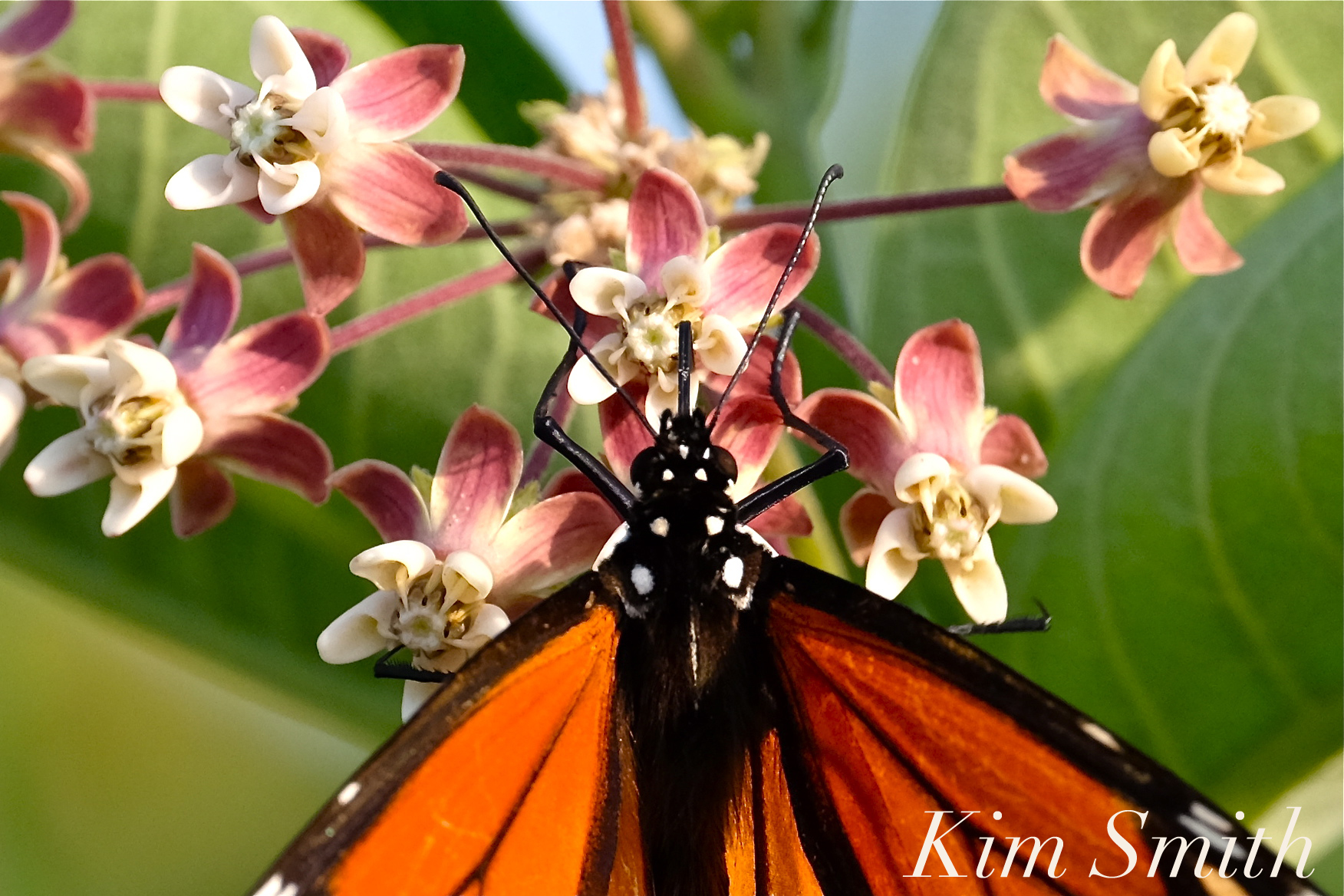
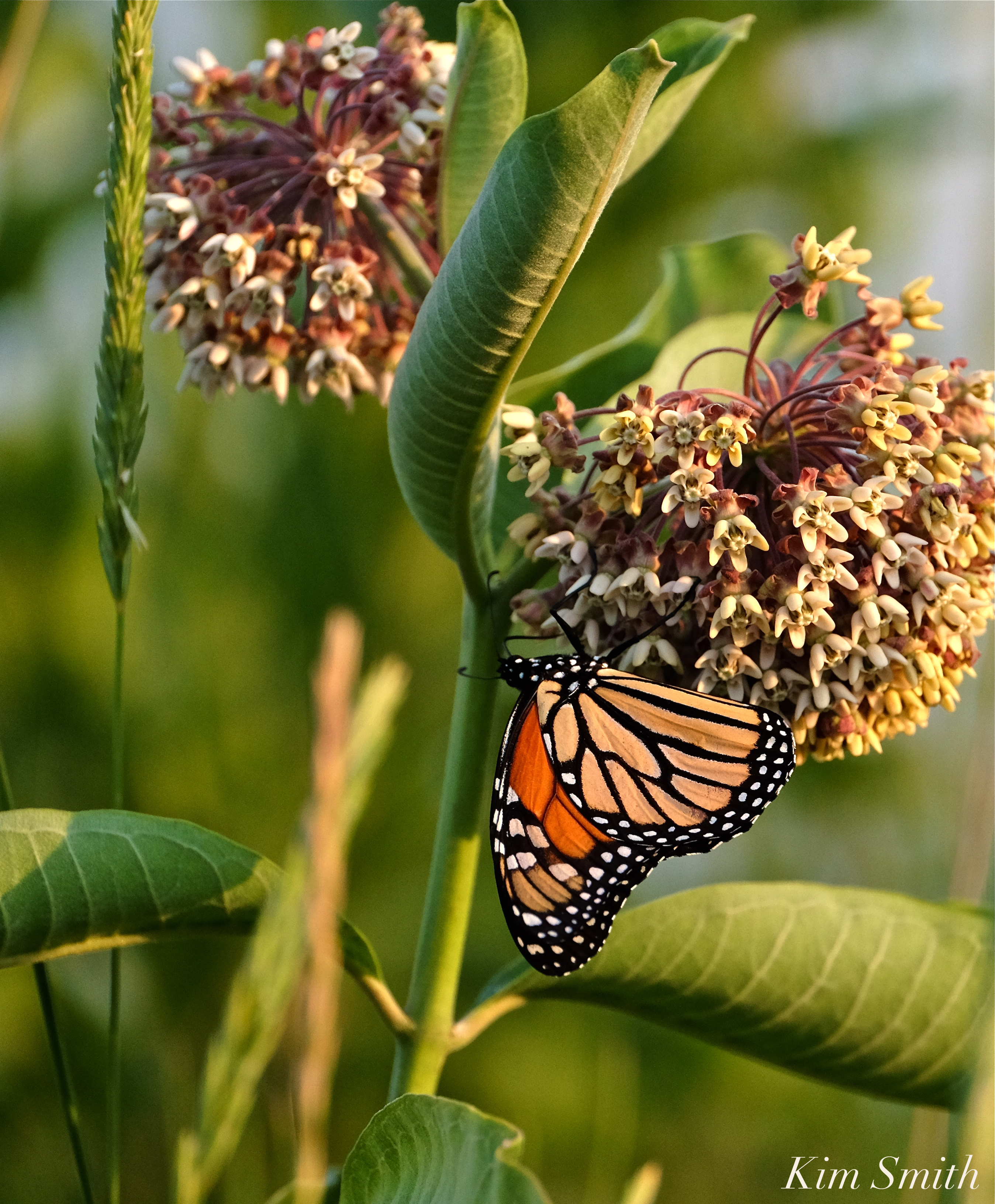
Monarchs not only drink nectar from the florets of milkweed, it is the only species of plant on which they deposit their eggs. In the above photo you can clearly see the Monarch probing for nectar with her proboscis, or drinking straw. 

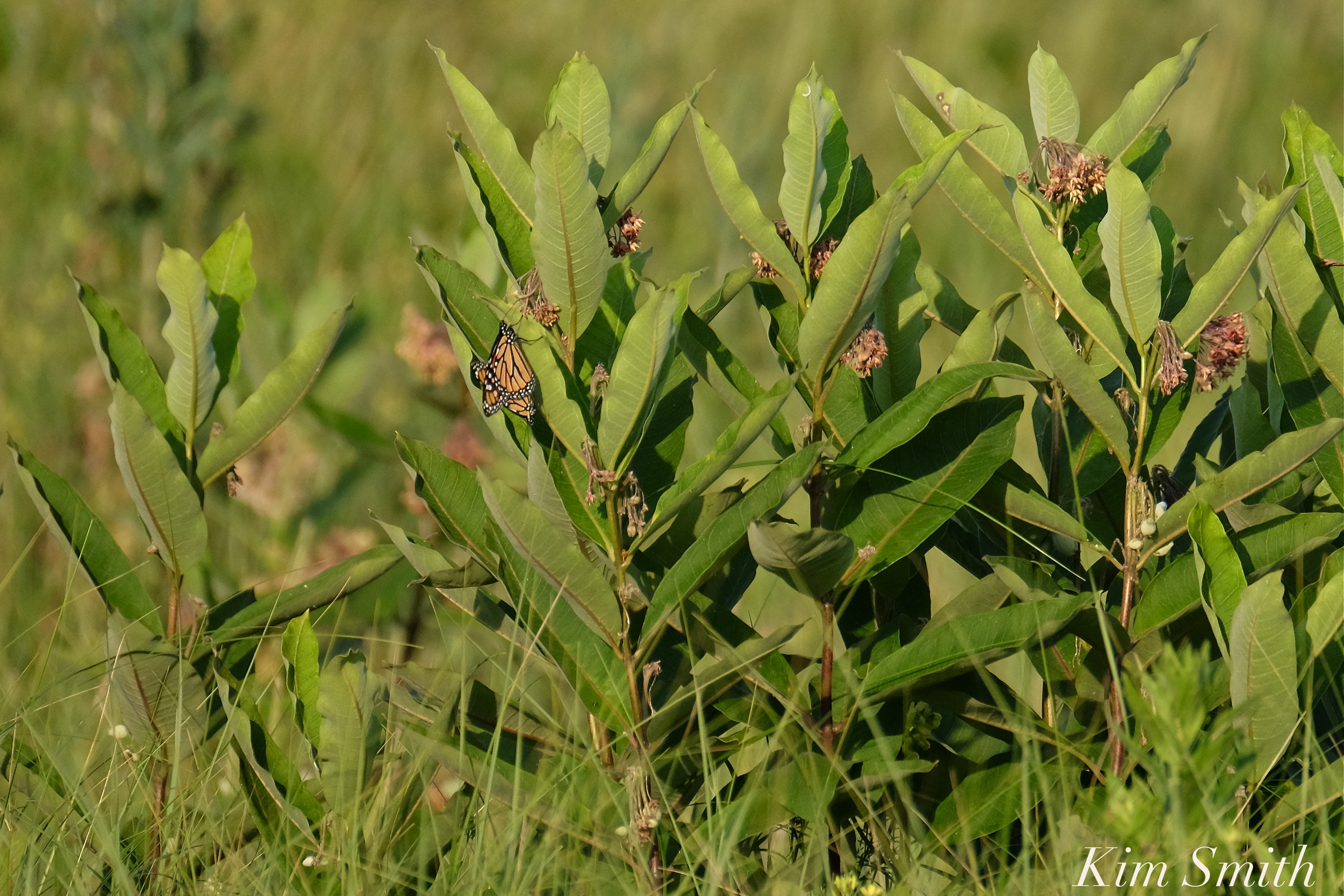
Look for the butterflies, eggs, and caterpillars wherever milkweed grows. In our region, they are most often found on pink flowering Common Milkweed (Asclepias syriaca) and Marsh Milkweed (Asclepias incarnata), as opposed to the orange milkweeds, A. curassavica and A. tuberosa.

 Female Monarch depositing an egg on an upper leaf of Common Milkweed.

The eggs are typically laid on the underside of the leaf, near the top of the plant. Tiny golden domes, no larger than a pinhead, Monarch eggs are easily confused with the eggs of other insects.

Once the tiny caterpillar emerges, it will stay towards the top of the plant, venturing further to larger leaves as it grows.

Four Monarchs in One Photo!

I was trying to take a snapshot of two Monarchs flying but not until I returned home did I realize that resting on a leaf were a pair of Monarchs mating. Lara Lepionka had just sent a photo the day before of a pair mating in a tree above her garden. Typically Monarchs will begin mating on the ground, or the foliage of a lower plant plant such as squash or milkweed. They will join together abdomen to abdomen and, once securely attached, the male then carries the female to a safer location. A male and female Monarch will stay coupled together for four to five hours before releasing (see photo below of a pair of Monarchs mating, towards center left.
Monarch and Common Milkweed Good Harbor Beach

Not everyone has a gorgeous milkweed patch like Patti Papows. Don’t despair. You don’t have to go far! I am finding tons of eggs and caterpillars on the Common Milkweed that grows around the edge of the parking lot at Good Harbor Beach.
Patti Papows Common Milkweed with Monarch and Bee.

Patti Papows Common Milkweed with Monarch and Bee.

https://www.instagram.com/p/BW7wfw-F5o9/

https://www.instagram.com/p/BXDTPFllQh9/

https://www.instagram.com/p/BW1R9IEFAoI/

https://www.instagram.com/p/BXAv8MHF0bO/

MONARCHS HERE, THERE, AND EVERYWHERE! PLEASE REPORT YOUR MONARCH BUTTERFLY SIGHTINGS (EDITED)

Reports of Monarch Butterfly sightings are coming in from all around Cape Ann, and beyond. I have seen more this this year than in recent summers. I wonder if higher numbers in July indicates a stronger migration in September. We can hope!

At this time of year, the females are depositing the eggs of the next generation.  You can find Monarchs at wildflower meadows, dunes, and gardens, where ever milkweed and nectar-rich flora grow. Typically, the eggs and caterpillars are found on the undersides of the uppermost leaves.

If you would, please report any Monarch activity that you have seen–eggs, flight, caterpillars, nectaring, mating, whatever you discover. Please share the approximate date and place. Even if you have shared previously in a comment, I hope to keep all the sightings in one place, so please re-comment. Thank you! 

*EDIT:

Thank you everyone for writing! How exciting that so many are being spotted, many more than the past several years. One was in my garden this morning, again, and two at Good Harbor Beach dunes earlier this morning.

Adding JoeAnn Hart, Susan Burke and Michele Del, as they commented on Facebook.

Patti, do you have caterpillars?? I’d love to stop by and see.

Please keep your comments coming. Thank you!!!!

When watching, note that the first two minutes of the film were shot in Gloucester. I think you will be dazzled by the numbers of Monarchs that travel through Cape Ann’s backyards and meadows during the peak of migration.