Tag Archives: Asclepias syriaca

Monarch Madness!

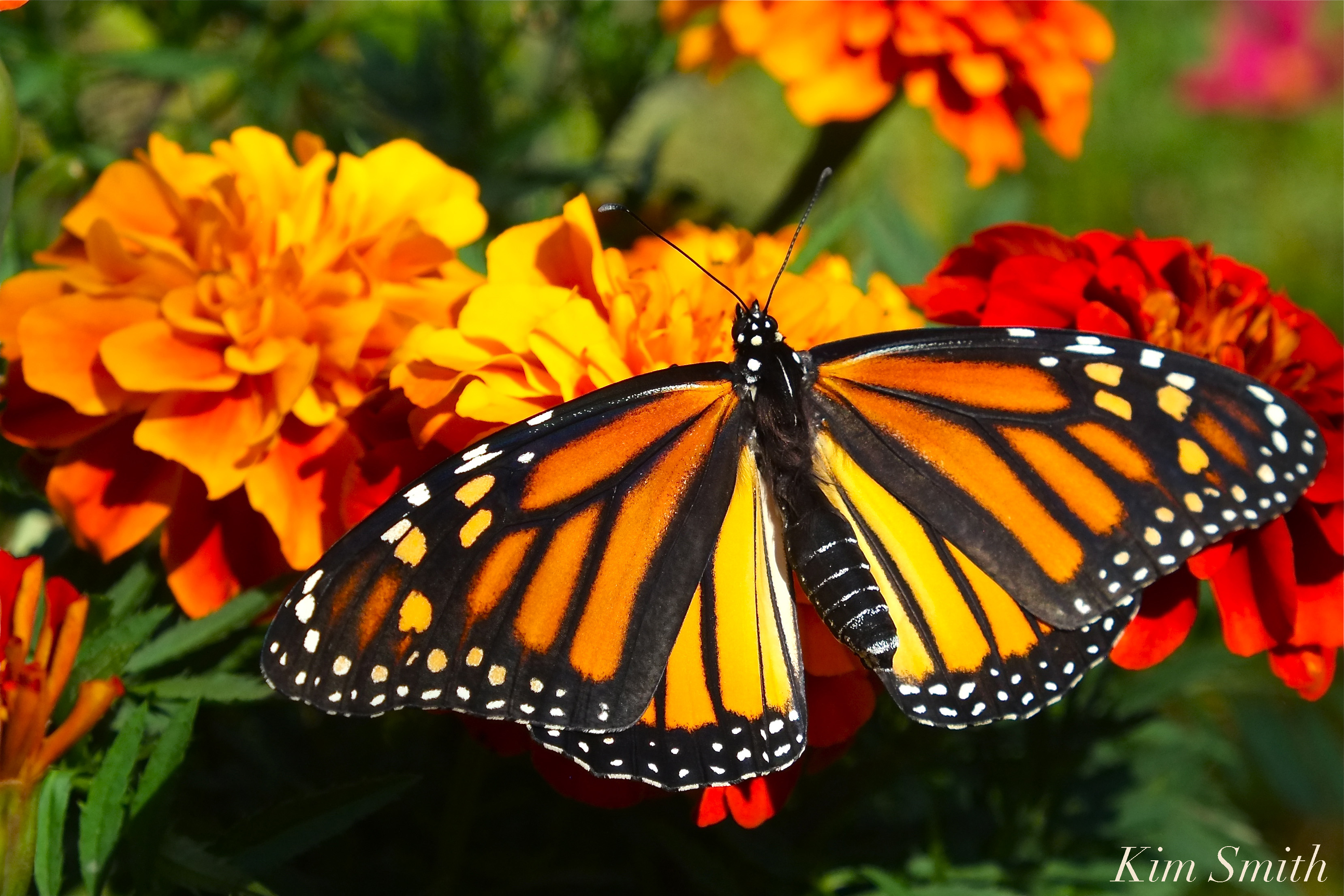
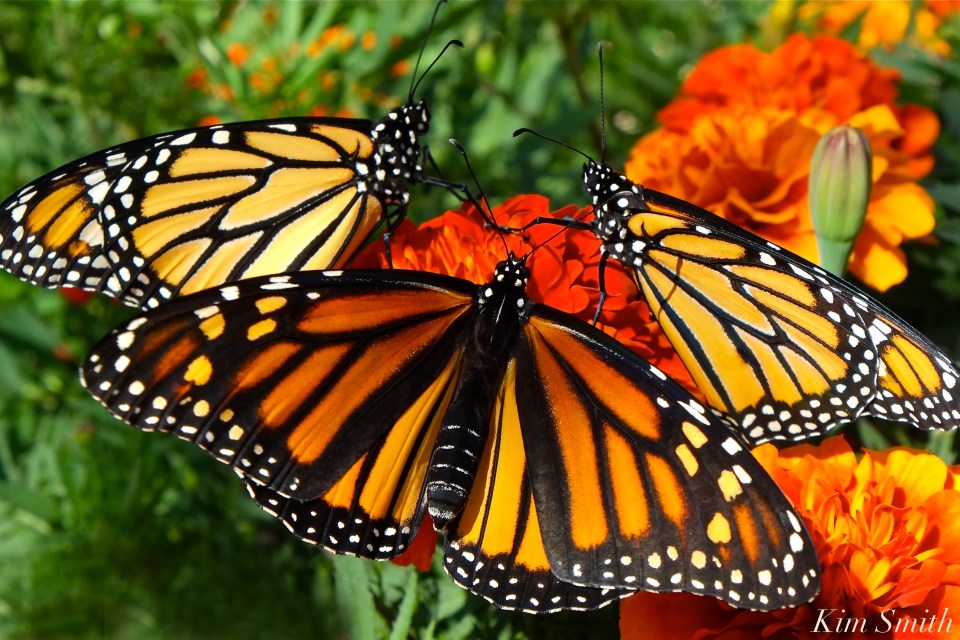
Four Monarchs eclosing and nineteen caterpillars becoming chrysalises, all in a day! And we have a new batch of caterpillars, just in time for my program tomorrow morning at the Cape Ann Museum. I hope to see you there!

Many thanks to my friend Jan Crandall for the caterpillars. She has a gorgeous butterfly garden and this morning there were dozens and dozens of caterpillars on her Common Milkweed plants.

Velvet wings drying in the morning sun.

Monarch Conference

https://www.instagram.com/p/BnWjaQjnipZ/

https://www.instagram.com/p/BnWkKo9HEz2/

CATERPILLAR CONDO

Caterpillar Condo

Several readers have written to ask how do I manage to have so many Monarch Butterfly caterpillars and chrysalises. The answer is very simple–because we have planted a wonderful little milkweed patch! We grow both Common Milkweed (Asclepias syriaca) and Marsh Milkweed (Asclepias incarnata) side-by-side. Our milkweed patch is planted near our kitchen. When washing the dishes, I can look out the window and watch all the pollinators and fabulous activity that takes place at the milkweed patch.

Several weeks ago, a Mama Monarch arrived and I watched as she gently floated from leaf to leaf, and bud to bud, ovipositing one golden egg at a time. She went back and forth between the Common and Marsh, depositing eggs on both the tender upper foliage as well as the more sturdy lower leaves. I waited for her to leave, but not too long (because the eggs are quickly eaten by spiders) and collected the sprigs with the eggs. I thought I had scooped up about eight eggs and you can imagine our surprise when 19 caterpillars hatched, all within the same day! Female Monarchs like to deposit eggs around the tiny buds of Marsh Milkweed and many of the eggs were hidden within the buds.

Here’s a video of a Mama depositing eggs on our Marsh Milkweed buds. Charlotte was with me that day and we were dancing to the song “There She Goes” as the butterfly was depositing her eggs and it was too perfect not to include in the video.

Our garden is postage stamp size, but I have managed to fill it with a wide variety of songbird, butterfly, bee, and hummingbird attractants. The great majority of plants are North American native wildflowers and shrubs, and we also include a few nectar-rich, non-native, but not invasive flowering plants. Plant, and they will come 🙂

I am super excited to give my children’s program at the Cape Ann Museum on Saturday morning. The program is free and open to the public. I hope to see you there!

THANKS TO A CANADIAN CHEMICAL ENGINEER, A VERMONT ACADEMIC AGRONOMIST, RISK-TAKING FARMERS, AND VISIONARY CLOTHING COMPANY FOR A FABULOUS NEW USE FOR MILKWEED

What’s old is new again!

Common Milkweed (Ascleipias syriaca) is the essential food plant for populations of the Northeastern and Atlantic coast Monarchs. During Colonial times, the silky floss found in the dried seed heads was used to stuff quilts and pillows. In the 1860s, in Salem Massachusetts, Common Milkweed silk was used as a mattress filling.

During WWII, Common Milkweed became the substitute for kapok, a soft cottony material from the kapok tree that was the preferred filling for life vests. Japan cut off the supply of kapok from Java, the main source of the material, and part of the wartime effort included children sent to fields to gather millions of pounds of Milkweed seed heads for the armed services.

“What is a weed? A plant whose virtues have not been discovered.” ~ Ralph Waldo Emerson

An innovative Canadian clothing manufacturer, the Quartz Company and Altitude Sports, has created the first modern insulated jacket using milkweed silk. Hundreds of acres of Common Milkweed have been planted in Vermont and Quebec. Particularly noteworthy is that the fields of Milkweed are not harvested until after the Monarchs have left.

READ THE STORY HERE  

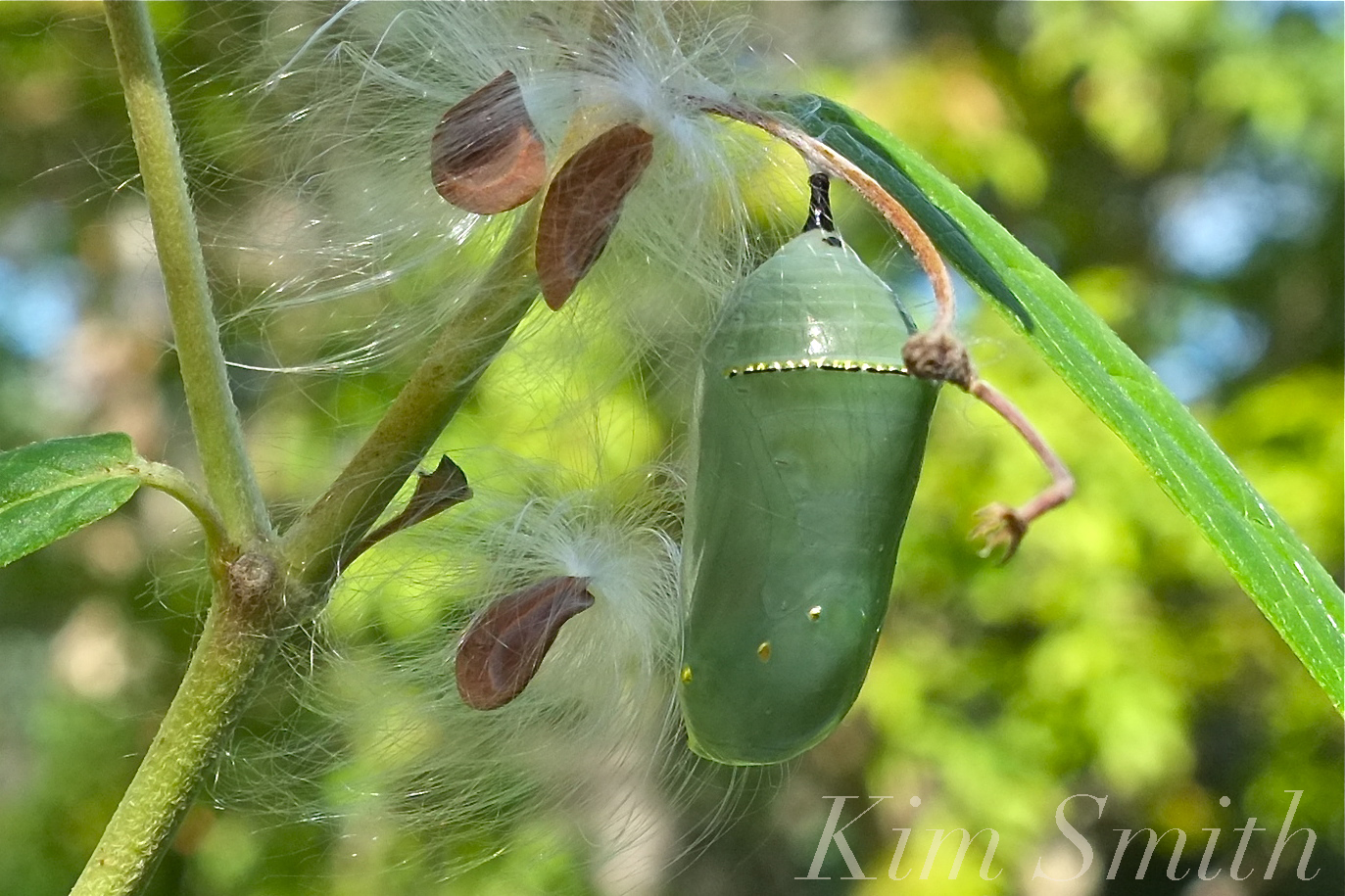
Milkweed Silk and Monarch Butterfly Chrysalis

WWII Common Milkweed photos courtesy Google image search.

LOOK WHAT PATTI PAPOWS MADE FOR SUNDAY’S MILKWEED SEED DISTRIBUTION EVENT!!

Thank you to Patti Papows for putting together these utterly charming pouches of milkweed seeds for our event tomorrow. We also have loads of milkweed pods and Joe-Pye seeds to distribute so come on down to Captain Joe’s dock Sunday morning from 10:30 to noon. We hope to see you there!

Captain Joes is located at 95 East Main Street, Gloucester.

To donate toward the completion of my documentary film Beauty on the Wing: Life Story of the Monarch Butterfly, please visit the film’s website at www.monarchbutterflyfilm.com

COMMUNITY MILKWEED SEED POD PROJECT FOR THE POLLINATORS!

MILKWEED SEED COLLECTION AND DISTRIBUTION PROJECT SUNDAY OCTOBER 15TH

Collect ripe milkweed seed pods (only Common Milkweed and Marsh Milkweed please). Place in a paper bag, not plastic, as plastic can cause the seed pods to become damp and moldy.

Bring seedpods to Captain Joe and Sons on Sunday morning between 10:30 and noon. Captain Joes is located at 95 East Main Street, East Gloucester.

If you’d like to distribute seeds, meet at the dock between 10:30 and noon and I will show you what to do.

NOTE: It is easy to tell when milkweed seedpods are ripe. The seeds inside turn brown. Do not collect the pods when the seeds are white or green. If you pick them too soon, they will never be viable. You can check the seed pods by slitting the pod a tiny bit and peeking inside.

Any questions, please comment in the comment section or email me at kimsmithdesigns@hotmail.com. Thank you and I hope to see you Sunday morning!

To learn more about how you can help fund the documentary Beauty on the Wing and the Monarch Butterfly Film Online Fundraising event, please visit the film’s website at monarchbutterflyfilm.com.

#POLLINATORHERO

Bees and butterflies, as we all know, pollinate flowers, but did you know that bats, songbirds, hummingbirds, wasps, beetles, moths, flies, midges, and even nasty mosquitoes also deliver pollen from plant to plant?

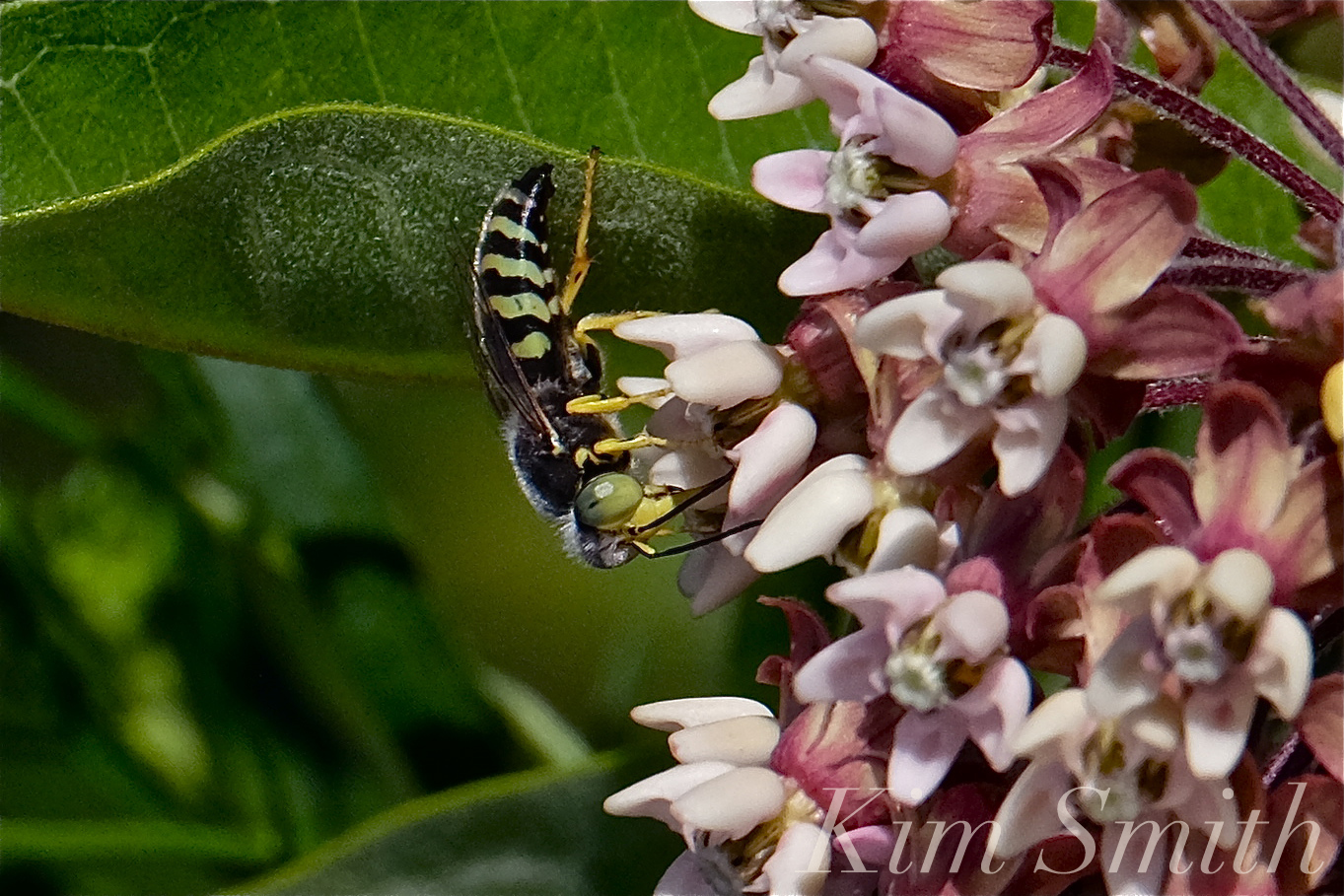
Flower pollinating Green-eyed Wasp drinking nectar from Common Milkweed florets.

The eyes of the male Green-eyed Wasp are larger than the females, all the better to see her, and predators. Green-eyed Wasps are also known as sand wasps because females excavate burrowing nests in sand (as well as soil).

Male Monarch Butterfly flitting about our garden and drinking nectar from the Marsh Milkweed florets.

Notice the mass of orange Milkweed Aphids in the background. Lady Beetles are another pollinator super hero because they help milkweed plants by eating aphids.

https://www.instagram.com/p/BXTNYD9F_We/

Common Milkweed Abloom, Here, There, and Everywhere!

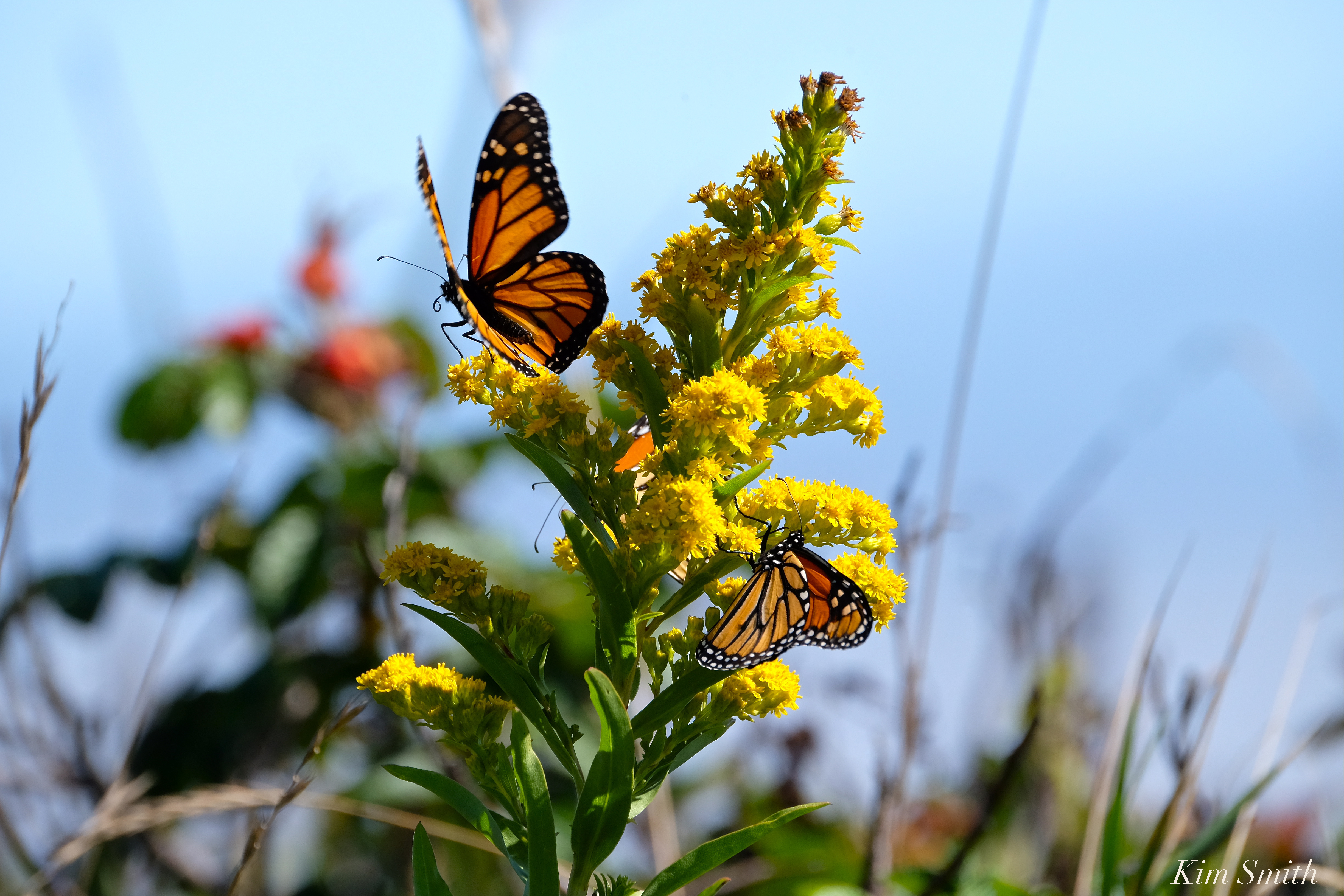
Common Milkweed and Bee Asclepias syriaca ©Kim Smith 2015A patch of Common Milkweed (Asclepias syriaca) in bloom has a wonderfully sweet honey-hay scent. Look for it growing along the sand dunes, roadside edges, fields, meadows, and where ever there is a neglected patch. And keep your eyes peeled for Monarchs; the earliest arrivals (for the most part) are synchronized to the flowering of Common Milkweed.

https://instagram.com/p/4opJl6DyjS/

Friend me on Facebook and follow me on TwitterInstagram, and Vine. You can also subscribe to my design website at Kim Smith Designs, and film’s websites at Beauty on the Wing ~ Life Story of the Monarch Butterfly, Gloucester’s Feast of Saint Joseph Community Film Project, and Life Story of the Black Swallowtail Butterfly.

ORDER YOUR MILKWEED SEEDS TODAY!

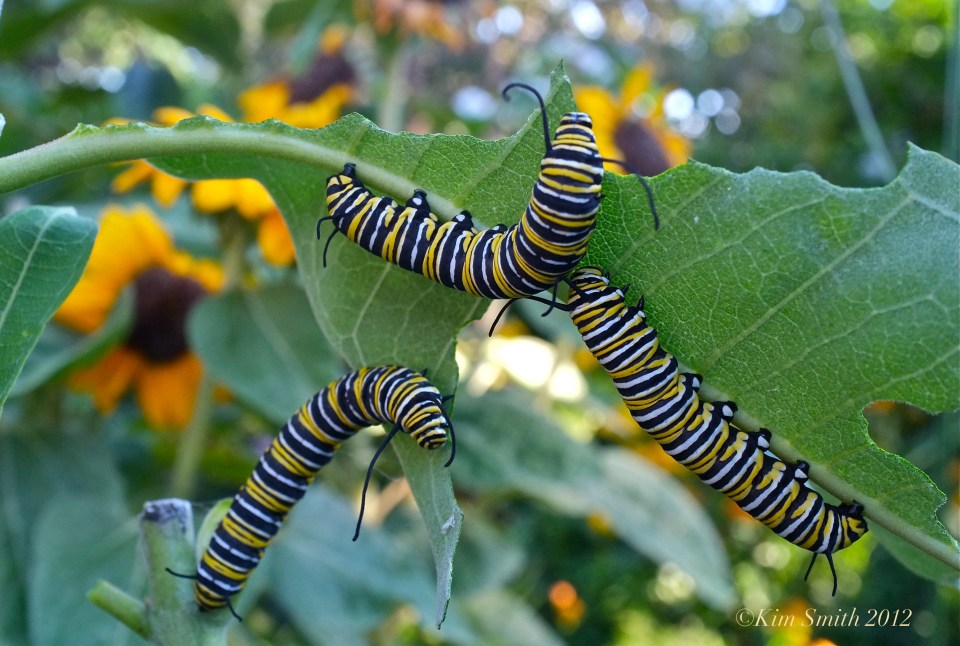
Monarch Caterpillars Eating Common Milkweed ©Kim Smith 2012JPGMonarch Caterpillars Munching on Milkweed

Ordering information:

Please note that the milkweed seeds are available in two different species and two different quantities. Please place your order amounts in the comment section of this post as follows:

Your Name, Your Email Address (optional), and Seed Type and Quantity.

For Example:

Pippi Longstocking, villvillakula@gmail.com

1 Packet Common Milkweed 3.50

1 oz. Marsh Milkweed 15.00

2 Packets Pink New England Aster @ 3.50 ea. = 7.00

My order total: $25.50

We are not collecting money ahead of time for the seeds. The orders are placed entirely by the honor system. Last year we did not have a single stiff and I will accept cash or check at the time of pick up. Seed pick up and information day will be Sunday, May 18th, from 9:30 to noon, at Captain Joe and Sons.

The packets of seeds (200-300 seeds) are perfect for a relatively smallish patch.

The larger ounce quantity is ideal for planting larger areas. On average, plan on 50 seeds per square foot. If your patch is 10 feet x 10 feet, that equals 100 square feet, and would require approximately 5,000 seeds.

Additionally, we are also offering pink and purple New England aster seeds. I’ve never grown New England asters from seed, but have read that they are relatively easy to start (although slow to germinate). New England asters make a beautiful border and will not only offer sustenance to southward migrating Monarchs, but in late summer also provide nectar for myriad species of bees and butterflies.

SEEDS

Common Milkweed (Asclepias syriaca)

Seed Packet (300 seeds) 3.50

1 ounce (4900 seeds) 12.00


Marsh Milkweed (Asclepias incarnata)

Seed packet (200 seeds) 3.50

1 oz. (5,200 seeds) 15.00


Pink New England Aster (Aster novae-angliae variation)

Seed Packet (1000 seeds) 3.50


Purple New England Aster (Aster novae angliae)

Seed Packet (1750seeds) 3.50

*    *    *

Why is it so important to plant milkweed for the Monarchs? Milkweed is the only food plant of the Monarch butterfly caterpillar. The Monarch butterfly migration is in serious peril due to loss of habitat in the United States by the use of Monsanto’s genetically modified Roundup Ready corn, soybean, and sorghum crops. Global climate change is also a factor in the weakening migration. We can all help mitigate some of the destruction by planting milkweed and nectar-rich wildflowers.
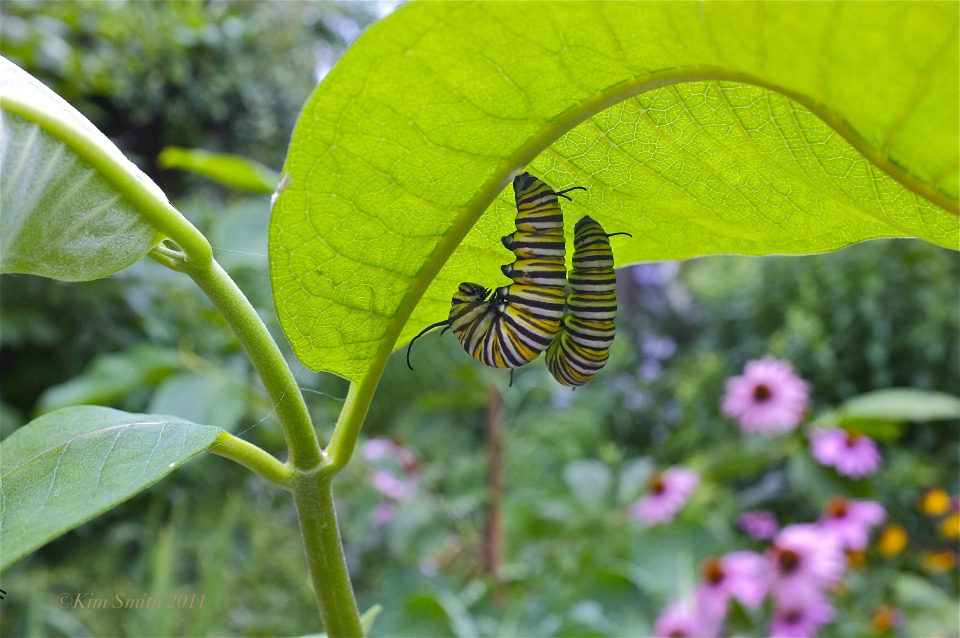
monarch-caterpillars-common-milkweed-c2a9kim-smith-2011Common Milkweed and Monarch Caterpillars J-shape

Common Milkweed (Asclepias syriaca) is the milkweed we see most typically growing in our dunes, meadows, roadsides, and fields. It grows quickly and spreads vigorously by underground runners. This is a great plant if you have an area of your garden that you want to devote entirely to milkweed. It prefers full sun, will tolerate some shade, and will grow in nearly any type of soil. The flowers are dusty mauve pink and have a wonderful honey-hay sweet scent.
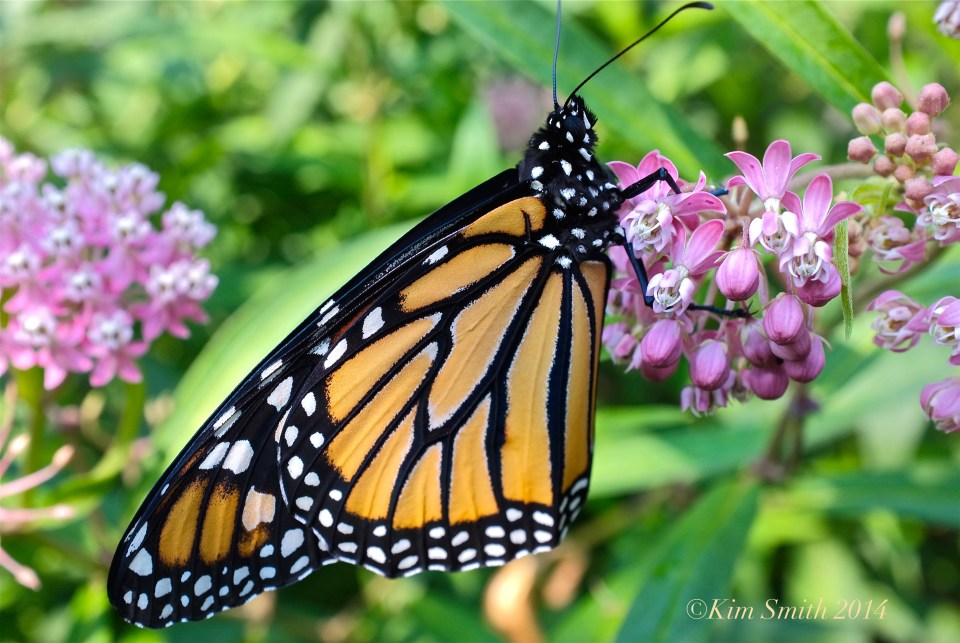
Monarch Butterfly marsh Milkweed ©Kim Smith 2012Marsh Milkweed and Monarch Butterfly

Marsh Milkweed (Aclepias incarnata) is more commonly found in marshy areas, but grows beautifully in gardens. It does not care for dry conditions. These plants are very well-behaved and are more clump forming, rather than spreading by underground roots. The flowers are typically a brighter pink than Common Milkweed.

New England Aster and Monarch Butterfly ©Kim Smith 2014New England Aster

New England Aster (Aster novae-angliae) is a hardy late summer perennial that grows approximately 36 inches to 60 inches. New England asters prefer wet to medium soil, grow well in full sun, and will tolerate part shade.

Cape Ann Milkweed Project Continues ~ Plant Milkweed Seeds to Save the Monarchs!

Monarch Butterfly milkweed Good harbor Beach ©Kim Smith 2011Good Harbor Beach Common Milkweed

Last year was the beginning of our first and wonderfully successful Cape Ann Milkweed Project. My friend Joe Ciaramitaro from Good Morning Gloucester generously offered to hold the plant sale at Captain Joe and Sons, which is very conveniently located on East Main Street, and we had a fantastic turnout. This year I am thinking about doing things a little differently. Rather than shipping and handling live small plants, I am planning to purchase milkweed seeds in bulk. My question is, and this is not the official order form, but just to get a sense of participation, does anyone have an interest in planting milkweed from seed in their gardens, meadows, and/or abandoned areas around our community?

I think I can get good quantities of seed of Marsh Milkweed, Common Milkweed, and Prairie Milkweed. All three are very easy to grow from seed and take about 14 days to germinate. I will provide complete information and tips on growing milkweed from seed.

Please answer in the comment section if you are interested in growing milkweed from seed.

monarch-butterfly-overwintering-graph-journey-north

Why is it so important to plant milkweed for the Monarchs? I’ve written much about that and at the end of the post, please find a list of posts previously published about the importance of milkweed. In a nutshell, milkweed is the only caterpillar food plant of the Monarch Butterfly. The Monarch Butterfly migration is in serious peril. One way we can all take action to is to plant milkweed to help mitigate the loss of habitat, partly due to global climate change and primarily due to the use of Monsanto’s GMO Roundup Ready corn, soybean, and sorghum seed along with the massive use of their herbicide Roundup.

Cape Ann Milkweed Project

News Release: MONARCH WATCH ANNOUNCES ‘BRING BACK THE MONARCHS’ CAMPAIGN

How Exactly is Monsanto’s Roundup Ravaging the Monarch Butterfly Population?

Where Are All the Monarchs?

monarch-butterfly-marsh-milkweed-kim-smith-2011

Request for Help and Monarch Film Update

For the past three years I have been filming the life story of the Monarch Butterfly in backyards and along the shores of Cape Ann. My original intent was to tell the story of the butterflies primarily as it relates to their northern breeding grounds and specifically here in our community. Prior to filming, I wrote a children’s story about the Monarchs and during this entire time I have had an ongoing inner debate as to whether or not to travel to Mexico. While editing the film these past few months, I determined that capturing the butterfly’s story in their winter sleeping grounds as they are awakening in Mexico would only add to the film’s depth and beauty. To film in Mexico would be a dream come true.

In February I am going to Mexico to film the Monarchs!!! This all has come about very quickly! I have to practice walking five miles a day, recall how to ride a horse, and learn enough Spanish so that if I am separated from my group or kidnapped by bandits, I can at least inquire as to where is the bathroom.

Does anyone know of a local outfit that gives lessons in trail riding? And does anyone have experience with a Spanish language lesson CD (basic)? If so, can you please recommend in the comment section. Thank  you!!!!!!!

Stay tuned for adventures from Mexico! Beauty on the Wing ~ Life Story of the Monarch Butterfly will premiere  in the summer of 2014.

Rather than wait until the film was complete, this weekend I made a new website for the film-in-progress. When you have a moment, I hope you’ll visit my website and read more about Beauty on the Wing here.

Monarch Butterfly milkweed Good harbor Beach ©Kim Smith 2011Monarch Butterfly Nectaring at Common Milkweed ~ Good Harbor Beach, Gloucester

Beauty on the Wing celebrates the poetry and majesty of the uniquely North American phenomenon of the Monarch butterfly and its migration. There are no other butterflies the world over that travel this distance and it is a fascinating ecological link that connects Mexico with nearly every geographic region within the United States and Canada. How well the forested habitats of Michoacán are taken care of is as of equal importance to the Monarchs as how we in Gloucester conserve our habitats.