Category Archives: Monarch Butterfly

Hello Mama Monarch

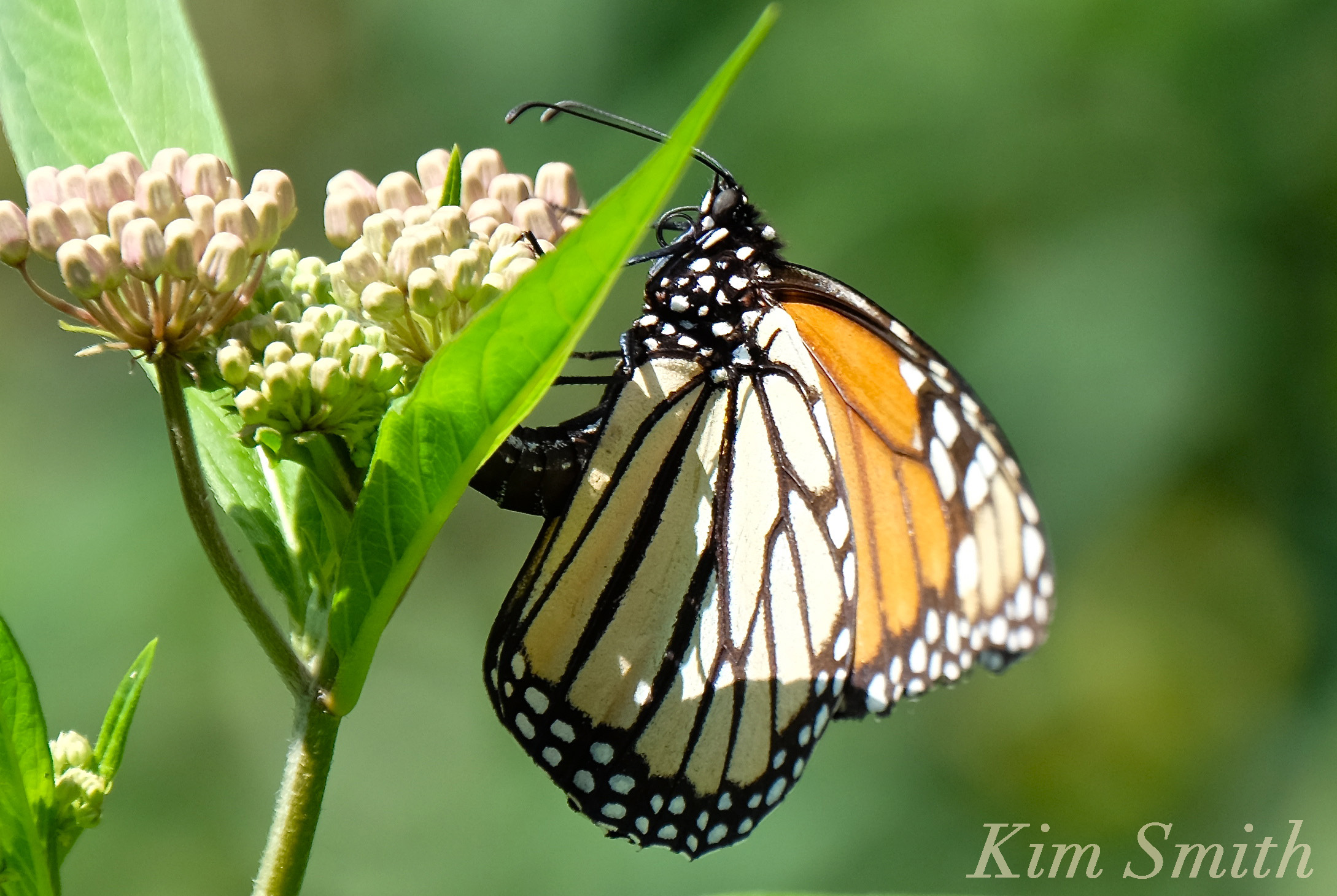
Plant and they will come! Female Monarch depositing eggs -1 copyright Kim Smith Alighting on the buds of our Marsh Milkweed plants, you can see in these photos that the female Monarch is curling her abdomen to the underside to deposit eggs. She will go from bud to bud and leaf to leaf ovipositing one egg at a time. A female, on average, deposits 700 eggs during her lifetime, fewer in hot, dry weather.

Female Monarch depositing eggs copyright Kim SmithFemale Monarch Butterfly and Marsh Milkweed (Asclepias incarnata)

Butterflies do not “lay” eggs; web would say oviposit or deposit. And you wouldn’t describe a caterpillar as hatched, but that it has emerged or eclosed.

Grow Marsh Milkweed and Common Milkweed and you most definitely will have female Monarchs calling your garden home!

Female Monarch depositing eggs -2 copyright Kim Smith
In the above photo you can see how she is contorting her abdomen to correctly position the eggs.

DISCOVERED: THE MONARCHS MEXICAN HAVEN

Forty one years ago today, January 9th is celebrated as the day the Monarchs winter habitat was “discovered.” The woman who led the discovery, Catalina Aguado, was  born in Michoacán, the Mexican state that is home to the butterflies wintering grounds. Catalina is the only living member of the original team featured in the following 1976 National Geographic article.

Excerpt from “Discovered: The Monarchs Mexican Haven”

Doctor Fred Urquhart, the Canadian zoologist who had been studying and tracking the butterflies since 1937 writes the following:

“In our search for the overwintering place, years passed, years of frustration. Norah, late in 1972, wrote to newspapers in Mexico about our project, asking for volunteers to report sightings and to help with tagging.

In response came a letter, dated February 26, 1973, from Kenneth C. Brugger in Mexico City. “I read with interest,” he wrote, “your article on the monarch. It occurred to me that I might be of some help. . . .”

Ken Brugger proved the key that finally unlocked the mystery.

Traveling in his motor home with his dog, Kola, he crisscrossed the Mexican countryside. He searched especially in areas where tagged monarchs had been recaptured, and places where other visitors had reported numerous butterflies. “Go out in the evening,” we instructed him. “That’s when you’ll see the monarchs moving about looking for a place to roost.”

In a letter written in April 1974, Ken reported seeing many monarch butterflies in the Sierra Madre flying at random as if dispersing from a congregating site.

“Your data and observations are exciting,” I replied. “We feel that you have zeroed in on the right area.”

Ken Brugger doubled his field capability by marrying a bright and delightful Mexican, Cathy. Late in 1974 he wrote of finding many dead and tattered butterflies along the roads in a certain area. “You must be getting really close,” we responded. These butterfly remains suggested that birds had been feeding on large flocks of monarchs.

Swiftly came the dramatic conclusion. On the evening of January 9, 1975, Ken telephoned us from Mexico. “We have located the colony!” he said, unable to control the excitement in his voice. “We have found them—millions of monarchs—in evergreens beside a mountain clearing.”

Mexican woodcutters, prodding laden donkeys, had seen swarming butterflies and had helped point the way.”

The complete article is available to read online here.

national-geographic

HOW RELOCATING TREES COULD HELP SAVE THE MONARCH BUTTERFLIES

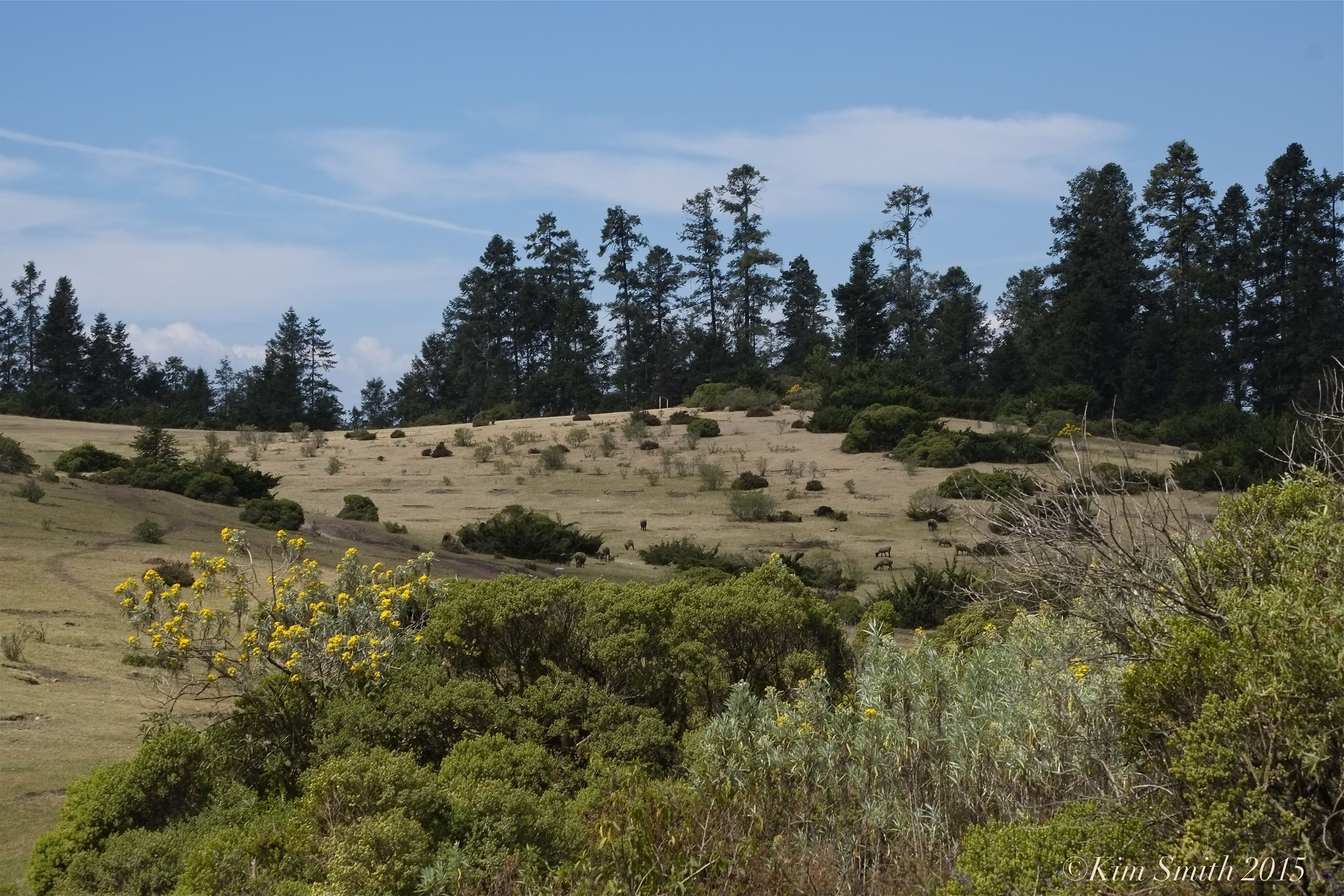
monarchs-el-rosario-©Kim Smith 2014In February of 2014 when I traveled to El Rosario Monarch Butterfly Biosphere Reserve in Angangueo to film the Monarchs, we encountered some difficulty locating the butterflies. Because of global warming conditions the Monarchs had roosted much further up the mountain than was typical. We needed to climb an additional 1500 feet, nearly to the top of the mountain. There was no place higher for the butterflies on this mountain and I wondered at the time, where would they go as the earth becomes increasingly warmer.

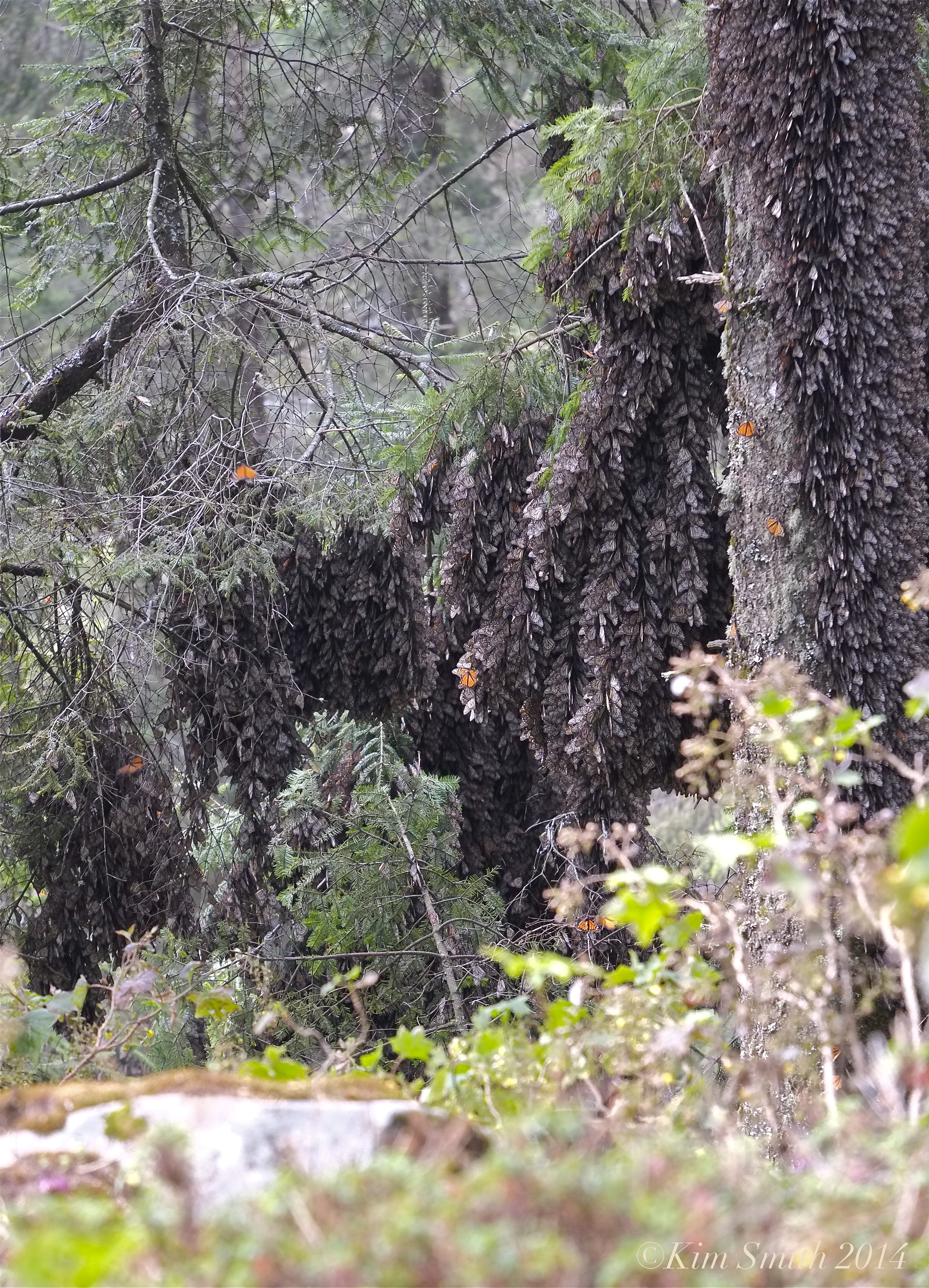
Butterflies are heliothermic, which means they gain heat from the sun. During the winter it is imperative that the butterflies remain relatively cool and in a state of sexual immaturity, called diapause. The sheltering boughs of the sacred Oyamel Fir (Abeis religiosa) trees and the cool temperatures at the higher altitudes of the Trans-Mexican Volcanic Mountain Belt, in the past, have provided optimal habitat for the butterflies.

El Rosario ©Kim Smith 2014Leaving the Chaparral and Entering the Oyamel Fir Forest

Oyamel Fir trees Abeis religiosa ©Kim Smith 2014 copyOyamel Fir Forest

The butterflies currently roost at altitudes between 9,500 and 10,800 feet. Mexican scientists are planning to progressively move the trees higher up the mountainsides in a race to save the fir trees. Last summer several hundred seedlings were planted at 11,286 feet where habitat best suited to Monarchs is expected to be by 2030.

Excerpt from “To Protect Monarch Butterfly, a Plan to Save the Sacred Firs”

By Janet Marinelli

“While U.S. biologists urge gardeners to plant milkweeds to help restore the monarchs’ summer habitat, Mexican scientists are pinning their hopes on a plan to move the species progressively higher up local mountainsides in a race to save these firs and the butterflies that depend on them. “We have to act now,” says the plan’s architect, Cuauhtémoc Sáenz-Romero, a forest geneticist at the Universidad Michoacana de San Nicolás de Hidalgo. “Later will be too late, because the trees will be dead or too weak to produce seeds in enough quantity for large reforestation programs.”

When the rainy season arrived last summer, a few hundred seedlings were planted at 11,286 feet, where habitat suited to oyamel fir trees is expected to be by 2030. By then, according to retired U.S. Forest Service geneticist Jerry Rehfeldt, who co-authored a paper with Sáenz-Romero on global warming’s effect on oyamels, temperatures in the reserve could rise above pre-industrial levels by 2.7 degrees Fahrenheit by 2030, and suitable habitat could shrink by nearly 70 percent. The scientists’ research further suggests that by the end of the century, habitat that meets the fir’s needs may no longer exist anywhere inside the reserve. Trees would have to be planted at higher altitudes on peaks more than 100 miles away from the monarch’s migratory home.

The sacred fir is a poster child for the plight of trees around the globe. Trees provide habitat for countless species and underpin ecosystems as well as human economies, but as a group they are highly imperiled. A diagram in the Intergovernmental Panel on Climate Change’s 2014 Working Group II report shows that of all life forms, trees are least able to respond to rapid climate change. Rooted in place, they have not evolved for rapid locomotion. Many take decades to mature and reproduce.

The breakneck speed of current global warming dwarfs anything in the fossil record, even what Lee Kump, professor of geosciences at Penn State University, has called “the last great global warming” 56 million years ago during the Paleocene-Eocene Thermal Maximum. At that time, over the course of a few thousand years, global temperatures soared 9°F as the supercontinent Pangaea broke apart. By comparison, if carbon emissions are not slashed soon, scientists warn it’s possible we could witness that much warming in a matter of centuries, if not decades. Without human help, trees and many other plant and animal species most likely won’t be able to migrate fast enough to keep pace with rapidly changing conditions.”

READ THE COMPLETE ARTICLE HERE

So many thanks to my friend Eric Hutchins for forwarding this article!!

Monarch butterflies oyamel trees Abeis religiosa ©Kim Smith 2014 copyOyamel Boughs Enveloped in Monarchs

LECTURE BEAUTY ON THE WING ~ THURSDAY NOVEMBER 12TH AT THE SAWYER FREE LIBRARY!

Monarch Butterfly Exposion -2 ©Kim Smith 2014 300dpi copyMonarch Butterfly Explosion

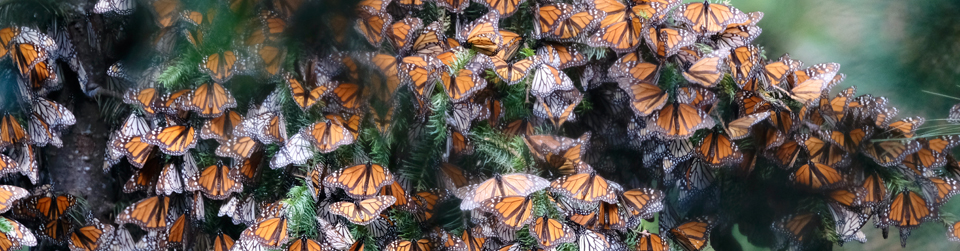
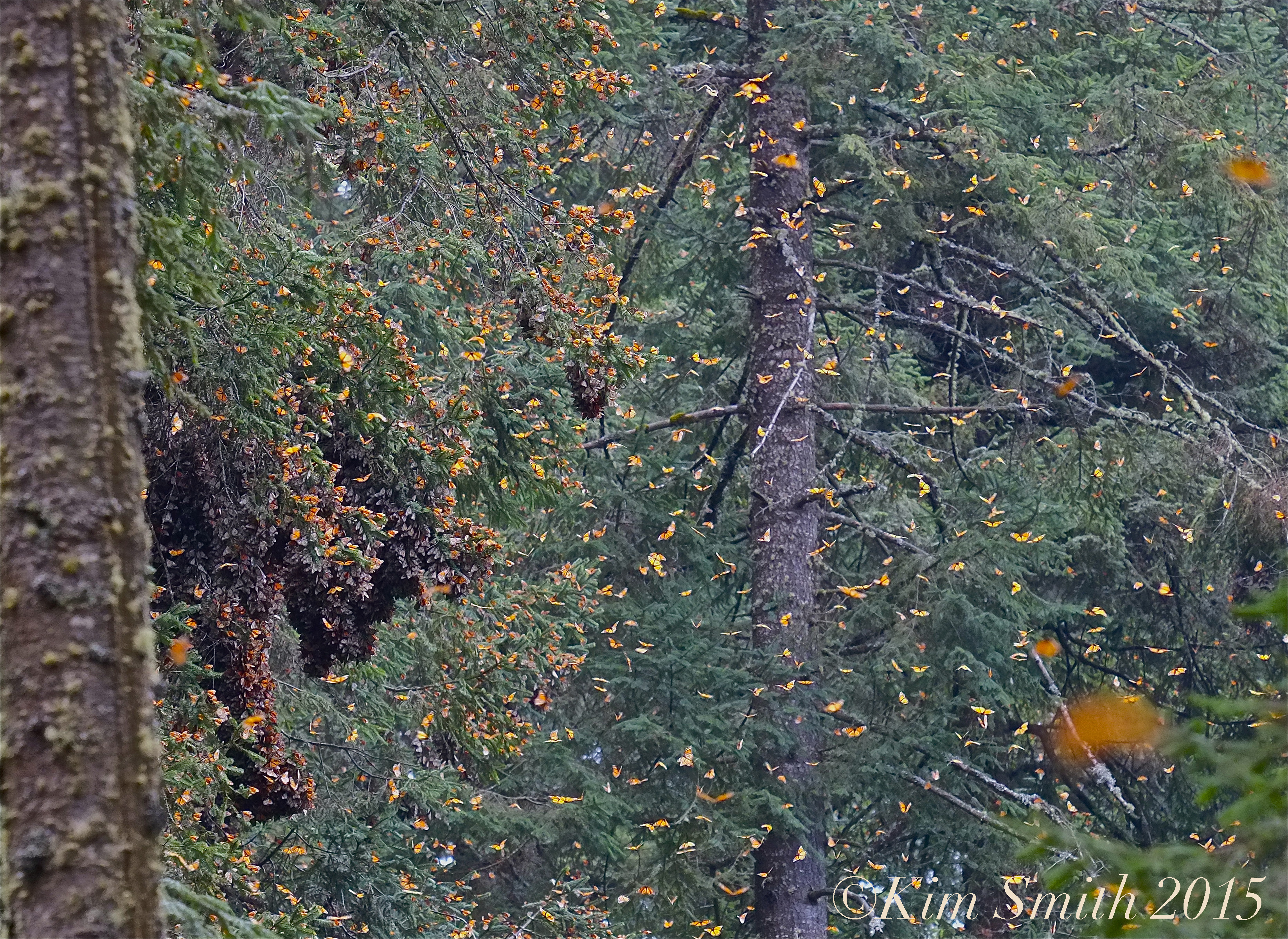
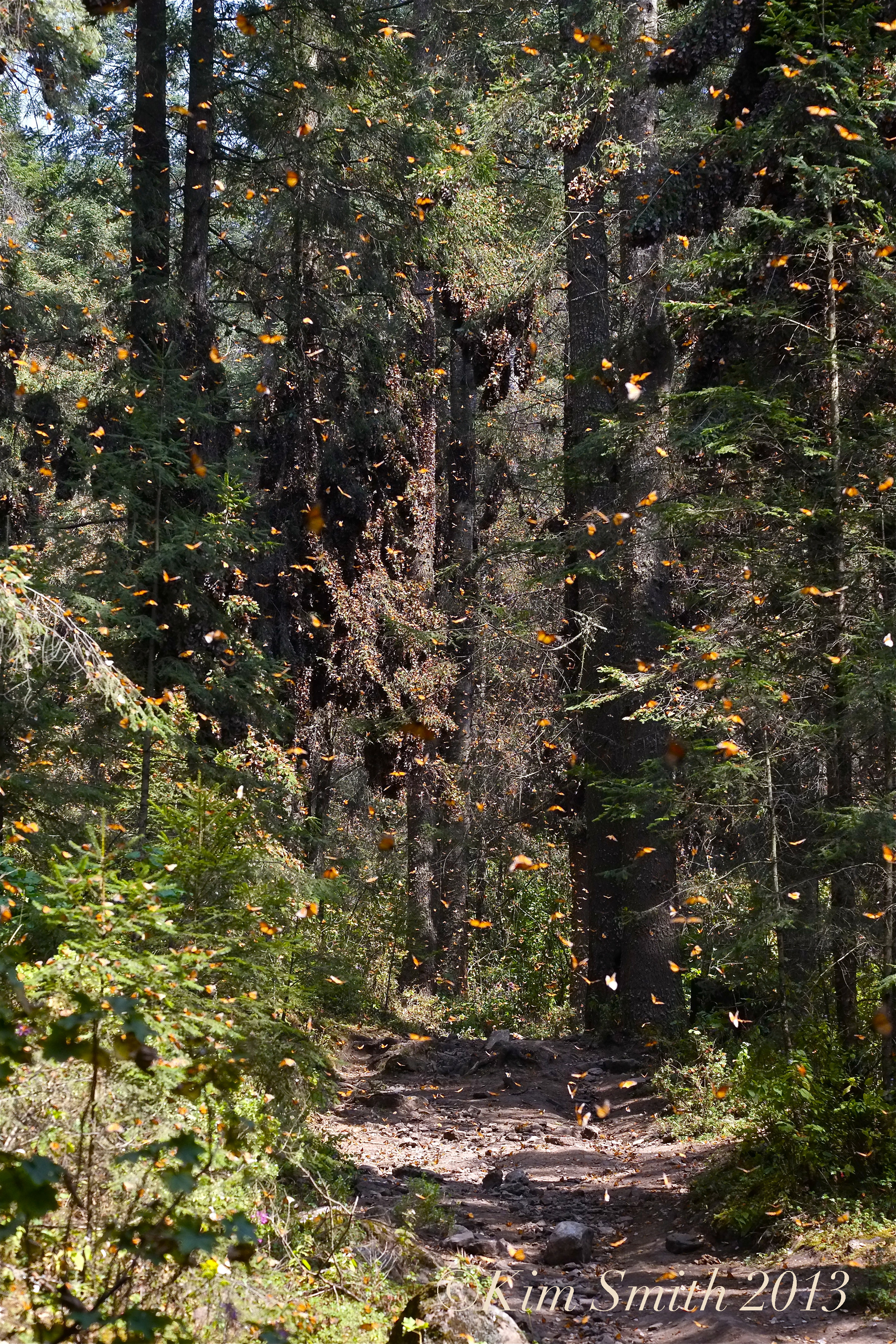
What is a Monarch Butterfly explosion? The butterflies migrate to Mexico to keep from freezing to death in northern climates. The air is cool and moist in the trans-Mexican volcanic mountains, cool enough to keep them inactive and in a state of sexual immaturity, called diapause, but not so cold that they will freeze. As spring approaches and the Earth’s temperature begins to rise, the butterflies sleeping in the oyamel fir forests need to get out of the hot sun. Millions explode from the trees, drink water from nearby mountain streams, and move to a cooler, shadier spot on the mountain.

I hope you’ll come join our program Thursday night at 7pm at the Sawyer Free Library. We’ll be talking all things Monarchs including the current status of the butterfly’s migration, habitat destruction here in our own community, and most importantly, ways in which we can all help the Monarch possibly survive the warming of the earth.

We will be premiering the trailer for my forthcoming film about the Monarchs, too (also titled Beauty on the Wing). I hope to see you there!

For more information, visit the Programs page of my website and the Sawyer Free Library Facebook page.Monarch Butterfly Explosion -1 ©Kim Smith 2014 300dpi copy

MONARCHS WEAPONIZE MILKWEED TOXINS

Monarch Caterpillars Eating Common Milkweed ©Kim Smith 2012JPGMilkweed Munching Monarchs

Although scientists have long known that the toxic sap that flows through milkweed veins, called cardenolides, can make a bird very sick if it attempts to eat a Monarch caterpillar, it was unclear whether the butterfly’s acquired adaption to the toxicity was a side effect that allowed the caterpillar to eat the milkweed or had developed separately as a defensive mechanism against predators. A Cornell University study recently published in Proceedings B of The Royal Society Publishing reveals that they have indeed evolved to weaponize milkweed toxins! Thank you so much to Maggie Rosa for sharing “The Scientist” article and you can read more about it here. 

“Monarch butterfly caterpillars have evolved the ability to store toxins known as cardenolides, obtained from their milkweed diet, specifically to make themselves poisonous to birds, as has at least one other species of milkweed-munching caterpillar, according to a study published Wednesday (November 4) in Proceedings of the Royal Society B.

“This finding is fascinating and novel,” Stephen Malcolm, a professor at Western Michigan University who studies cardenolides but was not involved in the new research, wrote in an email to The Scientist. “It is exciting to have evidence for the importance of top-down influences from predators.” Continue Reading

Please join me Thursday evening, November 12th, at 7pm at the Sawyer Free Library for my illustrated talk, Beauty on the Wing ~ Life Story of the Monarch Butterfly. Looking forward to seeing you there!Meadow monarch caterpillar ©Kim Smith 2015
Meadow Anderson and Milkweed Caterpillar

SAFE TRAVELS MONARCHS!

Cape Ann Monarch Butterfly Migration Update

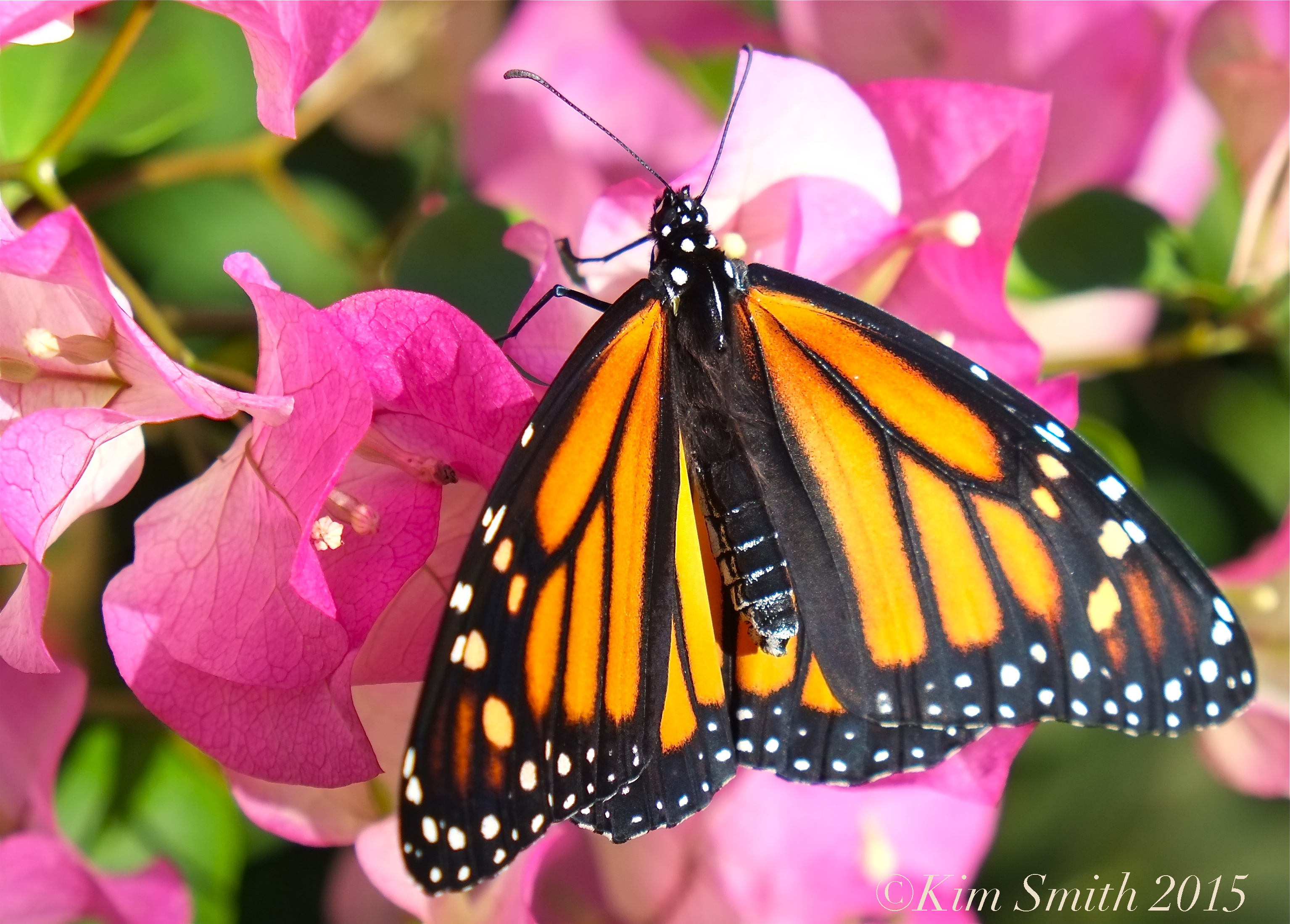
Monarch Butterfly bougainvillea ©Kim Smith 2015Female Monarch and Bougainvillea

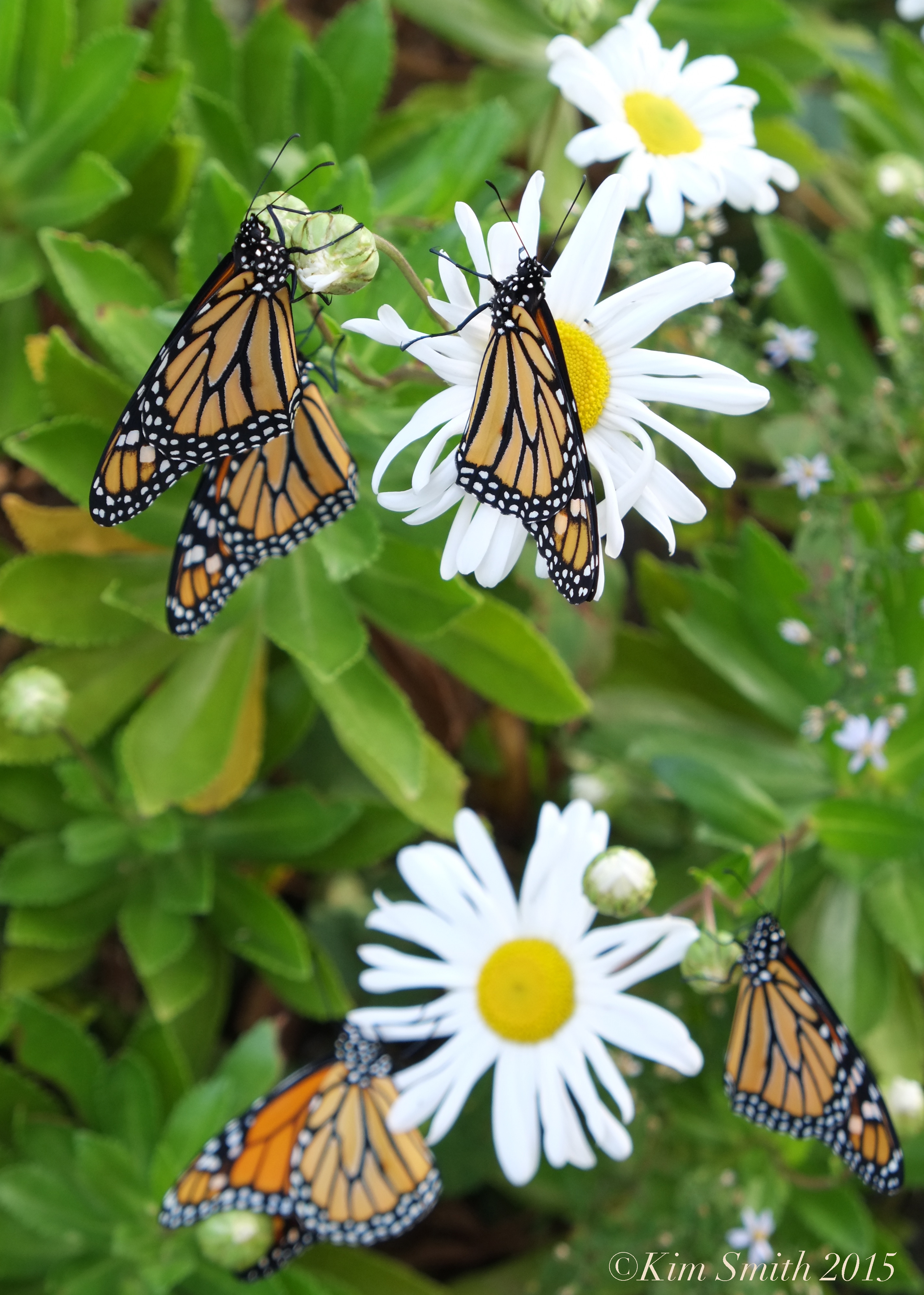
Monarch Butterflies Daisies ©Kim Smith 2015Methuselah Monarchs Heading to Mexico

Our last batch of Monarchs emerged from their chrysalides, dried their wings, and caught the tailwinds to Michoacán. I hope they arrive to their winter roosting sites at the trans-Mexican volcanic mountaintops safely!

Although not many migrating Monarchs were reported on the shores of Cape Ann, a great batch was seen migrating over Lake Erie in late summer. Cape May, which is 400 miles south of Cape Ann, also had a strong showing. Keep on the lookout though because on Election Day in 2007, I photographed a Monarch refueling at Korean Daisies.

The Monarchs are counted by the Mexican scientists in December and the numbers released in January. Last year a tiny increase from 2013 was noted (2013 was the year the lowest numbers were ever recorded). Lets keep our hopes up that the population will continue to improve.

Monarch Butterfly sunflower ©Kim Smith 2015Last Sunflowers of the Season

Monarch Butterfly daisy ©Kim Smith 2015Monarch Butterfly pink bougainvillea ©Kim Smith 2015

MY MONARCH BUTTERFLY PROGRAM AT THE SAWYER FREE LIBRARY

Dear Friends,

Please join us at the Sawyer Free Library on Thursday November 12th at 7:00 pm for my Monarch butterfly program. I am especially, especially excited to present to our community. I hope to see you there! Please note that this is my photo and lecture program, not the new film, which will be coming soon.

For more information visit my website Kim Smith Designs.

2- Monarch New England Aster ©Kim Smith 2013


MONARCH DAY! STARRING THE EAST GLOUCESTER NEIGHBORHOOD GANG

Pilar Monarch Day ©Kim Smith 2015Pilar has started a new fashion trend, Monarchs as hair accessory.

Enchanted by Monarchs!  We had a fantastic day filmmaking, thanks to Emma, Pilar, Frieda, Annie Kate, Lotus, April, Elijah, Esme, Charlie, Atticus, and last but not least, Meadow. And an extra huge thank you to all the moms and dads for not minding the early morning wake up calls and texts to let the kids know the butterflies were emerging! I was tied up filming and so wish I’d taken more stills.

Annie kate, Emma, Pilar Monarch Day ©kim Smith 2015 copyAnnie Kate, Emma, and Pilar

Meadow Monarch Day ©Kim Smith 2015 copyMeadow

See More Photos Here Continue reading

MONARCH CATERPILLAR NONUPLETS

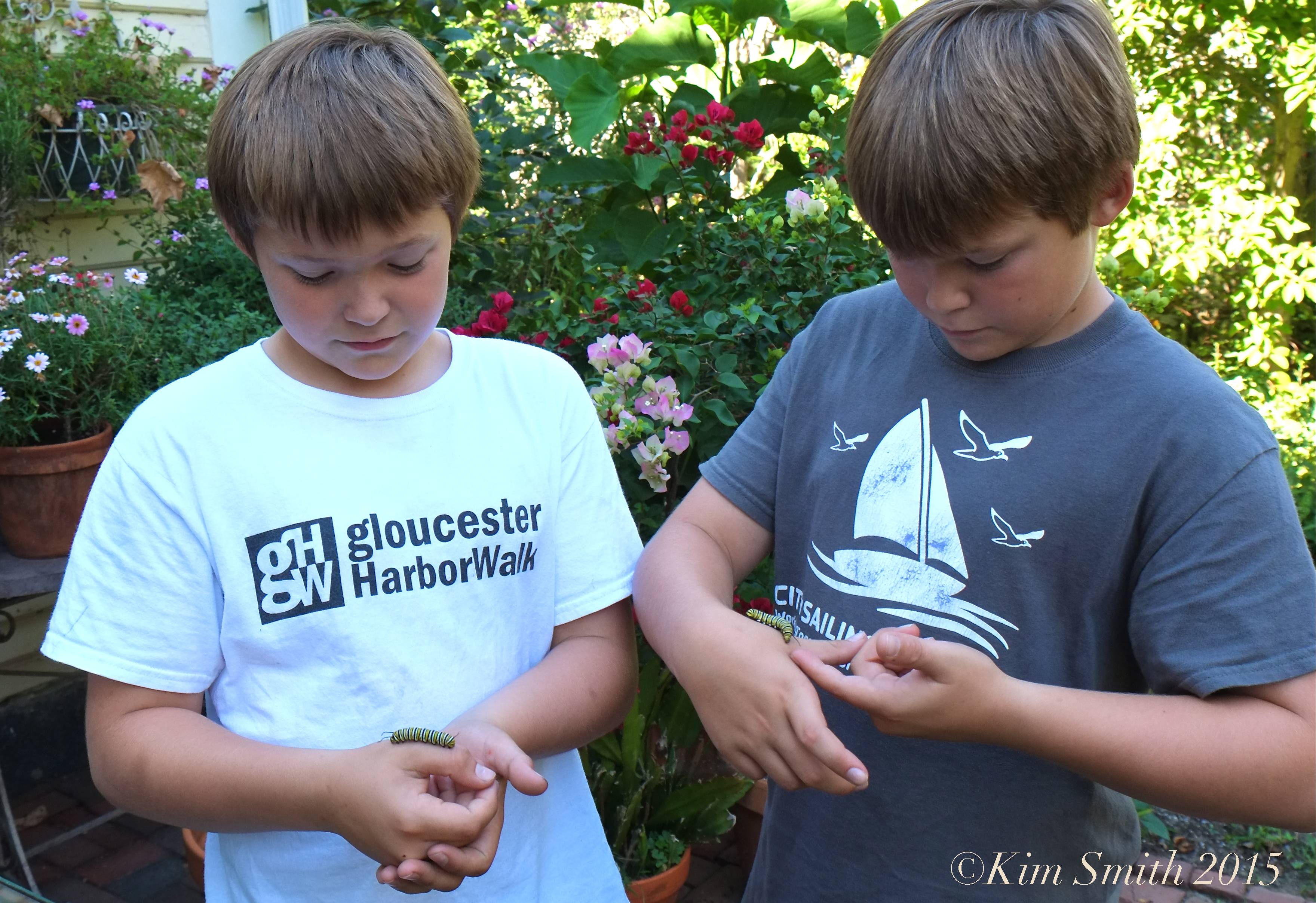
Thank you so much to my friends Charles and George Ryan and Mom Catherine for helping with the Monarch film project. Charles and George Ryan Monarch caterpillars ©Kim Smith 2015

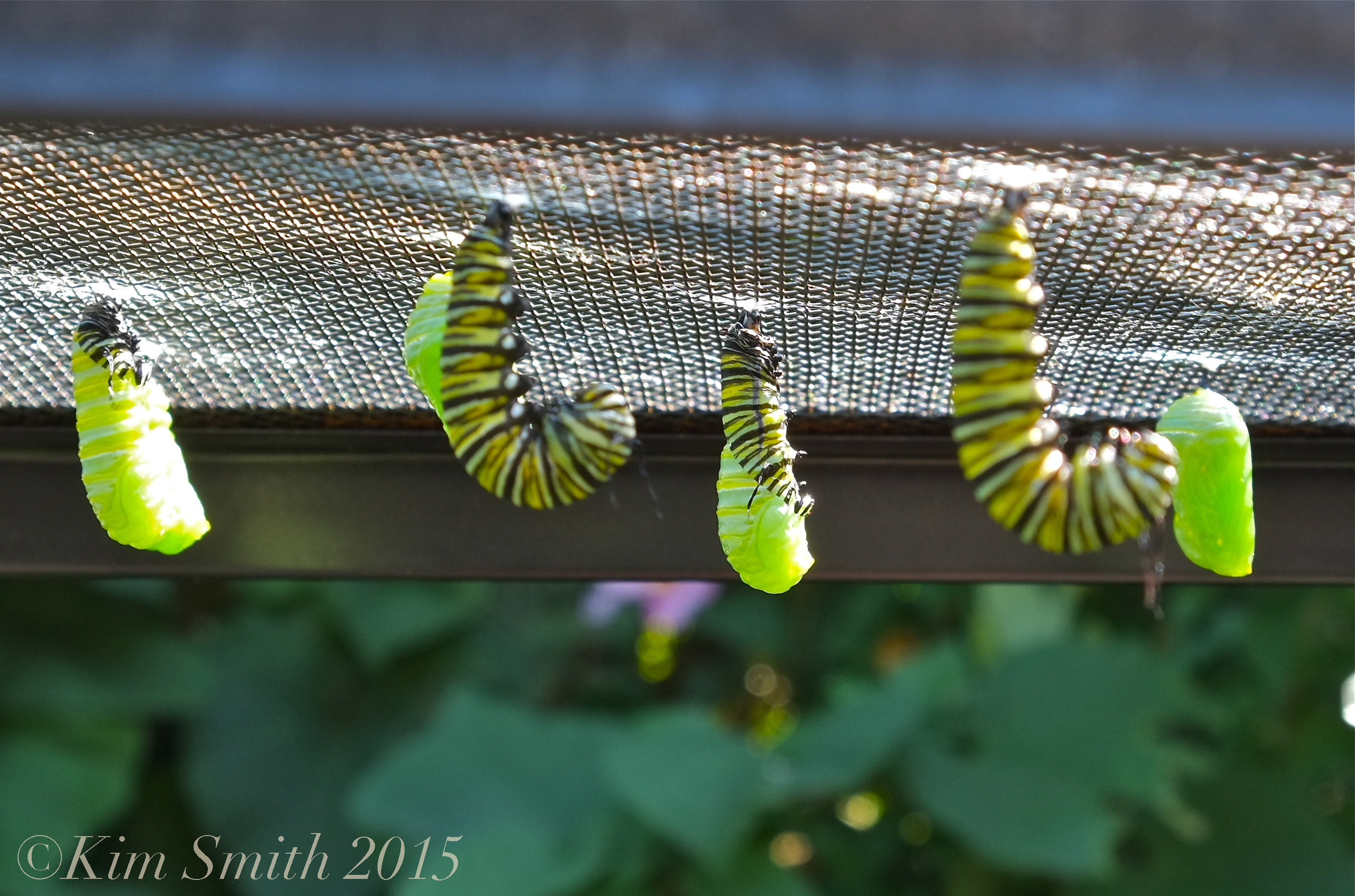
Nature’s Compass ~  My current group of nine Monarchs are synchronized, all lined up on a north-south axis and pupating within moments of each other.Monarch caterpillars north south ©Kim Smith 2015JPG

From the moment a caterpillar emerges, internally it begins to form the adult parts of its body. Adult Monarchs have magnetic receptors along the inner margins of their thorax, which help guide them on their south to north, north to south migration. I wonder if the magnetic receptors are here at work in the caterpillars north-south pattern of pupating.

Monarch caterpillars J-shape, pupating ©Kim Smith 2015All nine hung in a J-shape on the north-south axis as well. Since I took this photo three more have also pupated on the north-south axis. In the above photo, you can see the center caterpillar and caterpillar to the far left are in the midst of changing from a caterpillar to a chrysalis (pupating).

Common Milkweed Abloom, Here, There, and Everywhere!

Common Milkweed and Bee Asclepias syriaca ©Kim Smith 2015A patch of Common Milkweed (Asclepias syriaca) in bloom has a wonderfully sweet honey-hay scent. Look for it growing along the sand dunes, roadside edges, fields, meadows, and where ever there is a neglected patch. And keep your eyes peeled for Monarchs; the earliest arrivals (for the most part) are synchronized to the flowering of Common Milkweed.

https://instagram.com/p/4opJl6DyjS/

Friend me on Facebook and follow me on TwitterInstagram, and Vine. You can also subscribe to my design website at Kim Smith Designs, and film’s websites at Beauty on the Wing ~ Life Story of the Monarch Butterfly, Gloucester’s Feast of Saint Joseph Community Film Project, and Life Story of the Black Swallowtail Butterfly.