Category Archives: Gloucester Massachusetts

Save the Date for My Upcoming Program “Beauty on the Wing: Life Story of the Monarch Butterfly”

On Thursday, May 4th at 7pm, I am giving my lecture with photos, “Beauty on the Wing: Life Story of the Monarch Butterfly,” along with several short film screenings, for the Salem Garden Club. For more information, see the events page of my website. I hope to see you there!

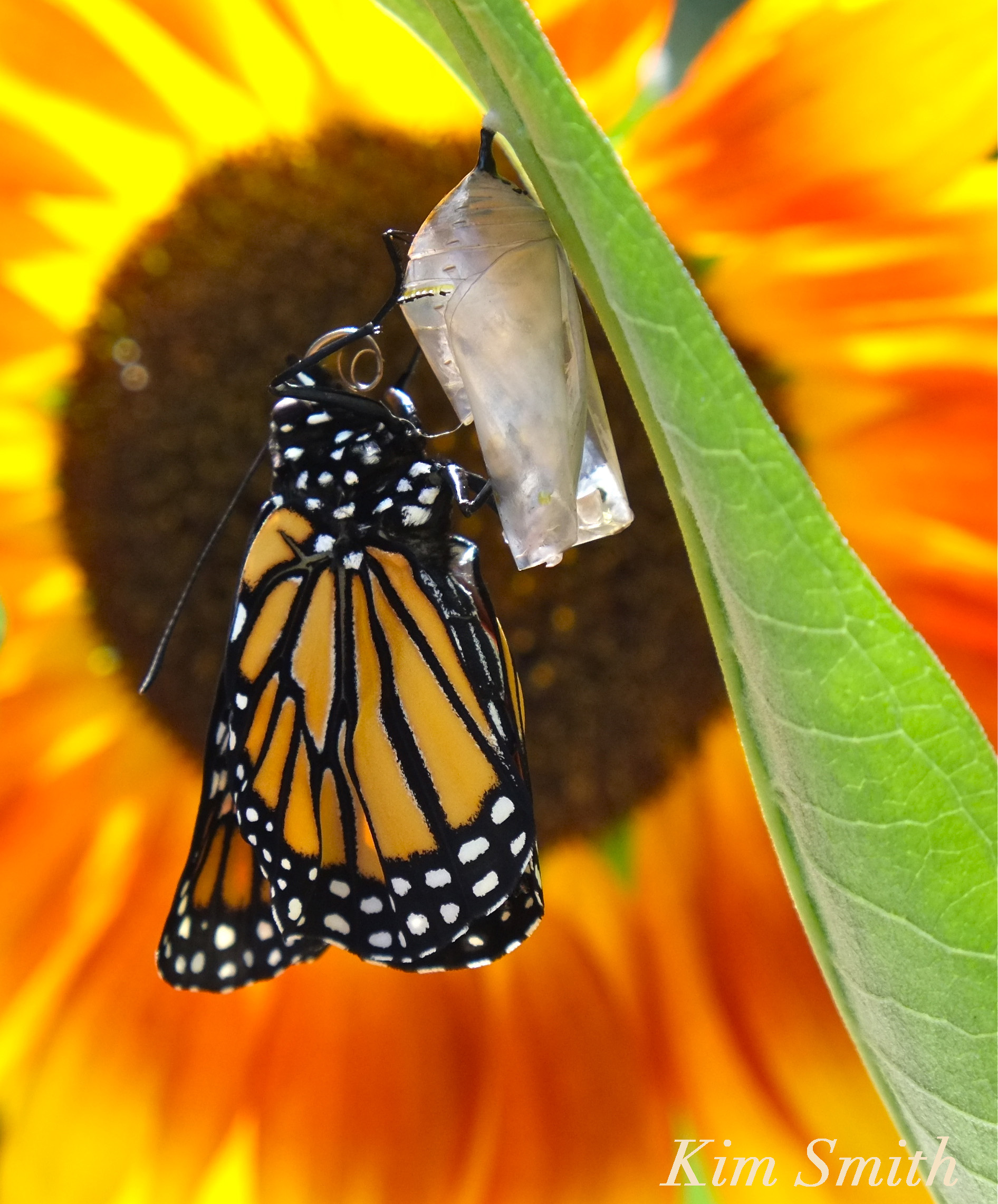
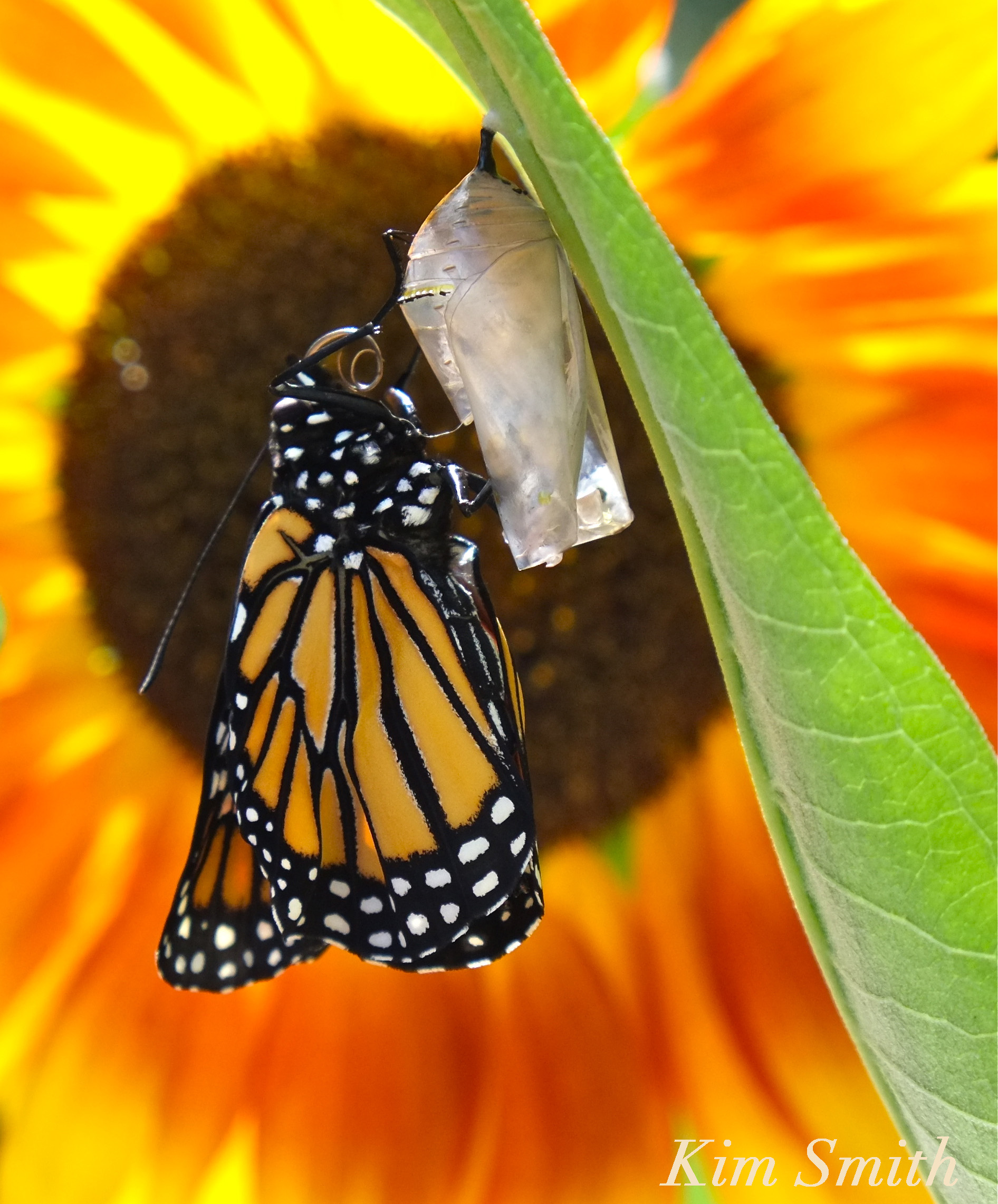
Newly Emerged Monarch Butterfly and Sunflower, Gloucester

Beauty on the Wing ~ Life Story of the Monarch Butterfly

The Monarch’s life story is one of nature’s most incredible examples of adaptation and survival. But the Monarch migration is in great peril. Learn how you can help. Through photographs and discussion, Beauty on the Wing tells the life story of the Monarch Butterfly, the state of the butterflies migration and why they are in sharp decline, and the positive steps we can take as individuals and collectively to help the Monarchs recover from the devastating effects of habitat loss and climate change.  (1-1.5 hours).

Monarch Butterfly Chrysalis and Marsh Milkweed

Monarchs Awakening

Please Vote For Me!

Essex National Heritage is celebrating their 20th anniversary. To mark this special occasion, Essex Heritage is recognizing organizations and people that make the Essex National Heritage Area (Essex County) so exceptional and I have been nominated!

Kim Smith Designs is nominated as an Essex Heritage Trailblazer in the second category, Connecting People to Place. The 130 nominees are all stellar and most are businesses and very large organizations, for example, the Peabody Essex Museum, Mass Audubon (statewide), and Parker River National Wildlife Refuge, so it is really quite an honor to be nominated.

The voting process is very simple, you don’t have to provide your email address or any other personal information. Please vote for me, in the center column, halfway down in the second category, Connecting People to Place. Here is the link to vote: surveymonkey.com/r/TrailblazersVote. Voting ends soon, on March 14th, so please vote today. And please share with your friends.

THANK YOU!

Save the Date for My Upcoming Pollinator Garden Program at the Sawyer Free Library!

Dear Friends,

Please join me April 6th at 7pm at the Sawyer Free Library where I will be giving my Pollinator Garden program and screening several short films. This event is free and open to the public. I am looking forward to presenting this program at our wonderful Sawyer Free and hope to see you there!!

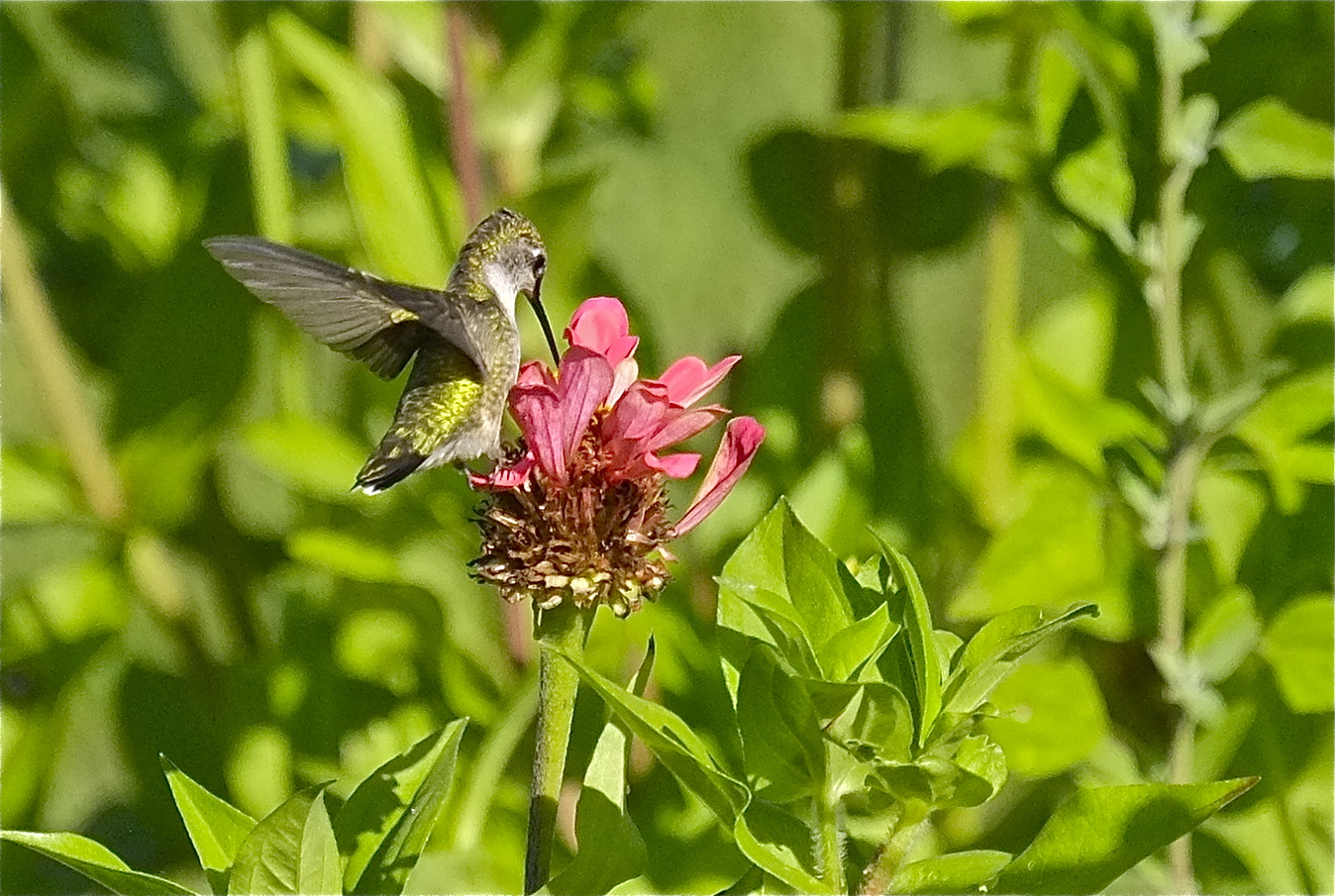
Female Ruby-throated hummingbird and zinnia – ornithophily is the pollination of flowering plants by birds. They carry off the pollen on their heads and neck to the next flower they visit.

This newly eclosed Monarch is clinging to its chrysalis case. Within moments of emerging, the two-part Monarch proboscis must zip together to form a siphoning tube. If the two parts do not join, the butterfly will not be able to drink nectar. In this photo, you can see the proboscis is not yet fully zipped.

“Following the rhythm of the seasons, celebrated landscape designer Kim Smith presents a stunning slide show and lecture demonstrating how to create a welcoming haven for bees, birds, butterflies, and other wildlife. Native plants and examples of organic and architectural features will be discussed based on their value to particular vertebrates and invertebrates.”

https://www.instagram.com/p/BK1D-bjjX8Y/

Please Share Your Monarch Sightings – Thank you!

There have been few Monarch sightings this summer but I have been hoping for a strong fall migration. The migration is peaking in Kansas and we are always a little bit behind. Please let me know if you see a Monarch, and where. Thank you very kindly!

https://www.instagram.com/p/BKqhTISjOjG/

Monarchs are emerging daily in my garden, from eggs collected at my friend Nancy’s field in Salem. This too would be an indication that we may be seeing them soon.newly-emerged-monarch-butterfly-copyright-kim-smith-jpg

This newly eclosed Monarch is clinging to its chrysalis case. Within moments of emerging, the two-part Monarch proboscis must zip together to form a siphoning tube. If the two parts do not join, the butterfly will not be able to drink nectar. In this photo, you can see the proboscis is not yet fully zipped.

Help Needed Please

Do any of my readers have a Paper Birch tree with some low hanging branches that I could cut? The branches need to be low enough for me to reach with a pair of pruners. Don’t worry, it won’t harm the tree. The foliage is needed for our ginormous and still growing Cecropia Moth caterpillars.

Birch tree Niles Pond moonlight copyright Kim SmithPaper Birch in the moonlight Niles Pond

https://www.instagram.com/p/BJER_HVDbKn/

Hello Mama Monarch

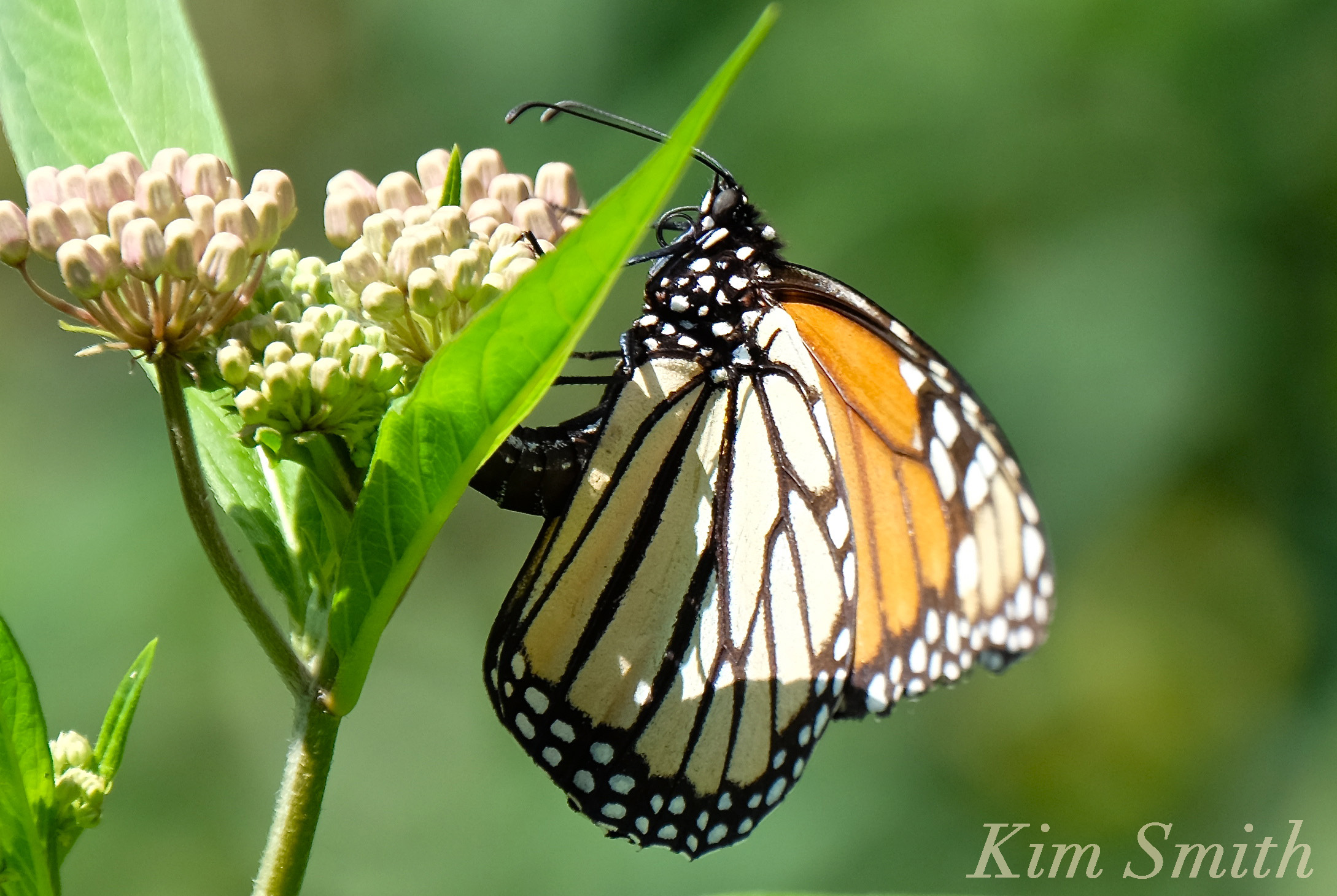
Plant and they will come! Female Monarch depositing eggs -1 copyright Kim Smith Alighting on the buds of our Marsh Milkweed plants, you can see in these photos that the female Monarch is curling her abdomen to the underside to deposit eggs. She will go from bud to bud and leaf to leaf ovipositing one egg at a time. A female, on average, deposits 700 eggs during her lifetime, fewer in hot, dry weather.

Female Monarch depositing eggs copyright Kim SmithFemale Monarch Butterfly and Marsh Milkweed (Asclepias incarnata)

Butterflies do not “lay” eggs; web would say oviposit or deposit. And you wouldn’t describe a caterpillar as hatched, but that it has emerged or eclosed.

Grow Marsh Milkweed and Common Milkweed and you most definitely will have female Monarchs calling your garden home!

Female Monarch depositing eggs -2 copyright Kim Smith
In the above photo you can see how she is contorting her abdomen to correctly position the eggs.

How You Can Help These Ginormous Gorgeous Moths Make a Comeback

Cecropia Moth Male copyright Kim SmithChristine holding male Cecropia Moth

This newly emerged Cercropia Moth, the largest species of Lepidoptera found in North America, was photographed at the home of my new friend Christine. She lives on the backshore of Gloucester and, with her friend Jane, who lives on the opposite side of Gloucester in the Lanesville area, are trying to repopulate Cape Ann with several species of the stunning and charismatic moths of the Saturn Family. These include the Cecropia Moth (commonly called Robin Moth), Luna Moth, and Polyphemus Moth.

Where formerly abundant, these most beautiful members of the native Giant Silkworm Moth group of Lepidoptera are at extreme risk of becoming extirpated (extinct from a region). Christine recalls a time when she could easily find the cocoons in her neighborhood. Now she finds none. The reasons for their decline are severalfold; loss of habitat, the poison in the pesticides sprayed on trees is highly toxic to all insects, and because they are suffering from a parasitism by a tachinid fly (Compsilura concinnata) that was introduced to control the Gypsy Moth. Each and every person on Cape Ann can help these moths make a comeback by making a commitment to not use pesticides and herbicides, for any reason, ever.

Cecropia moth cocoon copyright Kim SmithCecropia Moth cocoon

Christine and Jane purchase the cocoons at Magic Wings in Deerfield, MA. They place the cocoons in the screened butterfly house where they have also placed branches of the caterpillar’s food plant (in this case, birch branches). Cecropia Moth caterpillar food plants include the foliage of maple, birch, ash, apple, cherry, and lilac.

Screened butterfly cage-house copyright Kim SmithIf both male and female are present, they will mate almost immediately, within the first day or two, and the female will begin depositing eggs soon after. She releases the eggs on nearly every surface within the enclosure, dozens and dozens of eggs, up to 100!

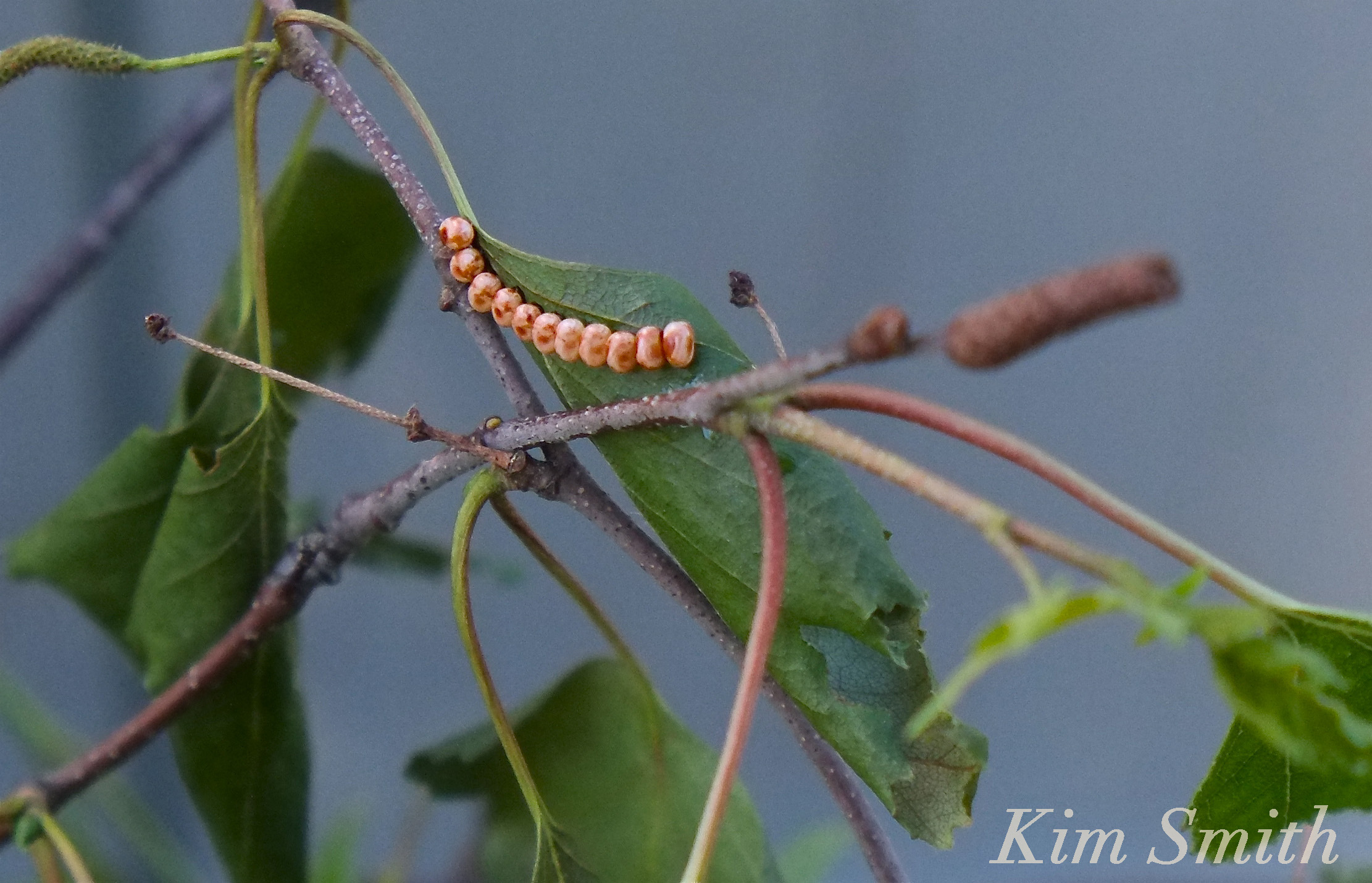
Cecropia moth eggs copyright Kim SmithCecropia Moth eggs

If the eggs are viable, within several weeks, the caterpillars will chew their way out of the egg casing and begin to eat the caterpillar food plants provided.

Perhaps like Christine and Jane who, moth by moth, are trying to save our native Giant Silkworm Moths, you’ll be inspired to raise these North American beauties, too!

More photos to come if a batch of caterpillars emerges.

https://www.instagram.com/p/BGffWh7jyh-/

https://www.instagram.com/p/BGff2xRjyjE/

DISCOVERED: THE MONARCHS MEXICAN HAVEN

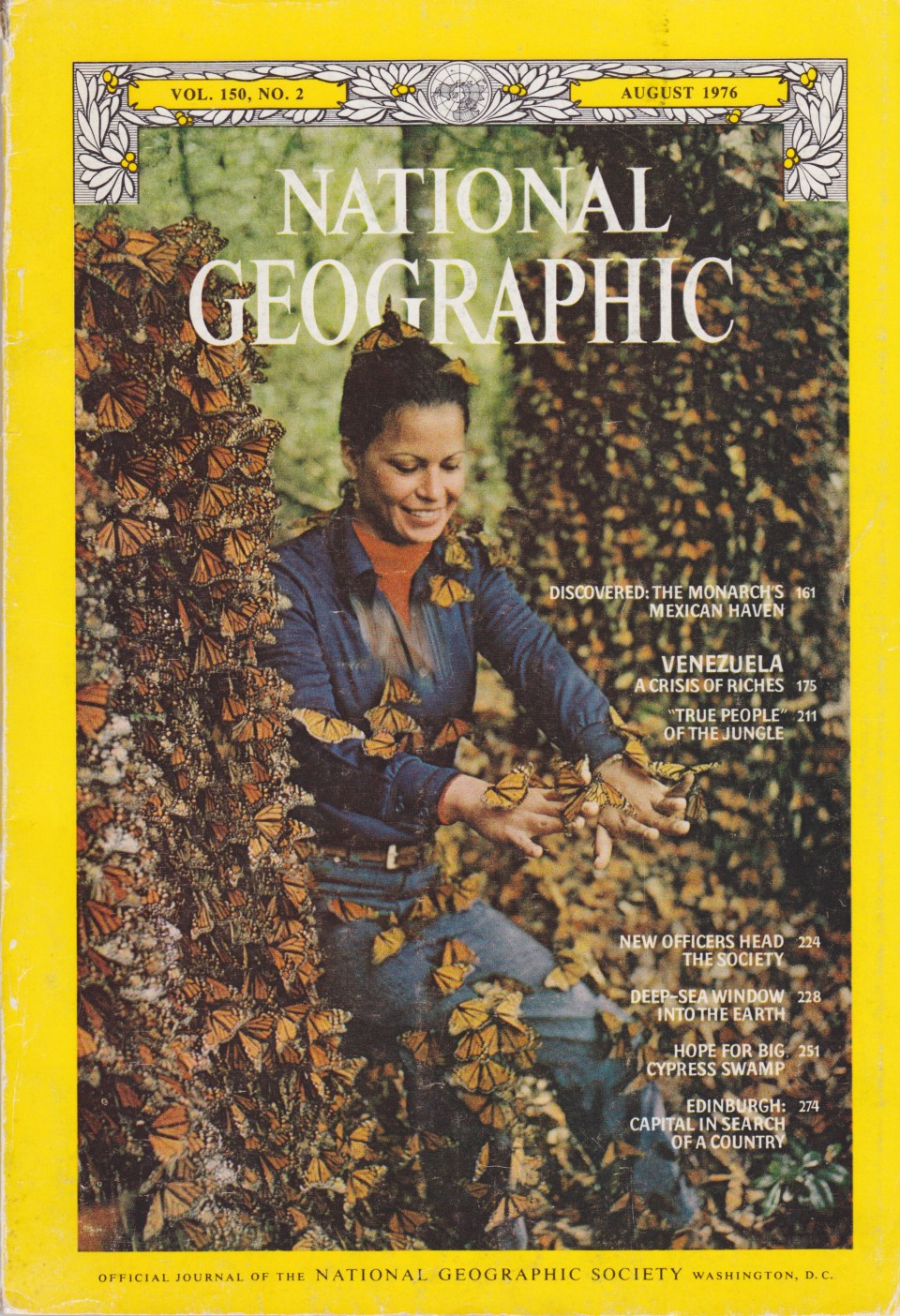
Forty one years ago today, January 9th is celebrated as the day the Monarchs winter habitat was “discovered.” The woman who led the discovery, Catalina Aguado, was  born in Michoacán, the Mexican state that is home to the butterflies wintering grounds. Catalina is the only living member of the original team featured in the following 1976 National Geographic article.

Excerpt from “Discovered: The Monarchs Mexican Haven”

Doctor Fred Urquhart, the Canadian zoologist who had been studying and tracking the butterflies since 1937 writes the following:

“In our search for the overwintering place, years passed, years of frustration. Norah, late in 1972, wrote to newspapers in Mexico about our project, asking for volunteers to report sightings and to help with tagging.

In response came a letter, dated February 26, 1973, from Kenneth C. Brugger in Mexico City. “I read with interest,” he wrote, “your article on the monarch. It occurred to me that I might be of some help. . . .”

Ken Brugger proved the key that finally unlocked the mystery.

Traveling in his motor home with his dog, Kola, he crisscrossed the Mexican countryside. He searched especially in areas where tagged monarchs had been recaptured, and places where other visitors had reported numerous butterflies. “Go out in the evening,” we instructed him. “That’s when you’ll see the monarchs moving about looking for a place to roost.”

In a letter written in April 1974, Ken reported seeing many monarch butterflies in the Sierra Madre flying at random as if dispersing from a congregating site.

“Your data and observations are exciting,” I replied. “We feel that you have zeroed in on the right area.”

Ken Brugger doubled his field capability by marrying a bright and delightful Mexican, Cathy. Late in 1974 he wrote of finding many dead and tattered butterflies along the roads in a certain area. “You must be getting really close,” we responded. These butterfly remains suggested that birds had been feeding on large flocks of monarchs.

Swiftly came the dramatic conclusion. On the evening of January 9, 1975, Ken telephoned us from Mexico. “We have located the colony!” he said, unable to control the excitement in his voice. “We have found them—millions of monarchs—in evergreens beside a mountain clearing.”

Mexican woodcutters, prodding laden donkeys, had seen swarming butterflies and had helped point the way.”

The complete article is available to read online here.
national-geographic