Category Archives: Angangueo Michoacán Mexico

LOSS OF HABITAT, THE USE OF PESTICIDES AND HERBICIDES, AND CLIMATE CHANGE ARE HAVING A PROFOUNDLY NEGATIVE IMPACT ON THE BUTTERFLIES

IT’S NOT JUST MEXICO’S FORESTS THAT NEED PROTECTING FOR BUTTERFLY MIGRATION

THEIR ROUTE FROM CANADA IS THREATENED BY OVERUSE OF HERBICIDES AND CLIMATE CHANGE, AMONG OTHER FACTORS

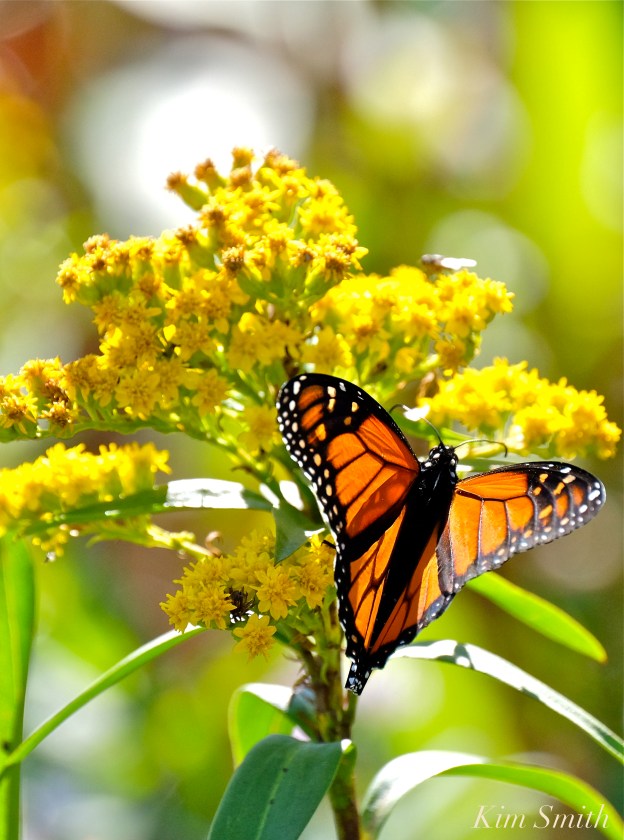
Monarch and Marsh Milkweed (Asclepias incarnata)

Mexico, the United States and Canada must share responsibility for the conservation of the monarch butterfly, according to a biologist who warns that the insect’s North American migratory path is at risk of becoming a thing of the past.

Víctor Sánchez-Cordero, a researcher at the National Autonomous University’s Institute of Biology and Mexico’s lead representative on a tri-national scientific committee that studies the monarch, said that the butterflies’ route from southeastern Canada to the fir tree forests of Michoacán and México state is under threat.

He blames the excessive use of herbicides, changes in the way land is used, climate change and a reduction in the availability of nectar and pollen.

“The commitment to conserve this migratory phenomenon not only focuses on Mexico; it’s a shared responsibility between our country, Canada and the United States,” Sánchez-Cordero said.

The researcher, who along with his team developed a system to monitor the migration of the monarch, said that there is a misconception that the most important – almost exclusive – factor in ensuring the continuation of the phenomenon is the conservation of forests in the Monarch Butterfly Biosphere Reserve (RBMM), located about 100 kilometers northwest of Mexico City.

That idea “has placed great international pressure on Mexico,” Sánchez-Cordero said before adding that he and his team published an article in the journal Frontiers in Environmental Science that shows that the decline in the number of monarch butterflies migrating to Mexico is not due to deforestation in the RBMM.

Deforestation has been drastically reduced in the past 10 years but butterfly numbers have continued to decline, he said.

“The dramatic reduction in the density of monarch butterflies that arrive at overwintering sites in Mexico doesn’t correlate with the loss of forest coverage, which shows that this factor is not responsible for the population reduction. … Other hypotheses to explain the decrease must be sought,” Sánchez-Cordero said.

One possible cause for the decline, he explained, is that the excessive use of herbicides is killing milkweed, a plant that is a main food source for monarch butterflies and on which females lay their eggs. Less nectar and pollen in the United States and Canada as a result of deforestation is another possible cause, Sánchez-Cordero said.

He added that large numbers of migrating butterflies have perished in Texas and the northeast of Mexico due to drought linked to climate change.

To conserve the migratory phenomenon of the monarch – butterflies fly some 4,500 kilometers to reach Mexican forests from Canada over the course of three to four generations – a network of conservation areas along their migration routes needs to be developed, Sánchez-Cordero said. He also said that the routes followed by the butterflies should be declared protected areas.

“A new conservation paradigm is needed. … It’s something that we [Mexico, the United States and Canada] should build together,” the researcher said.

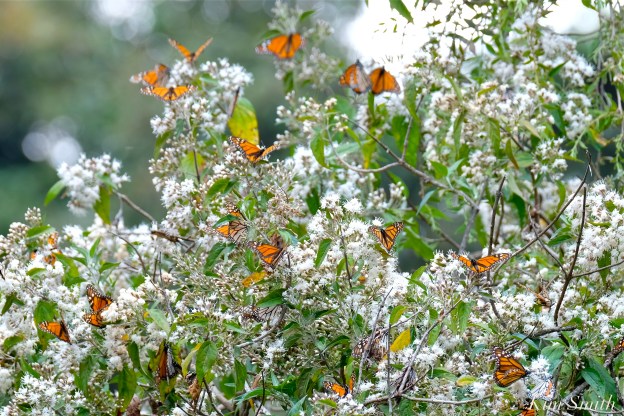
Monarch Butterfly Seaside Habitat

HAPPY VALENTINE’S DAY AND THANK YOU MONARCH FRIENDS!

Thank you so much dear butterfly friends for sharing Beauty on the Wing trailer. As I am writing this post, the new trailer just hit 600 views. That is quite wonderful as it has only been three days since we first shared the trailer and because unlike YouTube where if you watch only a few moments of a video it counts as a hit, with Vimeo, you have to watch it all the way through to be counted. By sharing the trailer and generating many views, you are truly helping when festival judges are viewing our submission.

So thank you, thank you, thank you for sharing!!! 

I couldn’t resist sharing the above photo from Alisa Marie, a member of the terrific group “The Beautiful Monarch,” administered by the very knowledgeable Holli Hearn.

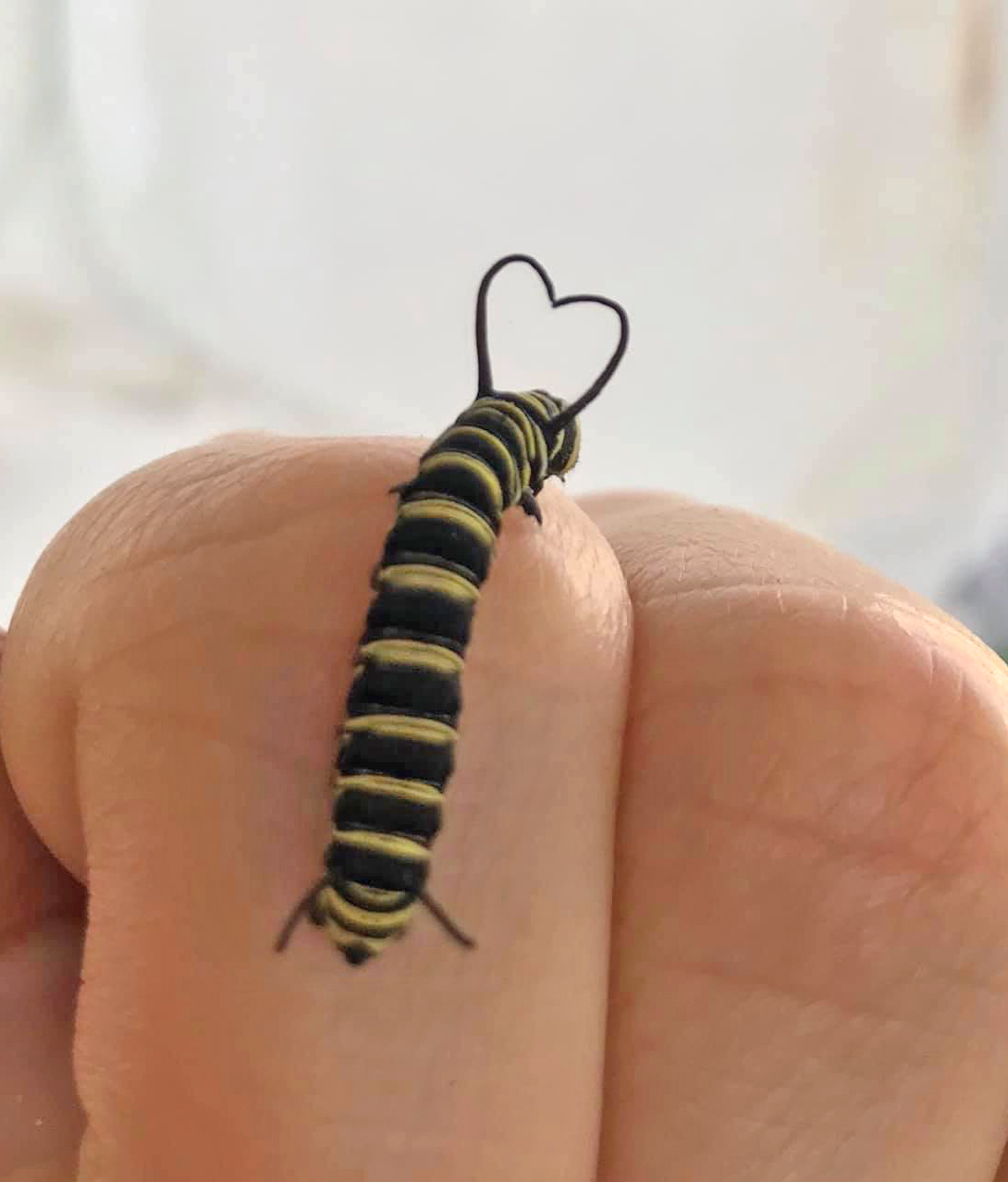
Monarch Heart

Monarch Butterfly Film Update

Dear Friends,

You are receiving this note because you donated generously or because you have been a friend and supporter in one manner or another to my documentary Beauty on the Wing: Life Story of the Monarch Butterfly.

I am beyond excited to share that we will be picking up the masters this week from the color and sound editing studio, Modulus, which I have been working with these many months. The film has come together beautifully. I think you will love the soundtrack by Jesse Cook and the new mix and voiceover recording. Because of several delays over the course of editing, I was able to include footage from the butterfly’s spectacular late winter exodus at Cerro Pelon, Mexico, and from the exquisite Monarch migration that took place along the shores of Cape Ann this past fall.

Currently I am submitting Beauty on the Wing to film festivals. Over the weekend I sent in no less than 18 submissions. Some festivals we’ll hear back from within a few weeks, others it may take several months. In the meantime, I am learning about film distribution and am working on scheduling a sneak peek preview screening for all my donors and will keep you posted about that.

Here is the new short trailer. I hope you will have two minutes to view and also, if you could please share. The old trailer has thousands of views and believe it or not, number of views is important to festival organizers and film distributors So please share. Also, I am creating a longer, more detailed trailer and will send that along later this week.

A most heartfelt thank you for your generosity and your kind support. I am so grateful.

Sincerely,

Kim

P.S. Very rough draft of a poster- I am looking for a graphic designer who can help with some ideas I have for posters, postcards, and other promotional materials. Please let me know if you have someone you love to work with. Thank you!

MONARCH BUTTERFLY PROTECTORS MURDERED

Many friends have written with questions about the death of Homero Gómez González, and now a second Monarch Butterfly conservationist, Raúl Hernández Romero, has also been found murdered. The deaths have been widely reported by the BBC, NYTimes, Washington Post, and many other news media. These are tragic events taking place in the desperately poor state of Michoacán, where the people who commit these crimes have nothing much to lose. The problems in these districts are many-layered and complex.

Homero Gómez González

I can only speak to our own experience traveling to the Monarch Butterfly Biosphere Reserves in Michoacán and the State of Mexico. On our trip last March, Tom and I stayed at the beautiful inn, JM Monarch Butterfly Bed and Breakfast, located in sleepy Macheros. JM Butterfly is owned and operated by husband and wife team Joel Rojas Moreno and Ellen Sharp. Macheros is a rural hamlet, called a ‘ranchita,’ with a population of more horses to people. Macheros is sited at the base of an old volcanic mountain, Cerro Pelon, which is located in the State of Mexico.

Cerro Pelon is the mountain where the butterflies were first located by outsiders. The villagers knew of the Monarchs annual return, but it was a mystery to the rest of the world where the Monarchs wintered over.

We felt safe every moment of our time at Cerro Pelon and JM Butterfly B and B. So safe that I went for long walks through the town filming and taking photos, on my own, and often left my handbag unattended  when socializing with fellow guests at dinner and in the common areas of the Inn .

Later this month I am posting a video interview with Ellen and Joel where we discuss safety issues, but it is well worth noting the following at this point in time when so much attention has been drawn to the region. Some states, cities, and towns in Mexico are more  prone to violence than other areas, just as we find in different regions of the US. Basing a decision to travel to Cerro Pelon on what happens in Michoacán is like saying I am not going to travel to Beverly Hills because of the gang violence that takes place in Emeryville.

I absolutely love Cerro Pelon and JM Butterfly B and B and hope to return very soon. We also can’t wait until our granddaughter is just a wee bit older so we can take a family trip there. I write older only for the reason that she will remember how memorable an experience.

Conversely, the Monarch Butterfly Biosphere Reserve at El Rosario is located in the state of Michoacán, where gang violence poses a greater threat. Homero Gómez González was a manager at El Rosario,  a former logger himself, and champion of the Monarchs and Reserve. Raúl Hernández Romero was also an environmentalist and tour guide. It is tragic that the defense of the exquisite and productive forest habitats of the Monarch Biosphere Reserves turns activists into victims of threats and persecution and that Monarch protectors González and Romero have paid the ultimate price for their bravery.

I traveled to El Rosario, in 2014, and again in March of 2019. This last trip we were with a small group sponsored by JM Butterfly and both trips, the one taken in 2014 and the one in 2019, we were perfectly safe and well looked after by our guides. The majority of the visitors to El Rosario are international tourists and Mexican families, respectively, making first time visits and annual pilgrimages. You will see the very youngest babies being strolled along the paths to the very oldest grannies hobbling along with walking sticks, and everyone in between.

El Rosario Monarch Butterfly Biosphere

Rural communities throughout Mexico are developing, some more rapidly than others.  We can do a great deal to help the local economy by continuing to visit these beautiful but impoverished areas and the wonderful people you will meet there, to treasure the unspoiled habitats and wildlife you will find there, and to spend our tourist dollars generously.  We live in a time with growing environmental awareness, but also a time with increasing anti-environment animus, largely generated by the current US federal government’s devastating anti-environment policies.

González was missing for two weeks before his body was recovered at the bottom of a holding pond in an agricultural area. Prosecutors in Michoacán say an autopsy found that the cause of death was “mechanical asphyxiation by drowning of a person with head trauma.”

Raúl Hernández Romero, who had worked as a tour guide in the preserve went missing last Monday. His body was found bruised, his head showing trauma from a sharp object.

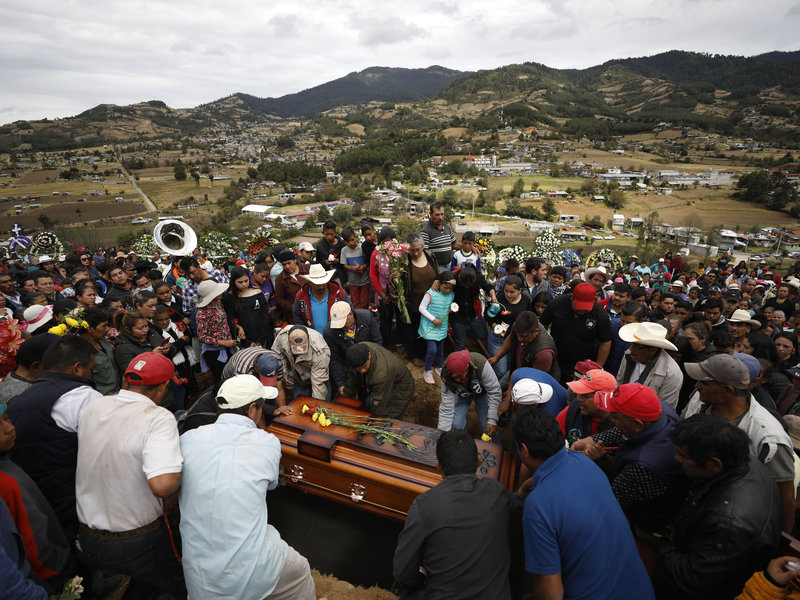
Mourners lower the coffin of community activist Homero Gómez González into a grave at a hillside cemetery in Ocampo, Mexico, on Friday. PHOTO: Rebecca Blackwell/AP

COMING SOON TO A THEATRE NEAR YOU!

We may have masters in hand by Wednesday! Posting a new trailer this week 🙂

HIGHER NUMBERS GIVE HOPE FOR MONARCHS

By Kim Smith

January 31, 2019

The World Wildlife Fund Mexico and Monarch Butterfly Biosphere Reserve (MBBR) announced on January 30th that this year the Monarch Butterfly population has increased significantly.

Each year the orange and black winged beauties return to the oyamel fir and pine tree forests, which are located in the heart of Mexico’s trans volcanic mountain belt. In December and January, Lepidoptera population specialists and citizen scientists measure the area the Monarch colonies cover at their over wintering sites. This year (2018-2019) the butterflies are blanketing 6.05 hectares (approximately 15 acres), up from an all-time low of only 0.67 hectares (1.65 acres) during the winter of 2013-2014.

Not since 2006-2007 has this great an area been covered by the butterflies, although the numbers are still quite low when compared to the numbers recorded in the late 1970s when the butterfly’s winter roosts were first discovered by Dr. Fred Urquhart.

I have been following the butterfly counts around the US as they were reported. The Monarch population has been decimated in California. This year only about 30,000 butterflies were counted, down from several million just two decades ago. There is the very real possibility that the Monarch butterfly will become extirpated (extinct from an area) on the West coast. The winter count is down drastically in Florida as well.

It was clear though that east of the Rockies–the Midwest and Northeast regions of the US, as well as southern provinces of Canada–there were many more Monarchs in gardens and on the wing than in recent previous summers.

Leading Monarch scientists are reluctant to become excited about the increase, and justifiably so. Last spring the weather was slightly cooler in Texas, which allowed more Monarch eggs to hatch, which in turn allowed more caterpillars to mature. A greater number of butterflies emerged and set the stage for a strong breeding season throughout the summer. That scenario, along with the overall good weather during the summer of 2018, also helped create ideal conditions. It was a true “goldilocks” summer, not too hot, not too cold, but just right.

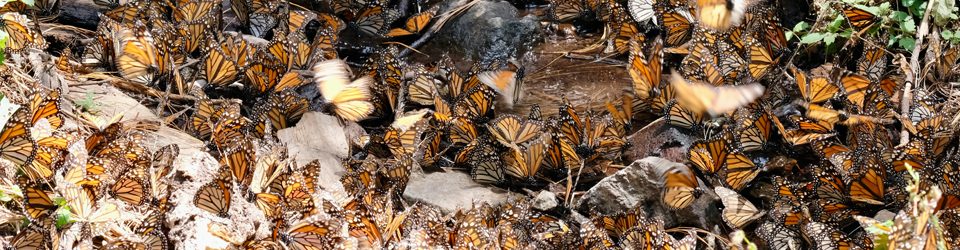
In autumn of 2018, the Monarchs arrived to Mexico about a week later than usual, but once they began to arrive, a kaleidoscope of butterflies poured into their winter roosting grounds.

The 2018-2019 Eastern population count is a reprieve from the past ten years of heartbreaking news, but one good year does not change what the butterflies need most, which is protection for the Monarchs under the Endangered Species Act.

Monarch and Mexican Sunflower (Tithonia)

There is disagreement among scientists whether planting milkweed has any bearing on the health of the Monarch butterfly population. Does creating corridors of Monarch habitat help mitigate the death and destruction caused by climate change, modern agricultural practices, the devastating use of pesticides and herbicides, and the planting of GMO crops (corn, sorghum, and soybeans, for example) that were engineered to withstand the deadly poisons, but which wildflowers and caterpillars cannot?

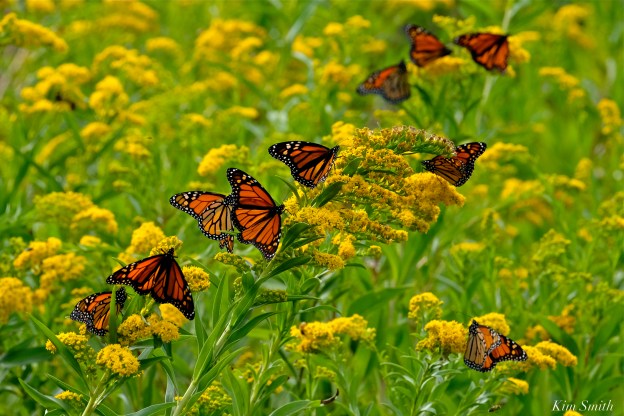
Monarch Butterflies and New England Aster, Gloucester, 2018

The answer to that question is a resounding yes! Monarchs are a bellwether species. The love for this one butterfly has helped shape a consciousness towards all species at risk. An uncomplicated stand of milkweed and asters can make every public walkway, park, community center, church, school, and backyard a haven for Monarchs and together we can bring about a conservation victory for the pollinators.

Film Update

HAPPY NEW YEAR!

 Dear Friends,

I have so much to be thankful for – my family, friends, work, film projects, and all of you for your generous donations to the documentary Beauty on the Wing: Life Story of the Monarch Butterfly.

 If we’ve spoken recently, then you know that over the past months I have been adding new scenes, from the Monarch migration of 2017, and from our most recent beautiful fall migration of 2018. This past week we screened the film for my two amazing producers Lauren and Susan (they both loved it and provided excellent feedback!). In the coming weeks the film next goes to an audio engineer and to a film “finisher,” with the goal of having a final cut in hand by the end by spring. I’ll be sending updates more frequently now that the project is beginning to spread her wings.

My sincerest thanks to you for being part of the wonderful journey of Beauty on the Wing.

Wishing you much love, joy, and beauty in the coming year.

Kim


PBS AND BBC ANNOUNCE AUTUMNWATCH – NEW ENGLAND

Some press for the show that I have been working on with the BBC! The shows air October 17-19th, at 8pm. I don’t know yet which night the Cape Ann Monarchs episode will play, but will let you know.

– Travel journalist Samantha Brown, wildlife cinematographer Bob Poole and BBC presenter Chris Packham host the live nature show celebrating fall in New England –

PBS announced, as part of its co-production partnership with the BBC, that a new three-part live event, AUTUMNWATCH – NEW ENGLAND, will air Wednesday-Friday, October 17-19, 2018, at 8:00-9:00 p.m. ET (check local listings).

Travel journalist Samantha Brown, BBC presenter Chris Packham and wildlife cinematographer Bob Poole will host the multi-platform television experience from alongside Squam Lake, New Hampshire. Similar in format to PBS’ previous summer spectacles BIG BLUE LIVE and WILD ALASKA LIVE, the new series will include a mix of live feeds and pre-taped footage from across New England.

Unique to AUTUMNWATCH – NEW ENGLAND, the live event will focus on cultural traditions and historical sites in addition to local wildlife and the colorful gold and red landscapes in the region that’s best known for them.

To accomplish this, local experts in food, wildlife, music, literature, and history will join the trio of hosts each night to showcase characteristics special to New England.

“In AUTUMNWATCH – NEW ENGLAND, audiences will experience exquisite outdoor adventures while surrounded by nature’s most picturesque imagery,” said Bill Gardner, Vice President, Programming & Development, PBS. “We look forward to partnering with the BBC once again to present this ambitious live production and share this American experience with PBS and BBC viewers.”

AUTUMNWATCH – NEW ENGLAND cameras will be there to capture time-lapse changes of fall foliage; a quest for majestic moose in Maine; the Monarch butterfly migration through Cape Ann, key wildlife species like squirrels, chipmunks and turkey gangs as they invade backyards in preparation for the winter months; and the critters like owls, bats and bears that make the most of nighttime.

Audiences can expect to see segments that highlight Native American history and traditions, Halloween traditions, regional fairs and the many farms that provide the region with its rich varieties of apples, pumpkins, cranberries and maple syrups.

“I’m thrilled that AUTUMNWATCH is moving to New England for this very special week of live programming,” Tom McDonald, BBC Head of Commissioning, Natural History and Specialist Factual, said. “The teams are heading to one of the most iconic locations in the USA to experience the great American ‘fall’ for what promises to be an unforgettable chapter in the Watches’ history.”

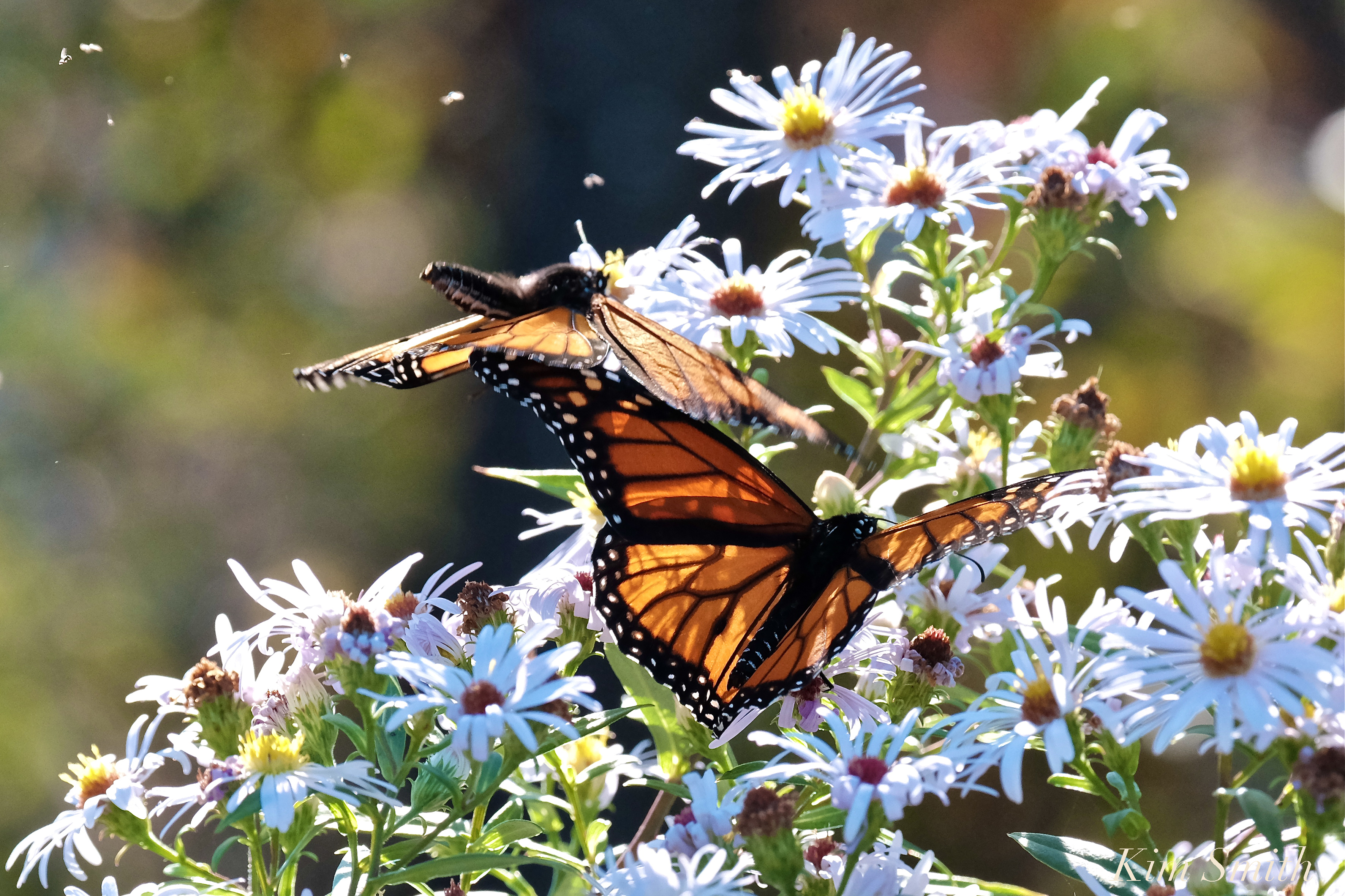
Female (left) and male (right) Monarch Butterfly. These two beauties (warming their wings on native wildflower New England Aster) eclosed (emerged) during the BBC filming of the Monarch migration through Cape Ann.