Buzz Off!
Leave a reply

There have been few Monarch sightings this summer but I have been hoping for a strong fall migration. The migration is peaking in Kansas and we are always a little bit behind. Please let me know if you see a Monarch, and where. Thank you very kindly!
https://www.instagram.com/p/BKqhTISjOjG/
Monarchs are emerging daily in my garden, from eggs collected at my friend Nancy’s field in Salem. This too would be an indication that we may be seeing them soon.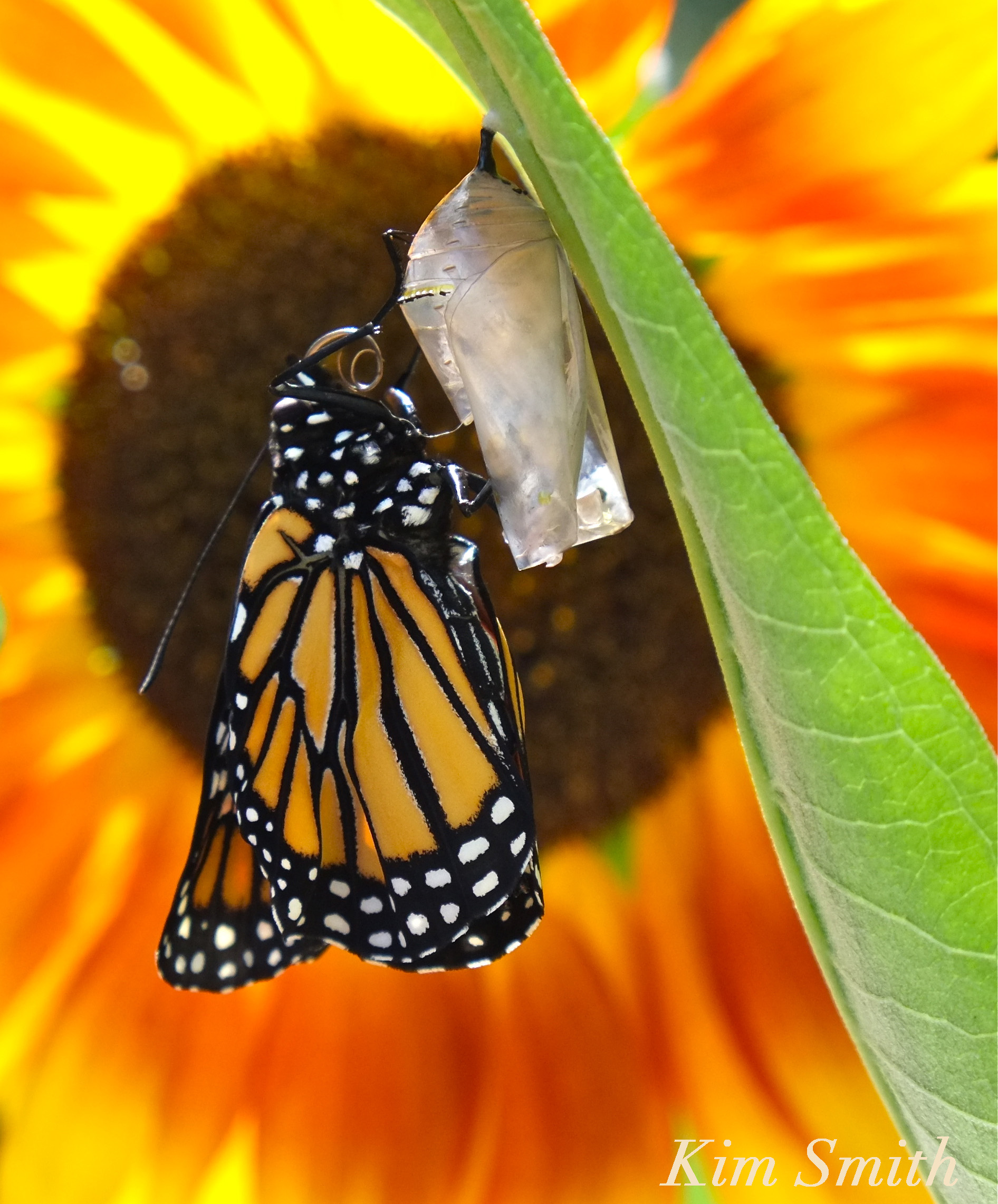
This newly eclosed Monarch is clinging to its chrysalis case. Within moments of emerging, the two-part Monarch proboscis must zip together to form a siphoning tube. If the two parts do not join, the butterfly will not be able to drink nectar. In this photo, you can see the proboscis is not yet fully zipped.
Here’s how you can help choose the Massachusetts state butterfly –
The choice is between the Black Swallowtail, the Great Spangled Fritillary, and the Mourning Cloak butterflies. All three are beautiful species of Lepidoptera, but as you know from my work, I am partial to the Black Swallowtail. I cast my vote for the Black Swallowtail and here is why. Both the Great Spangled Fritillary and Mourning Cloak are less commonly seen. I’d like children who are developing an interest in butterflies to have the opportunity to get to know their state butterfly easily. Black Swallowtails are widespread and very well-known. In a good year, Black Swallowtails will have two broods. The caterpillars eat plants kids can easily identify and plant, such as carrots, dill, fennel, parsley, and the common wildflower Queen Anne’s Lace. Black Swallowtails are typically on the wing throughout the summer, beginning in early spring through early autumn.
On the other hand, the Great Spangled Fritillary caterpillars eat strictly violet plants. This butterfly is usually only seen for about a month, during mid-summer, and has one brood of caterpillars. In our region of Massachusetts, the Mourning Cloak may have a second brood, if we have an early spring, but I only see them in spring, near pussy willows, and again in the fall when they are getting ready to hibernate.
Black Swallowtails are found in backyards, gardens, meadows, marshes, and along the shoreline. They love to drink nectar from wildflowers, including milkweed (as you can see in the short film below) and many, many common garden plants such as lilacs, coneflowers, zinnias, and butterfly bush.
Please vote here: VOTE MASSACHUSETTS STATE BUTTERFLY
 Great Spangled Fritillary nectaring from coneflower, Gloucester Harbor Walk Butterfly Gardens

Mourning Cloack Butterfly courtesy Google image search
The first of our Cecropia Moth caterpillars, nicknamed Mothra, is in the process of spinning her winter home, a fine silken enclosure. With the gossamer threads, she has woven several branches together, forming a V-shaped structure to secure the cocoon. 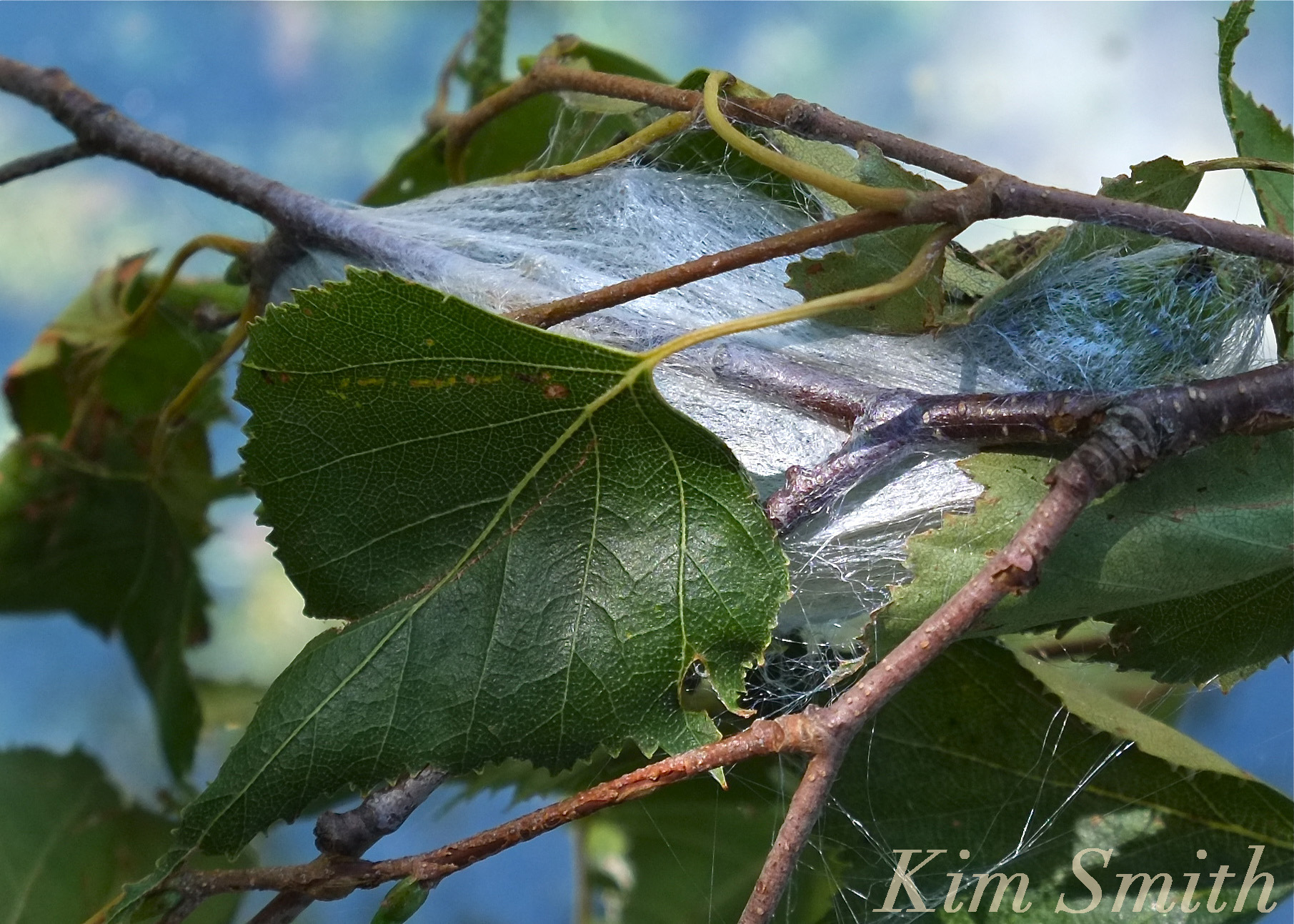 Surrounding leaves, like a blanket, are arranged around the cocoon and also secured with silk threads. The house is quite large, about four inches long and an inch and a half in diameter. As you can see from the Instagram, she has room enough to easily move within the cocoon. When completed, she will pupate within the case. Come next spring, Mothra will emerge from her winter home ready to mate and deposit eggs of the next generation. The circle of life continues.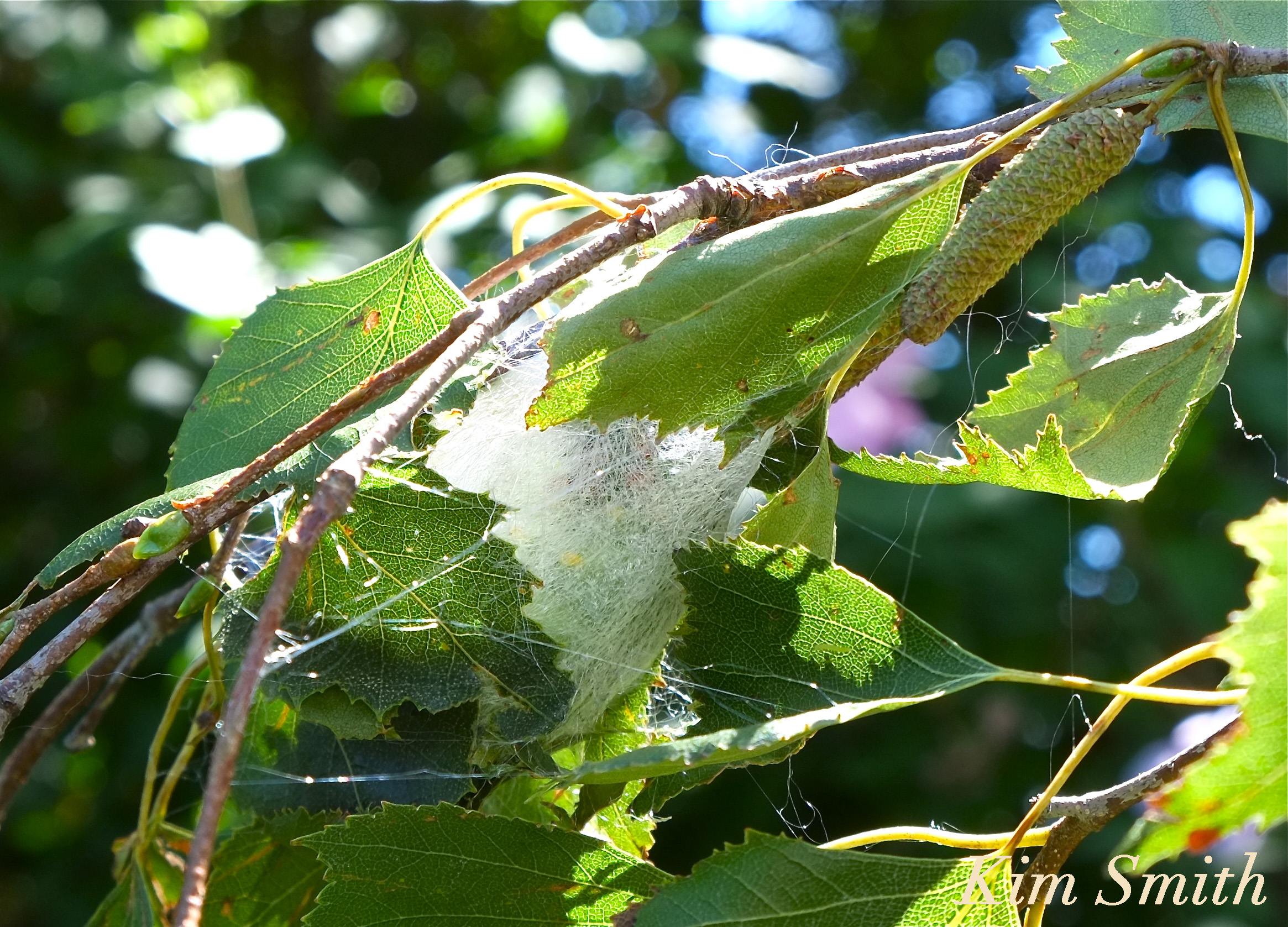
https://www.instagram.com/p/BJfRjLUDfKk/
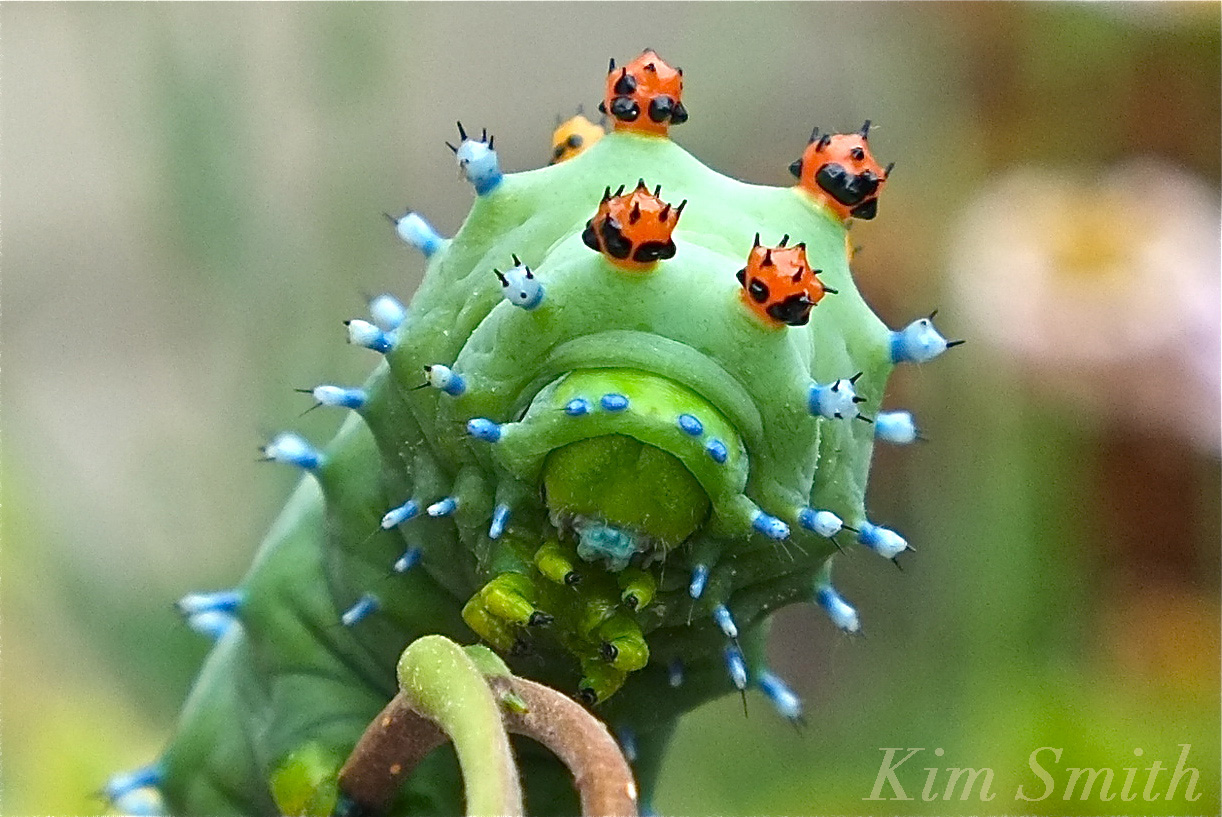
 Mothra’s Dad
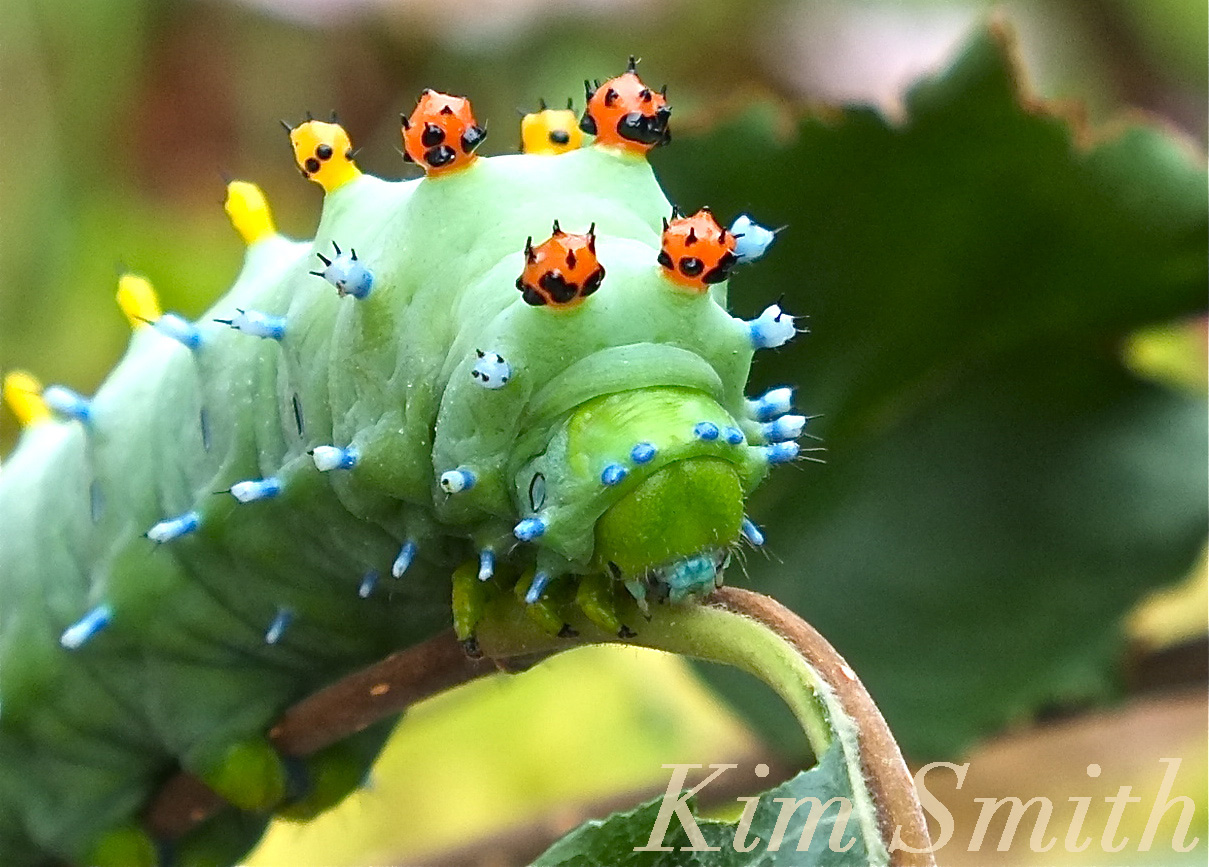 Cecropia Moth Caterpillar
So many thanks to my new friend Lauren, who generously shared cuttings from her American Birch Tree growing in her fantastic habitat garden. Her garden paradise is a pollinator’s dream, filled with gorgeous flowering and fruiting trees and shrubs, native wildflowers, and non-invasive well-behaved ornamental plants. While we were chatting, a Monarch flew on the scene, pausing to nectar at her butterfly bush! Mothra and her siblings thank Lauren, too.
Do any of my readers have a Paper Birch tree with some low hanging branches that I could cut? The branches need to be low enough for me to reach with a pair of pruners. Don’t worry, it won’t harm the tree. The foliage is needed for our ginormous and still growing Cecropia Moth caterpillars.
 Paper Birch in the moonlight Niles Pond
Plant and they will come! 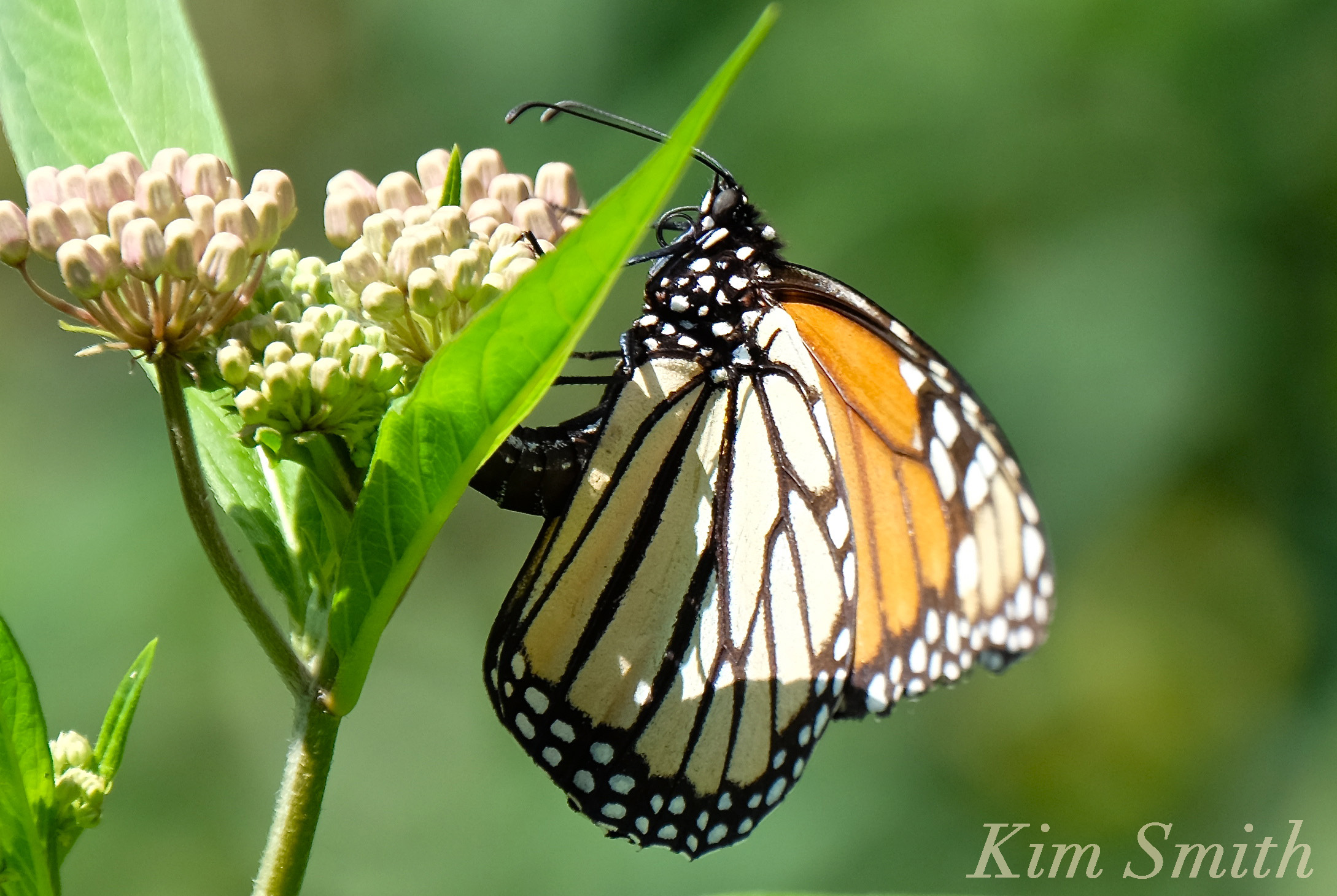 Alighting on the buds of our Marsh Milkweed plants, you can see in these photos that the female Monarch is curling her abdomen to the underside to deposit eggs. She will go from bud to bud and leaf to leaf ovipositing one egg at a time. A female, on average, deposits 700 eggs during her lifetime, fewer in hot, dry weather.
 Female Monarch Butterfly and Marsh Milkweed (Asclepias incarnata)
Butterflies do not “lay” eggs; web would say oviposit or deposit. And you wouldn’t describe a caterpillar as hatched, but that it has emerged or eclosed.
Grow Marsh Milkweed and Common Milkweed and you most definitely will have female Monarchs calling your garden home!

In the above photo you can see how she is contorting her abdomen to correctly position the eggs.
 Christine holding male Cecropia Moth
This newly emerged Cercropia Moth, the largest species of Lepidoptera found in North America, was photographed at the home of my new friend Christine. She lives on the backshore of Gloucester and, with her friend Jane, who lives on the opposite side of Gloucester in the Lanesville area, are trying to repopulate Cape Ann with several species of the stunning and charismatic moths of the Saturn Family. These include the Cecropia Moth (commonly called Robin Moth), Luna Moth, and Polyphemus Moth.
Where formerly abundant, these most beautiful members of the native Giant Silkworm Moth group of Lepidoptera are at extreme risk of becoming extirpated (extinct from a region). Christine recalls a time when she could easily find the cocoons in her neighborhood. Now she finds none. The reasons for their decline are severalfold; loss of habitat, the poison in the pesticides sprayed on trees is highly toxic to all insects, and because they are suffering from a parasitism by a tachinid fly (Compsilura concinnata) that was introduced to control the Gypsy Moth. Each and every person on Cape Ann can help these moths make a comeback by making a commitment to not use pesticides and herbicides, for any reason, ever.
 Cecropia Moth cocoon
Christine and Jane purchase the cocoons at Magic Wings in Deerfield, MA. They place the cocoons in the screened butterfly house where they have also placed branches of the caterpillar’s food plant (in this case, birch branches). Cecropia Moth caterpillar food plants include the foliage of maple, birch, ash, apple, cherry, and lilac.
 If both male and female are present, they will mate almost immediately, within the first day or two, and the female will begin depositing eggs soon after. She releases the eggs on nearly every surface within the enclosure, dozens and dozens of eggs, up to 100!
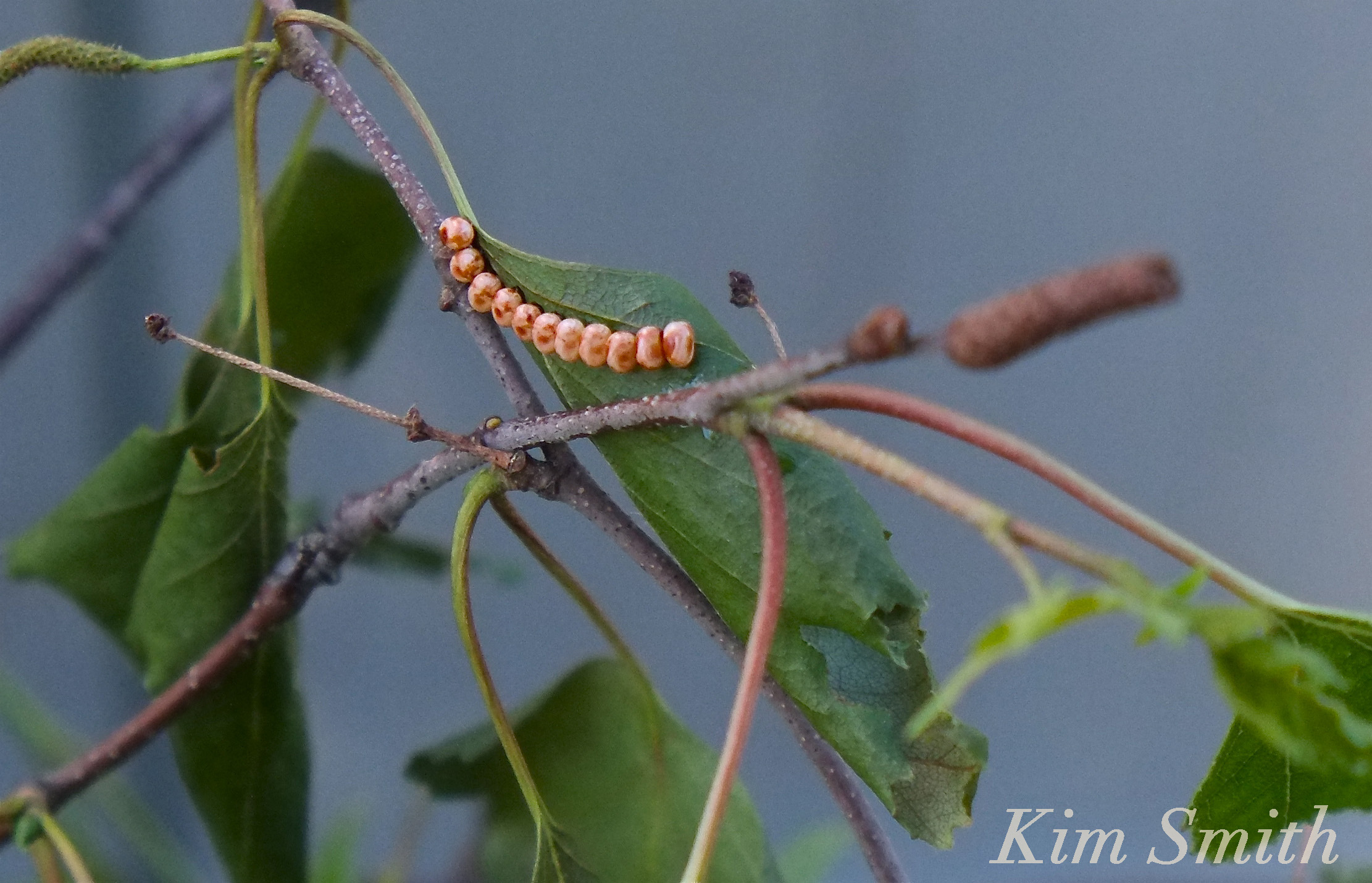 Cecropia Moth eggs
If the eggs are viable, within several weeks, the caterpillars will chew their way out of the egg casing and begin to eat the caterpillar food plants provided.
Perhaps like Christine and Jane who, moth by moth, are trying to save our native Giant Silkworm Moths, you’ll be inspired to raise these North American beauties, too!
More photos to come if a batch of caterpillars emerges.
Forty one years ago today, January 9th is celebrated as the day the Monarchs winter habitat was “discovered.” The woman who led the discovery, Catalina Aguado, was born in Michoacán, the Mexican state that is home to the butterflies wintering grounds. Catalina is the only living member of the original team featured in the following 1976 National Geographic article.
Excerpt from “Discovered: The Monarchs Mexican Haven”
Doctor Fred Urquhart, the Canadian zoologist who had been studying and tracking the butterflies since 1937 writes the following:
“In our search for the overwintering place, years passed, years of frustration. Norah, late in 1972, wrote to newspapers in Mexico about our project, asking for volunteers to report sightings and to help with tagging.
In response came a letter, dated February 26, 1973, from Kenneth C. Brugger in Mexico City. “I read with interest,” he wrote, “your article on the monarch. It occurred to me that I might be of some help. . . .”
Ken Brugger proved the key that finally unlocked the mystery.
Traveling in his motor home with his dog, Kola, he crisscrossed the Mexican countryside. He searched especially in areas where tagged monarchs had been recaptured, and places where other visitors had reported numerous butterflies. “Go out in the evening,” we instructed him. “That’s when you’ll see the monarchs moving about looking for a place to roost.”
In a letter written in April 1974, Ken reported seeing many monarch butterflies in the Sierra Madre flying at random as if dispersing from a congregating site.
“Your data and observations are exciting,” I replied. “We feel that you have zeroed in on the right area.”
Ken Brugger doubled his field capability by marrying a bright and delightful Mexican, Cathy. Late in 1974 he wrote of finding many dead and tattered butterflies along the roads in a certain area. “You must be getting really close,” we responded. These butterfly remains suggested that birds had been feeding on large flocks of monarchs.
Swiftly came the dramatic conclusion. On the evening of January 9, 1975, Ken telephoned us from Mexico. “We have located the colony!” he said, unable to control the excitement in his voice. “We have found them—millions of monarchs—in evergreens beside a mountain clearing.”
Mexican woodcutters, prodding laden donkeys, had seen swarming butterflies and had helped point the way.”
The complete article is available to read online here.

 In February of 2014 when I traveled to El Rosario Monarch Butterfly Biosphere Reserve in Angangueo to film the Monarchs, we encountered some difficulty locating the butterflies. Because of global warming conditions the Monarchs had roosted much further up the mountain than was typical. We needed to climb an additional 1500 feet, nearly to the top of the mountain. There was no place higher for the butterflies on this mountain and I wondered at the time, where would they go as the earth becomes increasingly warmer.
Butterflies are heliothermic, which means they gain heat from the sun. During the winter it is imperative that the butterflies remain relatively cool and in a state of sexual immaturity, called diapause. The sheltering boughs of the sacred Oyamel Fir (Abeis religiosa) trees and the cool temperatures at the higher altitudes of the Trans-Mexican Volcanic Mountain Belt, in the past, have provided optimal habitat for the butterflies.
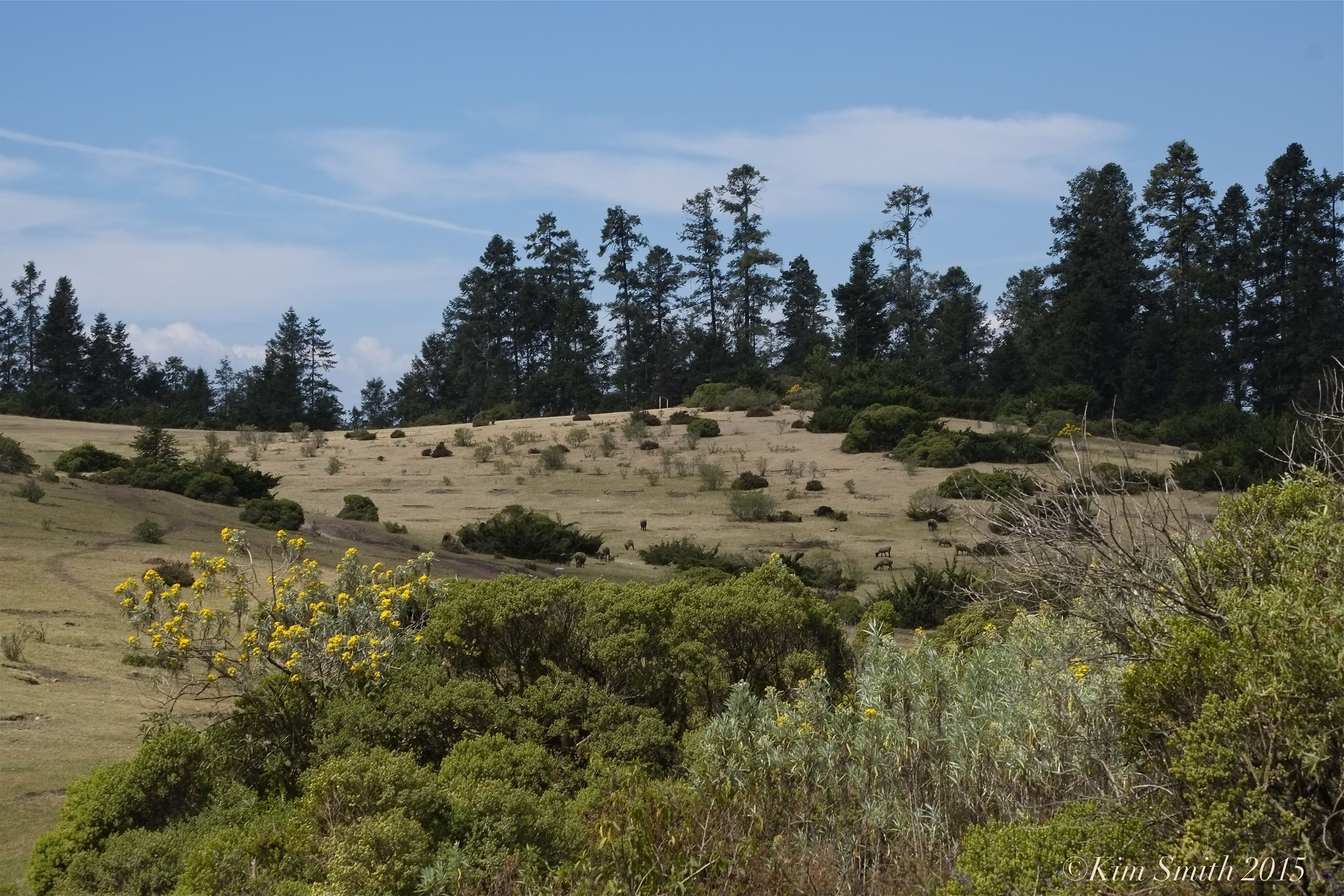 Leaving the Chaparral and Entering the Oyamel Fir Forest
 Oyamel Fir Forest
The butterflies currently roost at altitudes between 9,500 and 10,800 feet. Mexican scientists are planning to progressively move the trees higher up the mountainsides in a race to save the fir trees. Last summer several hundred seedlings were planted at 11,286 feet where habitat best suited to Monarchs is expected to be by 2030.
Excerpt from “To Protect Monarch Butterfly, a Plan to Save the Sacred Firs”
By Janet Marinelli
“While U.S. biologists urge gardeners to plant milkweeds to help restore the monarchs’ summer habitat, Mexican scientists are pinning their hopes on a plan to move the species progressively higher up local mountainsides in a race to save these firs and the butterflies that depend on them. “We have to act now,” says the plan’s architect, Cuauhtémoc Sáenz-Romero, a forest geneticist at the Universidad Michoacana de San Nicolás de Hidalgo. “Later will be too late, because the trees will be dead or too weak to produce seeds in enough quantity for large reforestation programs.”
When the rainy season arrived last summer, a few hundred seedlings were planted at 11,286 feet, where habitat suited to oyamel fir trees is expected to be by 2030. By then, according to retired U.S. Forest Service geneticist Jerry Rehfeldt, who co-authored a paper with Sáenz-Romero on global warming’s effect on oyamels, temperatures in the reserve could rise above pre-industrial levels by 2.7 degrees Fahrenheit by 2030, and suitable habitat could shrink by nearly 70 percent. The scientists’ research further suggests that by the end of the century, habitat that meets the fir’s needs may no longer exist anywhere inside the reserve. Trees would have to be planted at higher altitudes on peaks more than 100 miles away from the monarch’s migratory home.
The sacred fir is a poster child for the plight of trees around the globe. Trees provide habitat for countless species and underpin ecosystems as well as human economies, but as a group they are highly imperiled. A diagram in the Intergovernmental Panel on Climate Change’s 2014 Working Group II report shows that of all life forms, trees are least able to respond to rapid climate change. Rooted in place, they have not evolved for rapid locomotion. Many take decades to mature and reproduce.
The breakneck speed of current global warming dwarfs anything in the fossil record, even what Lee Kump, professor of geosciences at Penn State University, has called “the last great global warming” 56 million years ago during the Paleocene-Eocene Thermal Maximum. At that time, over the course of a few thousand years, global temperatures soared 9°F as the supercontinent Pangaea broke apart. By comparison, if carbon emissions are not slashed soon, scientists warn it’s possible we could witness that much warming in a matter of centuries, if not decades. Without human help, trees and many other plant and animal species most likely won’t be able to migrate fast enough to keep pace with rapidly changing conditions.”
READ THE COMPLETE ARTICLE HERE
So many thanks to my friend Eric Hutchins for forwarding this article!!
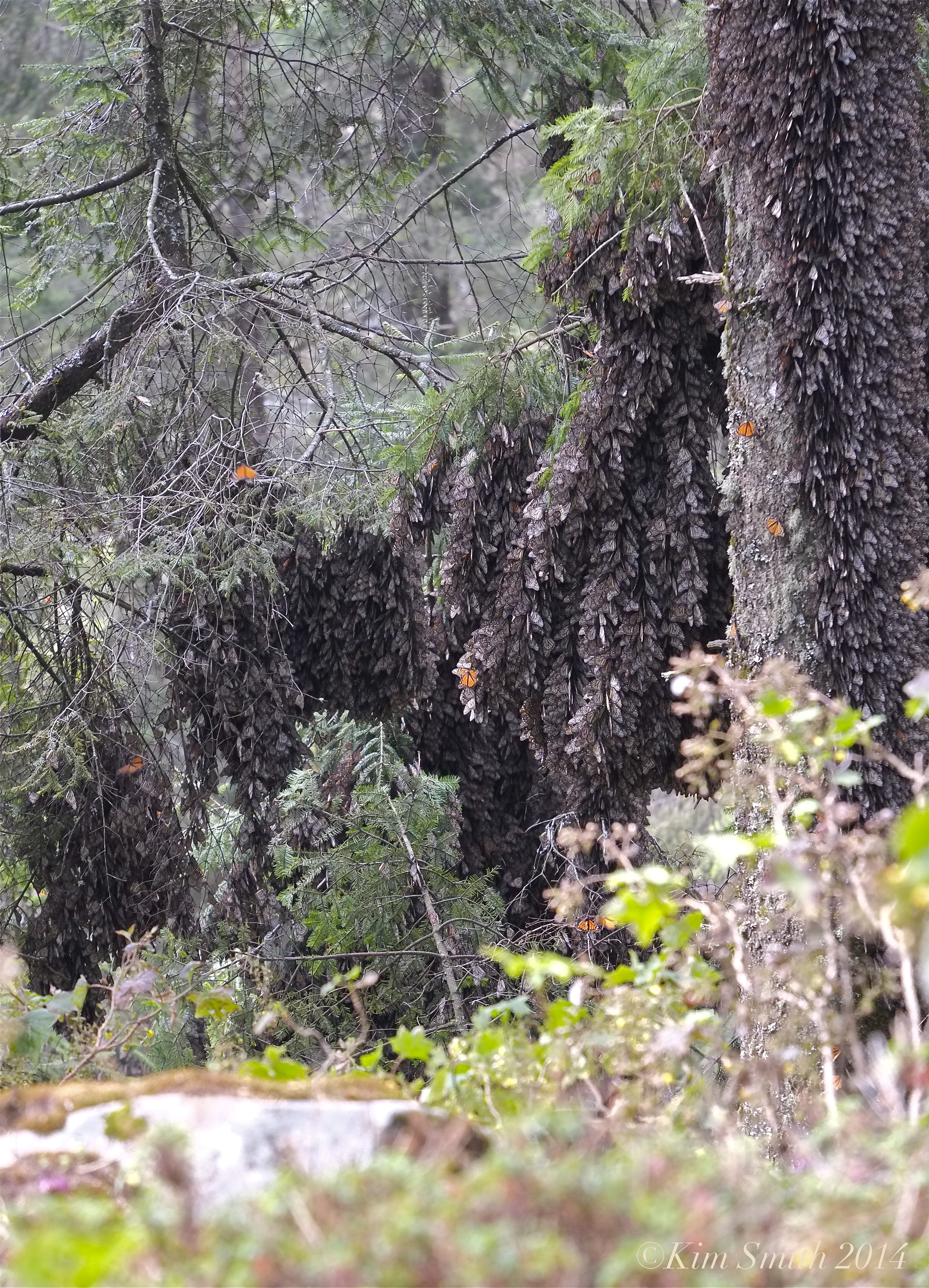 Oyamel Boughs Enveloped in Monarchs
 Beauty on the Wing