Tag Archives: Monarch Butterfly Migration

Please Share Your Monarch Sightings – Thank you!

There have been few Monarch sightings this summer but I have been hoping for a strong fall migration. The migration is peaking in Kansas and we are always a little bit behind. Please let me know if you see a Monarch, and where. Thank you very kindly!

https://www.instagram.com/p/BKqhTISjOjG/

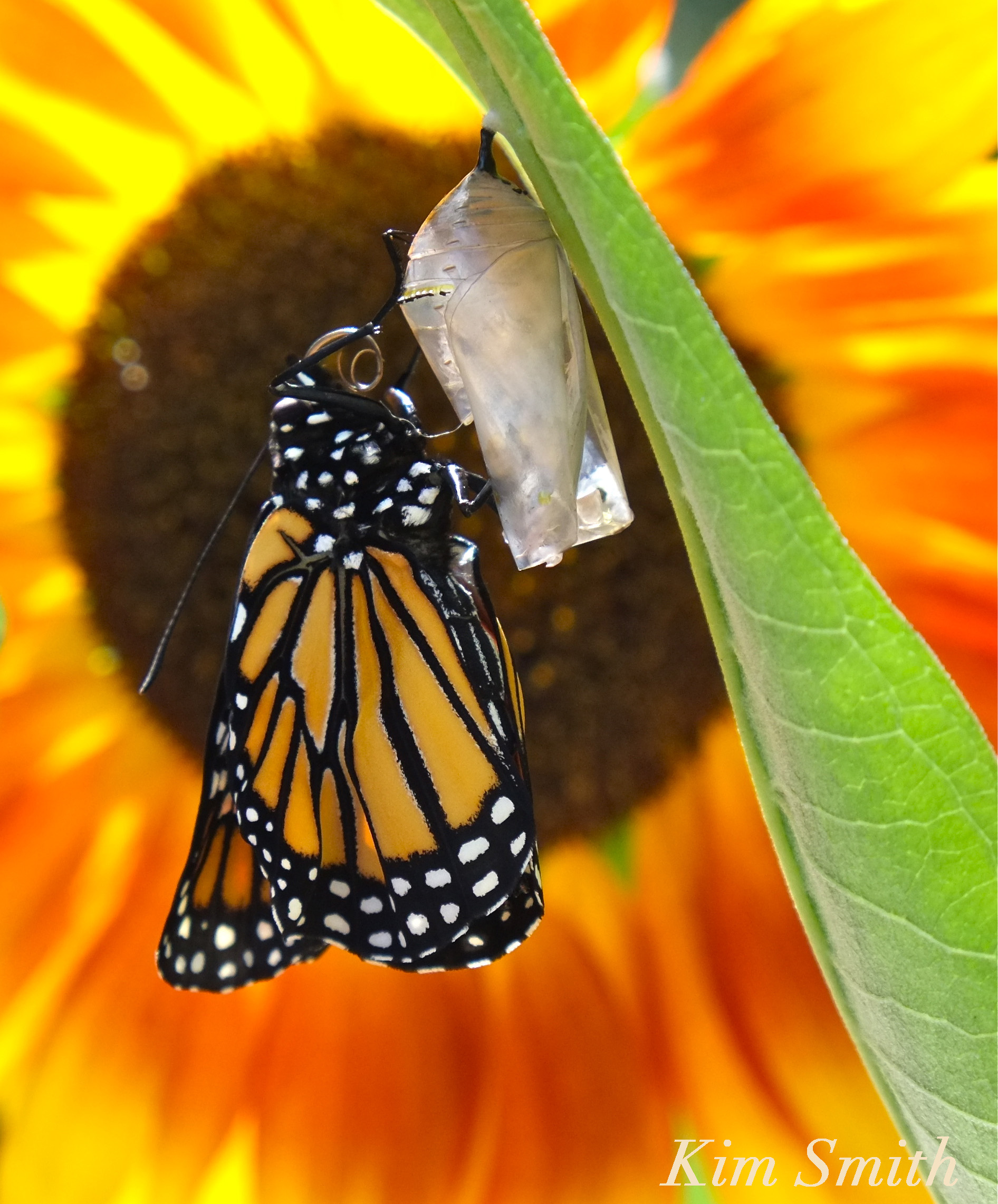
Monarchs are emerging daily in my garden, from eggs collected at my friend Nancy’s field in Salem. This too would be an indication that we may be seeing them soon.newly-emerged-monarch-butterfly-copyright-kim-smith-jpg

This newly eclosed Monarch is clinging to its chrysalis case. Within moments of emerging, the two-part Monarch proboscis must zip together to form a siphoning tube. If the two parts do not join, the butterfly will not be able to drink nectar. In this photo, you can see the proboscis is not yet fully zipped.

Hello Mama Monarch

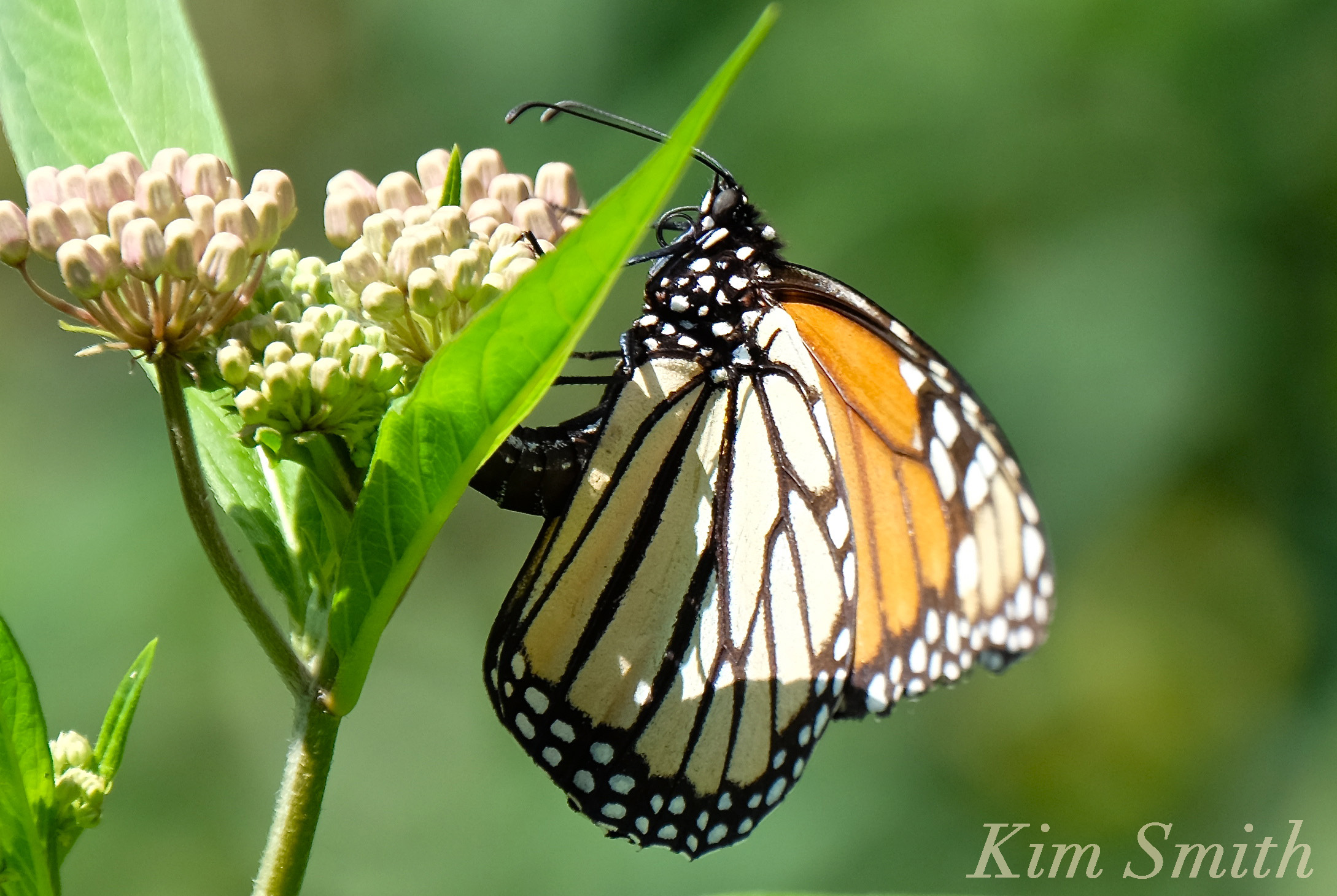
Plant and they will come! Female Monarch depositing eggs -1 copyright Kim Smith Alighting on the buds of our Marsh Milkweed plants, you can see in these photos that the female Monarch is curling her abdomen to the underside to deposit eggs. She will go from bud to bud and leaf to leaf ovipositing one egg at a time. A female, on average, deposits 700 eggs during her lifetime, fewer in hot, dry weather.

Female Monarch depositing eggs copyright Kim SmithFemale Monarch Butterfly and Marsh Milkweed (Asclepias incarnata)

Butterflies do not “lay” eggs; web would say oviposit or deposit. And you wouldn’t describe a caterpillar as hatched, but that it has emerged or eclosed.

Grow Marsh Milkweed and Common Milkweed and you most definitely will have female Monarchs calling your garden home!

Female Monarch depositing eggs -2 copyright Kim Smith
In the above photo you can see how she is contorting her abdomen to correctly position the eggs.

HOW RELOCATING TREES COULD HELP SAVE THE MONARCH BUTTERFLIES

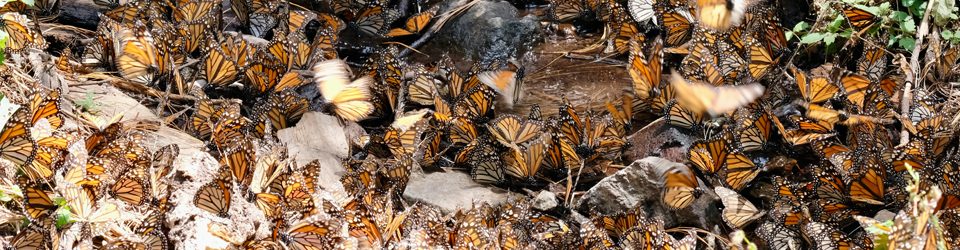
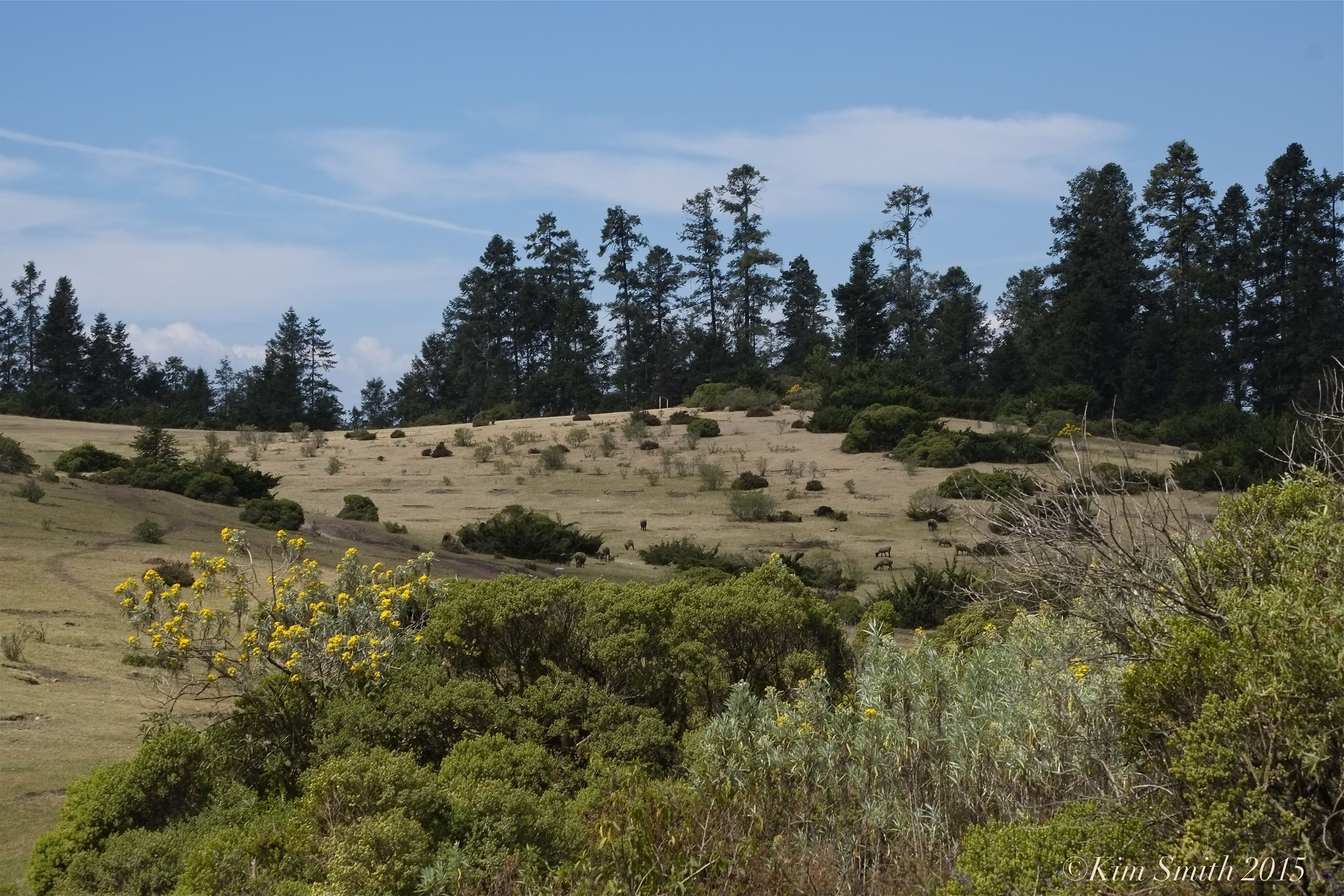
monarchs-el-rosario-©Kim Smith 2014In February of 2014 when I traveled to El Rosario Monarch Butterfly Biosphere Reserve in Angangueo to film the Monarchs, we encountered some difficulty locating the butterflies. Because of global warming conditions the Monarchs had roosted much further up the mountain than was typical. We needed to climb an additional 1500 feet, nearly to the top of the mountain. There was no place higher for the butterflies on this mountain and I wondered at the time, where would they go as the earth becomes increasingly warmer.

Butterflies are heliothermic, which means they gain heat from the sun. During the winter it is imperative that the butterflies remain relatively cool and in a state of sexual immaturity, called diapause. The sheltering boughs of the sacred Oyamel Fir (Abeis religiosa) trees and the cool temperatures at the higher altitudes of the Trans-Mexican Volcanic Mountain Belt, in the past, have provided optimal habitat for the butterflies.

El Rosario ©Kim Smith 2014Leaving the Chaparral and Entering the Oyamel Fir Forest

Oyamel Fir trees Abeis religiosa ©Kim Smith 2014 copyOyamel Fir Forest

The butterflies currently roost at altitudes between 9,500 and 10,800 feet. Mexican scientists are planning to progressively move the trees higher up the mountainsides in a race to save the fir trees. Last summer several hundred seedlings were planted at 11,286 feet where habitat best suited to Monarchs is expected to be by 2030.

Excerpt from “To Protect Monarch Butterfly, a Plan to Save the Sacred Firs”

By Janet Marinelli

“While U.S. biologists urge gardeners to plant milkweeds to help restore the monarchs’ summer habitat, Mexican scientists are pinning their hopes on a plan to move the species progressively higher up local mountainsides in a race to save these firs and the butterflies that depend on them. “We have to act now,” says the plan’s architect, Cuauhtémoc Sáenz-Romero, a forest geneticist at the Universidad Michoacana de San Nicolás de Hidalgo. “Later will be too late, because the trees will be dead or too weak to produce seeds in enough quantity for large reforestation programs.”

When the rainy season arrived last summer, a few hundred seedlings were planted at 11,286 feet, where habitat suited to oyamel fir trees is expected to be by 2030. By then, according to retired U.S. Forest Service geneticist Jerry Rehfeldt, who co-authored a paper with Sáenz-Romero on global warming’s effect on oyamels, temperatures in the reserve could rise above pre-industrial levels by 2.7 degrees Fahrenheit by 2030, and suitable habitat could shrink by nearly 70 percent. The scientists’ research further suggests that by the end of the century, habitat that meets the fir’s needs may no longer exist anywhere inside the reserve. Trees would have to be planted at higher altitudes on peaks more than 100 miles away from the monarch’s migratory home.

The sacred fir is a poster child for the plight of trees around the globe. Trees provide habitat for countless species and underpin ecosystems as well as human economies, but as a group they are highly imperiled. A diagram in the Intergovernmental Panel on Climate Change’s 2014 Working Group II report shows that of all life forms, trees are least able to respond to rapid climate change. Rooted in place, they have not evolved for rapid locomotion. Many take decades to mature and reproduce.

The breakneck speed of current global warming dwarfs anything in the fossil record, even what Lee Kump, professor of geosciences at Penn State University, has called “the last great global warming” 56 million years ago during the Paleocene-Eocene Thermal Maximum. At that time, over the course of a few thousand years, global temperatures soared 9°F as the supercontinent Pangaea broke apart. By comparison, if carbon emissions are not slashed soon, scientists warn it’s possible we could witness that much warming in a matter of centuries, if not decades. Without human help, trees and many other plant and animal species most likely won’t be able to migrate fast enough to keep pace with rapidly changing conditions.”

READ THE COMPLETE ARTICLE HERE

So many thanks to my friend Eric Hutchins for forwarding this article!!

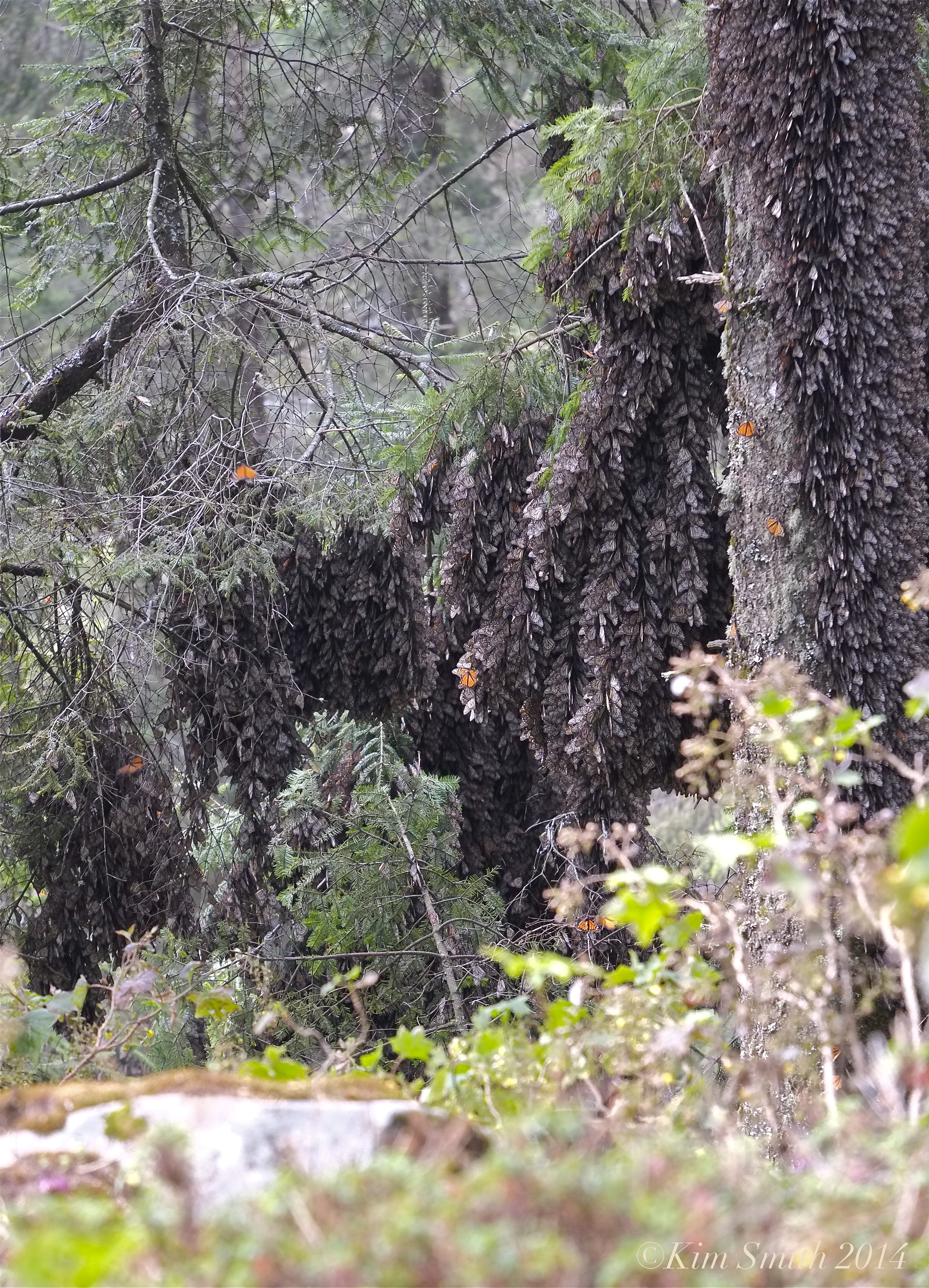
Monarch butterflies oyamel trees Abeis religiosa ©Kim Smith 2014 copyOyamel Boughs Enveloped in Monarchs

MONARCH DAY! STARRING THE EAST GLOUCESTER NEIGHBORHOOD GANG

Pilar Monarch Day ©Kim Smith 2015Pilar has started a new fashion trend, Monarchs as hair accessory.

Enchanted by Monarchs!  We had a fantastic day filmmaking, thanks to Emma, Pilar, Frieda, Annie Kate, Lotus, April, Elijah, Esme, Charlie, Atticus, and last but not least, Meadow. And an extra huge thank you to all the moms and dads for not minding the early morning wake up calls and texts to let the kids know the butterflies were emerging! I was tied up filming and so wish I’d taken more stills.

Annie kate, Emma, Pilar Monarch Day ©kim Smith 2015 copyAnnie Kate, Emma, and Pilar

Meadow Monarch Day ©Kim Smith 2015 copyMeadow

See More Photos Here Continue reading

NEW FILM: A FLIGHT OF MONARCHS

When watching, know that the first two minutes of the film were shot in Gloucester. I think you will be dazzled by the sheer numbers of Monarchs that travel through Cape Ann’s backyards and meadows during the peak of migration.

I began photographing the Monarchs in 2006, which was a year when we had an extraordinary number of Monarchs visiting our shores. At that time, I became determined that if ever again this phenomenon were to occur on Cape Ann, I was going to have the ability to document on film, rather than only through still images, this beautiful event for my community. It’s hard to imagine without observing and here you can see what I have wanted to share.

A Flight of Monarchs begins on a September day as first one and then passels of Monarchs begin to arrive to the fields and meadows of Cape Ann, carried across Massachusetts Bay on a tailwind. By the early evening light they begin to pour into the surrounding trees, clustering to stay warm in the branches furthest away from the prevailing breezes. The following morning as the sun begins to touch their wings, they alight from the trees, seeking the freshest wildflowers from which to drink nectar to help build their lipid reserves for the several thousand mile journey south. They drink and drink until the last of the sun’s rays dip below the tree line. As they arrived on a tailwind, they again depart, and are carried to the next gathering area. For coastal Monarchs, Allens Pond, which is located in Westport, Massachusetts is often the next stop.

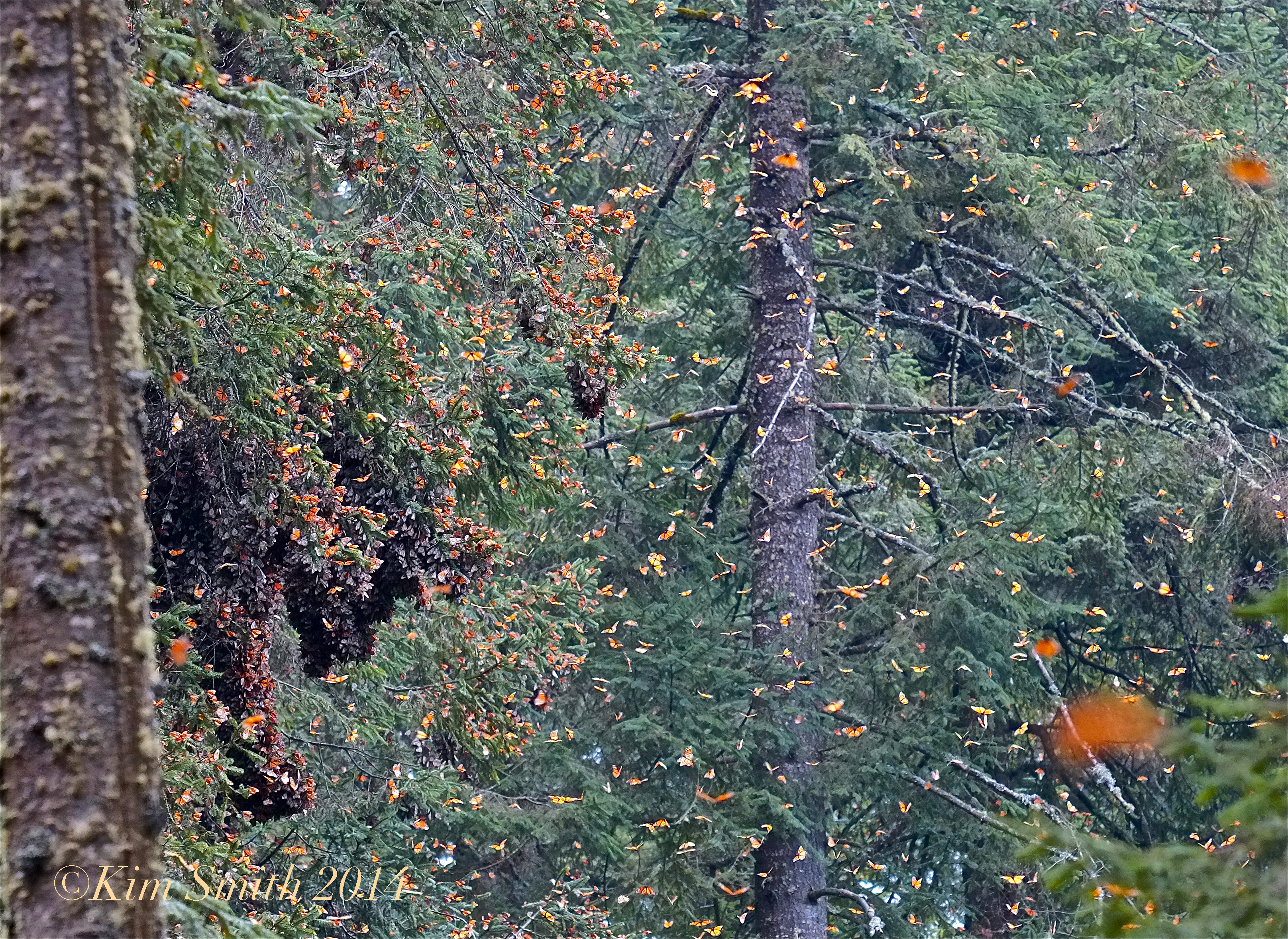
In the next scene, the butterflies have arrived to the sacred oyamel fir forests of Angangueo, Michoacán, deep in the heart of the Trans-Mexican Volcanic Belt. It’s early morning and the butterflies are suspended in great primordial branched clusters that may become so heavy from the weight of so many butterflies the boughs of the trees bend to the breaking point. Later in the day, as the sun begins to warm their wings, the butterflies begin to stir. During the winter, it is imperative that the Monarch’s body temperature remains relatively low. They leave the sunniest branches in search of shade and a drink of water from nearby mountain streams. Occasionally in late February, as the air temperatures begin to warm with the coming springtime, for a short period during the day, the butterflies leave the trees all at once. This phenomenon is called a butterfly “explosion,” and is a truly magnificent event to observe.

A Flight of Monarchs is set to the evocative and tender “Fields of Blue,” written and performed by composer and guitarist Jesse Cook and his band, to which permission was granted by the artist for the purpose of this short film. Here is a link to Cook’s website. I highly, highly recommend attending a live performance of Jesse Cook and Company. As was I, you will be completely taken by their gorgeous music, exquisite artistry, and with Cook’s songwriting, will travel in beautiful melodies inspired from around the world.

I am currently editing my feature length documentary, Beauty on the Wing, which after months and months of organizing and editing three years of footage, is currently running at approximately twelve hours in length. At eleven hours too long, I have a great deal of editing to accomplish in the coming winter months!

A Flight of Monarchs presented here is the shorter version of the film that I created for the Berkshire Museum’s “Butterflies” exhibit. The first version is six minutes long and played on a continuous loop in the main gallery of the exhibit hall. The longer version will soon be posted on Vimeo.


Butterflies! at the Berkshire Museum

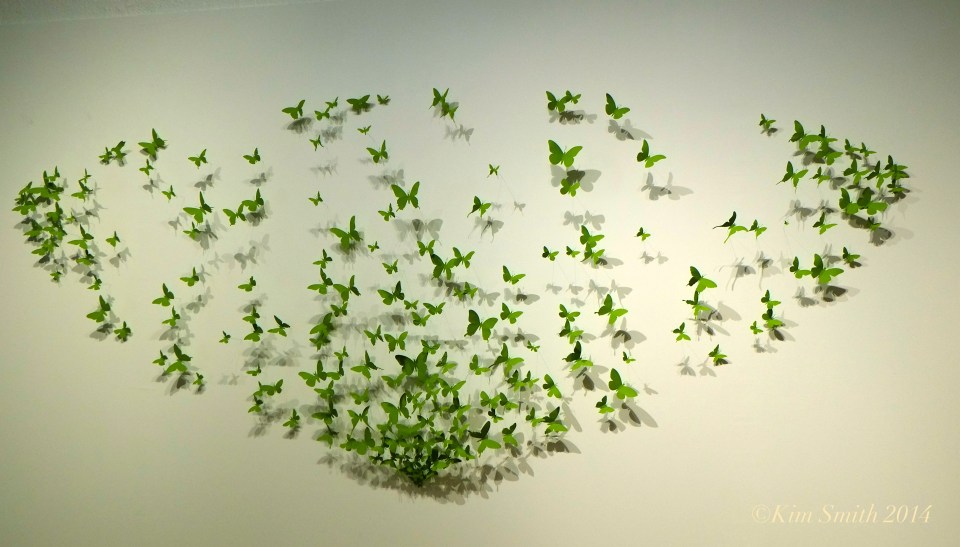
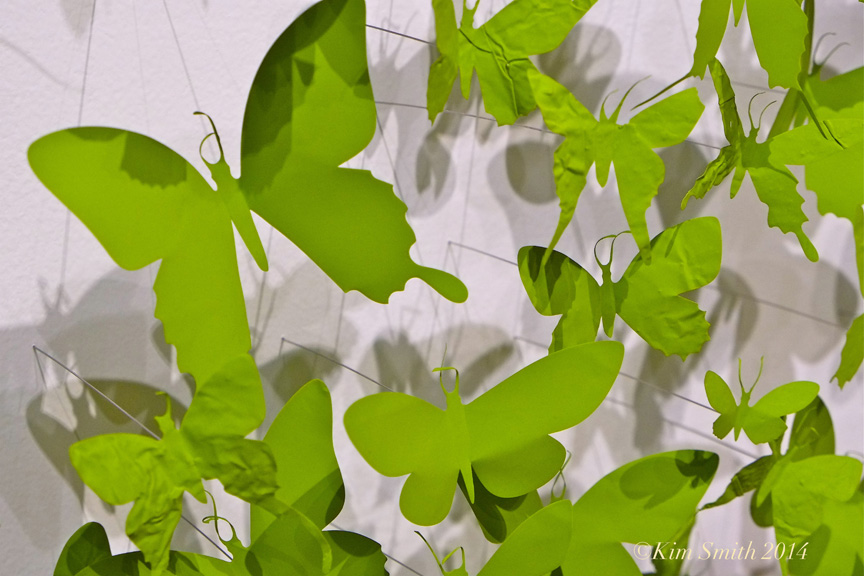
Paul Villinski Arcus -1 ©Kim Smith 2014

Detail of Paul Villinski’s “Arcus,” made from recycled cans.
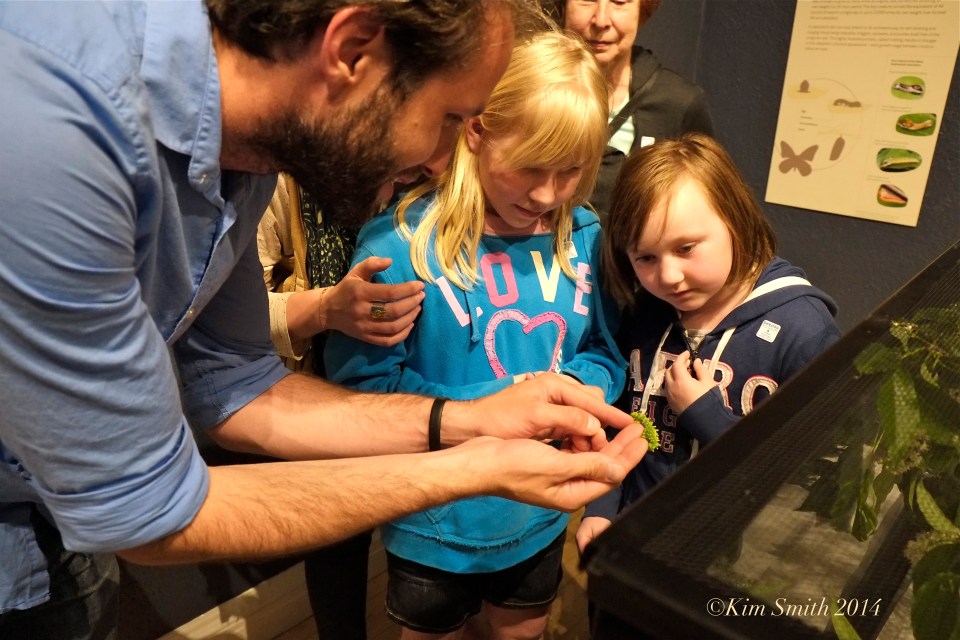
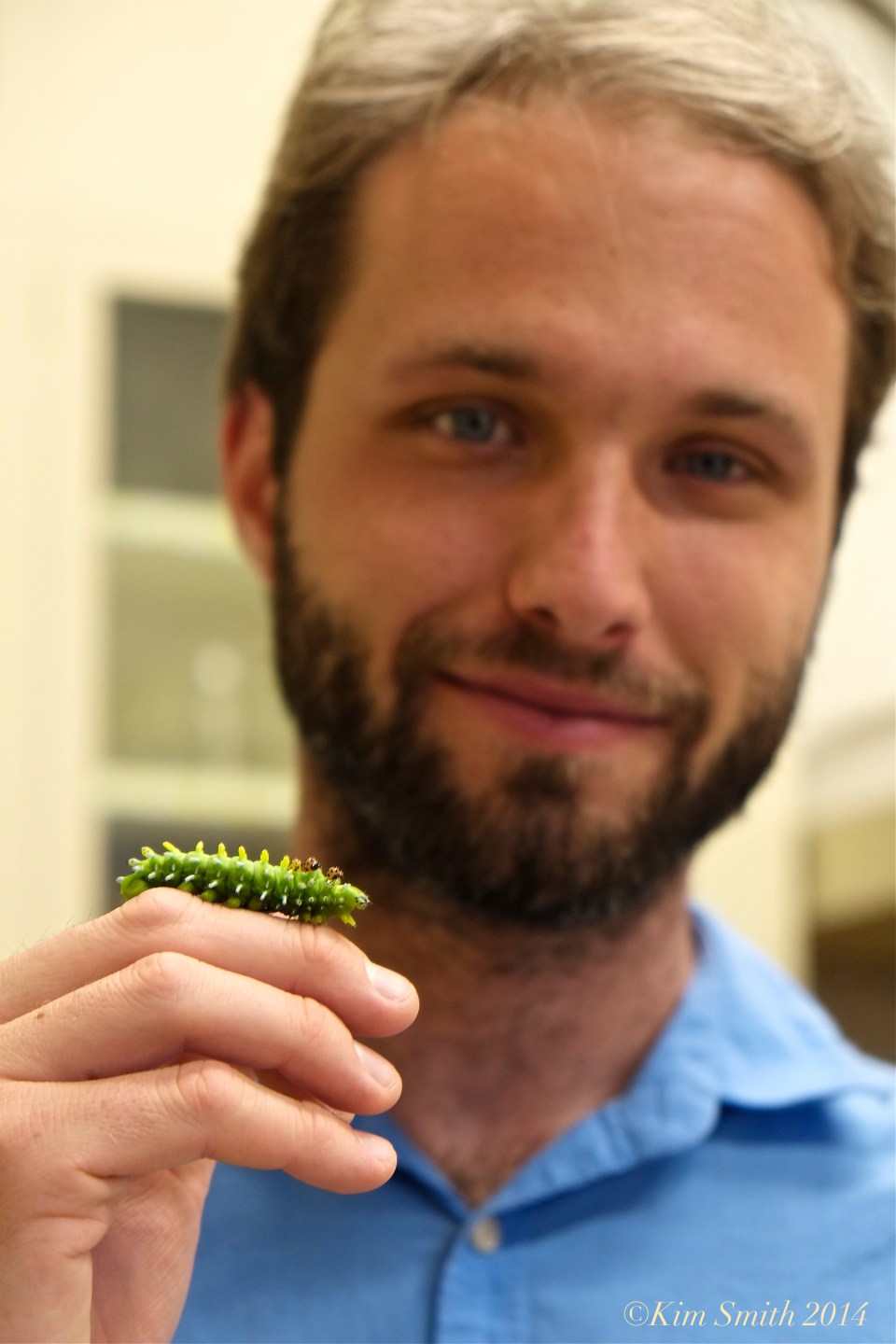
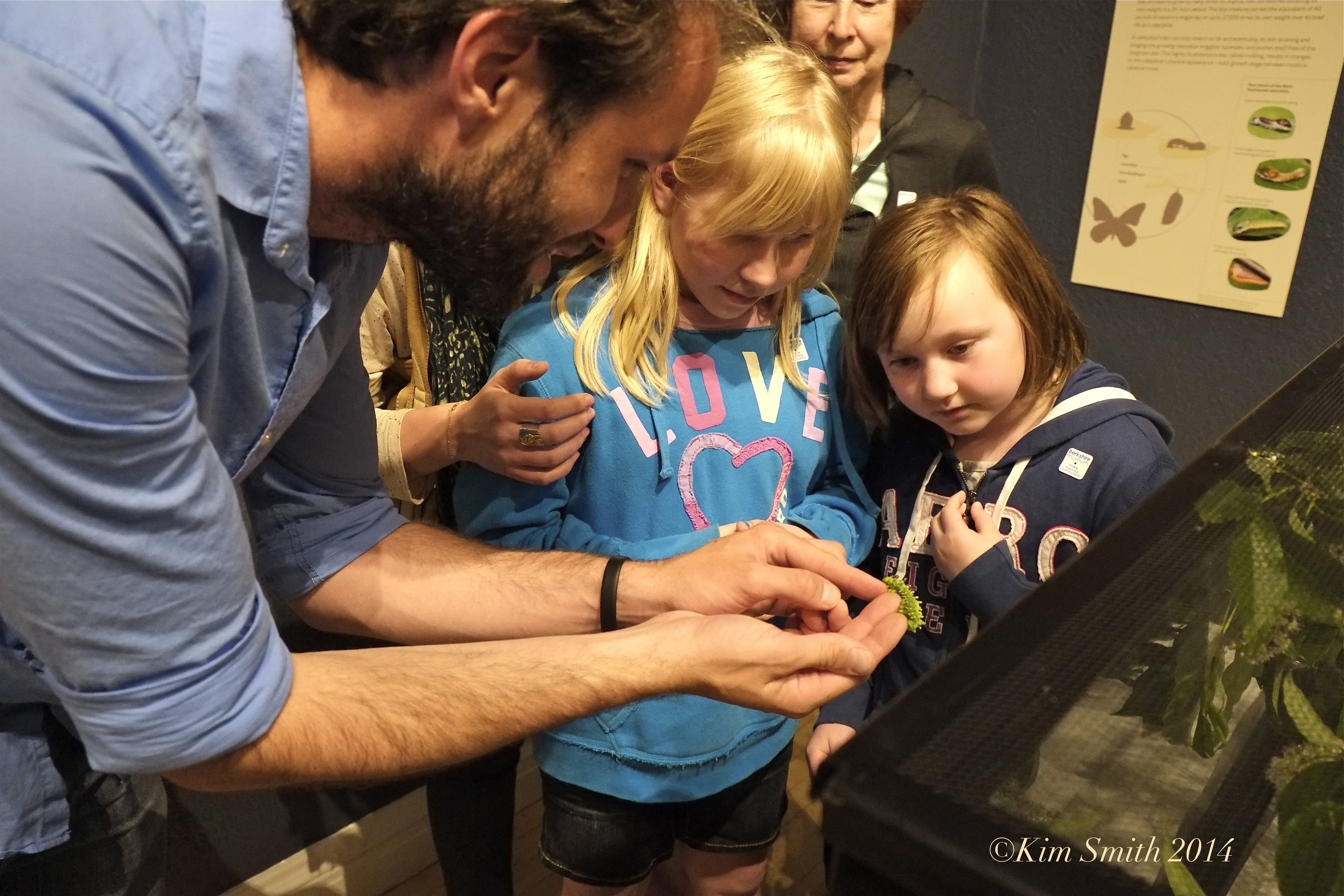
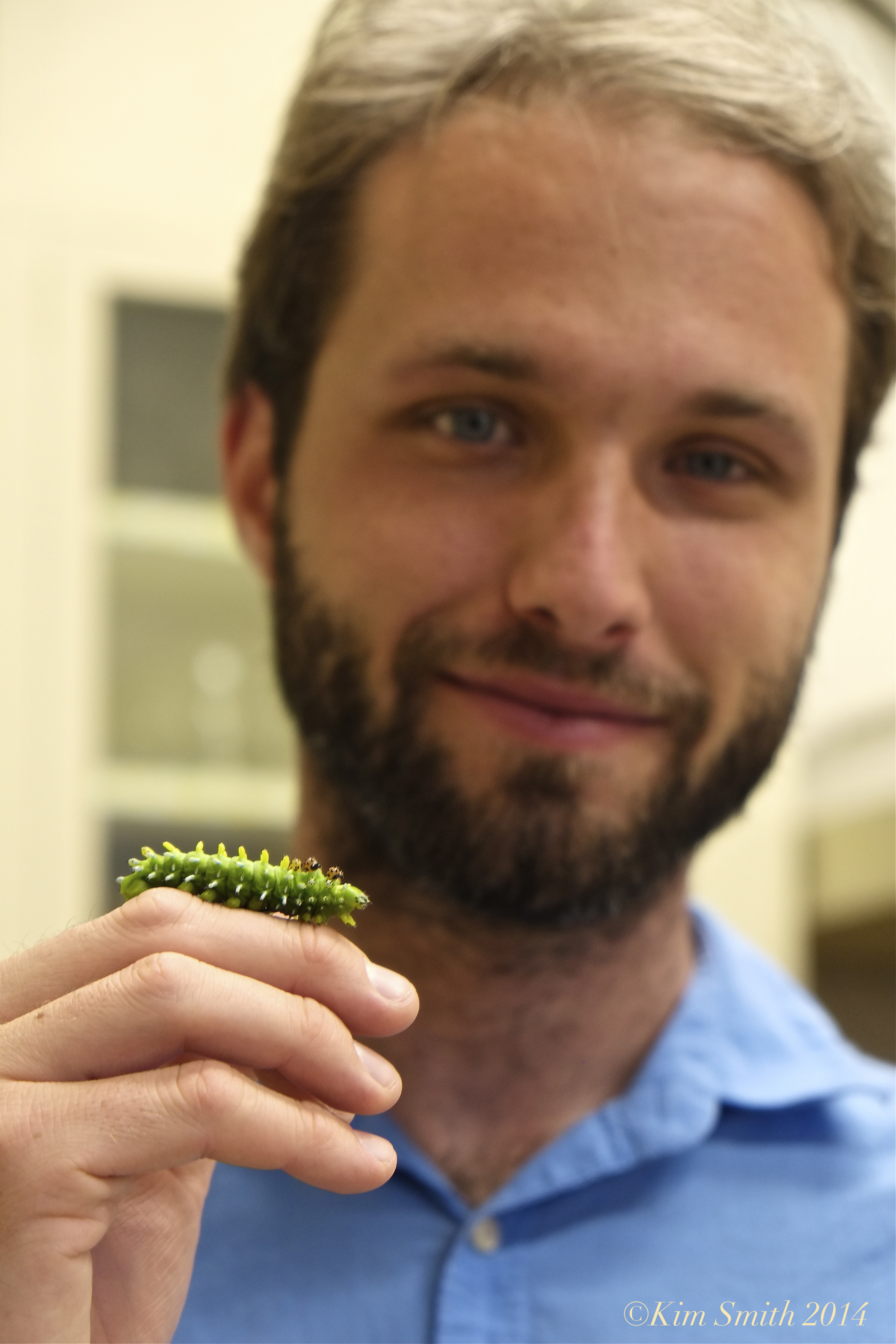
Kim Smith Berkshire Museum Butterflies ©Kim Smith 2014My friend Sam Jaffe talking about caterpillars.

Friday night I had the joy to attend the fabulous new exhibit at the Berkshire Museum titled “Butterflies!” The galleries are filled with hands on art and science activities, contemporary butterfly sculpture, artifacts from the museum’s collections, live caterpillars, and mixed media of photography and film, including an audio track from Dr. Lincoln Brower discussing what happens within a chrysalis. And, as part of the exhibit, one of the galleries houses a large butterfly pavilion with over 200 live tropical butterflies from around the world!

Blue Morpho Butterfly ©Kim Smith 2014Underwings of the Blue Morpho Butterfly from the live butterfly pavilion.

“Butterflies” was curated by Maria Mingalone, the museum’s director of interpretation, and she deftly and beautifully combines science, art, and nature in an exhibit that is sure to inspire and delight the very youngest to the most senior of citizens, and every age in between!

Butterflies Berkshire Museum ©Kim Smith 2014  copyThe opening was very joyful and buoyant—I most certainly felt that way and, judging from the expressions on visitor’s faces, wasn’t alone. I am convinced that butterflies bring out the happy in people!

Kim Smith film Berkshire Museum Butterflies ©Kim Smith 2014JPGThe audience for my short film “Flight of the Monarchs”—I watched as many people watched my film many times over, despite the case that because the galleries were so crowded you couldn’t hear the beautiful music. I think there were several thousand people at the event.

The music that I set my film to is “Fields of Blue,” written and performed by Jesse Cook. I wrote the artist and sent him a copy of my film and the most amazing thing happened where, within only the few day whirlwind to create this little film, we were granted permission to use his song!!!!!!!!

My film opens with a clip of a Monarch flying in front of Eastern Point Lighthouse (you can see our Lighthouse in the above photo). Most of the footage that I used for the movie was of butterflies in flight, shot on Cape Ann, and the audience was stunned at how beautiful the migration is through Gloucester. That opening clip of the Lighthouse and the Monarch took several days to capture the exact shot that I wanted. Butterflies don’t take direction!Berkshire Museum ©Kim Smith 2014 -2

Berkshire Museum Kim Smith 2014 1JPGSome of my photos were used to illustrate Dr. Brower’s audio recording explaining what happens inside a chrysalis.

Sam Jaffe Kathy©Kim Smith 2014 copySam and his fiance Kathy, also a graduate student in environmental studies.

Berkshire Museum © Kim Smith 2014JPGIf you have never been to the Berkshire Museum, their website description reads as follows: “The Berkshire Museum offers a unique array of exhibitions, activities, and attractions for visitors of all ages. From fine art and ancient objects to fossils; from an aquarium of native and exotic creatures to the Feigenbaum Hall of Innovation, we are your community museum: a place where everyone, from toddlers to elders, can learn, play, explore, innovate, be engaged and inspired.”

I arrived early, before “Butterflies” opened its door, and explored the galleries. It’s really a very engaging museum and especially while the exhibit is running, would be a wonderfully fun and interesting day trip with children.

Sam Jaffe ©Kim Smith 2014Sam Jaffe making final adjustments to the chrysalis and cocoon display. To see some of Sam’s stunning photography, click on his website here: Sam Jaffe

Olive Ridley skeleton ©Kim Smith 2014Olive Ridley Skeleton at the Berkshire Museum

_DSF3364Ellsworth Kelly “Grapefruit”

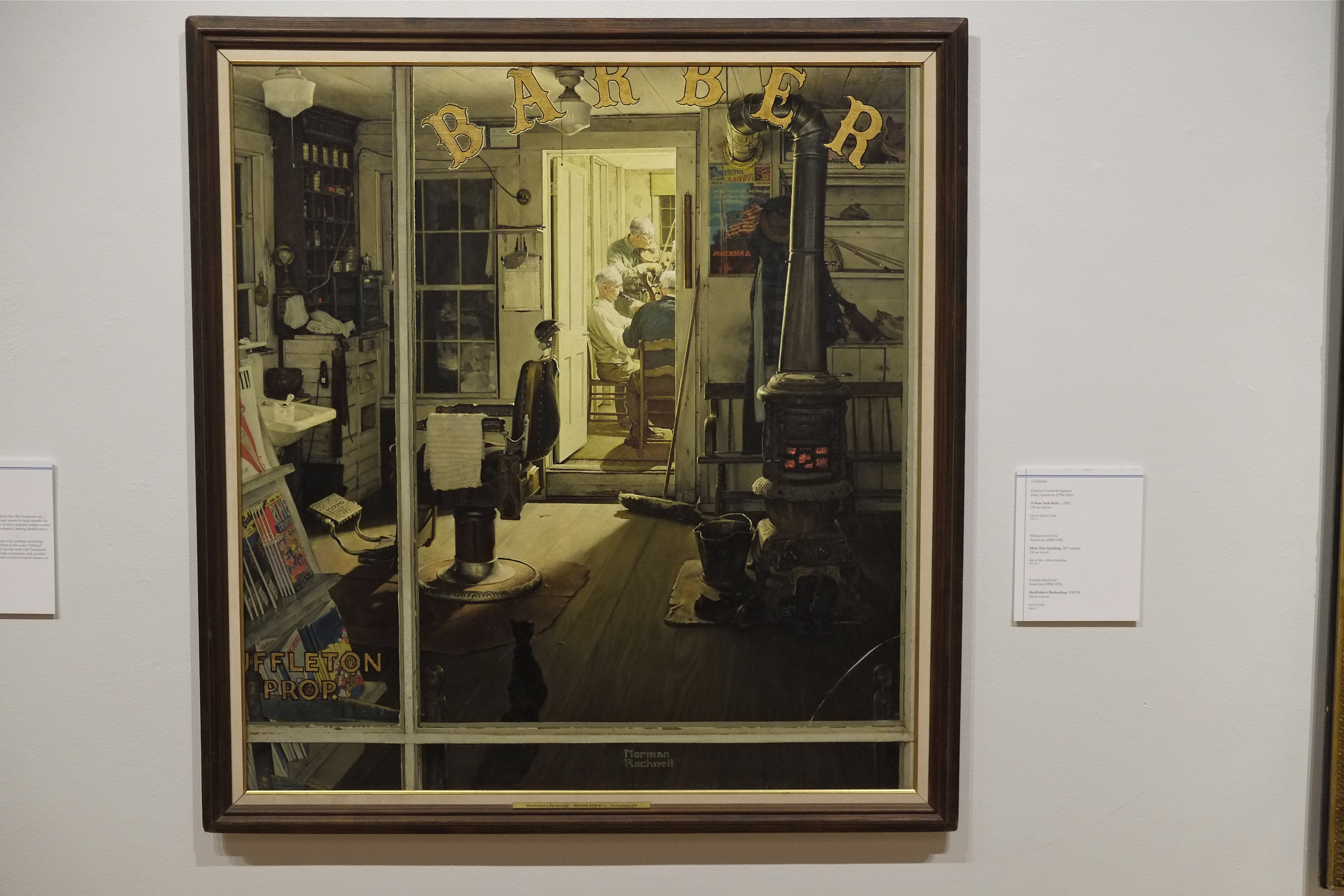
_DSF3362Norman Rockwell

Paul Villinski Arcus ©Kim SAmith 2014Paul Villinski “Arcus”

Sam Jaffe ©Kim Smith 2014 -2Sam Jaffee

New Film: Monarch Migration Interview with Tom Emmel

Horses neigh, bugs crawl across the lens, and Monarchs flutter in the background —interview on the mountaintop and it was all beautiful! Video includes footage from my forthcoming film, Beauty on the Wing ~ Life Story of the Monarch Butterfly.

Monarch Migration Interview with Tom Emmel, filmed at the summit of the Sierra Chincua Monarch Butterfly Biosphere Reserve, Angangueo, Mexico.

This was Tom’s 40th trip to Angangueo to study the Monarchs. In this interview, he provides some historical perspective from those very first trips to the remote Oyamel fir forests atop the Trans-Mexican Volcanic Mountains. We learn how scientists count millions of Monarchs. Tom discusses the state of the Monarch migration today and why it is in crisis.

Tom Emmel is the Director of the McGuire Center for Lepidoptera and Biodiversity at the Museum of Natural History of the University of Florida, Gainesville. Additional footage shot at El Rosario Monarch Butterfly Reserve and at the base of Sierra Chincua.

Monarch Butterfly Explosion!

Monarch butterfly explosion ©Kim Smith 2014Monarch Butterfly Explosion!

I am back from Mexico and, although there for less than a week, there was much to take in. My most sincerest thanks to all my readers for your safe-travels well-wishes and kind thoughts!

The butterflies were dazzling and beautiful beyond imagination, but also very sad. This wondrous migration of the Monarchs, which has taken place for over a million years, is in serious peril. If changes are not made very soon, the migration will end. I’ll write more about my trip and the extraordinary scientist that led our expedition, Doctor Tom Emmel, this weekend after I am all caught up with design work and photography projects. Additionally, I interviewed Dr. Emmel at the top of the Sierra Chincua Monarch Colony, located in Michoacán at 10,000 feet above sea level, and will be bringing readers the full interview!

What We Can Do to Help the Monarchs

Everywhere we turn this past month, there is a report in a major newspaper about the declining Monarch butterfly population. This forwarded from one of our readers: “Monarch butterflies keep disappearing. Here’s why” was published in the Washington Post on January 29th, 2014.

The author, Brad Plumer, interviewed Dr. Lincoln Brower, a professor of biology at Sweet Briar College and one of the nation’s leading authorities on the subject. I will be meeting Dr. Brower and interviewing him for my film while at the biosphere this month.

One of Dr. Brower’s suggestions on how we can help the Monarchs is along the millions of miles of roadsides in the eastern United States, if we cold get highway departments to plant for pollinators rather than cutting everything down and spraying herbicides. This would be of great help to the Monarchs, insects in general, and many species of birds.

I’ve thought a great deal about this and it is my foremost reason for creating butterfly and habitat gardens, such as the butterfly gardens at the Gloucester HarborWalk. I think too, of the many patches of unused city-owned land dotted about our community and how we could turn these little patches into habitats for all our winged friends. For several years I have wanted very much to organize this project however, I have my hands full with launching the film. Once the film is complete, my hope and plan is that it will become an inspirational and positive educational tool to help generate interest in community projects such as these.

In the meantime, as many of you may be aware, since 2007, I have been creating exhibits and giving lectures about the life story of the Monarch, on the state of butterflies migration, and how we can help the Monarchs both as individuals and collectively. I purposefully do not publish a price on any of my lecture listings because the cost of my programs are rated based on the size of your group or organization. No group is too small and I don’t want budget constraints to prohibit making the information available to all who are interested.

Here is a link to my Monarch program. If you and your organization would like to learn more about the Monarch Butterfly and how you can help, please contact me at kimsmithdesigns@hotmail.com.

Male Female Monarch Butterfly Marsh Milkweed -2 ©Kim Smith 2012 copyMale and Female Monarch Butterflies Marsh Milkweed