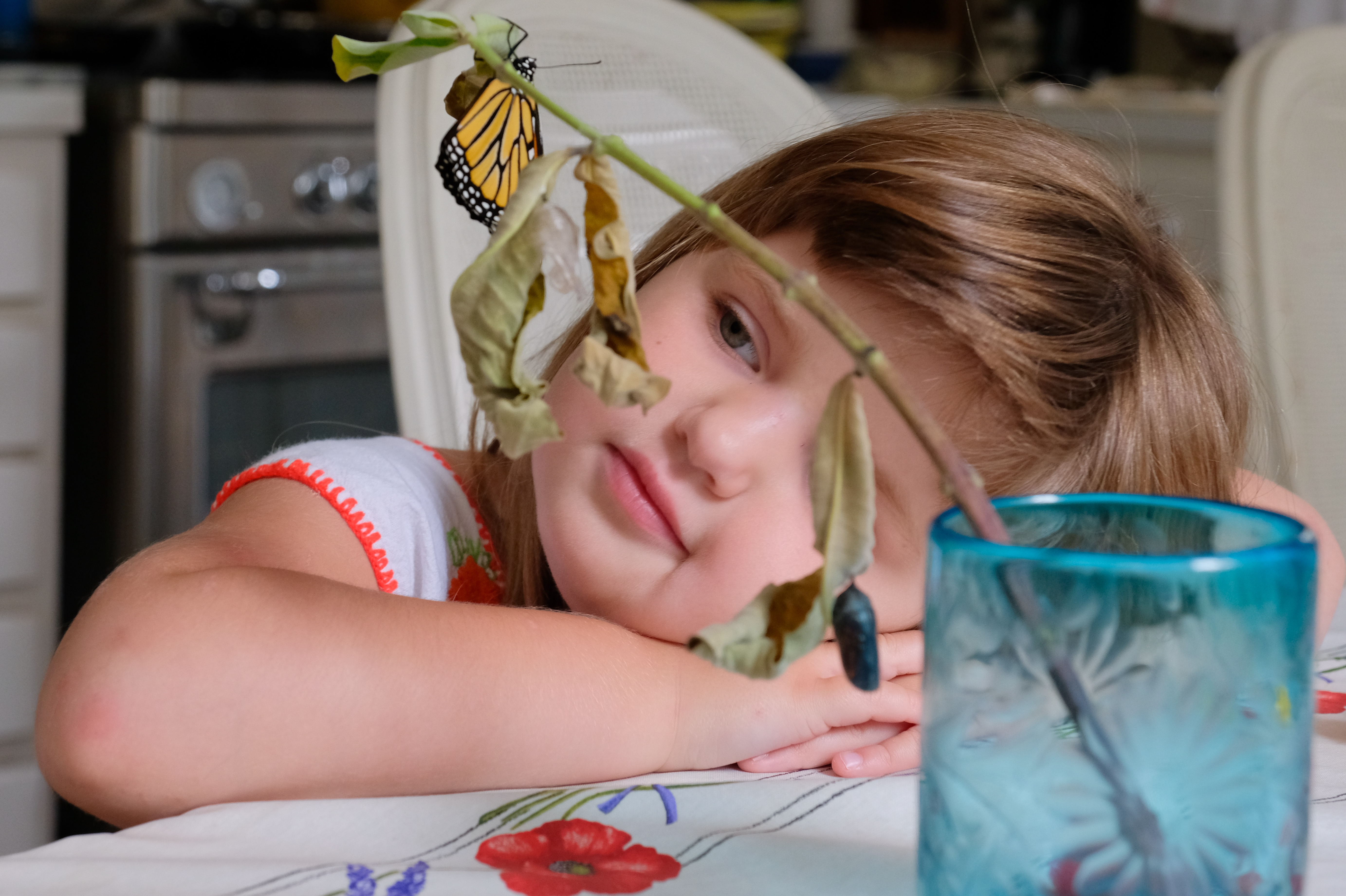
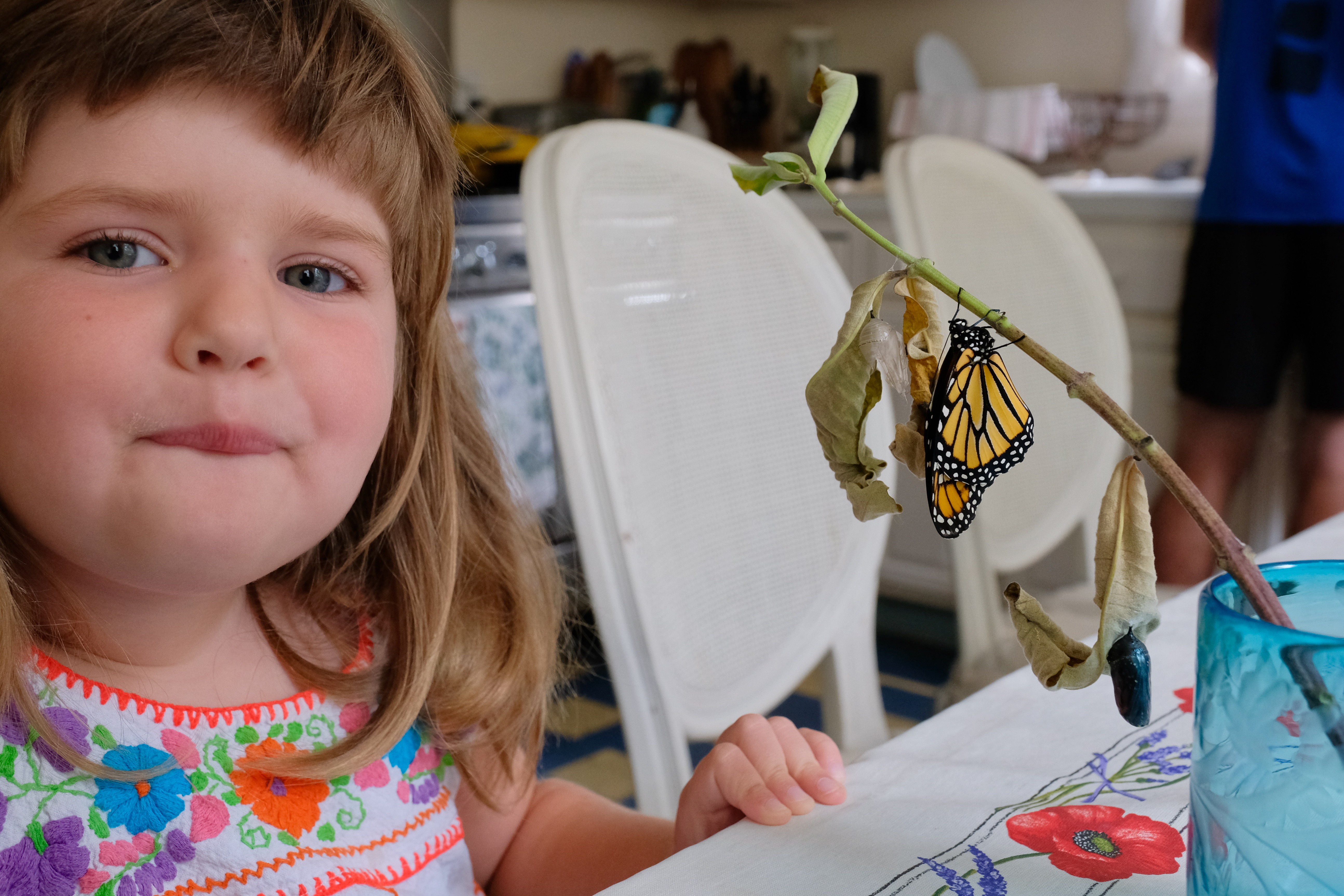
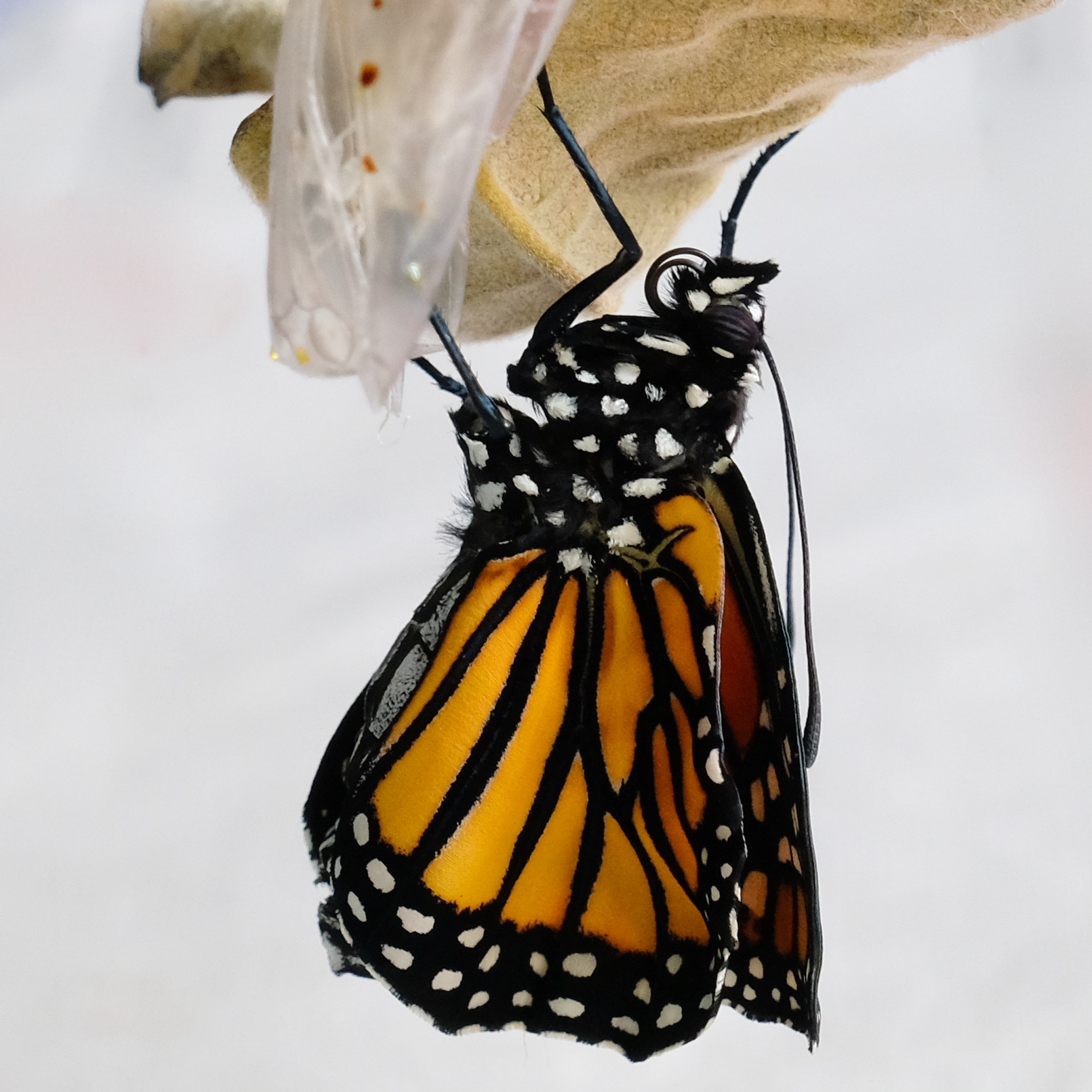
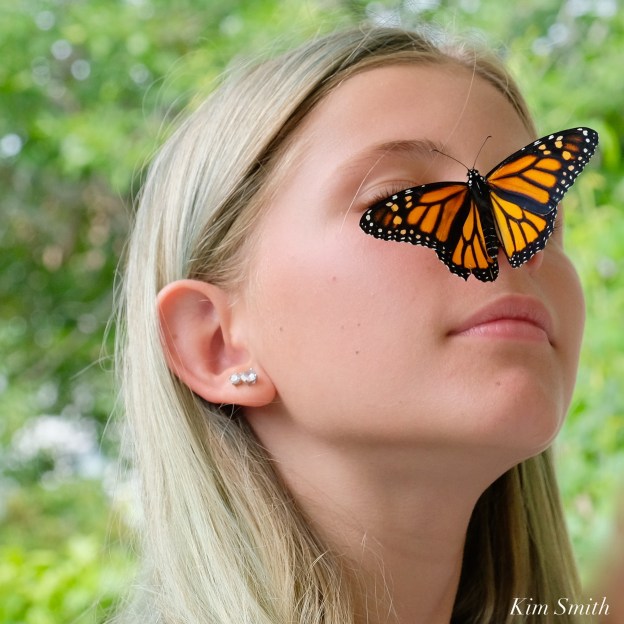
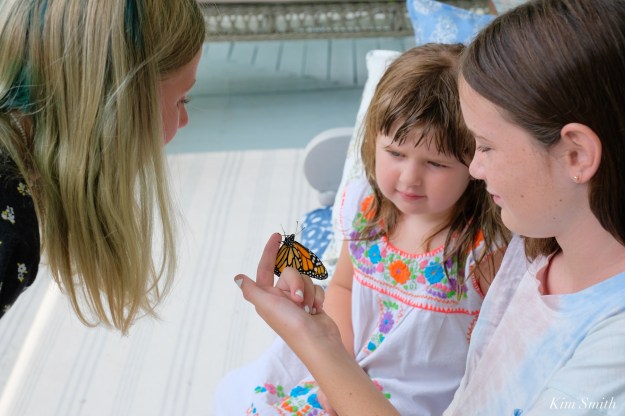
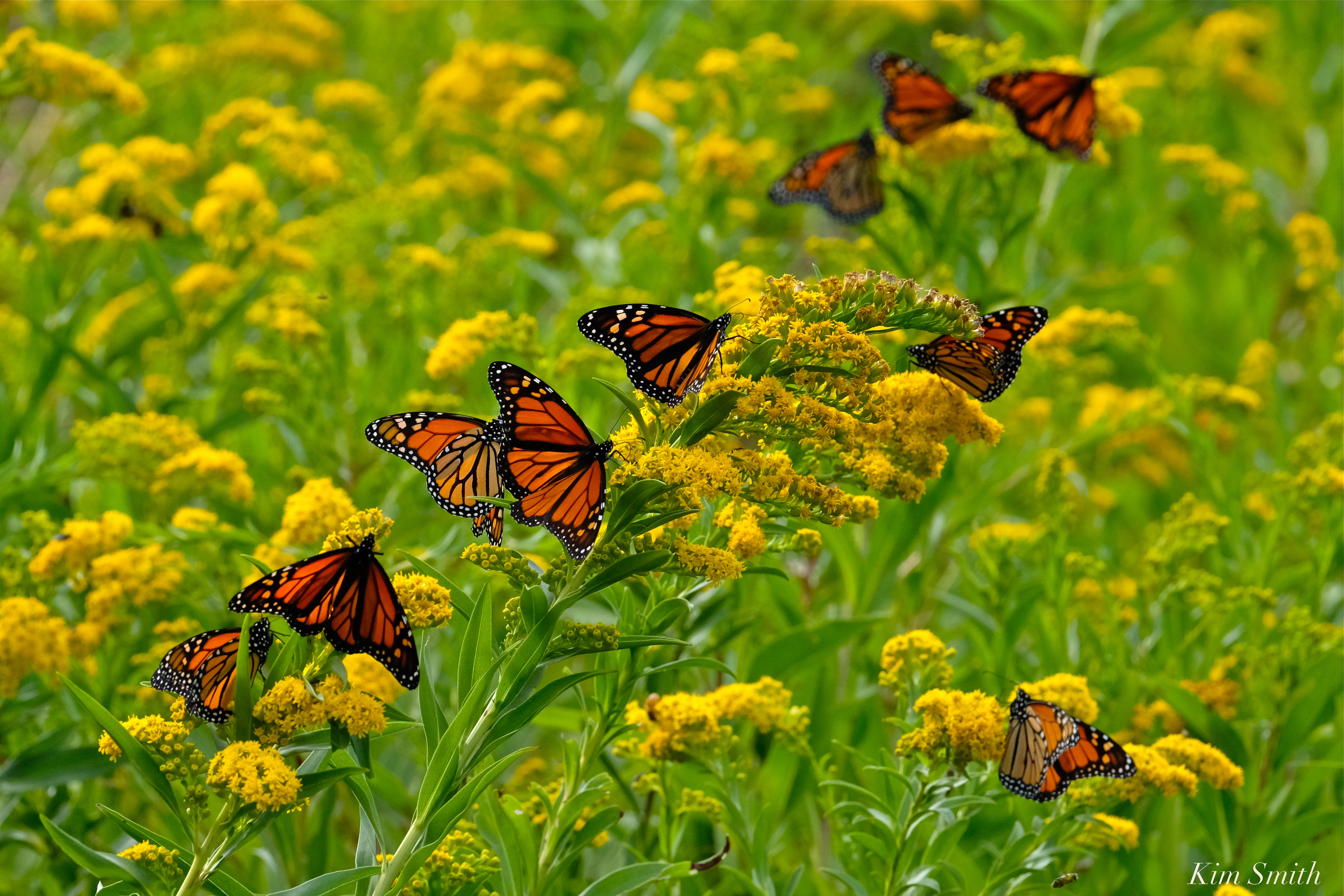
Last weekend watching the Monarchs emerge at breakfast – I think Charlotte loves butterflies nearly as much as do I ❤

MONARCHS EMERGING AT BREAKFAST
Leave a reply

Last weekend watching the Monarchs emerge at breakfast – I think Charlotte loves butterflies nearly as much as do I ❤



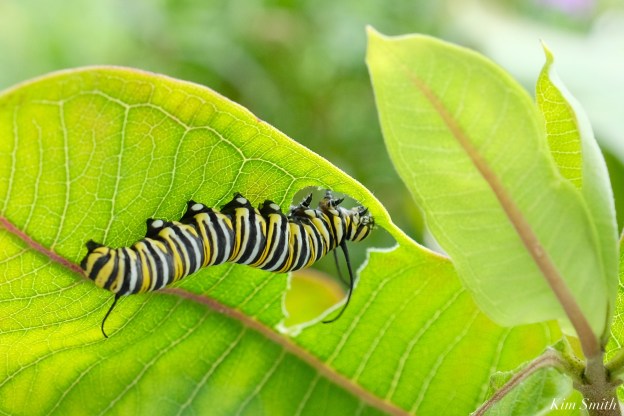
Milkweeds, as most know, are the host plant for Monarch Butterflies. A host plant is another way of saying caterpillar food plant.

Monarchs deposit eggs on milkweed plants. Some milkweeds are more productive than other species. For the Northeast region, the most productive milkweed is Common Milkweed (Asclepias syriaca). The second most productive is Marsh Milkweed (Asclepias incarnata), also known as Swamp Milkweed.
What is meant by productive? When given a choice, the females choose these plants over other species of milkweed and the caterpillars have the greatest success rate. In our own butterfly garden and at at my client’s habitat gardens, I grow both Common and Marsh side-by-side. The females flit from one plant to the next, freely depositing eggs on both species.

Please consider making a tax deductible donation, or becoming an underwriter, to bring our Monarch Butterfly documentary Beauty on the Wing: Life Story of the Monarch Butterfly to American Public Television. To Learn More go here and to DONATE go here. Thank you!
With thanks and gratitude to our growing list of wonderful folks for their kind contributions
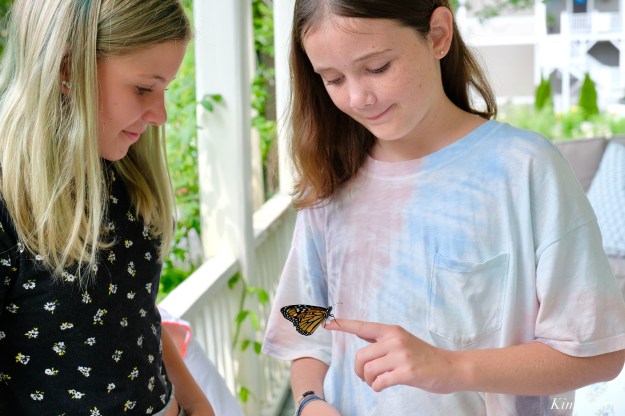
Walking past our front porch, butterfly friends Meadow, Frieda, and Ruby stopped by to see a batch of newly emerged Monarchs. Both Frieda and Meadow are featured in Beauty on the Wing: Life Story of the Monarch Butterfly, filmed when they were several years younger. It’s so wonderful to see all three girls are growing into the bright, beautiful young woman they are becoming.
Love our neighborhood kids ❤



With wonderfully exuberant pollinator friendly flower clusters atop 7 -12 foot tall stalks, what is not to love! Plant Joe-pye in a sunny location at the back of the border and enjoy the array of bees and butterflies that will flock to the nectar-rich blossoms.
More reasons to love Joe-pye is that it is low maintenance, attracts pollinators, is deer resistant, not flattened by rain, not bothered by diseases, blooms when Monarchs are on the wing, and is super easy to grow.

Coming in for a landing
Please consider making a tax deductible donation, or becoming an underwriter, to bring our Monarch Butterfly documentary Beauty on the Wing: Life Story of the Monarch Butterfly to American Public Television. To Learn More go here and to DONATE go here. Thank you!
Newly eclosed female in the petunia patch

You can tell she is a female Monarch because of her smokier and thicker wing venation. The male’s wing veins are narrower . The male also sports to black dots, or sacs, one on each hind wing. The sacs are filled with a pheromone, which the male sprinkles on the female during courtship. If she is receptive, the pair will mate. The pheromones are sometimes referred to by scientists as “love dust.”
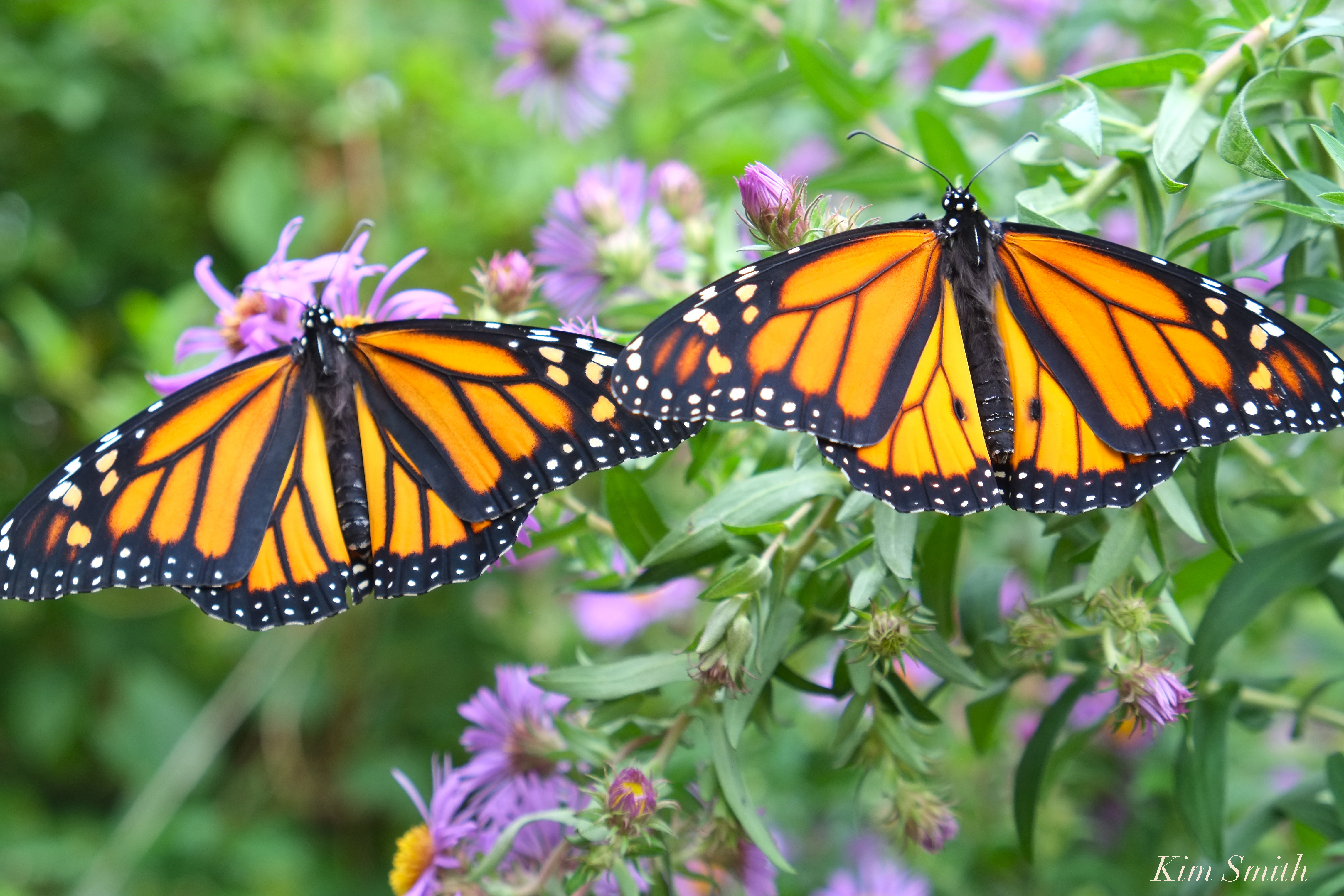
In the above photo taken during the fall migration last year, you can easily see the difference. The female is on the left, the male on the right.

Dear Monarch Friends,
Last week the short film about Monarchs created for the Sawyer Free Library children’s program had lots of interest. The Marvelous Magnificent Migrating Monarch! finished its run at the SFLibrary and I thought I would love to share it with you and the youngest members of your family. Many, many thanks to Justine Vitale, Sawyer Free Library Department Supervisor, for encouraging me to create this short film for children!!
At about four minutes in, Charlotte demonstrates an uncomplicated and fun method of raising Monarchs caterpillars. She has been doing this with me since she was two, and you can see how simple it is to set up a terrarium.
The number of Monarchs in gardens, meadows and dunes over the past month has been nothing but extraordinary. Simply going no further than on our front porch and in my garden (not quite recovered from broken leg yet), I have photographed countless females depositing eggs along with many battles of male to male combat as they stake out their patch of wildflowers and milkweed while patrolling for females.
Battle Royale over the Joe-pye wildflower (Eupatorium). What makes this patch of Joe-Pye so attractive to the males is that is it located adjacent to a patch of Marsh Milkweed (Asclepias incarnate)
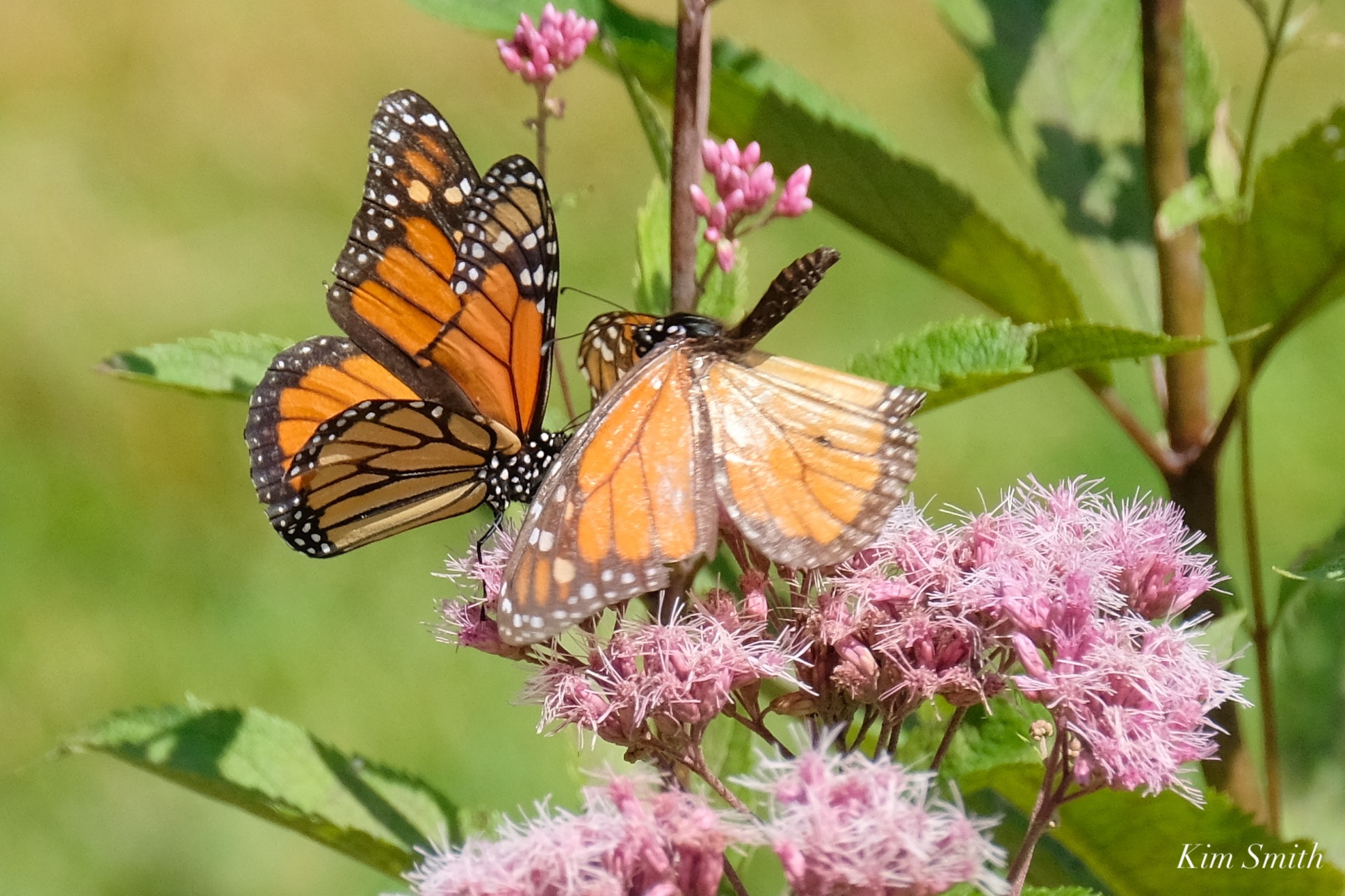
Over the past few days, the Monarchs have been settling down a bit, which happens every year toward the mid to end of August. I think the butterflies we have been seeing battling and depositing eggs may be the parents of the Methuselah Monarchs. This newly emerging batch of caterpillars may very well be the generation of Super Monarchs, the ones that journey to Mexico.
I am so hopeful for the future of this tiny marvel of nature. I hope The Marvelous Magnificent Migrating Monarch is easy for your youngsters to follow along and to understand, and also provides you with some tips on how we can all help the butterflies. Safe travels Monarchs!


Please join us during the week of August 3rd through August 7th (Tuesday – Saturday), for the premiere of a new short Monarch Butterfly film, “The Marvelous Magnificent Migrating Monarch!” The film was created for Cape Ann kids and for the Sawyer Free Library. You’ll learn about the special connection Monarchs have to Cape Ann, how you can help the butterflies, and how to raise Monarchs from eggs found in your own backyard, meadows, and local dunes.


Monarch and Coreopsis

Dear Monarch Friends,
Tomorrow evening I am giving a presentation on how climate change is impacting Monarchs for Cape Ann Climate Change Coalition. I am looking forward to presenting. Please join us if you can! RSVP with Zoom link to the meeting is on the Cape Ann Climate Change Coalition’s website on the ‘NEWS/EVENTS’ page. www.capeannclimatecoaltion.org
Thank you so very much to everyone who is donating to our online fundraiser to bring Beauty on the Wing to American Public Television. To date, we have raised over $17,000.00. To learn more about the fundraiser, please visit my website atkimsmithfilms.com and donate here.
Today Charlotte spotted the first Monarch in our garden and we saw the first in the dunes at Good Harbor Beach today as well. Both were depositing eggs on Common Milkweed! My friend Patti shares she saw one flitting about in her (fabulous) butterfly garden today, too. They are here and butterflies love this warm weather. Plant milkweed and they will come!
Warmest wishes,
Kim

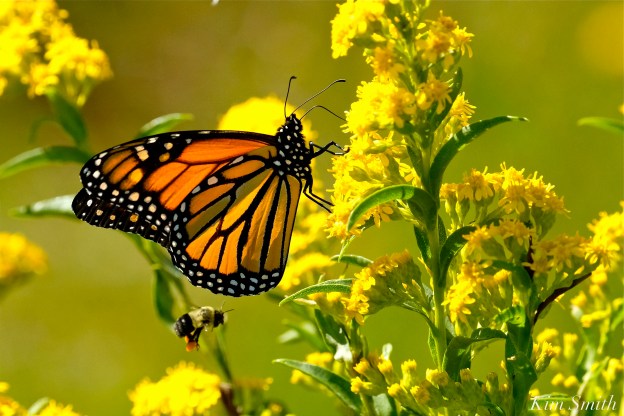
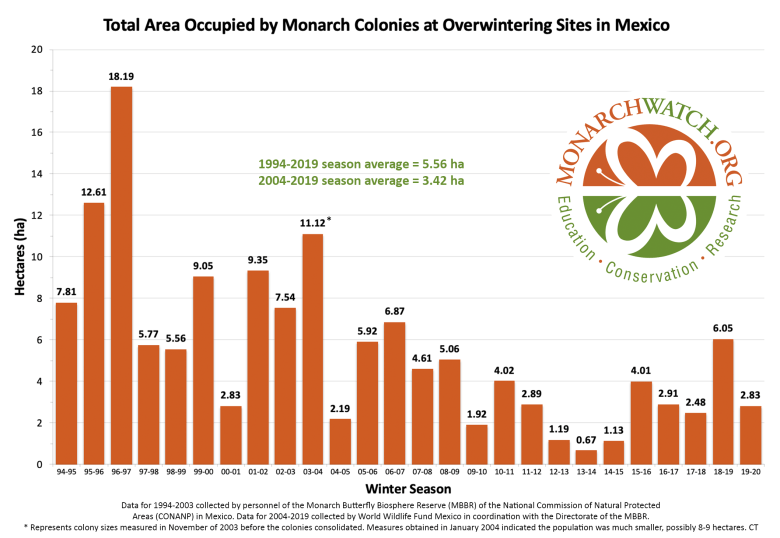
The United States Fish and Wildlife Service has determined that Monarchs are indeed threatened with extinction, but will not be added to the US list of Endangered and Threatened Species. The official designation is “warranted, but precluded,” which means they fall in line behind 161 other species considered more endangered.

Monarchs mating in a patch of Common Milkweed, Good Harbor Beach Gloucester
From USFWS –
What action did the Service take?
We have made a 12-month finding on a petition to list the monarch butterfly under the Endangered Species Act (ESA). Based on a thorough review of the monarch’s status, we determined that listing is warranted, but a proposal to list the monarch is precluded at this time while we work on higher-priority listing actions.
Is the monarch federally protected now?
No. Our 12-month finding does not protect monarchs under the ESA at this time. We first must propose the monarch for listing as either an endangered or threatened species, gather and analyze public comments and any new information, and using the best available science, make a final decision and publish a final rule. That process is deferred while we work on higher-priority listing actions.
What is a 12-month finding?
Under the ESA, when we receive a petition to list a species, we first make a 90-day finding, in which we evaluate the information in the petition to see if it is substantial enough to begin a review of the species’ status. If it is a substantial finding, we then prioritize the species in our evaluation process, and at the appropriate time, we begin a status review. The culmination of that review is a 12-month finding on whether listing is warranted, not warranted, or warranted but precluded by higher-priority listing actions.
Who petitioned the Service to list the monarch?
The Center for Biological Diversity, Center for Food Safety, Xerces Society and a private individual petitioned us in 2014 to list the monarch. We made a positive 90-day finding in December 2014 and launched the status review in 2016.
Read more questions and answers here on the USFWS website –
Dear Friends,
I hope you are well and staying safe. The happiest of news is that a vaccine is on the way. I am praying with all my heart that you all stay healthy between now and when we will be vaccinated and protected by herd immunity.
On a lighter note, I am delighted to share that Beauty on the Wing received an Outstanding Excellence award from the Nature Without Border’s Film Festival, and even more excited to share that we are an official selection to the Providence Children’s Film Festival. The Providence Children’s Film Festival takes place in mid-February (we don’t yet have the dates to share). The best news is that the film is geo-blocked to Rhode Island, Connecticut, and Massachusetts, which means film friends in Massachusetts will be able to participate in virtual screenings. More information to follow, as soon as the schedule is made public.
I am overjoyed that Beauty on the Wing is finding acceptance at both children’s and conservation festivals; that jurors see it as it was meant to be, a conservation film for people of all ages.
Take care dear Friends and stay well. Better days are sure to come.
Warmest wishes,
Kim

 Beauty on the Wing