Category Archives: Lepidoptera

KEEP MONARCHS WILD: WHY IT IS SO DETRIMENTAL AND UNCOOL TO RAISE AND RELEASE HUNDREDS OF MONARCHS

Captive breeding and captive raising Monarchs in the hundreds, and in some cases thousands, is not the way to help the butterflies. You may feel you are taking positive steps, but we have learned over time that captive breeding and rearing in large numbers spreads disease and  weakens the species. Captive rearing hundreds of Monarchs is HARMFUL. The following is a science based and thoughtful article published by one of the foremost authorities on Monarchs, the Xerces Society.

The thrust of the article is that captive rearing no more than ten at a time is educational and worthwhile, if the guidelines provided below are followed to a tee. If you are one of the folks that are rearing hundreds/thousands of Monarchs, please read the following –

By Emma Pelton on 15. June 2023

Instead of rearing—which is risky and unproven in helping monarchs—we should focus on more effective ways to conserve these glorious wild animals.

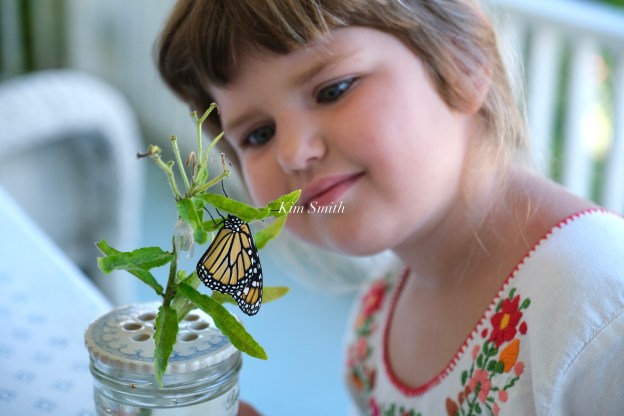
Many of us have been there: Finding a monarch caterpillar, collecting it in a jar, raising it on milkweed, and then waiting patiently for a butterfly to emerge and take flight. Helping a child (or an adult) learn about this captivating, up-close example of metamorphosis can be incredibly rewarding. Unlike many wild animals, monarchs are easily reared, so it is no wonder that bringing caterpillars into the classroom or home has been used by teachers and parents for decades as an educational tool—or just for the pure enjoyment of it. Rearing monarchs also has been a part of monarch research: From the tagging efforts started by the Urquharts in the 1960s to the multiple tagging programs of today. These programs, as well as other community science projects, have greatly expanded our understanding of migration paths.

Because rearing a butterfly in captivity enables people to share in the amazing transformation from a caterpillar to winged adult, it deserves a place in the future of monarch education and research efforts. However, we need to approach it thoughtfully and responsibly. Like any wild animal, we have to make sure that our interest in rearing monarchs does not harm the butterfly’s populations. This is particularly important today, with monarch populations down by 80-97%. These levels are so low that the migratory phenomenon to Mexico and coastal California is at risk. In an attempt to help reverse the monarch’s population free-fall, many people are attempting to save the species by rearing and releasing monarchs on a large scale. There are, however, serious concerns about this approach.

READ MORE HERE

For more about how you can help the magnificent migrating Monarch, visit my documentary’s website here – Beauty on the Wing

From the Xerces Society

Answers to a few frequently-asked-questions and answers about rearing

How can I rear monarchs responsibly?

  1. Rear no more than ten monarchs per year (whether by a single individual or family). This is the same number recommended in the original petition to list the monarch under the Federal Endangered Species Act.
  2. Collect immature monarchs locally from the wild, heeding collection policies on public lands; never buy or ship monarchs.
  3. Raise monarchs individually and keep rearing containers clean between individuals by using a 20% bleach solution to avoid spreading diseases or mold.
  4. Provide sufficient milkweed including adding fresh milkweed daily.
  5. Keep rearing containers out of direct sunlight and provide a moist (not wet) paper towel or sponge to provide sufficient, not excessive, moisture.
  6. Release monarchs where they were collected and at appropriate times of year for your area.
  7. Check out Monarch Joint Venture’s newly updated handout, Rearing Monarchs: Why or Why Not?
  8. Participate in community science, including testing the monarchs you raise for OE, tracking parasitism rates, and/or tagging adults before release.

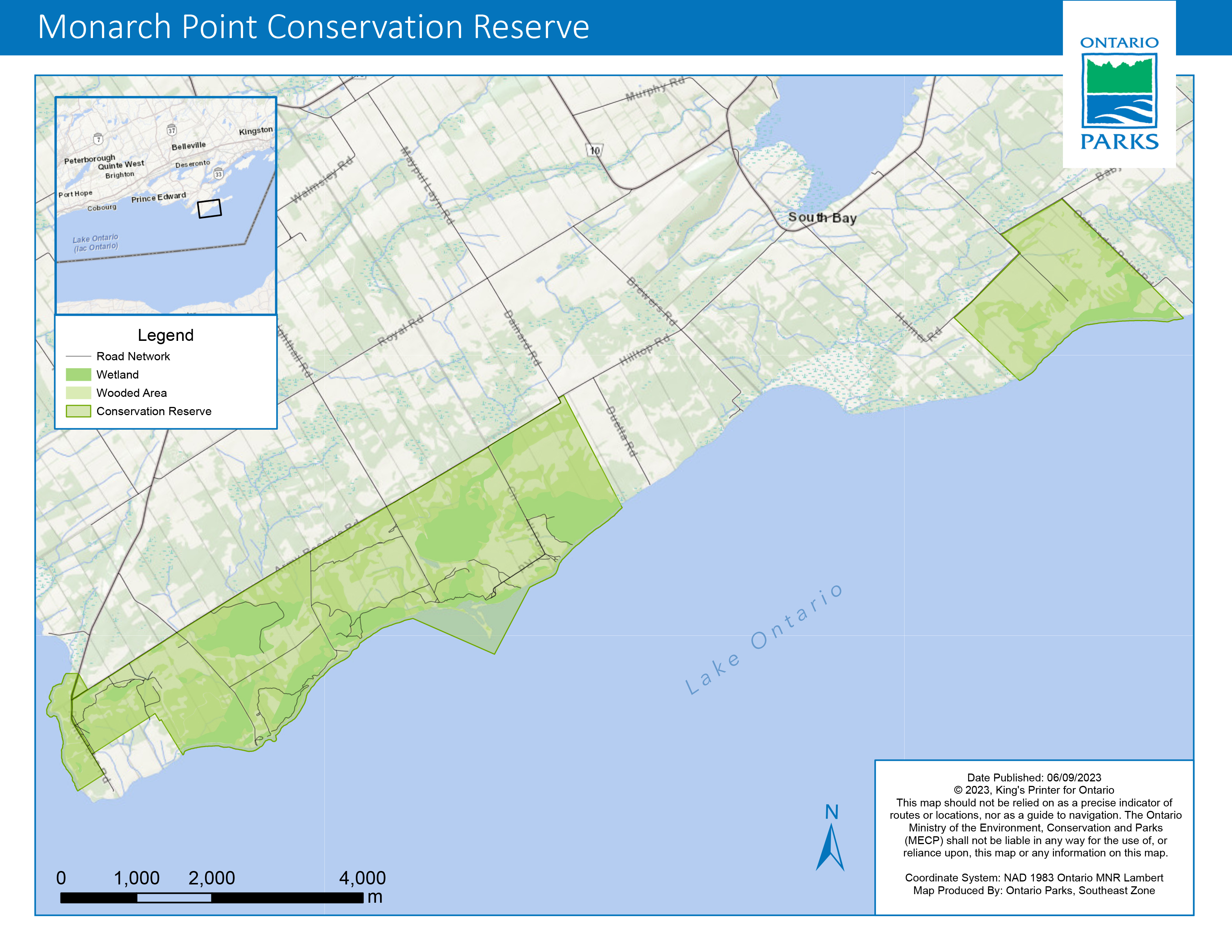
New Monarch Point Conservation Reserve Created in Prince Edward County

The Monarch Butterfly’s important habitat in Prince Edward County’s South Shore is now permanently protected. South Shore Joint Initiative (SSJI) board and partners are delighted to share that the Ontario government has just announced a new conservation reserve in Prince Edward County!

Ostrander Point Crown Land Block and Point Petre Provincial Wildlife Area – nearly 4,000 acres along the South Shore of Prince Edward County, Canada’s last undeveloped Lake Ontario shoreline – are now designated as Ontario’s newest conservation reserve, Monarch Point.

The complete Environmental Registry of Ontario posting can be found here. It is understood that Hon. David Piccini, Minister of the Environment, Conservation and Parks will make a public announcement in The County in the near future.

“We’re thrilled that the Ministry of the Environment, Conservation and Parks has moved forward with this important designation.” John Hirsch, president of South Shore Joint Initiative shares, “We’re proud to have participated in the consultation process and look forward to being involved in future land management planning.”

“The Monarch Point designation is deeply meaningful to thousands of community members as well as local, provincial and federal non-profit partners. We’re profoundly grateful for the active support of the Alliance to Protect Prince Edward County, Birds Canada, Hastings Prince Edward Land Trust, Kingston Field Naturalists, Nature Canada, Nature Conservancy of Canada, Ontario Nature, Prince Edward Point Bird Observatory, Prince Edward County Field Naturalists, Quinte Field Naturalists, Point to Point Foundation, Consecon Foundation, Gosling Foundation and Schad Foundation and, of course, the Council of the County of Prince Edward.”

For more than five years, South Shore Joint Initiative has led local efforts for the permanent protection and preservation of South Shore lands and waters. The organization hosts regular South Shore Strolls and encourages enjoyment of these public lands through initiatives such as a new Eco-Footpath.

Cultural and built heritage is another focus of this volunteer-led environmental non-profit. Restoration of the heritage-designated Hudgin Log House is well underway. Once completed, it will become a unique Field Centre where students, scientists, researchers and the public will be able to deepen their understanding of the South Shore’s incredible biodiversity and history.

John notes, “South Shore Joint Initiative came together in 2018. Today, we celebrate this watershed moment in our County’s natural history. Monarch Point Conservation Reserve will ensure generations of people will continue to enjoy access to the rare and fragile lands of this remarkably biodiverse area. Most importantly, it will protect the habitat of at least 39 rare and at-risk species such as Blanding’s Turtles, dozens of migrating bird species as well as Monarch Butterflies.”

South Shore Joint Initiative will host an online screening of the award-winning film Beauty on the Wing: Life Story of the Monarch Butterfly on June 23 at 1:00 pm. Prince Edward County is home to one of only three International Monarch Reserves in Canada and this 56-min film captures the butterfly’s incredible migration story. To confirm free registration for a school group, send an email to katherine.rogalska@ssji.ca. General public tickets are also available for $10 online here.

About South Shore Joint Initiative: Our vision is a permanently protected Prince Edward County South Shore where together biodiversity and people thrive. Together, our mission is to educate and advocate for the protection, preservation and restoration of South Shore lands and waters.

As a Canadian registered charity, South Shore Joint Initiative relies on the generosity of donors and supporters to advance its mission. To learn more, become a member, attend an event, volunteer or donate, visit ssji.ca.

For more information:
Cheryl Anderson
613-849-7743 or cheryl.anderson@ssji.ca
Overjoyed to be screening Beauty on the Wing at a host of schools in Canada this afternoon!

A new experience for me, screening Beauty on the Wing for schools in Ontario Canada. I am not foreseeing any, but with so many kids involved, just praying there are no technical issues.

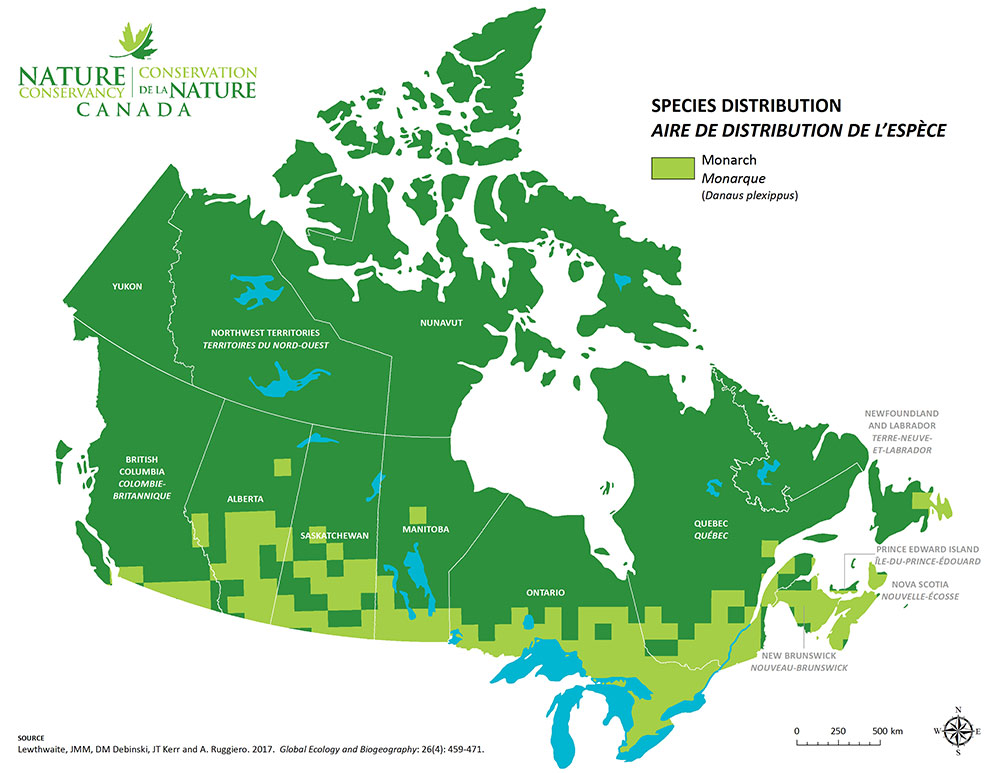
Monarch Distribution in Canada

The southern regions of Ontario are a beautiful province in which to see Monarchs, especially during the the late summer migration. The Great Lakes act as a barrier on the Monarch’s southward journey. The butterflies gather at the southern most points of Canada to cross the lakes, including Point Pelee in Lake Erie, and Monarch Point Conservation Reserve in Lake Ontario, both on the Ontario side. Just as the Monarchs form overnight roosts at Eastern Point in Gloucester while waiting for the right conditions to cross Massachusetts Bay, they do the same at Point Pelee and Monarch Point in Ontario.

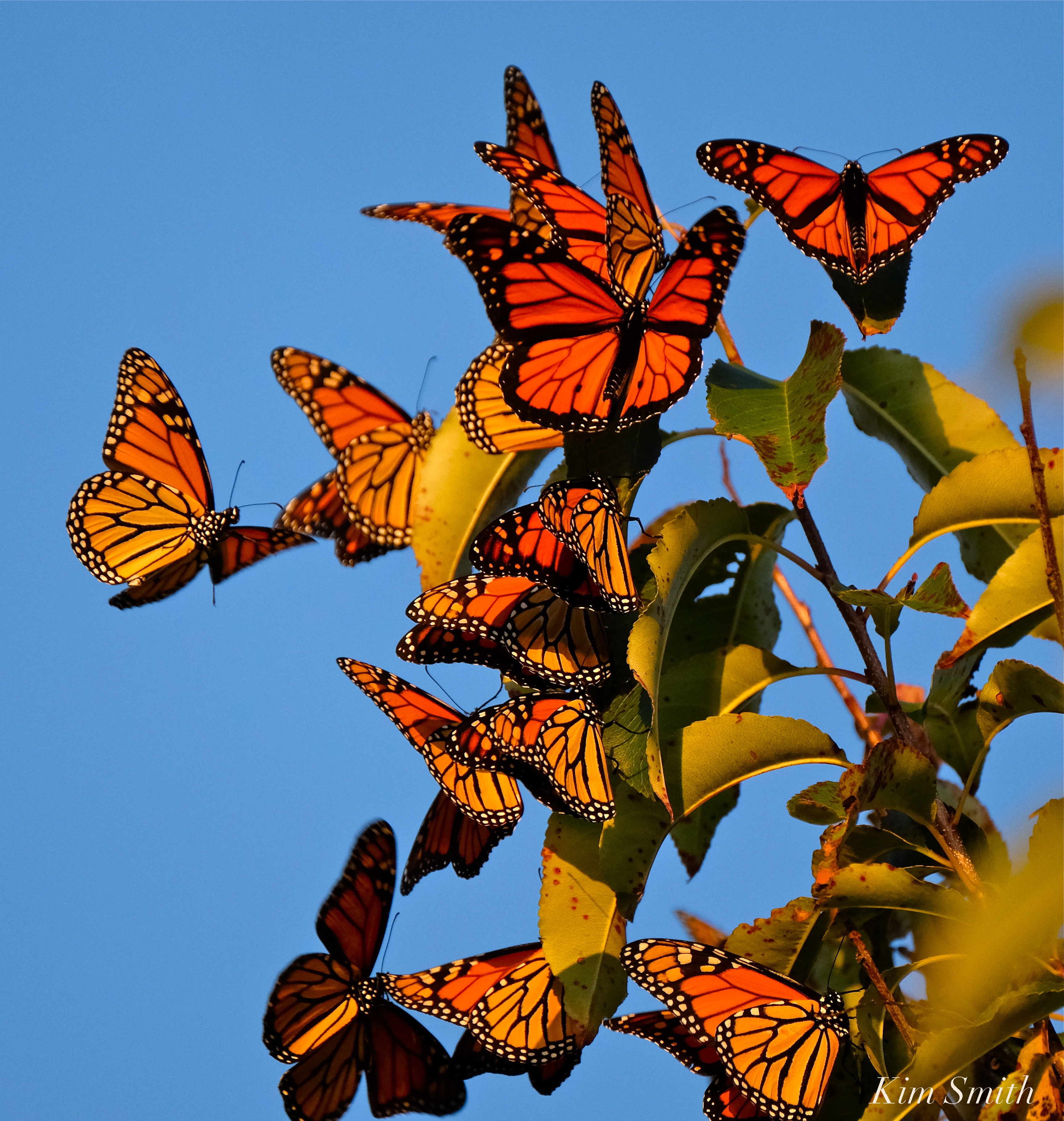
Monarch Butterfly overnight roost

OUTSTANDING WORK IN PROGRESS BY LOCAL LAND STEWARDS ORGANIZATION CREATING COMMONS COLLECTIVE

Xavier, Lucas, Mark, Nick, Kim, Molly, and Sarah

What a joy to meet these members of Creating Commons Collective, a grassroots organization passionate about developing beautiful, native plants landscapes for our community.

The project at Blackburn traffic circle began last spring.The soli was tilled (with the help of Mass DOT) and the first batch of plants were introduced. The group is selectively adding native flowering plants with the long term goal of creating a self-sustaining, pollinator friendly, native plants meadow.

Sarah mentioned Creating Commons Collective native plants project at Burnham’s Field, which I am very eager to go check out, and Nick shared a recent article “Improvised Landscapes” that he wrote for Arnoldia, the quarterly publication of the Arnold Arboretum. It’s a great read and you can find the link to the article below.

Improvised Landscapes

By Nicholas Anderson April 4, 2023

OVER THE YEARS I have abandoned and inverted my horticultural training, and today, I struggle to describe what I do. When time is short, I simply say that I make meadows with native plants; sometimes I use the term “ecological maximalism.” But definitions don’t really matter when it’s late September, and I’m stopping off at a patch of dirt in Gloucester, Massachusetts, sandwiched between a new housing development and a Market Basket on the edge of a woodland remnant. Just now I don’t particularly need any new plants, as I have a dozen or so ongoing meadow projects that double as plant nurseries, but I can’t resist a salvage mission before going grocery shopping. I walk past orange-painted surveyors’ stakes through one of the spots where I scattered seeds the previous winter. Most of the seedlings have succumbed to the drought, but a few anemic partridge-pea plants (Chamaecrista fasciculata) are visible amidst the tire tracks. This space is used as a parking lot for little league games in the summer and the city deposits untold tons of salty snow here every winter. Remarkably, whorled loosestrife (Lysimachia quadrifolia) and sweet fern (Comptonia peregrina) insist on colonizing into the very spot that gets savaged by the plows year after year. I pull up four rhizomes of the sweet fern and grab two tiny volunteers of winged sumac (Rhus copallinum) before heading over to the other side of the lot, where frost aster (Symphyotrichum pilosum) and oldfield goldenrod (Solidago nemoralis) are in bloom amidst mugwort (Artemisia vulgaris) and tendrils of asian bittersweet (Celastrus orbiculatus). Out of the midst of these introduced species, I yank up twenty-odd plants with tender violence and put them in a wet, plastic bag.

READ more here

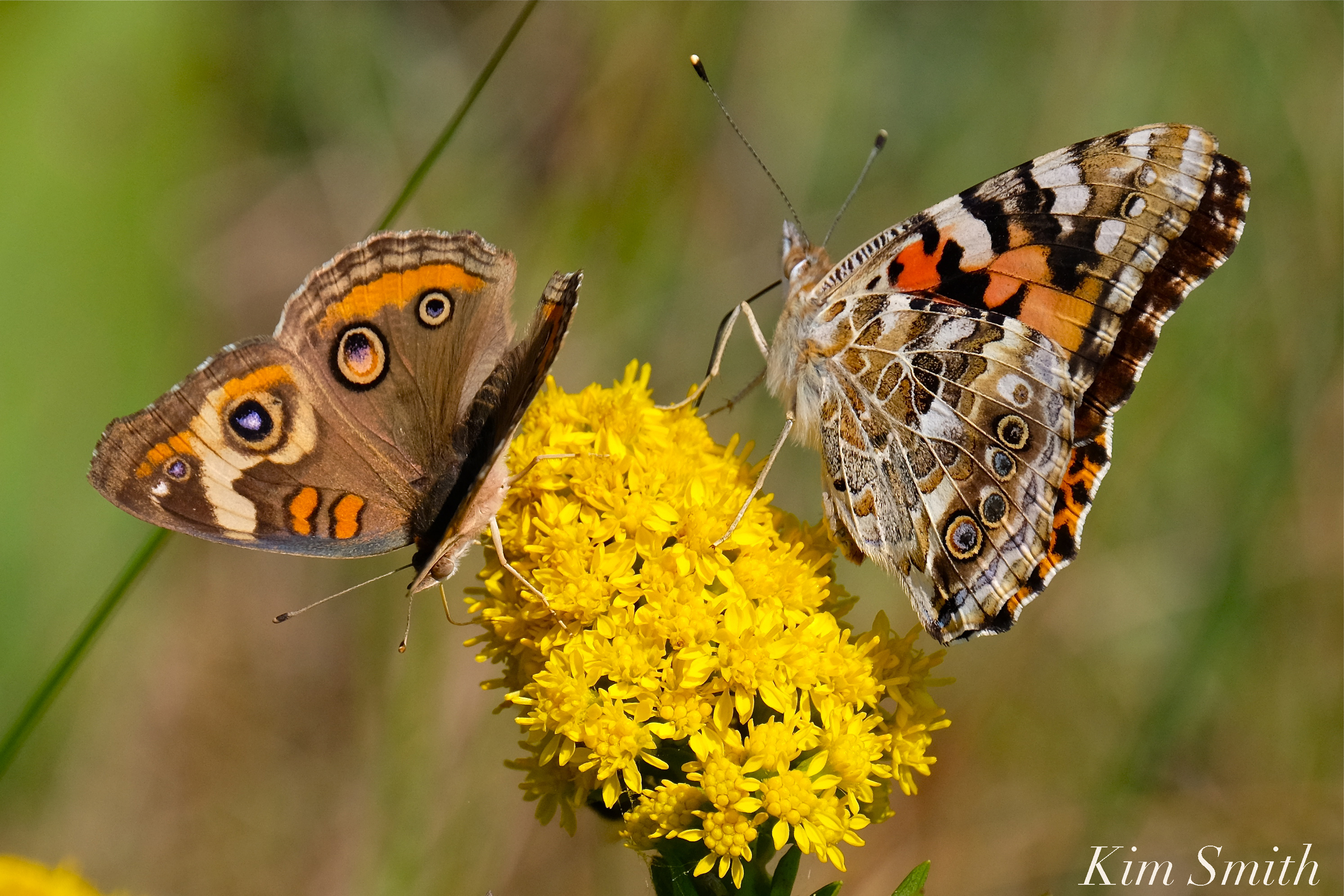
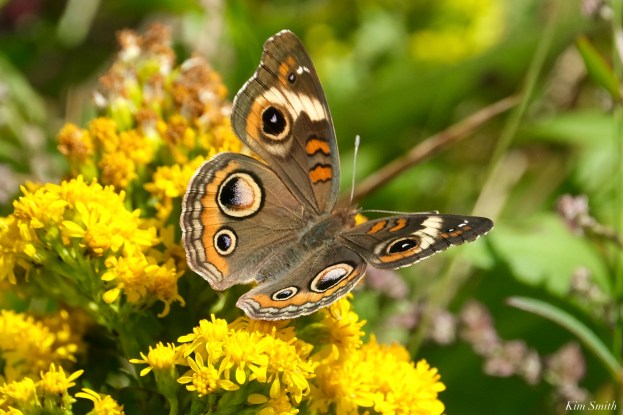
Buckeye and Painted Lady Butterflies drinking nectar at Seaside Goldenrod

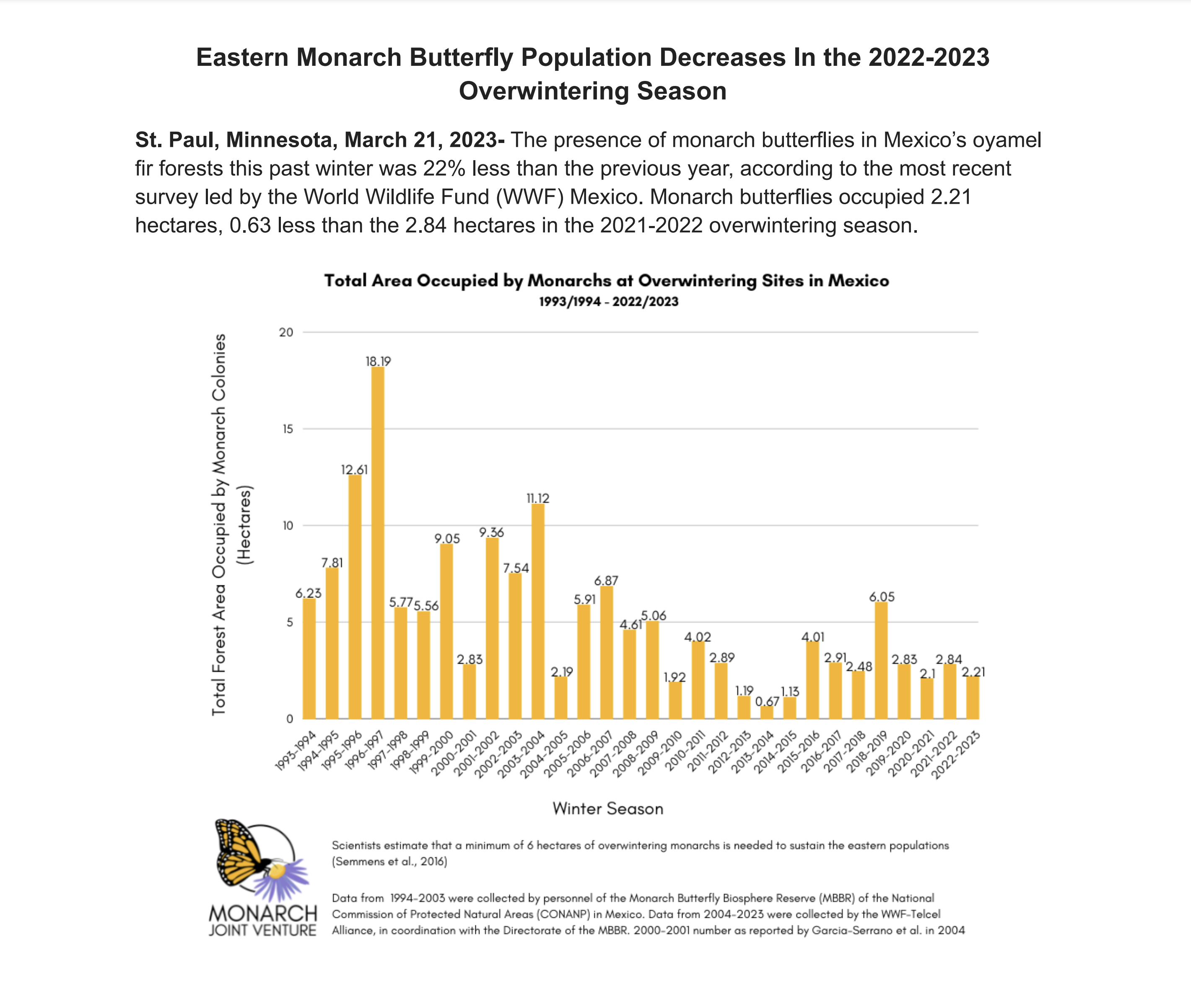
EASTERN MONARCH POPULATION COUNT DOWN FOR OVERWINTERING BUTTERFLIES 2022-2O23

The presence of the Eastern Monarch population in Mexico’s transvolcanic mountain forests was 22 percent less this winter compared to last winter, according to the World Wildlife Fund (WWF) annual count.

Rather than counting individual butterflies, the Monarchs are counted by the number of hectares they occupy. This past winter, the Monarchs occupied 2.21 hectares, down from 2.84 hectares in 2021-2022. A hectare is approximately 2.47 acres. A threshold of at least 6 hectares is recommended to sustain the eastern population.


For more precise information on how the Monarchs are counted read more from Monarch Joint Venture –

Estimating the Number of Overwintering Monarchs in Mexico

Contributors: Gail Morris, Karen Oberhauser, Lincoln Brower

Every year we anxiously await news of the monarch overwintering population count from Mexico. When are they done and how are the monarchs counted?

Monarchs go through four phases while overwintering in Mexico: their arrival, the establishment of an overwintering colony, colony movement and finally the spring dispersal.

The first fall migrating monarchs usually arrive at the overwintering sites in late October through mid-November. In this early phase, the monarchs are largely scattered and diffuse in their flight, moving frequently through an area and eventually creating small clusters at night, while still continuing to move through the forest. During the day, their movement is common and widespread, as they search for the perfect sheltered location to spend the winter.

As temperatures dip colder, monarchs begin to form larger and denser clusters, settling into smaller and protected areas at elevations of 2900-3300 meters (9,500 to 10,800 feet.) This usually occurs from mid-December through early February and the monarchs principally roost in oyamel trees although they use pines and other trees as well. This is the coldest time of the year where monarchs are most compact and stationary in their clusters, a time of winter survival with little movement.

By mid-February, temperatures are gradually climbing and the monarchs begin expanding their clusters. They slowly begin to move down the mountain on warm, sunny days searching for water to drink in nearby creeks. They return to the safety of the nearby forest as temperatures drop. The final phase is the monarch dispersal as the population gradually begins its movement north.

The traditional time of the annual overwintering count in Mexico is in late December when the clusters are most compact and movement is minimal. So how are the estimates done? How do you estimate how many monarchs there are in an area?

The World Wildlife Fund and the MBBR have measured the monarch population each year since the winter of 2004-2005. The occupied trees are mapped in each colony. Beginning with the highest tree in the periphery, the counters use a measuring tape or distance meter and compass to measure the perimeter using a series of lines connecting trees along the boundary. The enclosed area is then calculated in hectares.

Researchers have estimated that there are approximately 21.1 million butterflies per hectare, although this number most certainly varies with the time of the winter as the colonies contract, expand, and move. It also varies with the density and size of the trees in the colony. Based on this estimate the largest population of monarchs occurred in 1996-1997 when the colonies covered over 18 hectares and contained an estimated 380 million butterflies. To date the lowest population recorded was in 2013-2014 with 0.67 hectares and approximately 14 million monarchs.

While population estimates are recorded back to the winter of 1976-1977, long term counts of monarchs previously occupying the overwintering sites for comparison are limited due to a lack of complete data.

Keep in mind that the monarch overwintering estimates in Mexico are done when the monarchs are most compact in the trees. While counts continue biweekly during the time the monarchs are in the area, the end of December counts are used for comparison from year to year.

MONARCH BUTTERFLY POPULATION STATUS UPDATE AND LOOKING FORWARD TO SCREENING ‘BEAUTY ON THE WING’ IN NEW JERSEY ON SUNDAY!

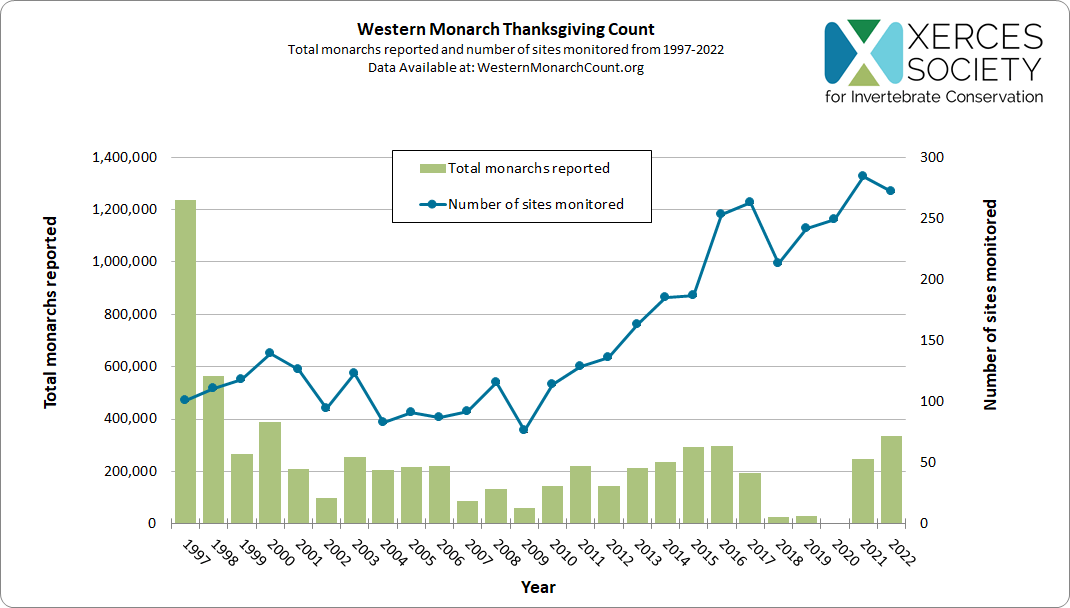
A very brief Monarch population status update – For the second year in a row, the Western Monarch population is seeing an uptick in numbers. The population is at roughly at 335,000, up from the historic low of only 2,000 counted in 2020.  Two years of relatively good numbers gives us all hope the Western population can be saved.

It appears as though the Eastern Monarch population is not doing quite as well as last year. The final count for the winter of 2022- 2023 is not yet in. We’ll check back in on that count as soon as the graph becomes available.

Sunday afternoon, I’ll be screening Beauty on the Wing at the New Providence Memorial Library in New Jersey. New Providence is only about 20 minutes from my Mom and Aunt’s childhood home and it was at my Grandmother’s gardens where I first fell in love with the natural world.

I am also super excited to share that we will be screening Beauty on the Wing for school children (and grownups) across Prince Edward County on June 23rd.  Prince Edward County in on Lake Ontario and is a late summer gathering point for Monarchs before crossing the Lake into the US. The entire long point peninsula on the South Shore of Prince Edward County is a designated International Monarch Butterfly Reserve (established in1995).

“The land area of the IBA (editor’s note- Canadian acronym for Important Bird Areas)  is comprised of shallow soil over limestone bedrock with areas of alvar habitat. Much of the habitat consists of old field (savannah) and shrub thickets, with small deciduous and coniferous forests being present. In addition to several natural wetlands, the IBA contains two large wetland areas created after berm construction by Ducks Unlimited. The IBA is important for concentrations of migrating birds, bats and butterflies and also supports several rare vascular plants including Four-leaved Milkweed, Butternut, Bicknell’s Sedge, Short-stalked Chickweed, Brainerd’s Hawthorn, Limestone Hedge-hyssop, Green Arrow-arum, White-tinged Sedge, Eastern Few-fruited Sedge, Ram’s-head Lady’s-slipper, and Carolina Whitlow-grass. Largely undisturbed sites are important to ensure survival of these plants.”

The PEC south shore is also home to the Prince Edward Point Bird Observatory, where a diverse and extraordinary number of birds concentrate during migration.

BEAUTIFUL BUCKEYES

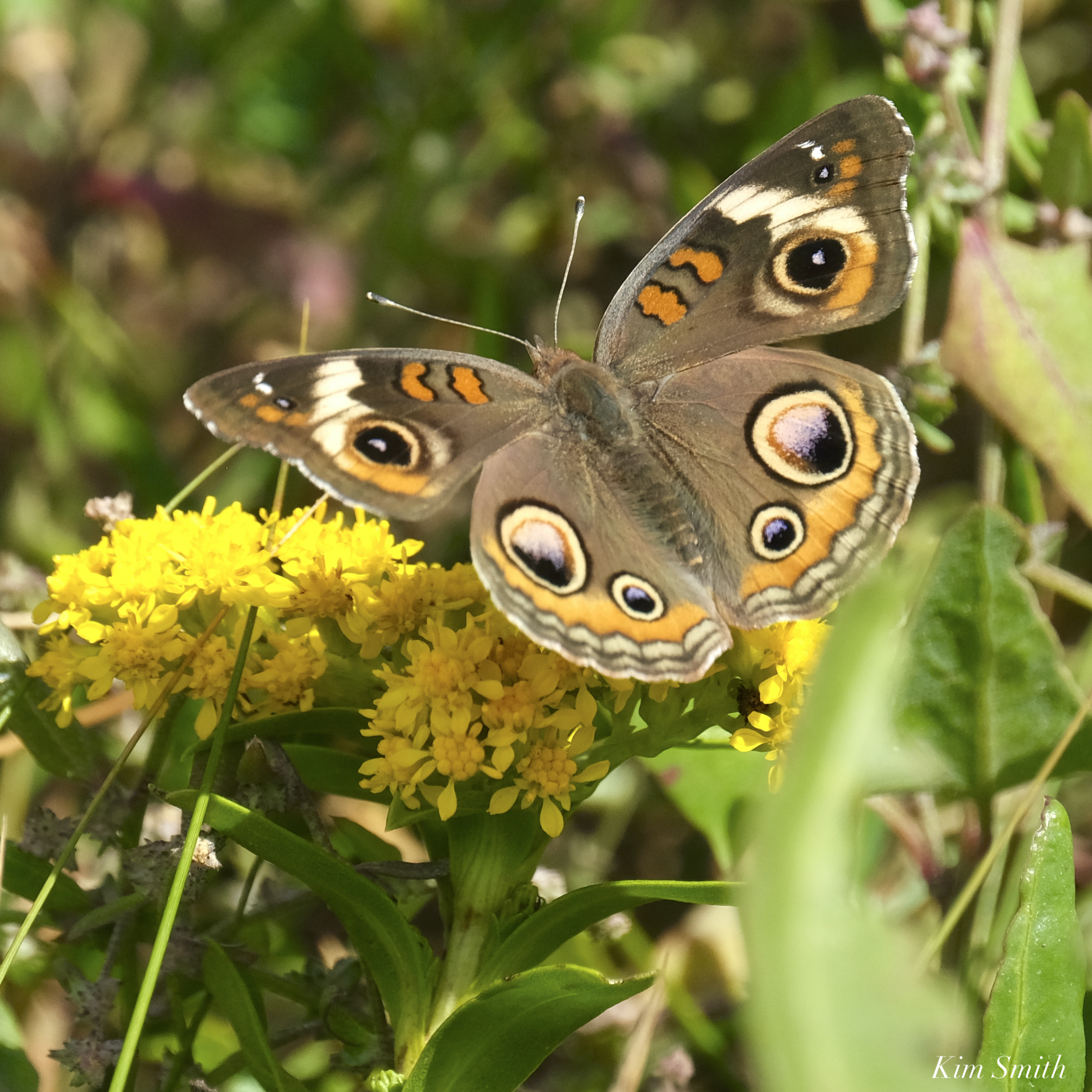
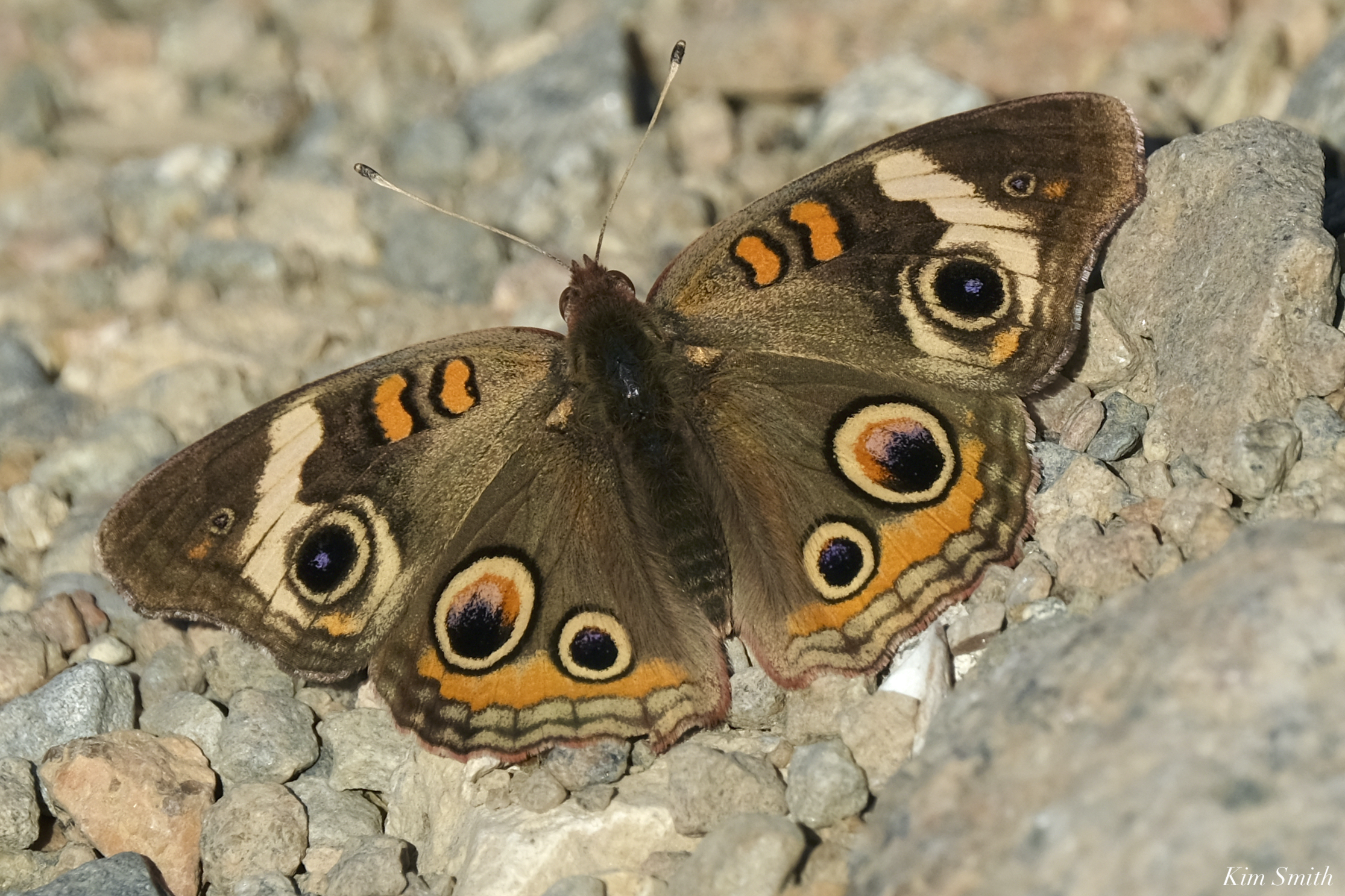
A truly glorious weekend weather-wise with warm sun, mild temperatures, beautiful sunrises and sunsets. There are still loads of butterflies on the wing. Saturday was a five species afternoon, not an everyday occurrence in mid-October on Cape Ann. Monarchs were on the move, along with American Ladies, Clouded Sulphurs, Orange Sulphurs, and one of my favorites, the wholly uncommon, Common Buckeye. The gloriously patterned 3 pairs of eyespots of the Common Buckeye are meant to frighten avian predators, a scary six-eyed monster if you will, but we humans find them enchanting.

Each summer Common Buckeyes emigrate to New England from southern states. Some years we see many more than others. It’s always a delight to come upon one and I typically find them at the edge of a marsh nectaring at Seaside Goldenrod or basking in the sun on a sandy path.

Underwing (ventral) view of Common Buckeye

To see a photo collection and short film of some of October’s most commonly seen butterflies go here –

A MINI- GLOSSARY OF LATE SUMMER BUTTERFLIES


Buckeyes begin around 2:40

Common Buckeye Larval Host Plants

Female Common Buckeyes deposit their eggs on a variety of plants, both native and non-native.

Caterpillar food plants from Mass Audubon –

Many documented. In the Northeast, larvae usually feed on “members of the snapdragon family (and) plantain family” (Opler and Krizek, 1984), including Blue Toadflax (Linaria canadensis); False Foxglove and gerardias (Gerardia, species), plantains (Plantago, sp.), and Snapdragon (Antirrhinum). Buckeye larvae have been observed in Massachusetts on Butter and eggs (Linaria vulgaris) and Slender Gerardia (Gerardia tenuifolia)

And from The Butterflies of Massachusetts

Today, lacking such an abundance of gerardia, Common Buckeye’s most usual host plant in Massachusetts may be Plantago lanceolata, or lance-leaved plantain, a widespread non-native weed introduced with the arrival of European settlers.  The 1990-95 Connecticut Atlas workers observed Buckeye ovipositing on lance-leaved plantain in the wild, and the caterpillars have been successfully raised on it many times, for example by caterpillar photographer Sam Jaffe in July 2011.  Buckeyes have been observed in the wild ovipositing on the native purslane speedwell (Veronica peregrina) (S. Jaffe 6/21/2011), and on the non-native butter-and-eggs (Linaria vulgaris) (M. Champagne 7/14/2008).  They are also reported to use blue toadflax (Linaria canadensis), slender gerardia (Agalinis tenuifolia), and sometimes non-native garden snapdragons (Antirrhinum majus) (Scott 1986).

Common Buckeye and Painted Lady

GUIDELINES ON HOW TO RESPONSIBLY RAISE MONARCHS

The first guideline in becoming an excellent citizen scientist is to do no harm while trying to do good. Considering the spiraling downward numbers of the Monarch Butterfly population, this basic tenet has never rang more true.

A number of friends have written in the past month with questions about captive rearing butterflies and the new listing of the Monarch as an endangered species by the IUCN (International  Union for the Conservation of Nature) and by the state of California. The ruling by the IUCN, which is an organization based in Gland, Switzerland, has no bearing on rearing Monarchs however, that is not the case with the California ruling.

In June, a California court ruling opened the door for the protection of insects as endangered species, which now includes the Monarch Butterfly. It is unlawful to take possession of live monarchs, breed and rear them in captivity, and conduct other interventions including covering eggs, larvae, and adult butterflies with nets, and transporting Monarchs to different locations. Canada and Mexico also restrict Monarch handling.

The ruling is understandable. There are folks who are rearing Monarchs by the hundreds, thousands, and even tens of thousands in wholly unsatisfactory conditions, ignoring safe and sanitary protocols.

As goes California, so goes the rest of the nation. I am deeply saddened that it won’t be long before we in the rest of the country will also no longer be able to rear Monarchs even on the most modest scale.

READ MORE HERE

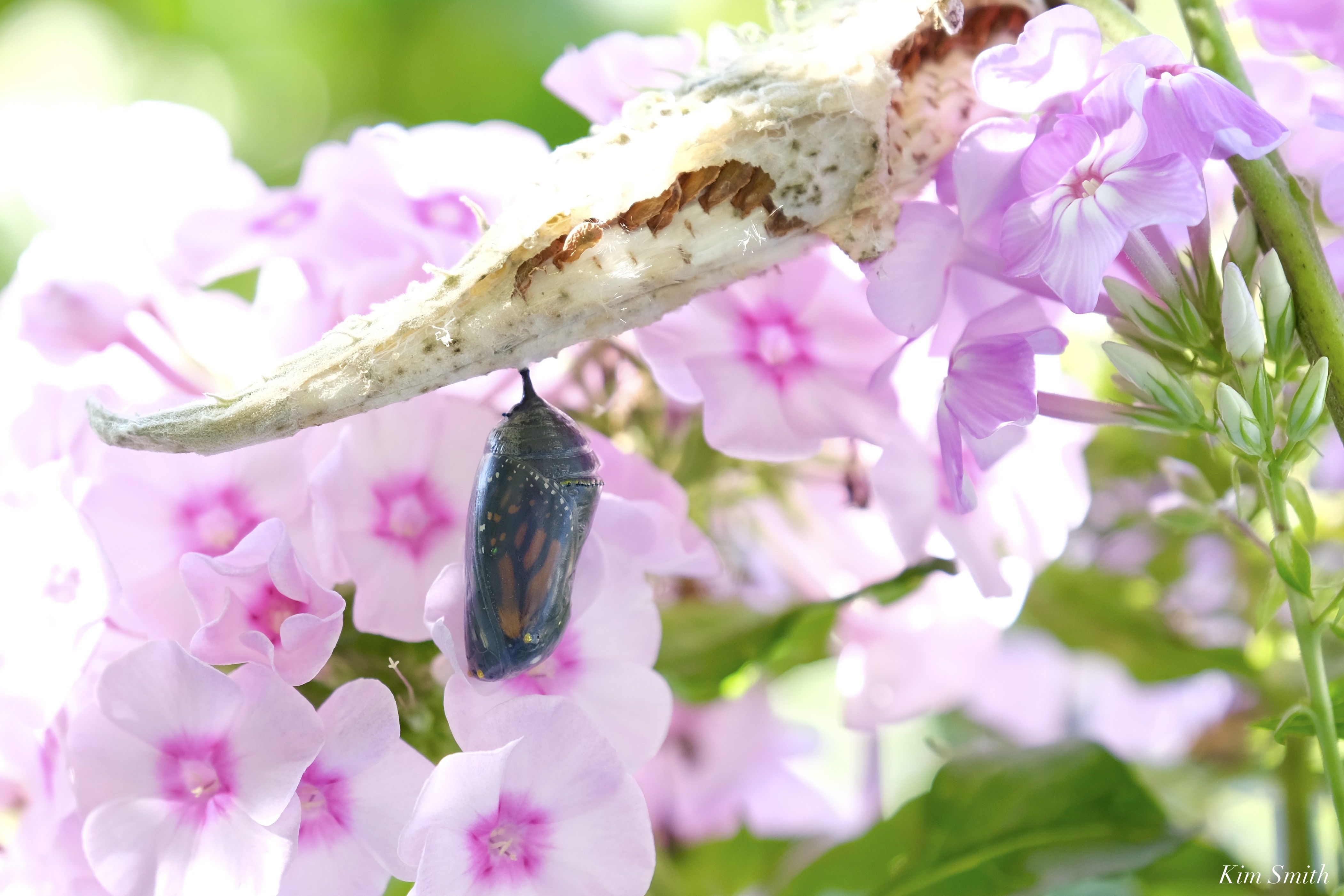
Monarch Chrysalis ready to eclose – native garden phlox (Phlox paniculata)

One of the strongest reasons for not rearing hundreds (or more) Monarchs in close quarters is the spread of the highly contagious parasite OE (Ophryocystis elektroscirrha).

“Ophryocystis elektroscirrha (OE) is a debilitating protozoan parasite that infects Monarchs. Infected adult Monarchs harbor thousands or millions of microscopic OE spores on the outside of their bodies. When dormant spores are scattered onto eggs or milkweed leaves by infected adults, Monarch caterpillars consume the spores, and these parasites then replicate inside the larvae and pupae. Monarchs with severe OE infections can fail to emerge successfully from their pupal stage, either because they become stuck or they are too weak to fully expand their wings. Monarchs with mild OE infections can appear normal but live shorter lives and cannot fly was well as healthy Monarchs.” From Monarch Joint Venture

Simply put, the very best way to help Monarchs is to create pollinator habitats on whatever scale you can manage. Plant milkweeds native to your region, which provides food for the caterpillars.*  Plant native wildflowers such as New England Asters, Seaside Goldenrod, and Joe-pye, which provide sustenance to migrating Monarchs and a host of other pollinators. Plant annuals native to Mexico with simple, uncomplicated structures, such as single (not double) Zinnias, Cosmos, and Mexican Sunflowers (Tithonia), which will bring the pollinators into the garden and provide sustenance throughout much of the growing season, while the pollinators are on the wing.

Plants such as daylilies, roses, and dahlias are eye candy for humans. Keep your eye candy plants to a minimum and know that they are just that, eye candy. They do not help pollinators in any way, shape, or form.

A Monarch in the wild flits from plant to plant and from leaf to leaf when looking for a suitable milkweed plant on which to deposit her eggs. She is carefully inspecting each leaf, first scratching the surface with her feet, the butterfly’s way of sensing taste. The female will typically deposit no more than one egg or possibly two eggs per leaf or bud. When you see an image of a large cluster of Monarch eggs, you can be sure the female was raised in close quarters in captivity and is desperate to deposit her eggs. 

Recommendations from the Xerces Society:

How can I rear monarchs responsibly?

  1. Rear no more than ten Monarchs per year (whether by a single individual or family). This is the same number recommended in the original petition to list the monarch under the Federal Endangered Species Act.
  2. Collect immature Monarchs locally from the wild, heeding collection policies on public lands; never buy or ship monarchs.
  3. Raise Monarchs individually and keep rearing containers clean between individuals by using a 20% bleach solution to avoid spreading diseases or mold.
  4. Provide sufficient milkweed including adding fresh milkweed daily.
  5. Keep rearing containers out of direct sunlight and provide a moist (not wet) paper towel or sponge to provide sufficient, not excessive, moisture.
  6. Release Monarchs where they were collected and at appropriate times of year for your area.
  7. Check out Monarch Joint Venture’s newly updated handout, Rearing Monarchs: Why or Why Not?
  8. Participate in community science, including testing the Monarchs you raise for OE and tracking parasitism rates.

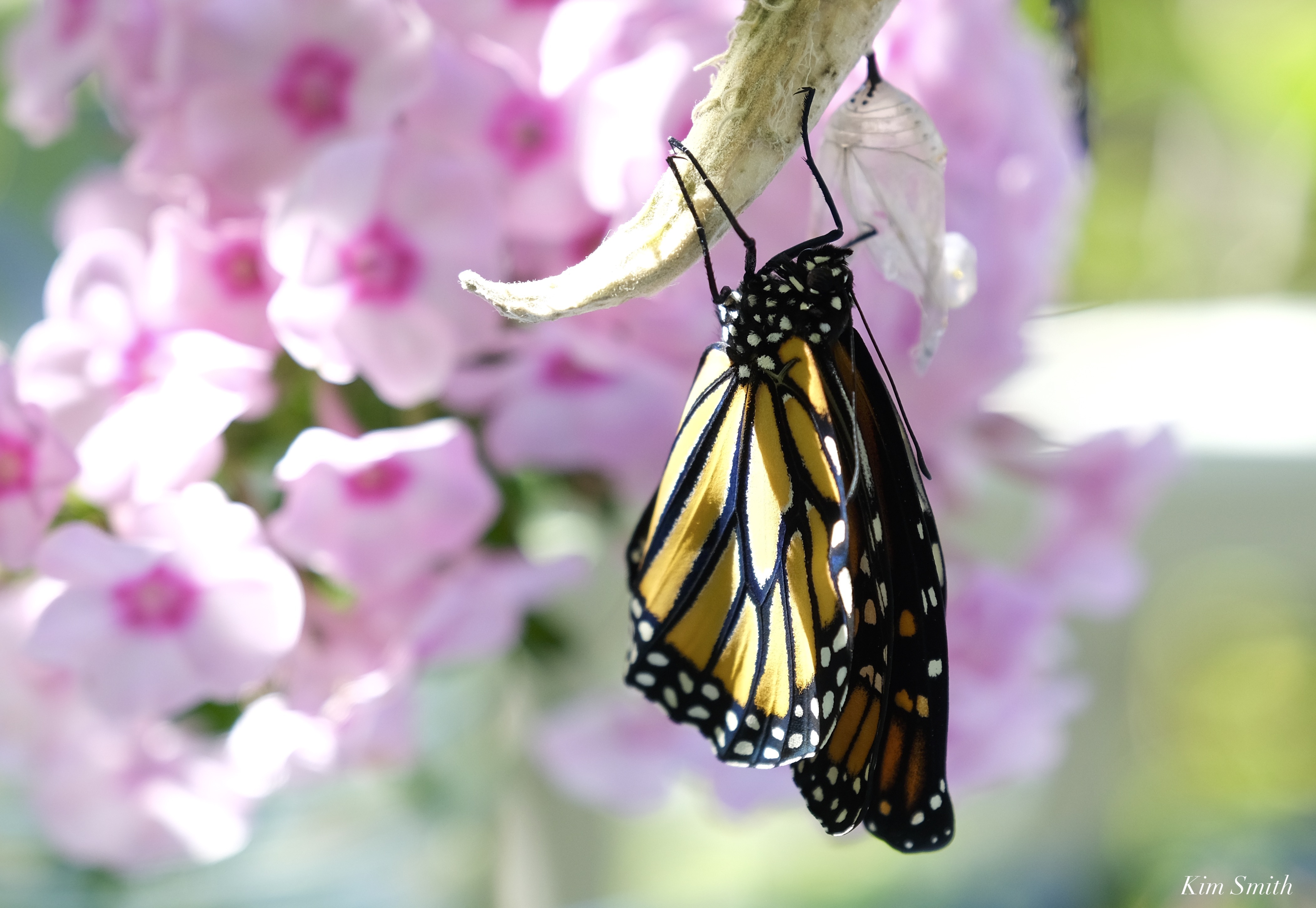
Monarch Butterfly newly emerged and expanding wings

Monarch newly emerged and sun drying wings

*Best milkweeds native to Cape Ann, in order of productivity: Common Milkweed (Asclepias syriaca), Marsh Milkweed (Asclepias incarnata), and Butterflyweed (Asclepias tuberosa)


THE MARVELOUS MAGNIFICENT MIGRATING MONARCH AT THE ESSEX LIBRARY!

Please join me Thursday, August 18th, at 10am at Essex’s T.O.H.P. Burnham Library for a free  all ages (5 plus) Monarch Butterfly event, The Marvelous Magnificent Migrating Monarch. To register, please GO HERE

I hope to see you there!

BEE PART OF POLLINATOR WEEK!

HAPPY POLLINATOR WEEK!

We can all lend a hand helping pollinators. 

The three best practices –

1) Plant a habitat garden for bees, butterflies, bats, hummingbirds, and songbirds.

2) Keep your home and garden free from pesticides, herbicides, and rodenticides.

3) Support local farmers and beekeepers by purchasing locally produced food.

Please join me tonight at the Salem Regional Visitor Center for a free screening of Beauty on the Wing: Life Story of the Monarch Butterfly

A wonderfully early-in-the-season for our region batch of Monarch caterpillars feeding on Common Milkweed (Asclepias syriaca), June 11.