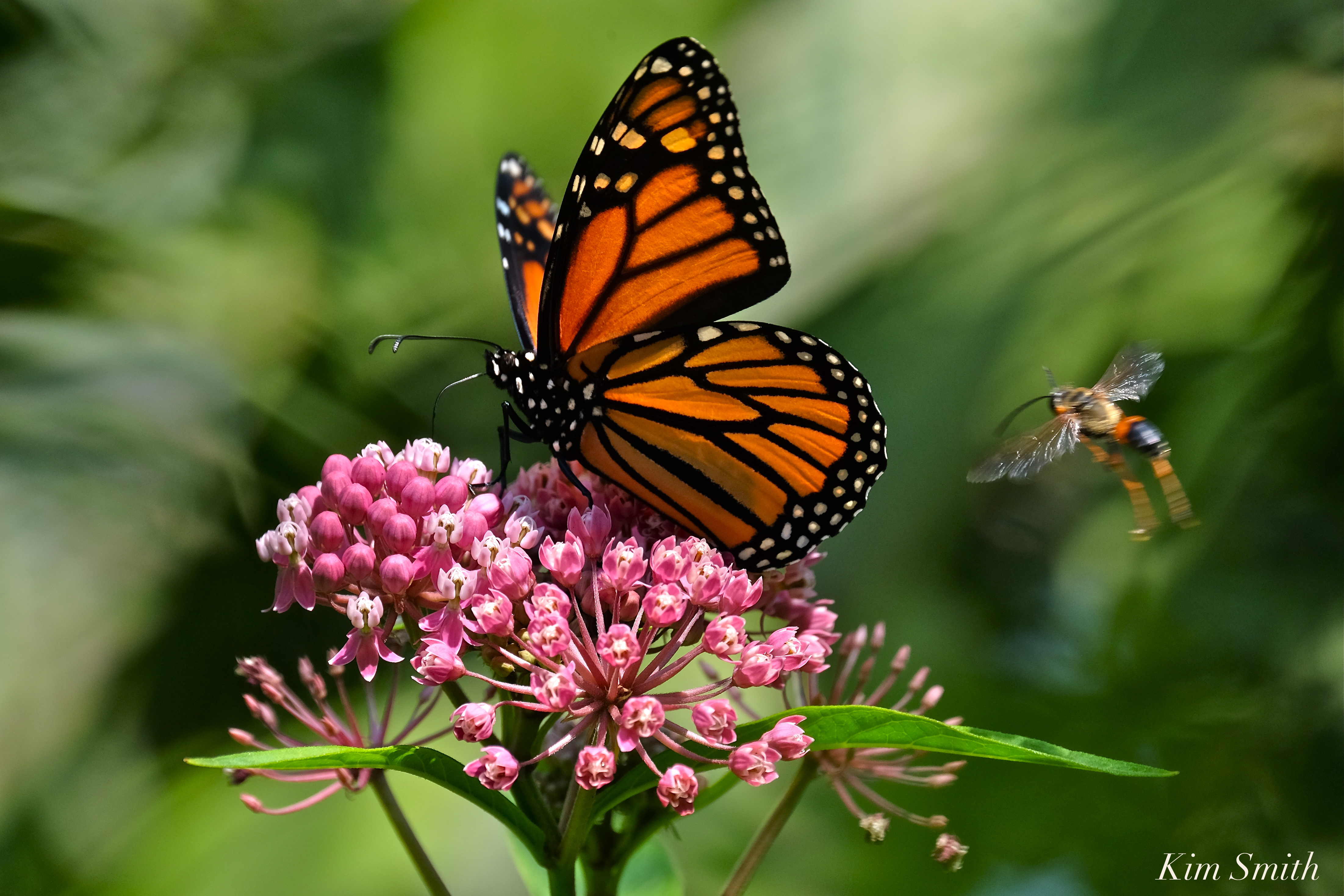
Category Archives: Danaus plexippus

OVER THE MOON!

Dear Monarch Friends,

I hope so much everyone is doing well. For Cape Ann, tropical storm Henri brought lots of rain but south of us, some of you were hard hit. I hope your homes and businesses weren’t damaged. It’s been a strange summer in more ways than one. The upside to having a broken leg has been spending more time with my family, as well as all the beautiful pollinators in our little garden, both of which give such joy so no complaints here 🙂

The results of American Public Television’s Summer offer to Public Television Stations across the country were tallied. We are simply over the Moon with the results. Beauty on the Wing had one of the highest ratings ever. The documentary is going to be shown in 9 out of 10 of the nation’s major markets and 23 out of the top 25.  What does this mean exactly? 267 PBS stations voted YES, 44 stations voted MAYBE, and only 15 stations voted NO. The YES votes cover 88.5 percent of American homes, and the MAYBES and NOS may still change their minds! Beauty is going to be airing from New York to Los Angeles (the two top markets) and everywhere in between! This is wonderful for Monarchs, for our community, for New England, and for pollinator habitats everywhere!

Everyone who receives these updates has generously contributed to Beauty on the Wing and/or supported the film in some manner or another. Please Generous Contributors, I am not asking for further monetary contributions. I am already overwhelmed by your kind generosity and support. What I am hoping you may be able to help with is to think about worthy organizations, businesses, or foundations that you are affiliated with or know about that would be interested in becoming an underwriter.

When you view a show on PBS and the announcer says, this show was brought to you by the following …, these people and organizations are underwriters. Each and every time that Beauty on the Wing airs, underwriters will be promoted at both the beginning and end of the program. Becoming an underwriter for Beauty on the Wing is a wonderful way to let people know about a business, foundation, or organization, on a national platform. We have a very positive letter from APT to share with possible underwriters. So please think about all this and email me if you have any suggestions. I am happy to provide the station results from American Public Television, along with APT’s Underwriting Guidelines.

On another positive note, we are having a truly phenomenal year for Monarchs, not just on Cape Ann, but in regions throughout the butterfly’s northern breeding grounds. These population spikes seem to happen about every ten years or so. The last time Cape Ann was blessed with so many Monarchs was in 2012. Let’s keep our hopes up that the current beauties cavorting in our gardens, meadows, and dunes will make it all the way to Mexico and we’ll see an improvement in population counts at the butterfly’s wintering grounds in Cerro Pelon and El Rosario.

Happy August Butterfly Days!

xoKim

With heartfelt thanks and gratitude to the following for their generous support in helping to bring Beauty on the Wing to public television – 

Lauren Mercadante, Jonathan and Sally Golding, James Masciarelli, Pete and Bobbi Kovner, Joeann Hart and Gordon Baird, Karrie Klaus (Boston), Sally Jackson, Marion Frost (Ipswich), Joy Van Buskirk (Florida), Lillian and Craig Olmstead, Suki and Fil Agusti (Rockport), Janis Bell, Nina Groppo, Nubar Alexanian, Marguerite Matera, Claudia Bermudez, Thomas Hauck, Judith Foley (Woburn), Jane Paznik-Bondarin (New York), Paul Vassallo (Beverly), Stella Martin, Liv Hauck (California), Julia Williams Robinson (Minnesota), Cynthia Dunn, Diane Gustin, Heidi Shiver (Pennsylvania), John Ronan, Karen Maslow, Fernando Arriaga (Mexico City), Holly Nipperus (Arizona), Kristina Gale (California), Maggie Debbie, Kate and Peter Van Demark (Rockport), Mia Nehme (Beverly), Chicki Hollet, Alice Gardner (Beverly), Therese Desmarais (Rockport), Jennie Meyer, Kathy Gerdon Archer (Beverly), Melissa Weigand (Salem), Duncan Todd (Lexington), Catherine Ryan, Linda Bouchard (Danvers), Elaine Mosesian, Paul Wegzyn (Ipswich), Catherine Bayliss, Alessandra Borges (Rhode Island), Jan Waldman (Swampscott), Carolyn Constable (Pennsylvania), Nancy Mattern (New Mexico), Ian Gardiner, Judy Arisman, Tom Schaefer, Margaret Thompson

Please consider making a tax deductible donation, or becoming an underwriter, to bring our Monarch Butterfly documentary Beauty on the Wing: Life Story of the Monarch Butterfly to American Public Television. To Learn More go here and to DONATE go hereThank you!

From APT – “Congratulations! This is a wonderful response to this beautiful, well produced and educational nature program. The stunning scenery from the coast of New England to the heart of Mexico makes it an excellent program for children as well as nature lovers of all ages. This voting clearly shows that program managers across the country are confident that Beauty on the Wing: Life Story of the Monarch Butterfly will resonate with their viewing audiences.”

YES

  • WNET in New York #1
  • KOCE/KCET in Los Angeles #2
  • WTTW in Chicago #3
  • WHYY in Philadelphia #4
  • KQED in San Francisco #6
  • Georgia Public Broadcasting #7
  • KUHT in Houston #8
  • WETA in Washington, DC #9
  • KAET in Phoenix #11
  • KCTS in Seattle #12
  • WEDU in Tampa #13
  • WTVS in Detroit #15
  • KRMA in Denver #16
  • WUCF in Orlando #17
  • WPBT in Miami #18
  • WVIZ in Cleveland #19
  • KVIE in Sacramento #20
  • Oregon Public Broadcasting #21
  • WTVI in Charlotte #22
  • KETC in St. Louis #23

MAYBE

  • UNC-TV #24
  • WFYI in Indianapolis #25
Wonderful press for “Beauty on the Wing” from Pennsylvania! From the Ground Up: Preserving beauty on the wing

Recently I had the joy to present a screening of Beauty on the Wing to the Pennsylvania Bucks County Audubon, in collaboration with several conservation and environmental organizations. It was a fantastically engaged audience and one of the attendees wrote to the region’s nature reporter, Pam Baxter, where the story appeared in a number of Pennsylvania newspapers.

From the Ground Up: Preserving beauty on the wing

THE REPORTER
By Pam Baxter For MediaNews Group

I want to share with you an email that I received in response to my column last week in which I reviewed a new book, by Sara Dykman, titled “Bicycling with Butterflies.” (2021, Timber Press)

The reader wrote:

“I read your article today about monarchs. My wife and I recently saw a film created over a several year period by Kim Smith. It has won many awards as listed on her website. It was sponsored by local environmental groups and others for a local showing via Zoom. I thought I knew everything about the monarch, but her video of the life cycle was amazing, with incredible detail.” (The film is tentatively scheduled to air on PBS in February 2022.)

I clicked on the website link provided (see below), and discovered that it contains a short, free video designed for children, titled, “The Marvelous Magnificent Migrating Monarch.” The detail of the close-ups of the various stages of the monarch’s life-cycle is captivating, and a young child featured in the video demonstrates how easy it is to make a monarch habitat to be able to observe and help restore the number of monarchs in the wild. The message is that anyone can raise monarchs, even pre-schoolers.

As I mentioned in my previous column, helping monarchs is really as simple as planting monarch-sustaining milkweed plants, along with other native, nectar plants. Milkweed is the only plant that monarchs feed on. There are many species, and it’s important to plant the ones suited to this area. The best ones for the Delaware Valley are Swamp Milkweed (Asclepias incarnata), and Butterfly Weed (Asclepias tuberosa). Swamp Milkweed has lavender-pink flowers and a lovely evening fragrance. It can grow fairly large, and works well in a stand-alone planting bed or in a naturalized border. With its bright orange or yellow flowers and more refined habit, Butterfly Weed is a knockout in any flower bed or container.

Marsh Milkweed (Asclepias incarnata)

A monarch “habitat” only really needs to comes into play if you want to go the next step — and if you want to get up close to nature. All that is required — in addition to some care and curiosity — is a large aquarium with a screen cover, some cheesecloth, a glass jar with a lid (make holes in the lid), and water. When you find monarch caterpillars on your milkweed, cut the stem they are on, and place it through the holes in the jar lid, so that the stem is in the water. Cover the aquarium with the cheesecloth and then the screen. Caterpillars can eat a huge amount for their size, so be prepared to add/replace milkweed stems as needed.

In his email, the reader also explained that donations are needed to enable Kim Smith’s film, “Beauty on the Wing,” to appear on PBS:

“[The film] has been accepted by PBS, but requires a fee for distribution to get it shown. She has a link for donations to reach the amount she needs. It is tentatively scheduled for February 2022. The web-site explains how to donate to get it on PBS. I recommend this highly and thought you might like to keep an eye out for it when hopefully it will appear on PBS. (https://monarchbutterflyfilm.com/)”

Last week, I discovered that monarchs are at risk not just from habitat loss in their breeding and over-wintering grounds, both here and in Mexico. The larvae are vulnerable to predation by stink bugs, both the nymphs and the adults. Sadly, we discovered this just last week in our own garden, with two of four monarch caterpillars killed by stink bugs. More incentive to “adopt” at least some of the monarch caterpillars, to keep them safe from these predators. I’ve done this with black swallowtails, and it’s a fascinating process.

Pam Baxter is an avid organic vegetable gardener who lives in Kimberton. Direct e-mail to pamelacbaxter@gmail.com, or send mail to P.O. Box 80, Kimberton, PA 19442. Share your gardening stories on Facebook at “Chester County Roots.” Pam’s book for children and families, Big Life Lessons from Nature’s Little Secrets, is available on Amazon.

WHY ARE THERE GOLD DOTS ON A MONARCH CHRYSALIS?

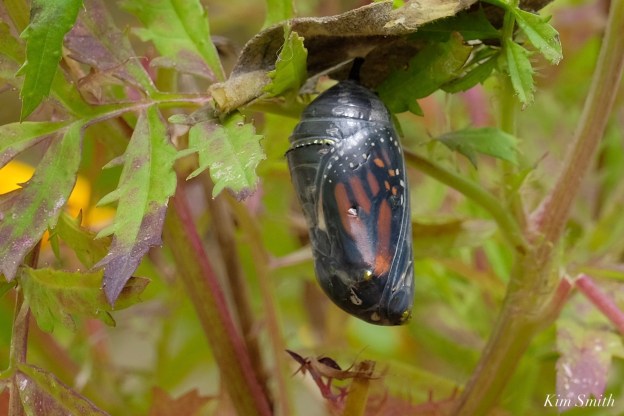
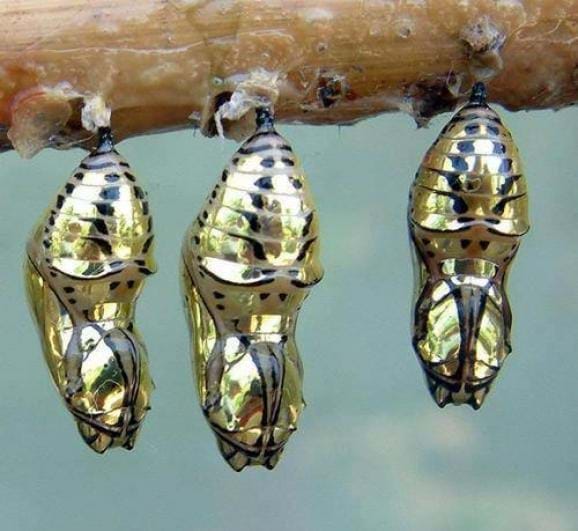
Glimmering sparkly gold in the sunlight, a question often asked is why is the Monarch chrysalis adorned with metallic dots and dashes? The gold dots serve the function of oxygen exchange but that doesn’t answer how and why the dots are gold.

Since time immemorial people have noticed the brilliant golden dots, dashes, and gold leafing of many species of butterfly chrysalides. The word chrysalis originates from the Greek word “chrysos,” which means gold.

There are are several hypotheses. The two that make the most sense are deterrents to predators and camouflage.

For the same reason the iridescent scales of the Blue Morpho Butterfly flash light when the butterfly is in flight, the golden markings of the chrysalis catch light, confusing and deterring predators.

Butterfly pupae are protein-rich easy targets. They are too busy rearranging their insides while undergoing metamorphosis to fend off predators. For the most part, throughout a butterfly’s life cycle, from caterpillar to chrysalis to adult, each species has evolved with specific-to-that-species warning and/or camouflage markings.

The chrysalis of the Black Swallowtail Butterfly is a perfect example. When the butterfly pupates in the spring and summer, the chrysalis has a soft golden green hue, which blends beautifully with the lush green of summer foliage.

When the butterfly pupates late in the summer, the chrysalis turns woody brown, taking on the same hues of bare tree branches.

Golden studs, dashes, and leafing reflect the surrounding area, create flashes of light, look like drops of dew, shafts of light, and is some cases, such as that of the Tigerwing Butterfly, may frighten a predator when it sees its own reflection.

Tigerwing Butterfly (Tithorea harmonia) Photo by Desus Mortus

How the gold is formed is easier to pinpoint. Metallic and iridescent markings in butterflies are created when both pigmented cells (in this case yellow carotenoids) and structural cells are present. You see carotenoids present when trees turn yellow, gold, and orange in autumn. The Monarch caterpillar gets its carotenoids from the plant it eats, milkweed.

The crown of the Monarch pupa is called a diadem. If you look closely at the diadem, it’s a raised structure, a line of tiny hills. The combination of the raised hills and carotenoids present both absorb and reflects the light, creating the appearance of shiny gold.

Please consider making a tax deductible donation, or becoming an underwriter, to bring our Monarch Butterfly documentary Beauty on the Wing: Life Story of the Monarch Butterfly to American Public Television. To Learn More go here and to DONATE go hereThank you!

HOW TO TELL THE DIFFERENCE BETWEEN A MALE AND FEMALE MONARCH BUTTERFLY

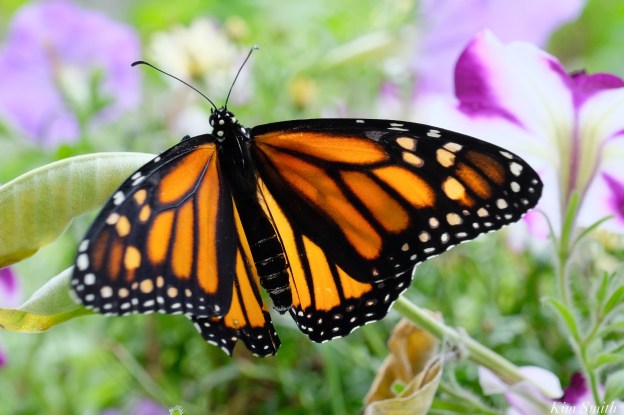
Newly eclosed female in the petunia patch

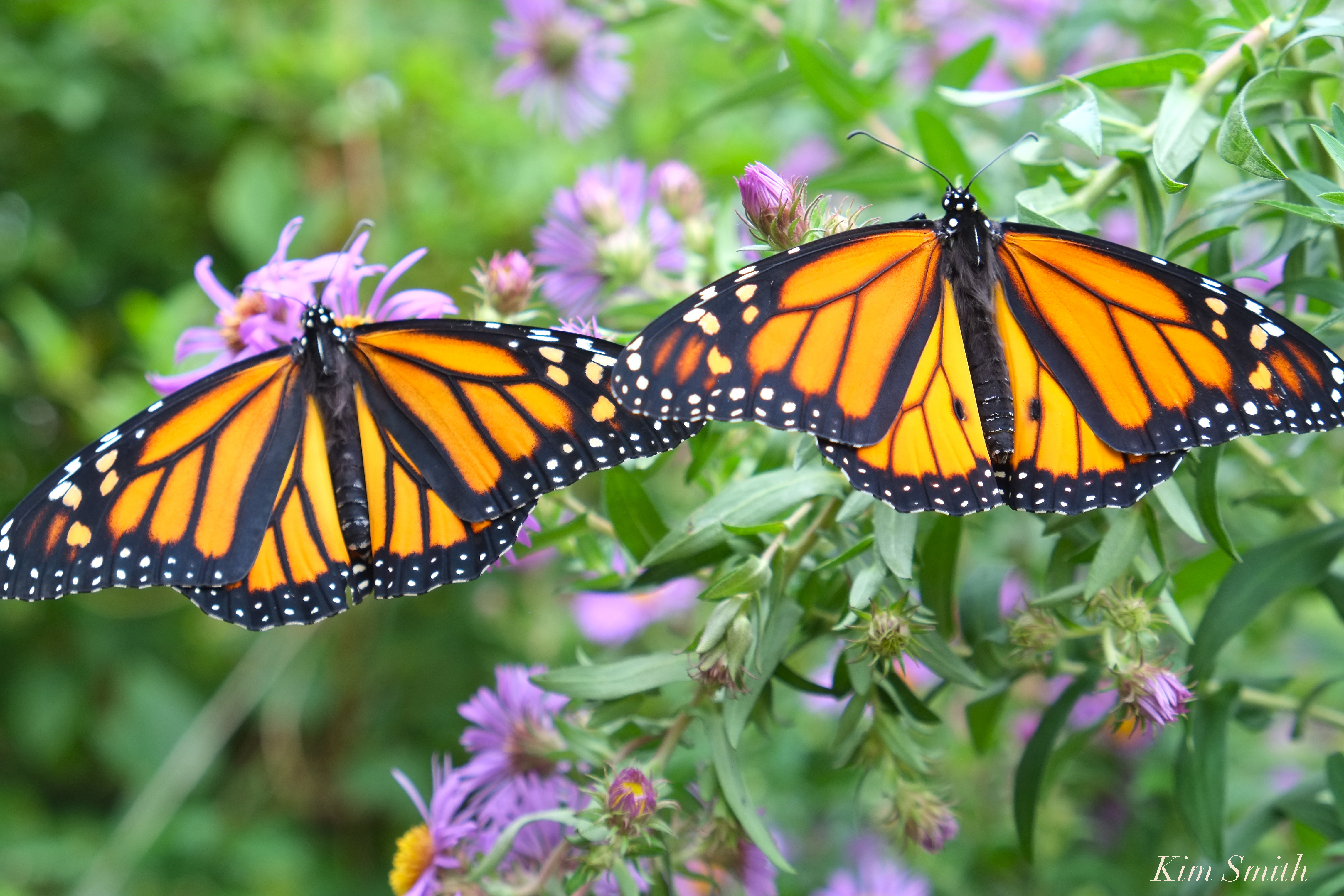
You can tell she is a female Monarch because of her smokier and thicker wing venation. The male’s wing veins are narrower . The male also sports to black dots, or sacs, one on each hind wing. The sacs are filled with a pheromone, which the male sprinkles on the female during courtship. If she is receptive, the pair will mate. The pheromones are sometimes referred to by scientists as “love dust.”

In the above photo taken during the fall migration last year, you can easily see the difference. The female is on the left, the male on the right.

Please consider contributing to our online fundraiser to bring the feature length documentary Beauty on the Wing: Life Story of the Monarch Butterfly to American Public Television. Thank you! 

NEW FILM FOR MONARCH KIDS: THE MARVELOUS MAGNIFICENT MIGRATING MONARCH! AVAILABLE TO VIEW FOR FREE

Dear Monarch Friends,

Last week the short film about Monarchs created for the Sawyer Free Library children’s program had lots of interest. The Marvelous Magnificent Migrating Monarch! finished its run at the SFLibrary and I thought I would love to share it with you and the youngest members of your family. Many, many thanks to Justine Vitale, Sawyer Free Library Department Supervisor, for encouraging me to create this short film for children!!

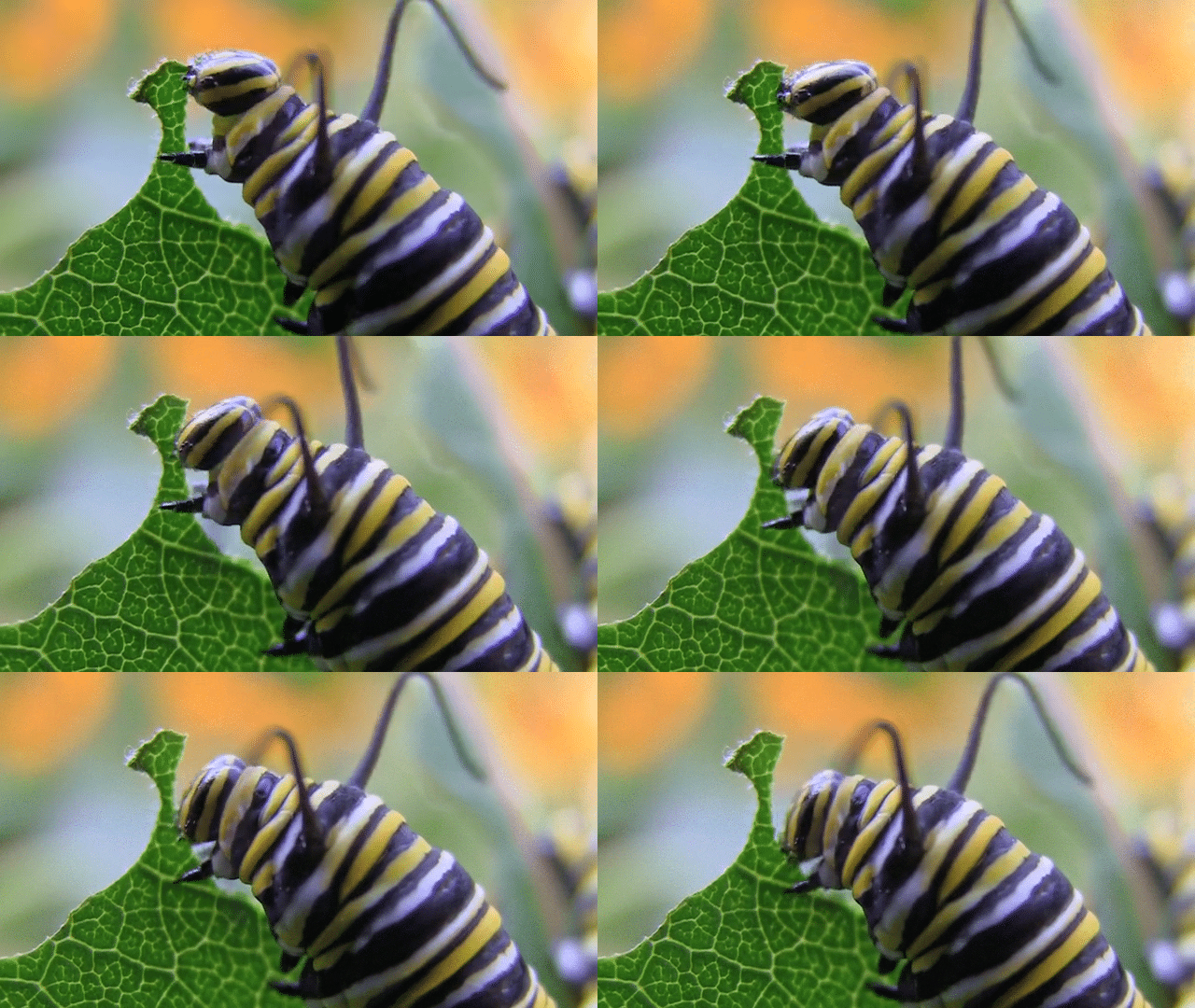
At about four minutes in, Charlotte demonstrates an uncomplicated and fun method of raising  Monarchs caterpillars. She has been doing this with me since she was two, and you can see how simple it is to set up a terrarium.

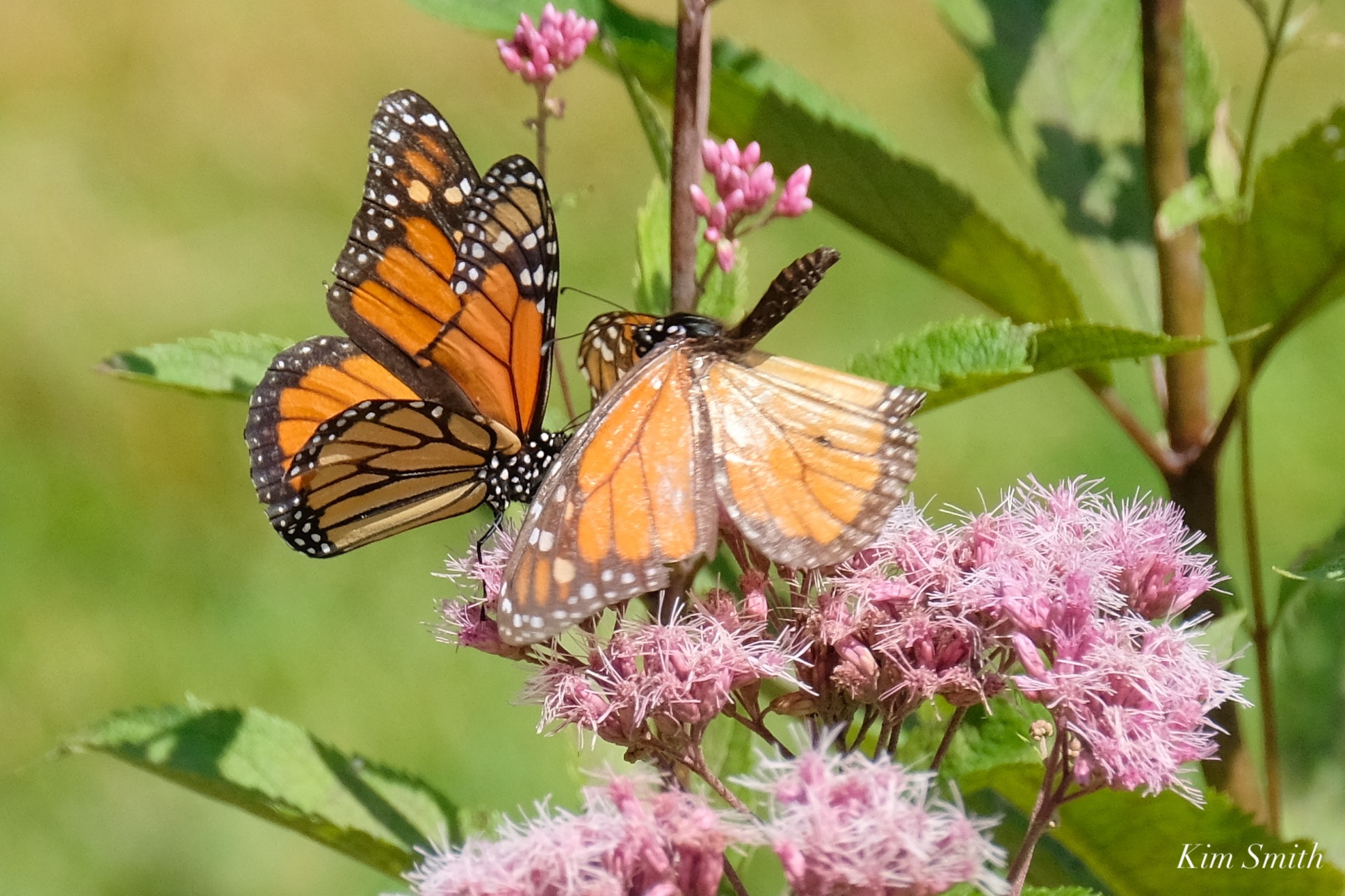
The number of Monarchs in gardens, meadows and dunes over the past month has been nothing but extraordinary. Simply going no further than on our front porch and in my garden (not quite recovered from broken leg yet), I have photographed countless females depositing eggs along with many battles of male to male combat as they stake out their patch of wildflowers and milkweed while patrolling for females.

Battle Royale over the Joe-pye wildflower (Eupatorium). What makes this patch of Joe-Pye so attractive to the males is that is it located adjacent to a patch of Marsh Milkweed (Asclepias incarnate)

Over the past few days, the Monarchs have been settling down a bit, which happens every year toward the mid to end of August. I think the butterflies we have been seeing battling and depositing eggs may be the parents of the Methuselah Monarchs. This newly emerging batch of caterpillars may very well be the generation of Super Monarchs, the ones that journey to Mexico.

I am so hopeful for the future of this tiny marvel of nature. I hope The Marvelous Magnificent Migrating Monarch is easy for your youngsters to follow along and to understand, and also provides you with some tips on how we can all help the butterflies. Safe travels Monarchs!

My deepest gratitude and thanks to all who are contributing to the second phase of launching Beauty on the Wing: Life Story of  the Monarch Butterfly out into the world, the world of Public Television. To date we have raised close to $18,000.00 toward our goal of $51,000.00.

For more information on how you can help launch Beauty on the Wing to the American Public Television audience, please go here.

DONATE HERE

Thank you so very much to all these kind contributors:

Lauren Mercadante, Jonathan and Sally Golding, James Masciarelli, Pete and Bobbi Kovner, Karrie Klaus (Boston), Sally Jackson, Marion Frost (Ipswich), Joy Van Buskirk (Florida), Lillian and Craig Olmstead, Suki and Fil Agusti (Rockport), Janis Bell, Nina Groppo, Nubar Alexanian, Marguerite Matera, Claudia Bermudez, Thomas Hauck, Judith Foley (Woburn), Jane Paznik-Bondarin (New York), Paul Vassallo (Beverly), Stella Martin, Liv Hauck (California), Julia Williams Robinson (Minnesota), Cynthia Dunn, Diane Gustin, Heidi Shiver (Pennsylvania), John Ronan, Karen Maslow, Fernando Arriaga (Mexico City), Holly Nipperus (Arizona), Kristina Gale (California), Maggie Debbie, Kate and Peter Van Demark (Rockport), Mia Nehme (Beverly), Chicki Hollet, Alice Gardner (Beverly), Therese Desmarais (Rockport), Jennie Meyer, Kathy Gerdon Archer (Beverly), Melissa Weigand (Salem), Duncan Todd (Lexington), Catherine Ryan, Linda Bouchard (Danvers), Elaine Mosesian, Paul Wegzyn (Ipswich), Catherine Bayliss, Jan Waldman (Swampscott), Alessandra Borges (Rhode Island), Nancy Mattern (New Mexico), Carolyn Constable (Pennsylvania), and Ian Gardiner.

Female Monarch depositing eggs on Common Milkweed seedpod

NEW MONARCH BUTTERFLY FILM CREATED FOR CAPE ANN KIDS PREMIERING AT THE SAWYER FREE LIBRAY!

Please join us during the week of August 3rd through August 7th (Tuesday – Saturday), for the premiere of a new short Monarch Butterfly film, “The Marvelous Magnificent Migrating Monarch!”  The film was created for Cape Ann kids and for the Sawyer Free Library. You’ll learn about the special connection Monarchs have to Cape Ann, how you can help the butterflies, and how to raise Monarchs from eggs found in your own backyard, meadows, and local dunes.

To register, go here.

My deepest gratitude and thanks to all who are contributing to the second phase of launching Beauty on the Wing: Life Story of  the Monarch Butterfly out into the world, the world of Public Television. To date we have raised close to $18,000.00 toward our goal of $51,000.00.

For more information on how you can help launch Beauty on the Wing to the American Public Television audience, please go here.

DONATE HERE

Monarch and Coreopsis

Thank you so very much to all these kind contributors:

Lauren Mercadante, Jonathan and Sally Golding, James Masciarelli, Pete and Bobbi Kovner, Karrie Klaus (Boston), Sally Jackson, Marion Frost (Ipswich), Joy Van Buskirk (Florida), Lillian and Craig Olmstead, Suki and Fil Agusti (Rockport), Janis Bell, Nina Groppo, Nubar Alexanian, Marguerite Matera, Claudia Bermudez, Thomas Hauck, Judith Foley (Woburn), Jane Paznik-Bondarin (New York), Paul Vassallo (Beverly), Stella Martin, Liv Hauck (California), Julia Williams Robinson (Minnesota), Cynthia Dunn, Diane Gustin, Heidi Shiver (Pennsylvania), John Ronan, Karen Maslow,Fernando Arriaga (Mexico City), Holly Nipperus (Arizona), Kristina Gale (California), Maggie Debbie, Kate and Peter Van Demark (Rockport), Mia Nehme (Beverly), Chicki Hollet, Alice Gardner (Beverly), Therese Desmarais (Rockport), Jennie Meyer, Kathy Gerdon Archer (Beverly), Melissa Weigand (Salem), Duncan Todd (Lexington), Catherine Ryan, Linda Bouchard (Danvers), Elaine Mosesian, Paul Wegzyn (Ipswich), Catherine Bayliss, Jan Waldman (Swampscott), and Alessandra Borges (Woonsocket RI).

THE MONARCH BUTTERFLY AND CLIMATE CHANGE KIM SMITH PRESENTATION

Dear Monarch Friends,

Tomorrow evening I am giving a presentation on how climate change is impacting Monarchs for Cape Ann Climate Change Coalition. I am looking forward to presenting. Please join us if you can! RSVP with Zoom link to the meeting is on the Cape Ann Climate Change Coalition’s website on the ‘NEWS/EVENTS’ page. www.capeannclimatecoaltion.org

Thank you so very much to everyone who is donating to our online fundraiser to bring Beauty on the Wing to American Public Television. To date, we have raised over $17,000.00. To learn more about the fundraiser, please visit my website atkimsmithfilms.com and donate here.

Today Charlotte spotted the first Monarch in our garden and we saw the first in the dunes at Good Harbor Beach today as well. Both were depositing eggs on Common Milkweed! My friend Patti shares she saw one flitting about in her (fabulous) butterfly garden today, too. They are here and butterflies love this warm weather. Plant milkweed and they will come!

Warmest wishes,
Kim

BEAUTY ON THE WING INVITED TO THE DOCTALKS FESTIVAL AND SYMPOSIUM AND FILM SCREENING!

Laura Azevedo, Director of Filmmakers Collaborative, and I are featured guests at the 2021 DOCTalks Festival and Symposium that takes place annually (this year virtually from New Brunswick). We will be screening Beauty on the Wing and then discussing myriad topics related to the filmmaking process. The screening and discussion are FREE and OPEN TO THE PUBLIC. Please see below to register for the event.  The schedule has not yet been finalized but I believe our talk and screening will take place June 16th at 7pm (our time), which is actually 8pm Atlantic Daylight Time.

Earlier on Thursday  June 16th, at 1pm (6pm UK time), I am screening Beauty on the Wing to the British Mexican Society in London. Thanks to Zoom, it’s going to be an international day for Beauty!

Please consider becoming an underwriter and donating to our online fundraiser to bring Beauty on the Wing to American Public Television. Thank you! 

2021 DOCTalks Festival & Symposium 

DOCTalks Dialogues – online June 15 to 17, 2021

The theme for the 2021 festival and symposium is – DOCTalks Dialogues – a program of conversations that will feature people from various cross-sectors that have associated with DOCTalks over the last nine years (2013 to 2021). 

In a ‘relaxed conversational’ format that will feature knowledge-based documentary media – long form documentaries, short videos, podcasts, immersive learning technology, interactive website, social media – DOCTalks Dialogues will explore ‘best practices’ used to create, fund, and mobilize knowledge-based documentary media using a cross-sector collaborative storytelling approach.

Our moderator and host for the DOCTalks Dialogues program will be Catherine D’Aoust from Jemseg, New Brunswick. Enrolled in a Masters program studying linguistics at MUN (Memorial University of Newfoundland), Catherine will also be investigating – How does language and personal intention affect cross-sector collaborative outcomes when producing knowledge-based documentary media?

It should be noted that an underlying narrative for cross-sector, knowledge-based documentary media is – real stories, about real people, living in real communities, addressing real issues, and trying to create real change in society.

Event Registration:

Register at Eventbrite: www.eventbrite.com/e/2021-doctalks-festival-symposium-tickets-152537905983

Free Public Screenings & Talks

All evening screenings & talks are open to the public. A Zoom link will be provided for admission

Beauty on the Wing Selected Semi-finalist at the Dumbo Film Festival

We are overjoyed to share that Beauty on the Wing has been selected a semi-finalist at the Dumbo Film Festival. We’ll know on June 11th whether or not we have been selected officially to show at the festival that takes place in September. Keeping my hopes up!

About the Dumbo Film Festival

The Dumbo Film Festival (DFF) is a yearly event structured in bimonthly contests. Every two months, each of the categories will be awarded and a final ceremony will be held every year in New York City’s district of Dumbo to award projects that have been judged the very best over the past year. This structure is meant to highlight both affirmed and emergent filmmakers and to launch promising artists into the world film stage.

Read more here

Please consider donating to our online fundraiser to bring Beauty on the Wing to American Public Television. Thank you!

Read more about our fundraiser here.

MONARCHS IN THE NEWS, MILKWEED GROWING TIPS, AND FILM FUNDRAISING UPDATE

Monarchs have been sighted in our region! Before the Memorial Day weekend cold snap, Monarchs as far north as Nova Scotia have been reported. One was spotted in Ipswich and another in Concord, New Hampshire.  The chilly temperatures surely put the kibosh temporarily on flight but as soon as it warms again, Monarchs will be on the wing. 

Map from Journey North of first adult Monarchs sighted

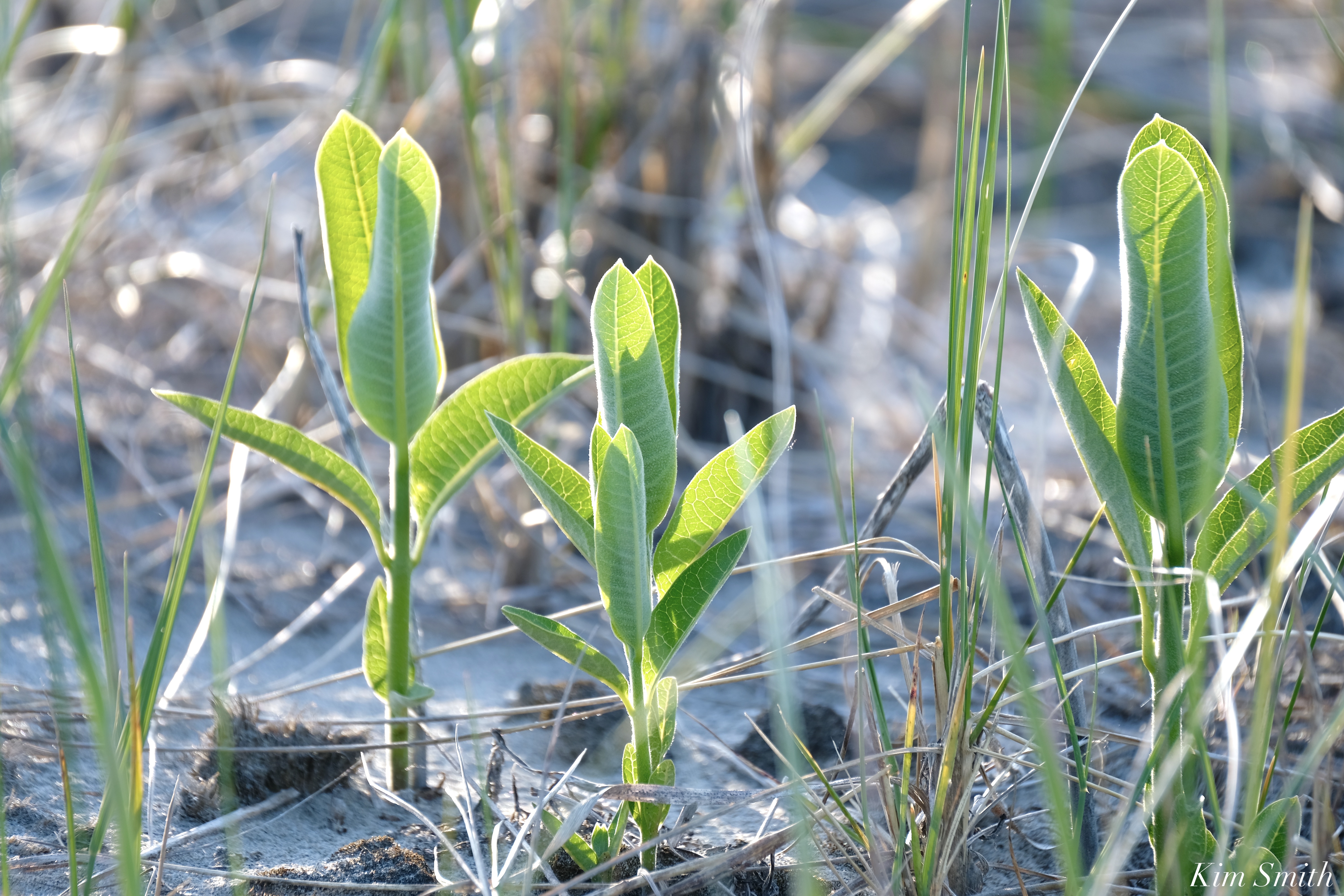
Milkweed growing tip – The most productive milkweed for Monarchs in northern regions is Common Milkweed (Asclepias syriaca), the species you see growing prolifically in dunes, meadows, roadsides, and even in the cracks of sidewalks. By productive I mean that females deposit more eggs on Common Milkweed than any other species. Marsh Milkweed (Asclepias incarnata), also know as Swamp Milkweed, is second.

Common Milkweed Good Harbor Beach

We grow patches of both in our gardens. I find Marsh Milkweed is generally slower to emerge than Common. Some of our Common is already two feet tall. Because most Monarchs will not be depositing eggs in our New England gardens for another few weeks, I prune half of the Common Milkweed plants to nubs several inches high. The plants quickly regrow and when the majority of Monarchs arrive, there is new fresh tender foliage emerging. The females prefer to deposit their eggs on new shoots and tender leaves to that of the older, thickened foliage. The flowers of the milkweed plants that aren’t pruned are there for  pollinators and for any early bird Monarchs.

Common Milkweed thrives in full sun but also does remarkably well with morning sun and afternoon shade. And as you can see based on the variety of rugged areas from where it emerges, A. syriaca is not fussy in the least about soil!

With gratitude to my generous community, we have raised $16,000.00! We are more than one quarter of the way toward our goal of $51,000.00, which will enable us to distribute Beauty to the national public television audience.

Thank you to all for your very generous donations and kind, thoughtful  comments. 

Lauren Mercadante, James Masciarelli, Pete and Bobbi Kovner, Karrie Klaus (Boston), Sally Jackson, Marion Frost (Ipswich), Joy Van Buskirk (Florida), Lillian and Craig Olmstead, Suki and Fil Agusti (Rockport), Janis Bell, Nina Groppo, Nubar Alexanian, Marguerite Matera, Claudia Bermudez, Thomas Hauck, Judith Foley (Woburn), Jane Paznik-Bondarin (New York), Paul Vassallo (Beverly), Stella Martin, Liv Hauck (California), Julia Williams Robinson (Minnesota), Cynthia Dunn, Diane Gustin, Heidi Shiver (Pennsylvania), John Ronan, Karen Maslow, Fernando Arriaga (Mexico City), Holly Nipperus (Arizona), Kristina Gale (California), Maggie Debbie, Kate and Peter Van Demark (Rockport), Mia Nehme (Beverly), Chicki Hollet, Alice Gardner (Beverly), Therese Desmarais (Rockport), Jennie Meyer

For more information about the film and how to donate, please see the following links:

SUPER, SUPER, SUPER EXCITING NEWS FOR BEAUTY ON THE WING -COMING TO YOUR LIVING ROOM! AND PLEASE CONSIDER A TAX DEDUCTIBLE DONATION

DONATE HERE

BEAUTY ON THE WING WINS ENVIRONMENTAL AWARD

THANK YOU GENEROUS COMMUNITY! FIRST WEEK OF FUNDRAISING AND WE HAVE RAISED $12,000.00!

THANK YOU O’MALEY INNOVATION MIDDLE SCHOOL STUDENTS FOR THE LOVELY THANK YOU NOTES AND DRAWINGS!!

How the amazing monarch butterfly migrants became refugees — from us