Instagram Hack

Friends, my Instagram account was hacked and it was super creepy. My kimsmithdesigns account and monarchbutterflyfilm account are temporarily disabled. If you would like to follow me on instagram, I have a new account, kimsmithfilms.

Please follow at kimsmithfilms if you would like to connect on Instagram. Thank you so much!

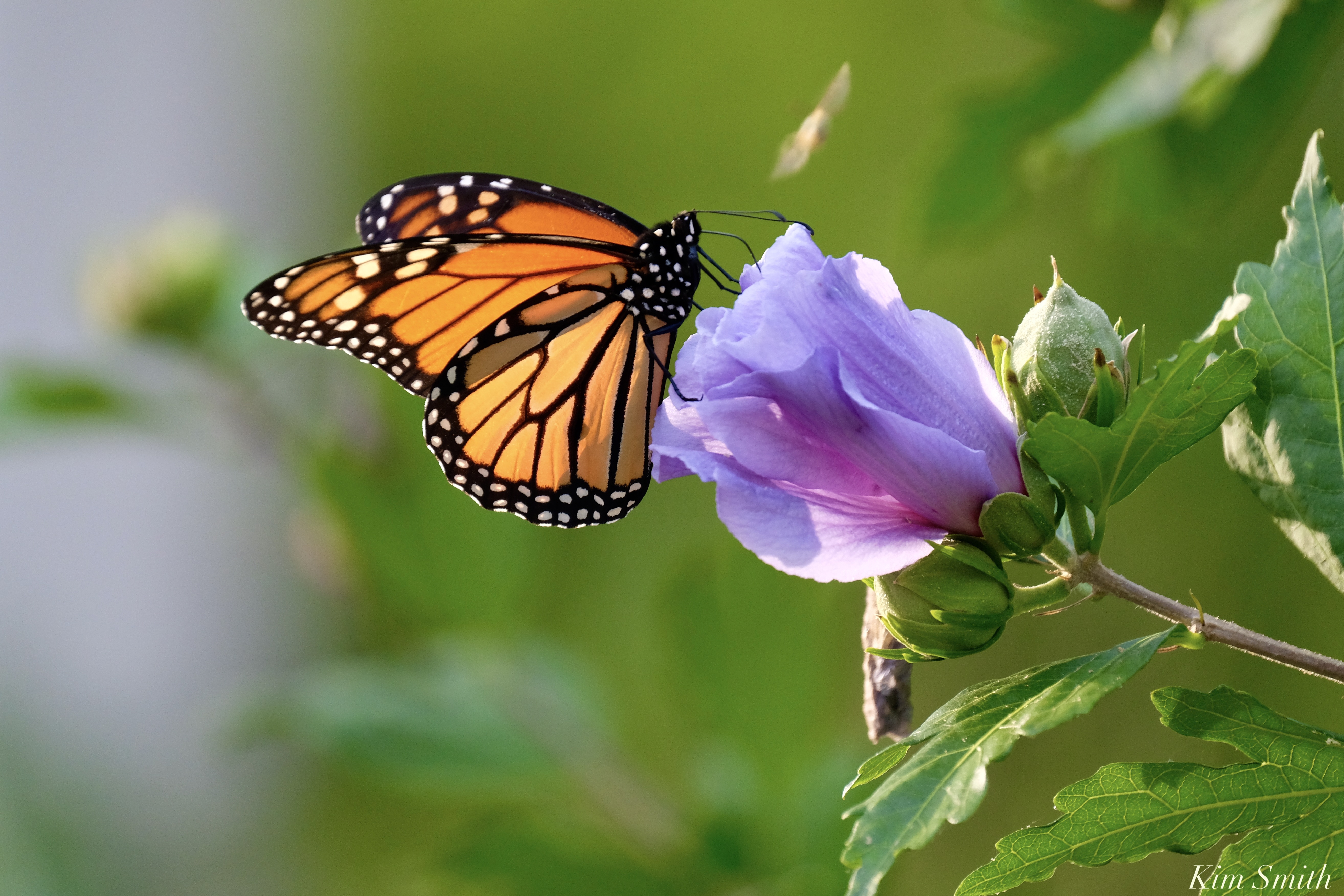
Monarch Butterfly and blue Rose of Sharon

THANK YOU HEATHER ATWOOD AND KORY CURCURU FOR THE WONDERFUL MONARCH FILM 1623 STUDIOS INTERVIEW!

Thank you so very much to Heather Atwood and Kory Curcuru for sharing about all things Monarchs, including the current state of the butterflies, Monarchs and other species of butterflies found in our gardens, and about my forthcoming film Beauty on the Wing; Life Story of the Monarch Butterfly.  

I look forward to watching weekly episodes of their show, Cape Ann Today, and was simply delighted to be interviewed. Thank you again

“As light as a paperclip and they travel over 3,000 miles.” The Monarch Butterfly and its awe-inspiring life cycle has become a sort of northstar for documentary filmmaker Kim Smith. Watch the trailer to her soon-to-be-released film, “Beauty on the Wing – Life Story of the Monarch Butterfly” and hear Smith discuss this iconic winged being, and what we can do to support its journey.

You can watch the interview on either Youtube or the Facebook link; I think the Youtube version is a little clearer.


WHERE HAVE ALL THE BUTTERFLIES GONE?

In thinking about where have all the butterflies gone, I am reminded of the poignant song written by Pete Seeger “Where Have All the Flowers Gone,” which although a song about the futility of war, sums up much about the environmental impact of habitat loss. Without wildflower habitat, there will be no pollinators of any sort.

Where have all the flowers gone?
Long time passing
Where have all the flowers gone?
Long time ago.
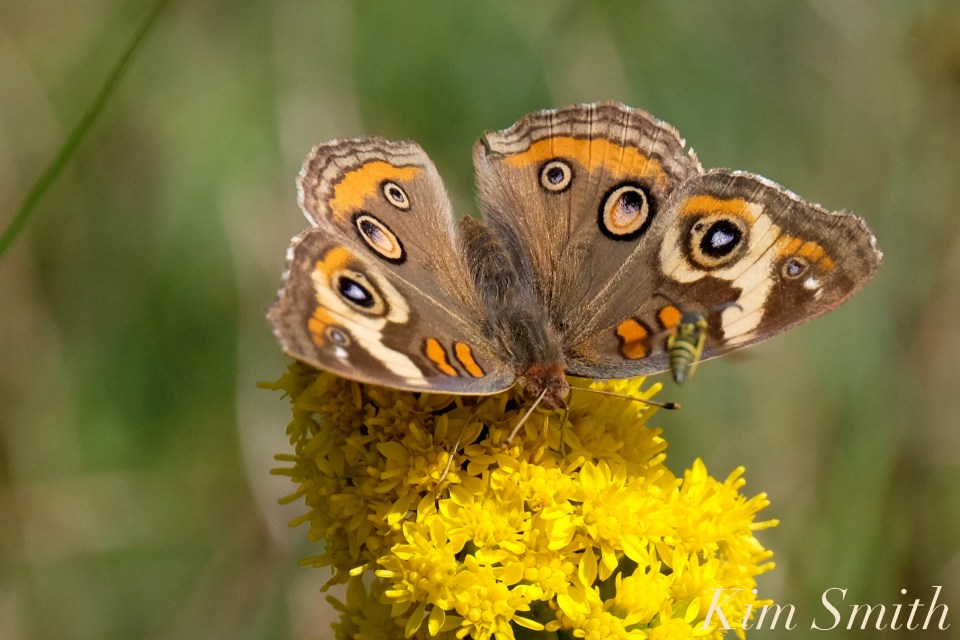
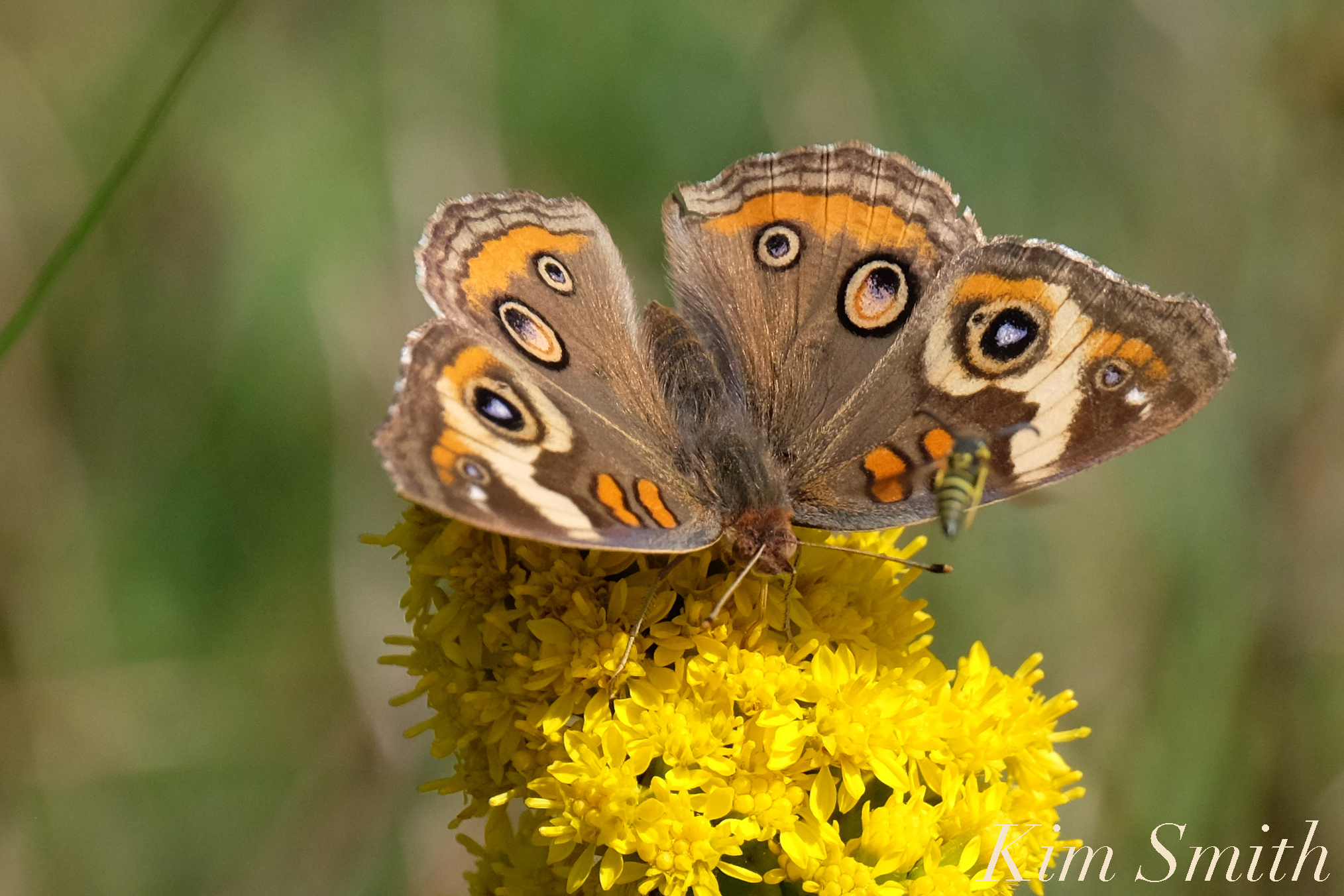
Buckeye and Seaside Goldenrod

Where have all the butterflies gone? Different species of butterfly populations fluctuate from year to year. For example, some years you may see far greater numbers of Buckeyes, the next year not so much. That same year you may hardly see any Tiger Swallowtails but will the following.

That being said, everyone must realize that every year there are fewer butterflies than the year before. Butterflies thrive in meadows, the very same topography that is the easiest to build upon. Every time a new house or shopping mall is built on a meadow, we decrease not just butterfly habitat, but a whole community of wildlife habitat.

In the above photo you can see a Monarch with a Black Swallowtail flying overhead. This stunning patch of wildflowers and nectar plants was sited in Gloucester at a prime spot for Monarchs to rest and refuel after migrating across Massachusetts Bay. The new home owners ripped out most of the wildflowers and planted the site in a more formal style, with non-native perennials and shrubs. At this location, I would often see Monarchs, Tiger Swallowtails, Black Swallowtails, Painted and American Ladies, Sulphurs, and many other species. That is no longer true.
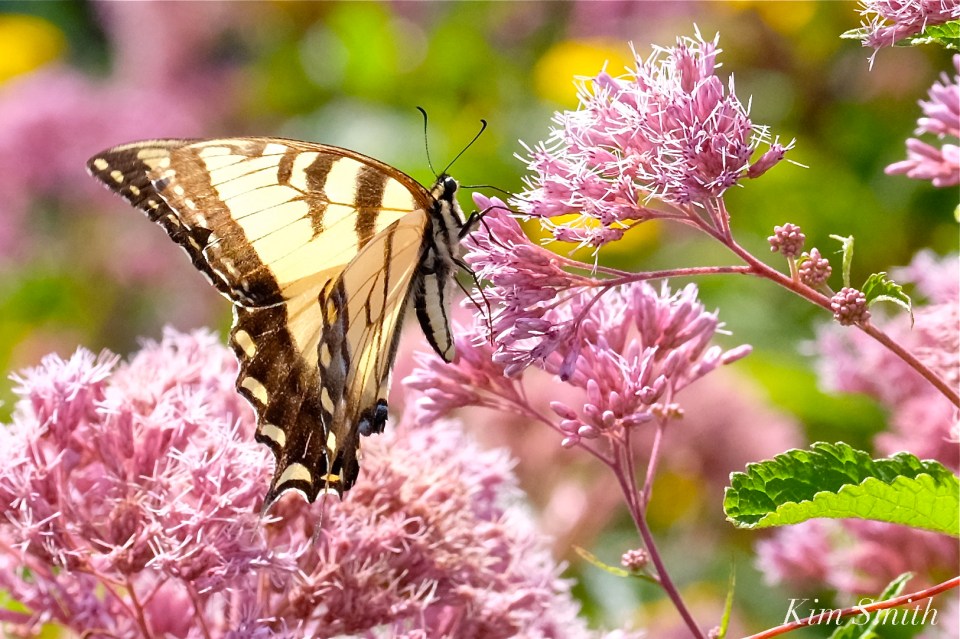
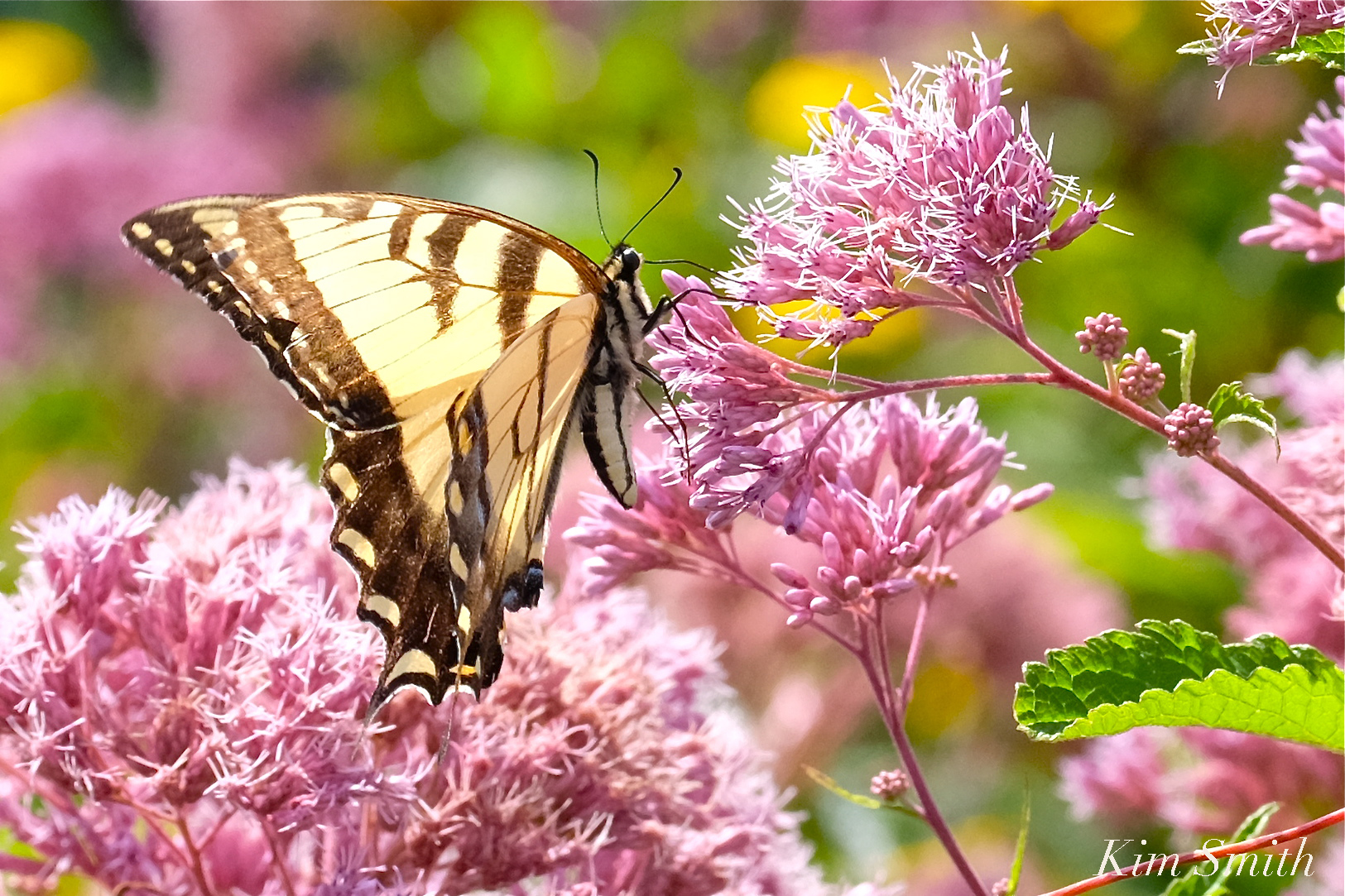
Tiger Swallowtail drinking nectar from Joe Pye-weed at the same wildflower patch, no longer in existence.

Butterfly and bee populations are declining overall, not only because of habitat loss, but because of the unbridled use of herbicides and pesticides in agriculture and home lawn care.

Butterflies are especially sensitive to fluctuations in weather, and also to overall climate change. This year we had a long, cold wet spring. The inclement weather is continuing, too, from a butterflies perspective, because although we are seeing some warmer temperatures the past few days, it has mostly been rainy, foggy, or overcast. Butterflies thrive during long stretches of sunny, hot weather. Their wings don’t work very well in the damp and cold. Because of global climate change, we have seen a seven percent increase in precipitation worldwide.

One of the best years I have ever seen for dozens and dozens of species of butterflies, including Monarchs, in the Northeast, was the summer and fall of 2012. That year, we had a warm winter followed by a warm spring, then a warm, dry summer, and a long, warm Indian summer. It was butterfly bonanza that summer and autumn!

Adding to people’s concern is the fact that last year, there was an abundance of spring rain that in turn created an extraordinary wildflower bloom in Texas, which got all the butterflies off to a good start. In 2019, we were seeing Monarchs as early as early June, which was very unusual for Cape Ann. Folks are comparing this year to that of 2019, however, 2019 was not an average year.

Monarchs are a case unto themselves. Their spring and summer numbers largely depend upon an additional variety of conditions, including how successful was the previous year’s autumn migration, whether or not there were nectar providing wildflowers on their northward and southward  migrations, and wind and weather conditions all along their route, from Canada to Mexico.

Note the bar graph in that the eastern population of the Monarchs plummeted by half, according to this year’s spring count by the World Wildlife Fund Mexico.

Particularly in the northeast, the wind patterns during the Monarchs spring northward migration matter tremendously. My friend Charmaine at Point Pelee, in southern Ontario, which is 49 degrees latitude (we are 43 degrees latitude) has been raising and releasing Monarchs for over a month now, while most of us on Cape Ann have only seen a smattering. The Monarchs moved this year in a straight northward trajectory. If the wind does not blow from west to east during some part of their northward migration, far fewer will end up along the eastern shores.

Monarchs and Seaside Goldenrod

All is not lost. I am 90 percent certain we will soon be seeing some of our migratory and non-migratory local populations, we just need some good weather. They are later than usual, but not gone entirely.

For so many more reasons, I am hopeful for the future of wildlife and their habitats and see such tremendous, positive change. Despite the current administration’ s extremely harmful stance against the environment, many, many individuals and organizations are gaining a deeper appreciation about the importance of habitats and taking positive action. Many have made it their life’s work. These individuals and organizations are creating wildlife sanctuaries and conserving existing habitats. If the Monarch is declared an endangered species, that will surely bring an added awarenesses and increased federal spending for protecting and creating habitats.

How can you help species such as the Monarchs, which in turn will help myriad species of other butterflies and pollinators)? Plant wildflowers! Both Marsh and Common Milkweed for their northward migration, and lots of nectar-rich later summer blooming wildflowers for their southward migration, including New England Aster, Smooth Aster, Purple-stemmed Aster, Seaside Goldenrod, and Canada Goldenrod.
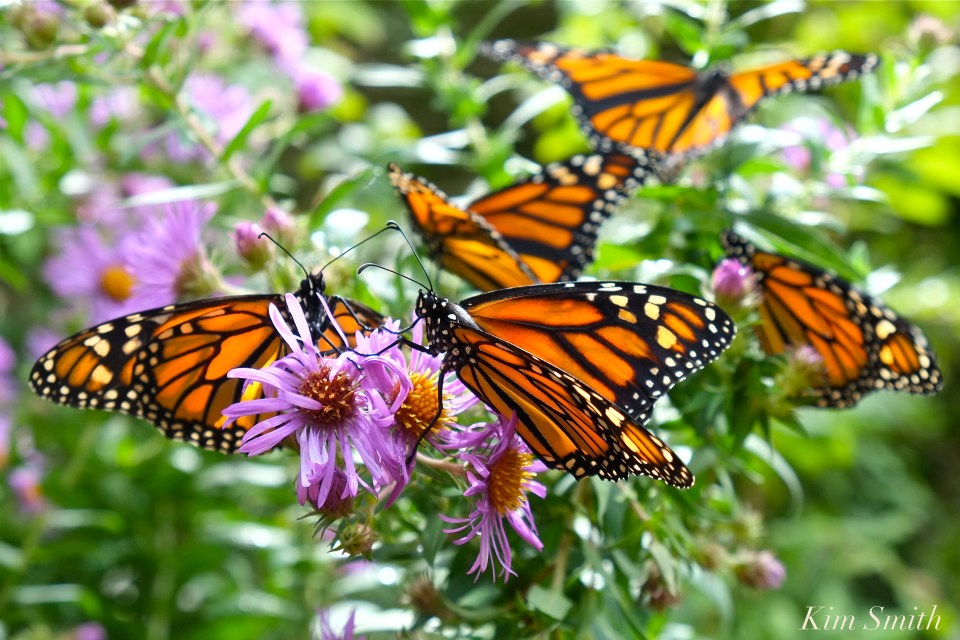
Monarchs and New England Aster

BEAUTY ON THE WING ACCEPTED TO THE NEW HAVEN DOCUMENTARY FILM FESTIVAL!

Overjoyed Beauty on the Wing has been accepted to the New Haven Documentary Film Festival!
2019 Honors Filmmaker

CECROPIA LOVE AMONGST THE LILACS

NORTH AMERICA’S STUNNING AND LARGEST MOTH THE CECROPIA AND WHY THESE GIANT SILK MOTHS ARE THREATENED – PART TWO

See Part One Here

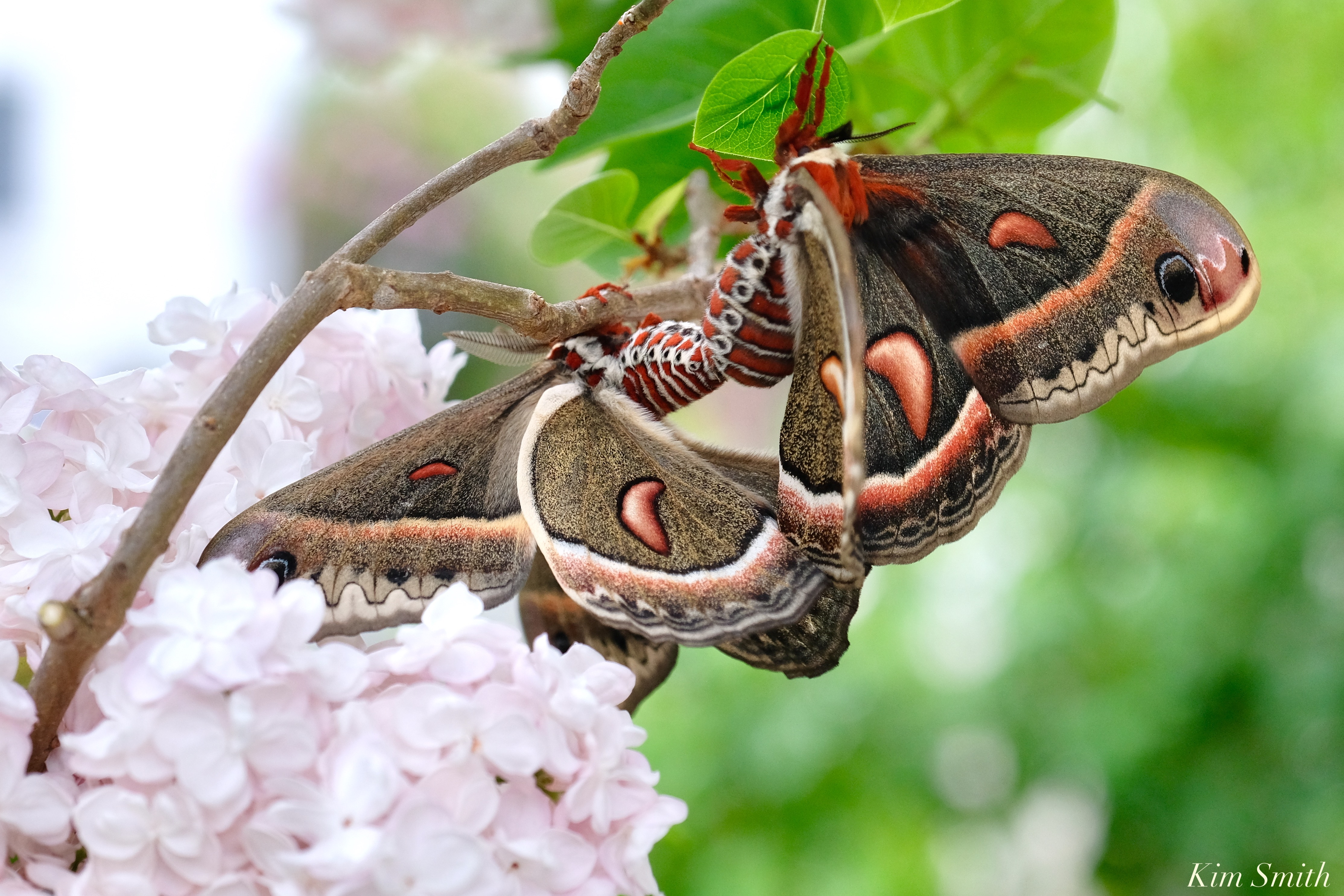
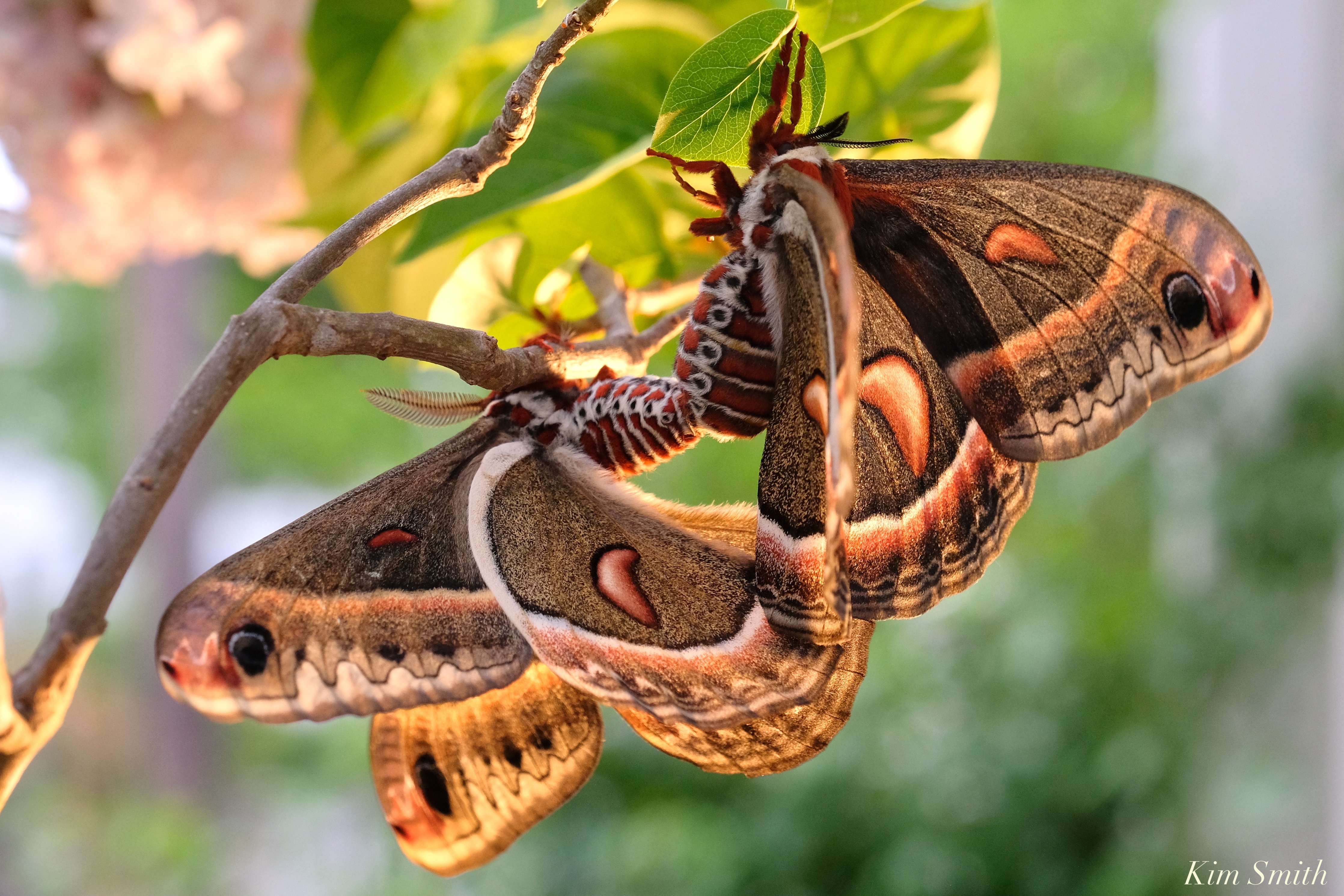
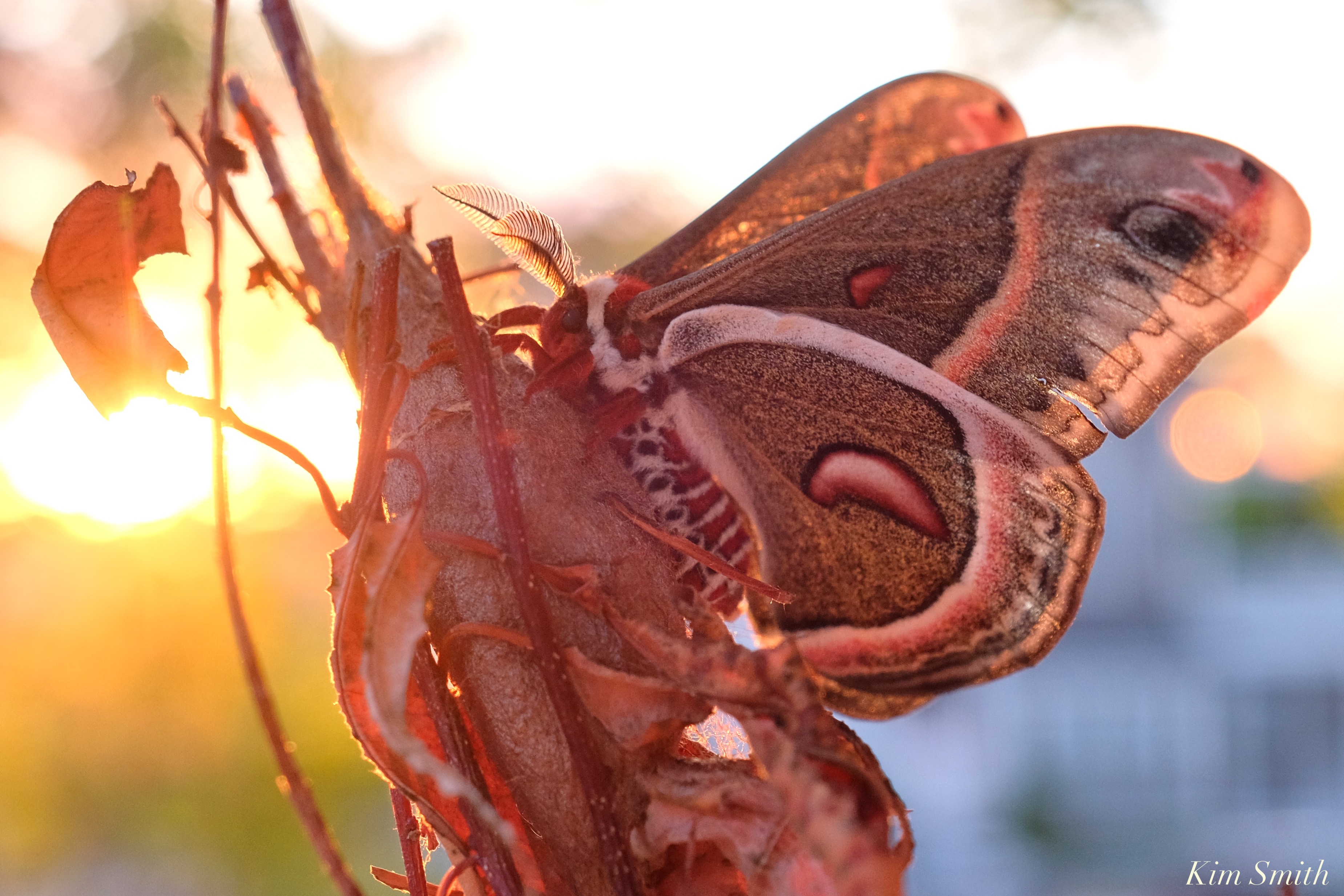
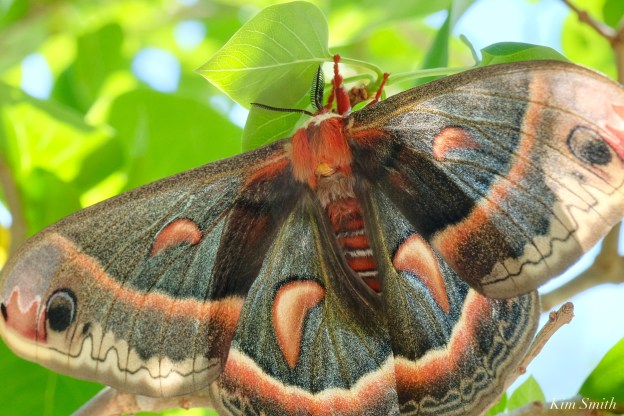
After spending the winter and most of the spring tightly wrapped in their cocoons of spun silk, the first male eclosed on the last day of May. Burly and beautiful, Cecropia Moths emerge with wings patterned in white crescent spots outlined in rust and black, sapphire blue and black eyespots, waves and wiggly lines in soft woodland hues, and a wide tubular body banded and dotted orange, black and white.

It is easy to tell the difference between a male and female because of the male’s spectacular plume- like antennae.

The females were equally as easy to identify because their antennae are comparatively more slender.

Males rely on their superbly oversized antennae to detect the female’s pheromones.

After each Cecropia Moth emerged from its cocoon and their wings had dried, we placed them on the shrubs around our front porch. The males eventually flew off, but the females stayed in one place and usually by morning we would find a pair, or two, mating in our garden.

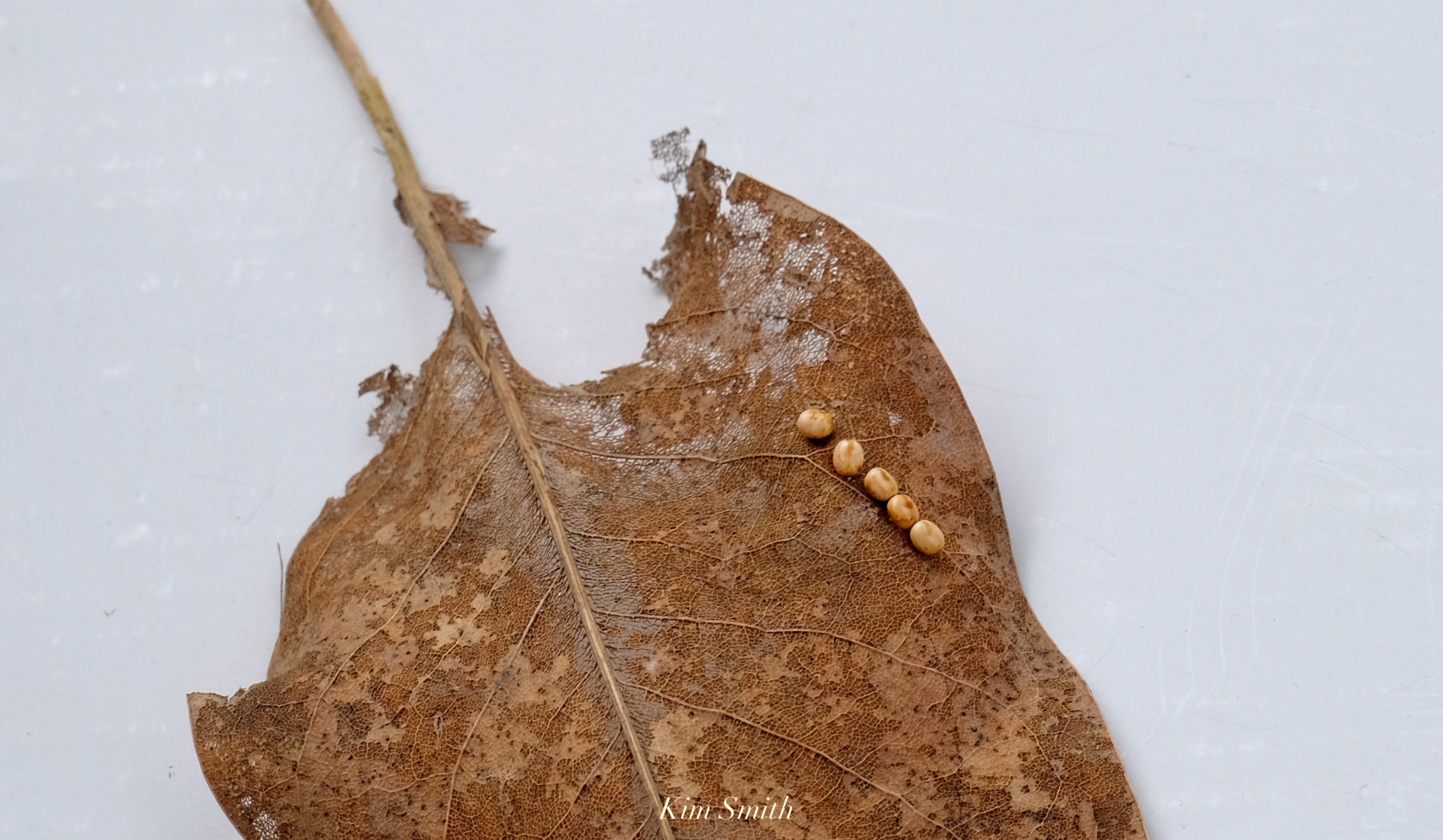
They stayed coupled together all day long, uncoupling sometime during the evening. We kept two of the females for several days and both rewarded us with dozens of eggs.

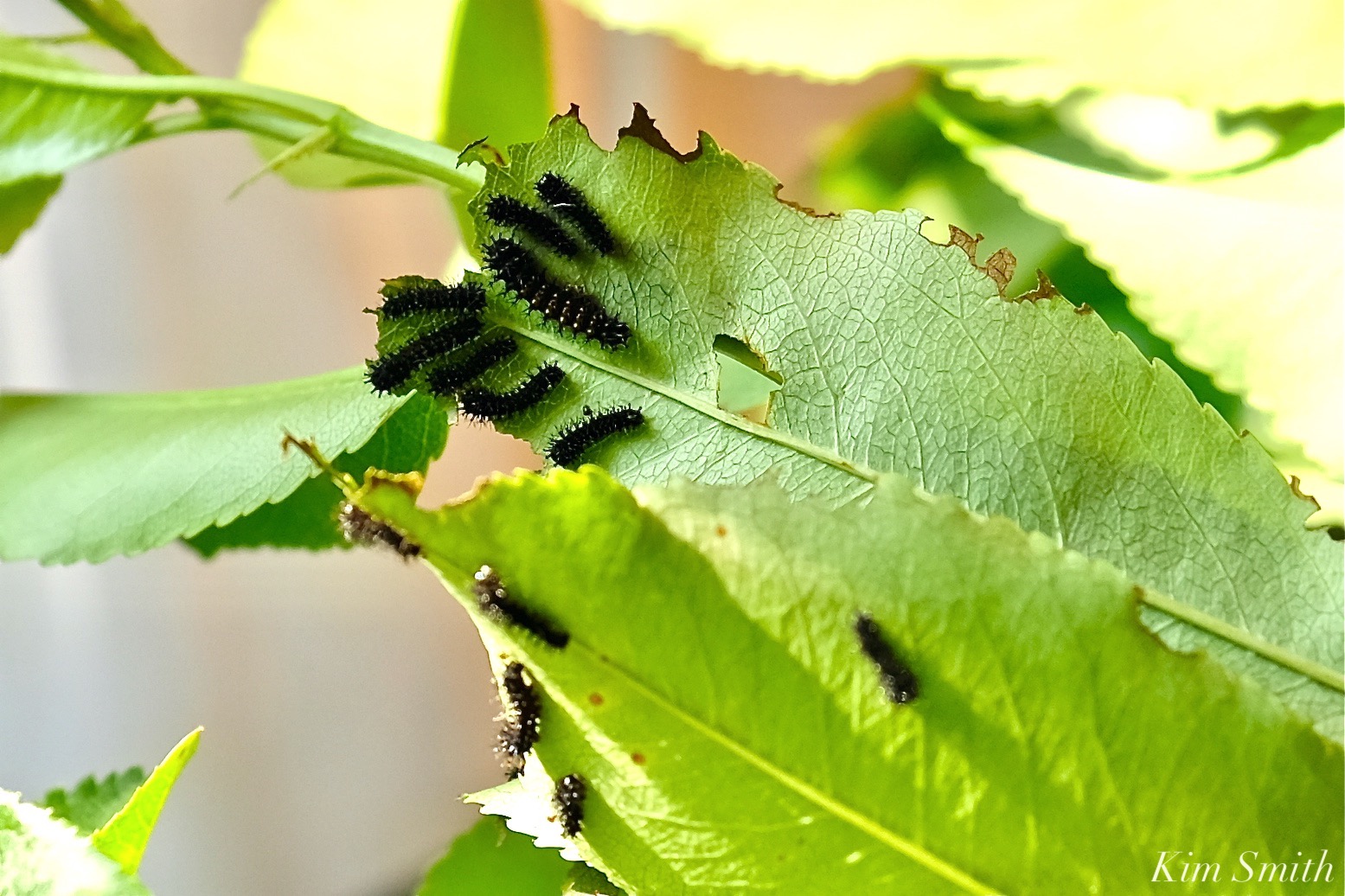
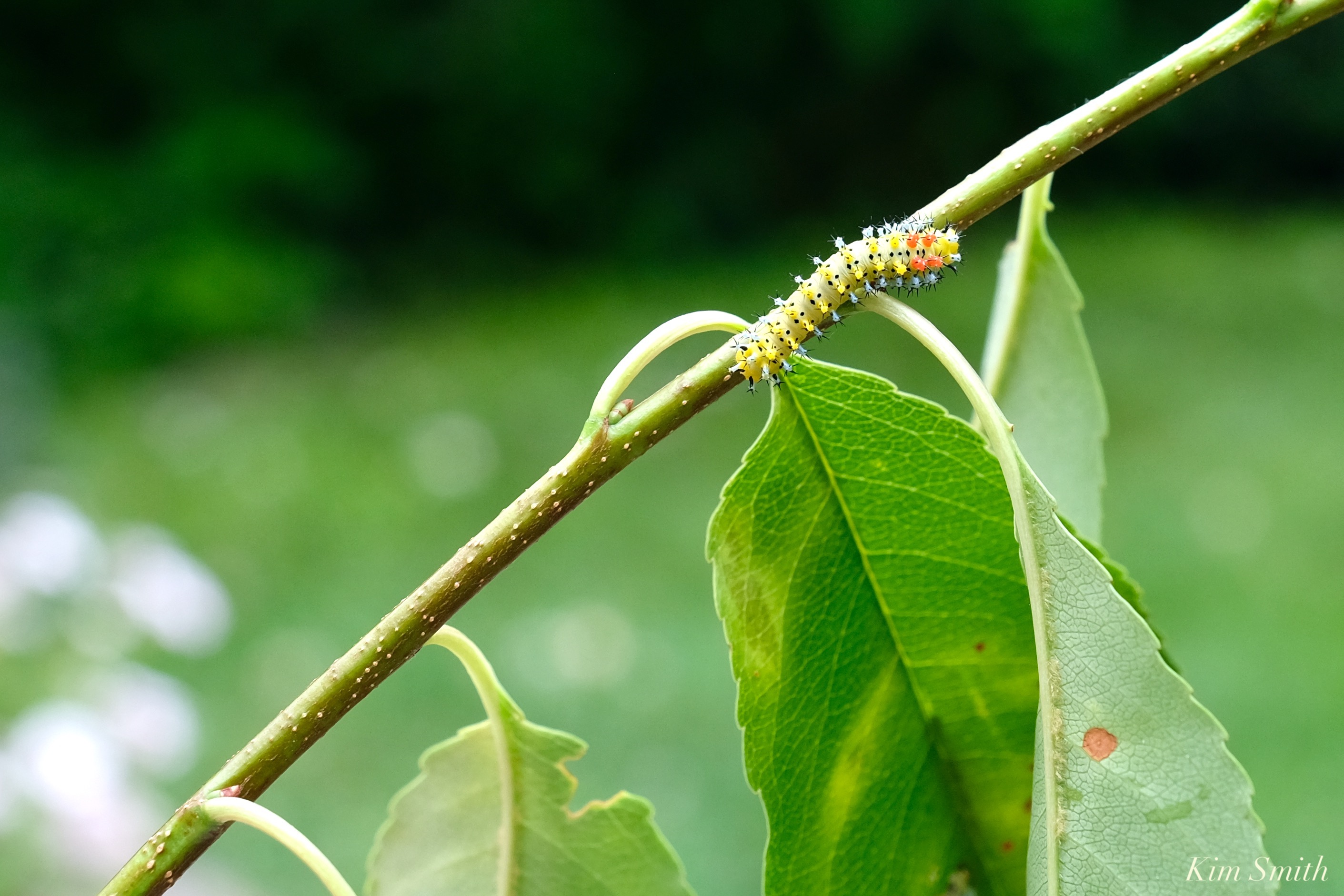
I had read it only takes a week or so for the larvae to emerge from their eggs and was beginning to think ours were not viable, when they began hatching today! In actuality it really took between two and three weeks for the caterpillars to emerge. Possibly the cooler temperatures during this period slowed hatching. The caterpillars are teeny tiny, perhaps one quarter of an inch, black with pokey spines. Charlotte and I collected a bunch of Chokecherry (Prunus viginiana) branches this morning as we prepare to raise another batch of stunning Cecropias.

The adults, both male and female, are short lived. Giant Silk Moths, which include Luna, Polyphemus, Promethea, and Cecropia emerge without mouthparts and cannot eat. Cecropia Moths spend several months in the larval stage, most of their lives as a cocoon, and only a week or two as their beautiful winged adult selves. Giant Silk Moths live only to reproduce.

Threats to Giant Silk Moths are significant. The number one threat is Compsilura concinnata, a tachinid fly that was introduced to North America to control invasive European Gypsy Moths. Both insects are a cautionary tale of why not to introduce invasive species without knowing the full breadth of the harm they will cause. Spraying trees with toxic pesticides that kills both the caterpillars and the cocoons is also a major threat. And, too, squirrels eat the cocoons

Hyalophora cecropia moths are univoltine, having only one generation per year. Our Cecropias began hatching just before the full moon. I have more cocoons and am wondering if this next batch of moths are waiting to emerge prior to July’s full moon.

TWELVE NATIVE MILKWEEDS

Did you know that there are over two hundred species of milkweed (Asclepias) found around the world? Seventy different species are native to North America.

Milkweeds, as most know, are the host plant for Monarch Butterflies. A host plant is another way of saying caterpillar food plant. Monarchs deposit eggs on milkweed plants. Some milkweeds are more productive than other species. For the Northeast region, the most productive milkweed is Common Milkweed (Asclepias syriaca). The second most productive is *Marsh Milkweed (Asclepias incarnata). What is meant by productive? When given a choice, the females choose these plants over other species of milkweed and the caterpillars have the greatest success rate. In our own butterfly garden and at at my client’s habitat gardens, I grow both side-by-side. The females flit from one plant to the next, freely depositing eggs on both species.

This fun chart shows some of the most common species of milkweeds found in North American gardens. *Swamp Milkweed is another common name for Marsh Milkweed.


NORTH AMERICA’S STUNNING AND LARGEST MOTH THE CECROPIA AND WHY THESE GIANT SILK MOTHS ARE THREATENED – PART ONE

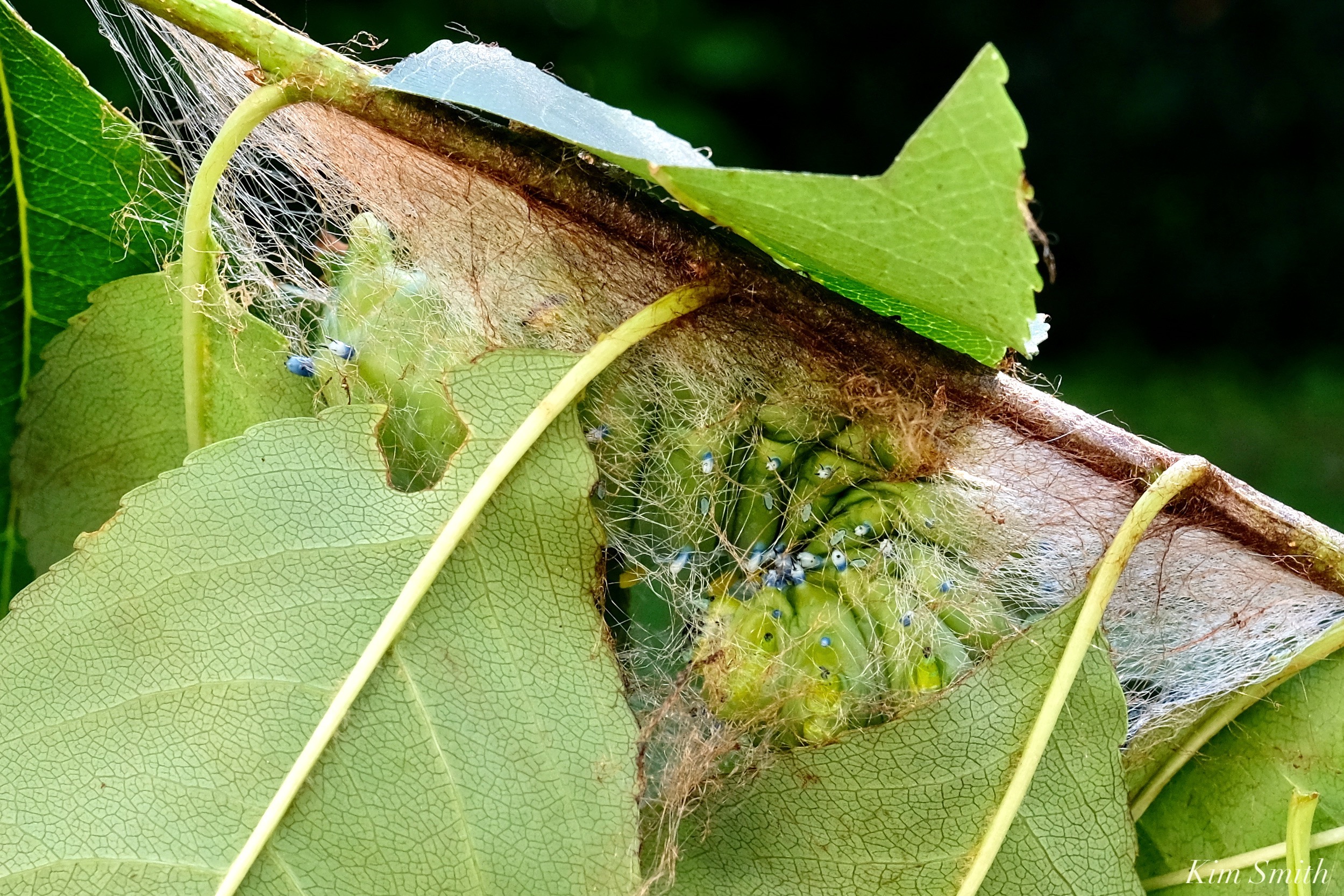
Last summer my friend Christine gave me a handful of Cecropia Moth eggs. Nearly all hatched and grew, AND grew, AND GREW. The caterpillars were a whopping five inches in length and the width of a very large man’s thumb before they began to pupate (become a cocoon).

Cecropia Moth Eggs

First Instar

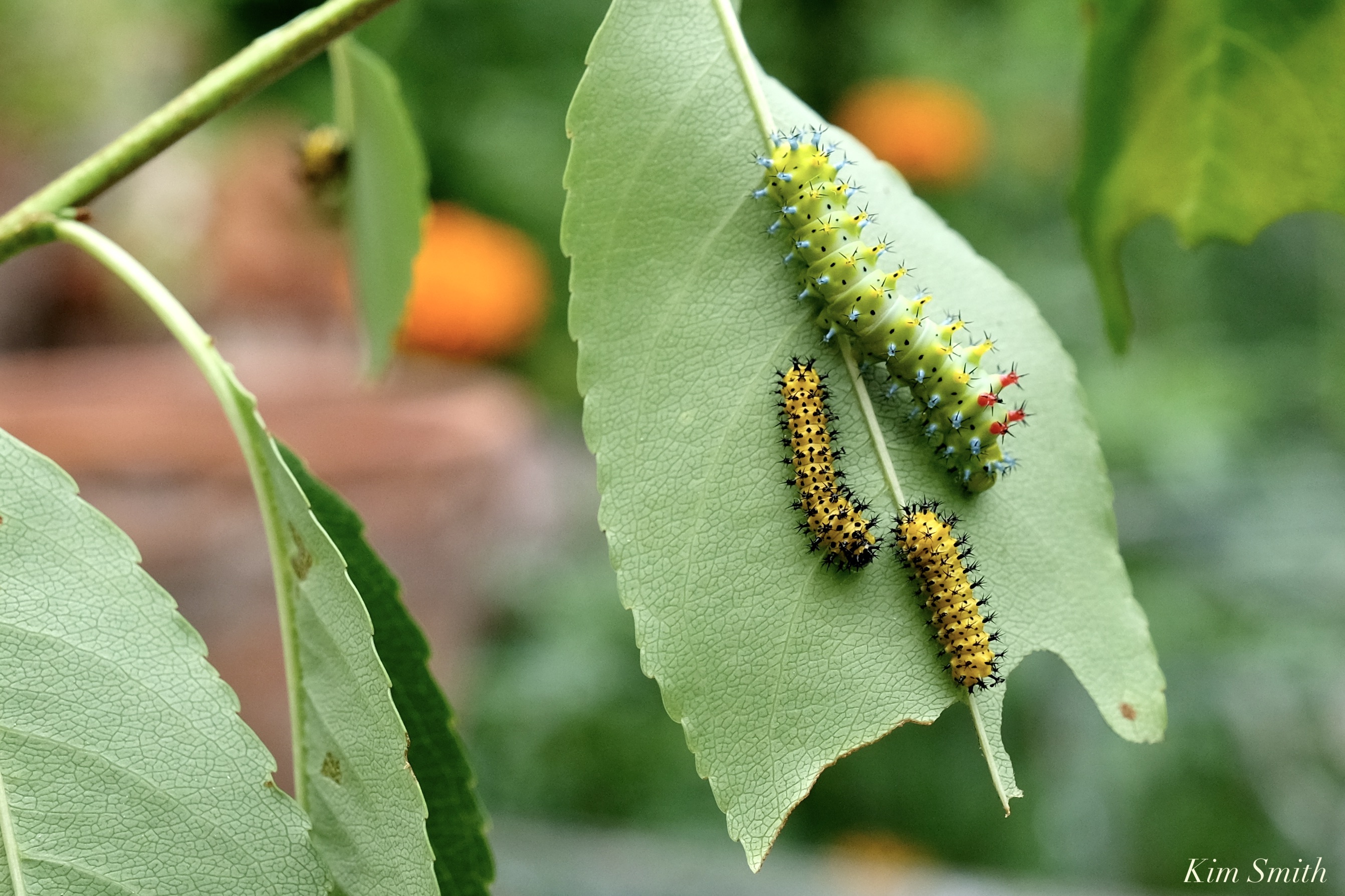
Second and Fourth Instar

Third Instar

Fifth and Final Stage

Cecropia Going Pooh

The Cecropia caterpillar eats the leaves of many trees and shrubs, including alder, ash, birch, box elder, Chokecherry, elm, lilac, maple, poplar, Prunus and Ribes species, and willow. People are always a bit dismayed when I tell them that the adult is born without mouthparts and cannot eat during its brief lifespan. The adult’s only purpose in life is to mate and it lives for about a week or so.

We fed our Cecropia caterpillars Chokecherry (Prunus viginiana), because I knew of a good source where it was growing plentifully.

Cecropia Spinning a Cocoon -The caterpillar pulled some leaves loosely around, but mostly the cocoon is made from its own spun silk. Some spin their cocoons on tree branches and some on the sides of the buildings.

All winter the cocoons lived in glass terrariums on the side of our front porch, which is not enclosed, and which is also out of direct sunlight. The cocoons need to experience normal fluctuations in temperature so that adults will emerge at the correct time of year, when trees are leafed out.

Cecropia Moths are the largest moths found in North America. They are members of the Family Saturniidae. There are approximately 1,500 species of large moths in this family and they are found all over the world. The very largest are found in the tropics, but the wingspan of our Cecropia Moths can reach an amazing 7 inches across (compared to a Monarch, with a wing span of approximately 3.5 inches).

Part Two – emerging, reproduction, laying eggs of the next generation, and how we can help this increasingly rare species.

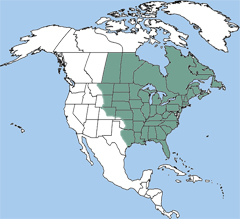
Cecropia Moths are found east of the Rocky Mountains, in Canada and the United States

FRIENDS CHECK OUT THIS SUPER INTERESTING AND FAMILY ORIENTED ZOOM WEBINAR I AM PARTICIPATING IN, ALONG WITH WITH JOHN NELSON AND MARTIN RAY

Save the date for the Zoom event “Try Birding in Your Own Backyard” with fellow guests Martin Ray and John Nelson, moderated by Eric Hutchins and hosted by Literacy Cape Ann.

So very much looking forward to participating and so very honored to be asked.

Try birding in your backyard!
Zoom in for something fun on summer solstice eve!
Three of our favorite chroniclers of birds and nature share birding tips and experiences via Zoom and all are invited. Literary Cape Ann presents authors/naturalists John Nelson, Kim Smith and Martin Ray on Friday, June 19, from 6:30 to 7:30 for a lively talk the family will enjoy. Learn ways not just to observe birds but to capture your experience with birds via blogs, journals, photos or sketches. Make some popcorn, gather your family and join us.

Check in with the Literary Cape Ann Facebook page on June 19 for the Zoom link.

NEW YOUTUBE SHOW – BEAUTY BY THE SEA EPISODE #9


Male American Bullfrog mating serenade

Beaver, Beaver Lily Pad Eater

Reinventing our culture to benefit the many, not just the few.

Pitch Perfect Pandemic Precautions –

Alexandra’s Bread

Blue Collar Lobster Co – Steamers!

Beauport Hotel

Cedar Rock Gardens

Wolf Hill native noneysuckle (Lonicera semervirens) and super Hummingbird attractant ‘John Clayton’

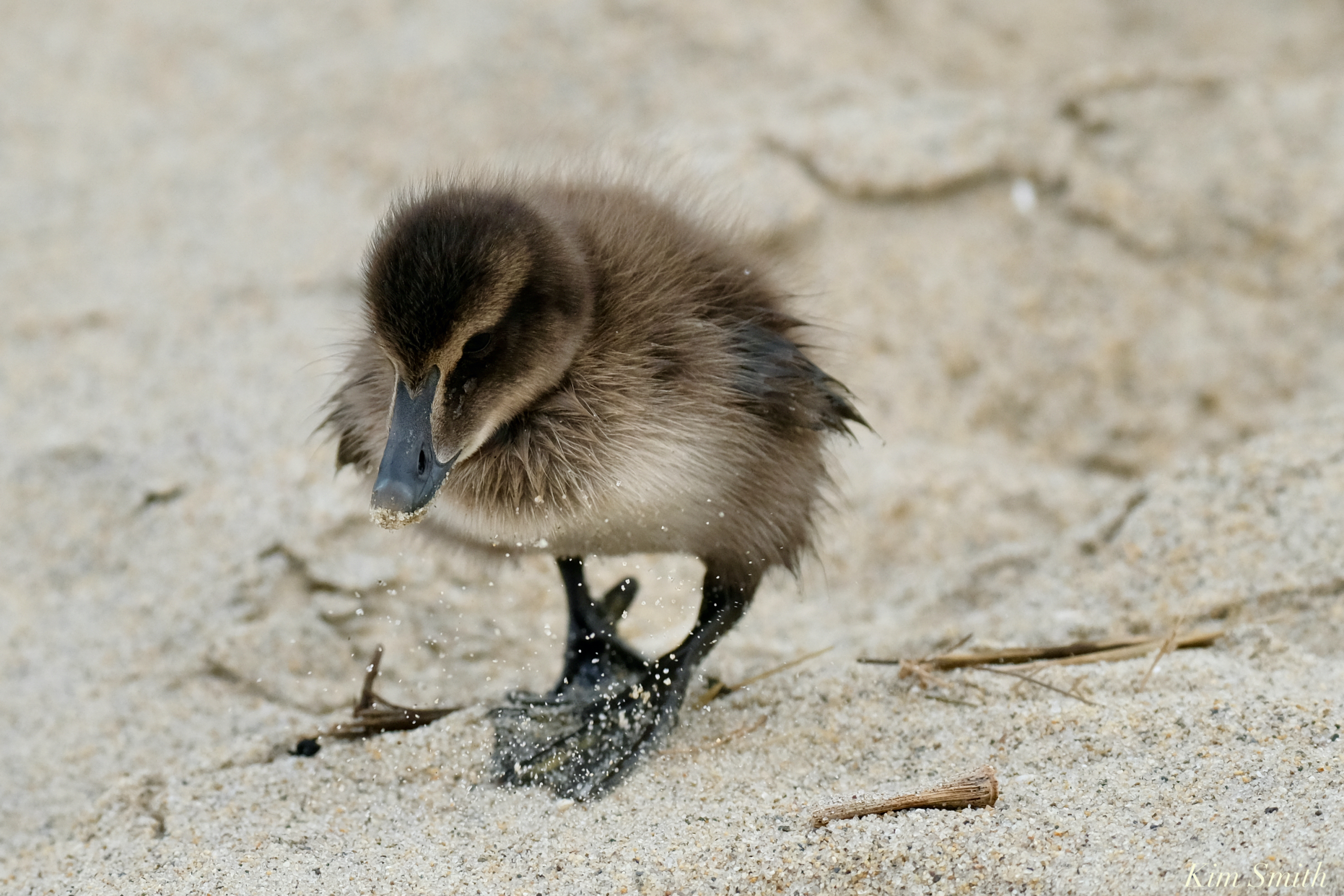
Common Eider Duckling Rescue with Hilary Frye

Thank you Jodi from Cape Ann Wildlife Inc!

Piping Plover Chronicles –

Exclosure installed by Greenbelt’s Dave Rimmer and Gloucester’s DPW’s Joe Lucido.

Huge Shout Out to Essex Greenbelt and Dave Rimmer, director of land stewardship.

Huge thank you to Joe Luciodo!

People’s Letters Really Helped. Thank you, thank you for writing!

Castaways Vintage Café Street Boutique

Charlotte Pops In ❤

New YouTube Show – Beauty by the Sea Episode #8


Happy Memorial Day!

The flags that you see lining the boulevard are organized each year by Pauline Bresnihan. She owns the gift shop Pauline’s Gifts, on Essex Avenue in Gloucester, with many lovely hand painted and whimsical items for your home and garden.

Good Harbor Beach open to half capacity.

Piping Plover endangered/threatened species signs installed at GHB.

Sending thanks and gratitude to everyone who wrote emails ❤

Piping Plovers are on the agenda for the City Council meeting on Tuesday night, which will be live streamed at 7pm.

Alexandra and Jon at Alexandra’s Bread

Castaways Vintage Café

Caffe Sicilia

Short and Main

Beauport Hotel

Incredible job at Fisherman’s Wharf Gloucester

Tree Peony, Rock’s peony, divinely scented,five blossoms

Please report your Monarch sightings. .

Piping Plover Chronicles continue –excellent detailed footage of Piping Plovers mating.

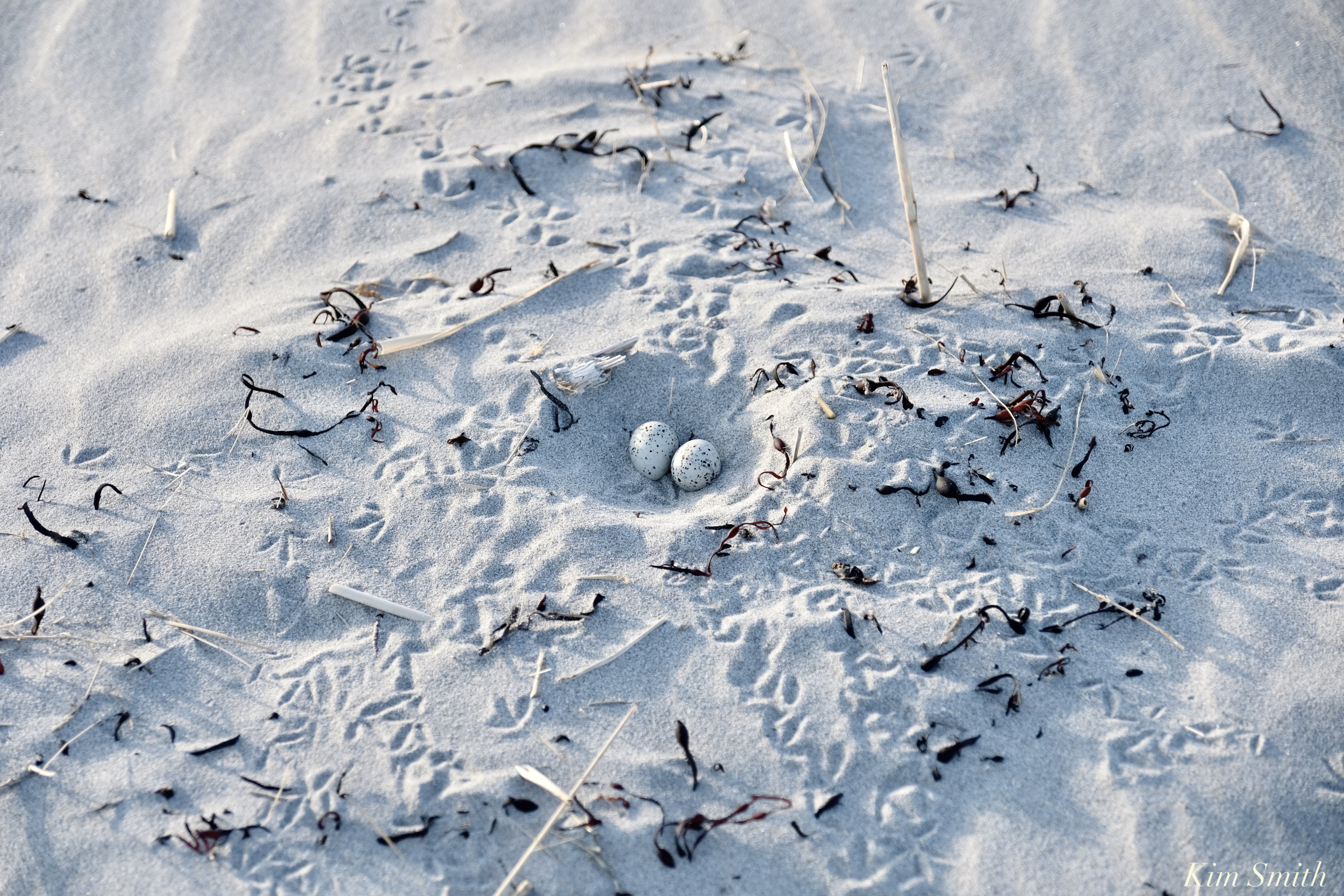
Two Eggs!